News of the extended network of faculty, alumni, students, visiting researchers, and mission partners is regularly updated, and some of the big ideas or major events in Global Christianity are covered in the CGCM News.
Human Trafficking Conference
|
|
Amos Yong (’99) Becomes Dean Twice Over

Fuller Seminary announced that Amos Yong ('99) has been named to serve as dean of both the School of Theology (SOT) and the School of Intercultural Studies (SIS), marking a historic new structure for the institution, effective July 1. Under one dean, the coordination and integration of curriculum and degrees in SIS and SOT will be more conducive for student needs and learning. This revised structure provides the strategic cohesion Fuller needs in the next season of the life of the seminary. Yong’s previous role as the director for the Center for Missiological Research, his extensive missiological expertise, and his work as a theologian make him uniquely suited for this role as Fuller revises its curriculum to nimbly, responsively, and adaptively address changing needs of our students and the world.
Yong came to Fuller in 2014 from Regent University School of Divinity, where he taught for nine years, serving most recently as J. Rodman Williams Professor of Theology and as dean. Prior to that he was on the faculty at Bethel University in St. Paul, Bethany College of the Assemblies of God, and served as a pastor and worked in social and health services in Vancouver, Washington.
In reflecting on this new role, Yong said: “I am honored and thrilled to get to work with colleagues in both schools and across the seminary as Fuller continues to press deeper into its historic commitments to provide quality theological education that engages the academy in ways attentive to and in service of the global church.”
Methodist Mission Bicentennial
Last week, the United Methodist General Board of Global Ministries, in collaboration with Candler School of Theology of Emory University in Atlanta, hosted a conference on “Answering the Call: Hearing God’s Voice in Methodist Mission Past, Present, and Future.” The conference celebrated Methodism’s mission heritage and looked to the future of Methodist mission.
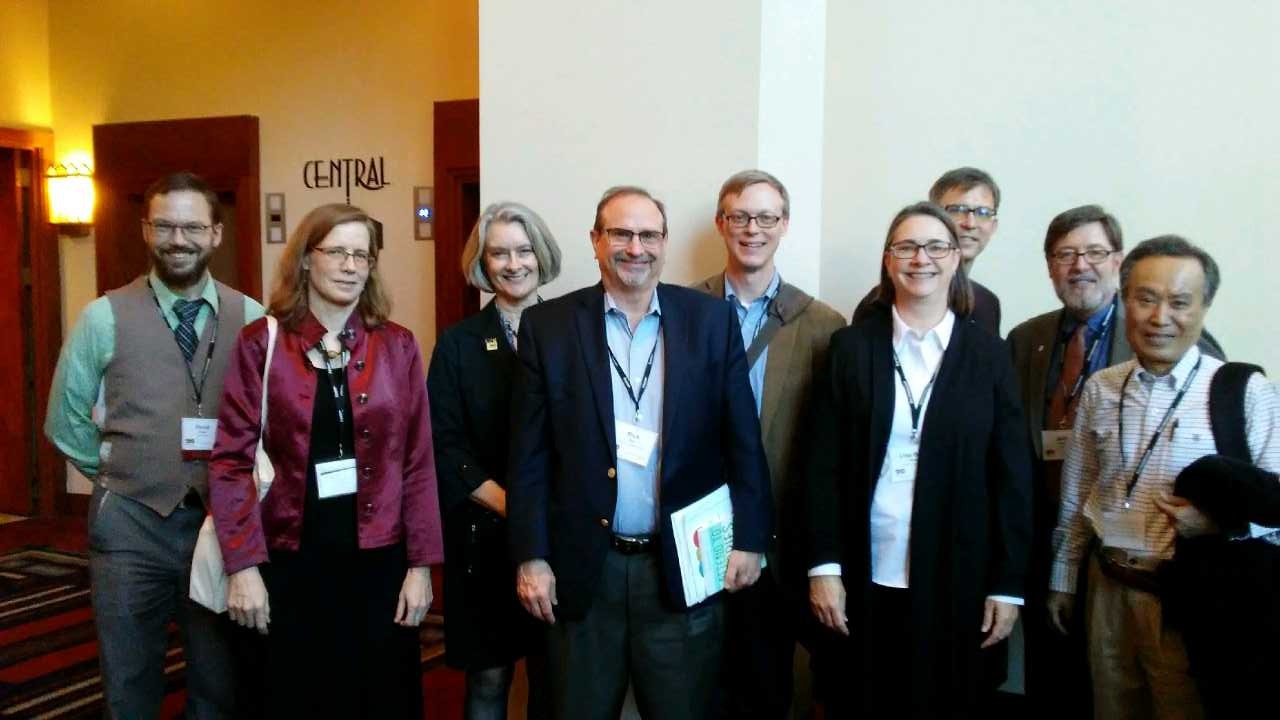
Some of those present with ties to Boston University included (from Left to Right): David Scott (’07), Michele Sigg (’18), Dr. Dana Robert, Rich Darr (’05), Doug Tzan (’13), Lisa Beth White (’08), Ben Hartley (’00 & ’05), Jack Amick (’06), & Mikio Miyagi (’10).
Material Cultures of Devotion in Early Modern Jesuit Missions
This roundtable will examine the functions of sacred objects in three very different Jesuit missions from the sixteenth to nineteenth centuries - England, China, and Northeastern America - to compare the devotional, social, and sometimes political significance that sacred objects acquired in different geographical and cultural circumstances. The event will feature an exhibit of relics and sacramental objects from the Boston College Burns Library's Liturgy and Life Collection, a unique collection of historical devotional materials donated by Catholic communities across the United States.
Friday, April 26th, 2019
Fine Print Room
Burns Library, Boston College
3:00 p.m. - 4:30 p.m.
| Speakers |
| Laura Masur - Boston University
Sacred Objects in the Archaeological Record of the Maryland Mission Eugenio Menegon - Boston University Healing and Converting: The Power of Sacred Objects in the China Jesuit Mission Aislinn Muller - Boston College Sacramentals, Dissent, and Resistance in Jesuit Missions to Early Modern England Chair and Respondent James O'Toole - Boston College |
Meeting of Mission Minds
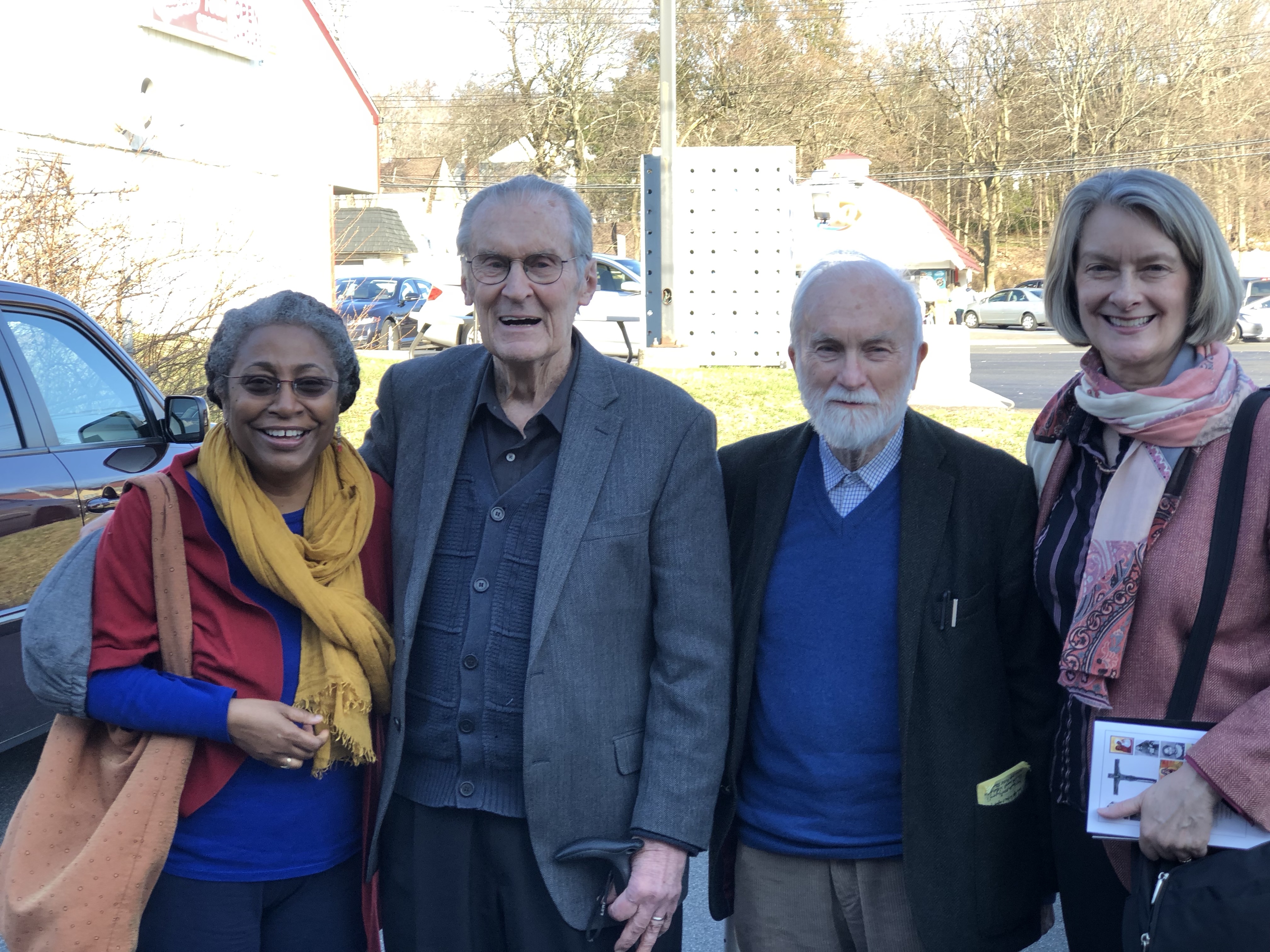
On April 6, 2019, Andrew Walls, Ingrid Walls, Dana L. Robert, M.L. Daneel, and Gerald Anderson met in New Haven, Connecticut. The contributions to Mission Studies by each is significant, but the friendship among them is what endures.

Moving Forward Together: Ecumenical Meeting

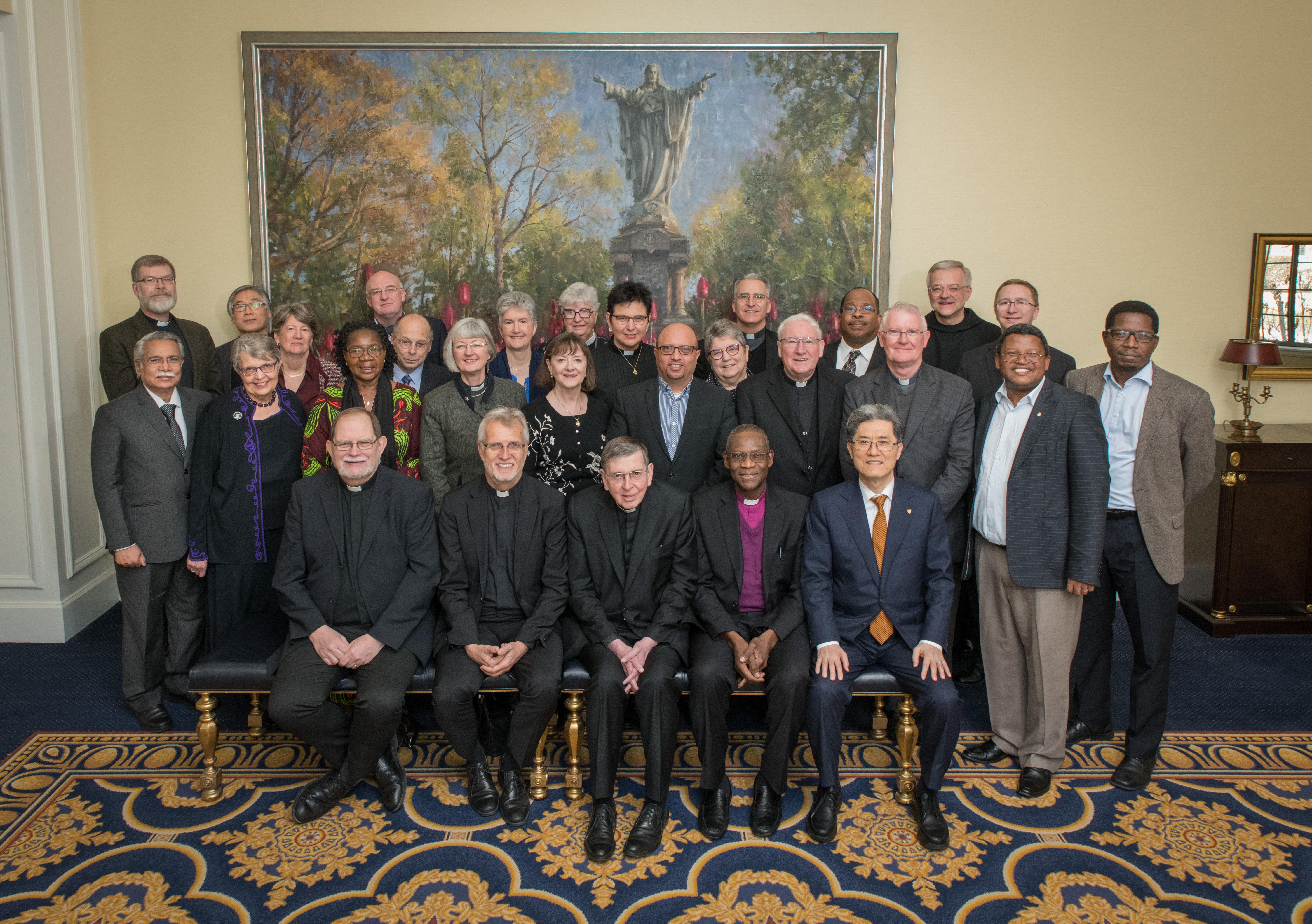
From 26 to 28 March 2019, the University of Notre Dame (Indiana, USA) hosted representatives of the five Christian world communions formally associated with the Joint Declaration on the Doctrine of Justification (JDDJ) to discuss implications of that landmark agreement in the context of growing closeness and collaboration between them. Church leaders came from the Roman Catholic Church, the Lutheran World Federation, the World Methodist Council, the World Communion of Reformed Churches, and the Anglican Communion.
The meeting opened with an ecumenical evening prayer service led by local clergy and members of the Notre Dame community. The event concluded with a public panel entitled “From Conflict to Communion: The Future of Christians Together in the World.”
Participants at the consultation recognized the urgency of presenting afresh the core message of the JDDJ that “by grace alone, in faith in Christ’s saving work and not because of any merit on our part, we are accepted by God and receive the Holy Spirit, who renews our hearts while equipping and calling us to good works.” They stressed the relevance of this gospel message for our conflicted and wounded world.
The representatives discerned further steps on the journey toward deeper ecclesial communion and a more visible common witness. Challenged with showing the deeper bonds that have been developing over the past two decades, the group welcomed the 2016 “Lund Imperative” to act always from the perspective of unity rather than from the point of view of division. The participants also affirmed the method of differentiating consensus that allows for agreement on common convictions while maintaining different confessional expressions.
The purpose of the meeting was not to achieve theological breakthroughs, yet participants were able to discuss key issues of mutual recognition of ministry, highlighting ways of strengthening cooperation in pastoral ministry and social outreach. The group discussed the need for strategies to address the connection between justification and justice, and proposed the production of a range of common resources such as catechetical tools. Together participants encouraged the strengthening of the common bond of baptism in ways appropriate to local contexts.
The participants recognized the need to apply the 1952 Lund Principle, which calls them to act together in all things except when significant differences of conviction compel them to act separately. To continue the conversation, the participants decided to set up a steering committee to carry forward their ongoing work.
The members of the Consultation expressed gratitude for the generous hospitality shown by the University of Notre Dame which enabled them to move forward together on their journey. It was their prayer that the Holy Spirit bring to completion what God has begun.
150th Anniversary of Methodist Woman’s Foreign Missionary Society
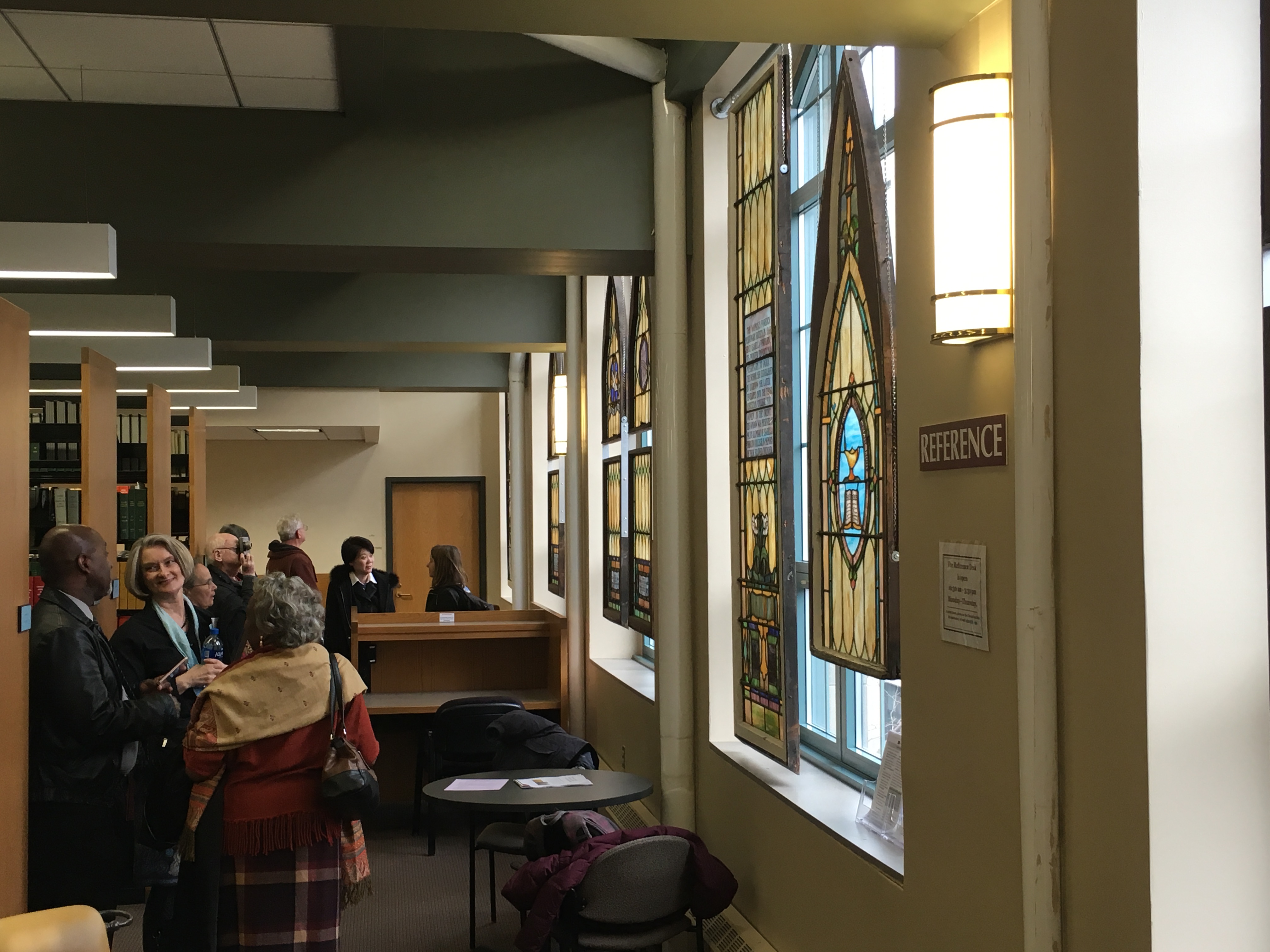
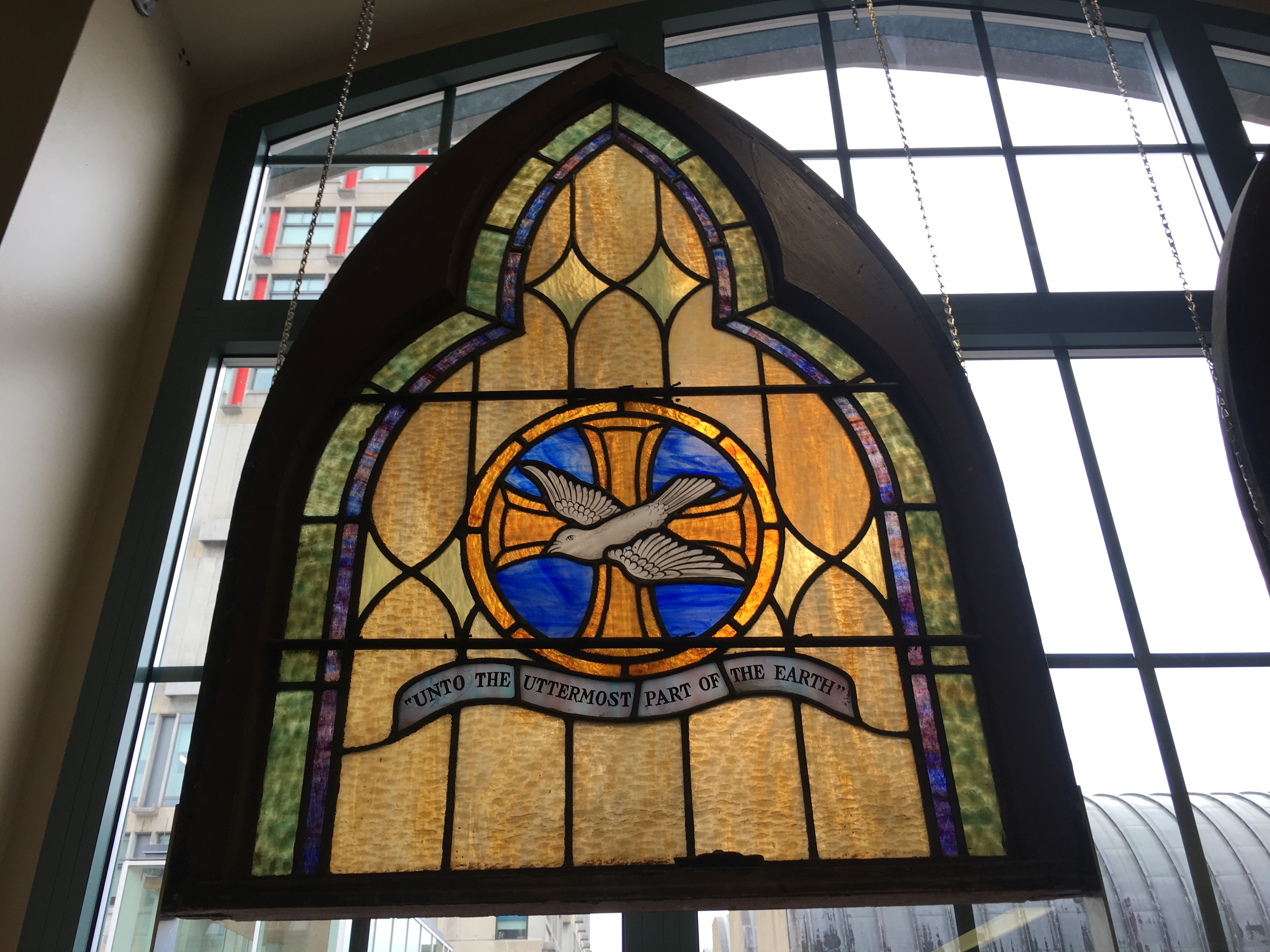 On March 23, 1869, eight women gathered at Tremont Street Methodist Episcopal Church in Boston and founded the Woman’s Foreign Missionary Society. To commemorate the event, the School of Theology held a dedication ceremony of the stain-glass windows that came from the Tremont Street church that memorialized the women who started the society. Dana L. Robert gave a lecture about the "First Women of Theology," and how they were intertwined with the beginning of Boston University. In fact, she explained, on the same day Massachusetts Governor William Claflin chaired the first public meeting of the Woman’s Foreign Missionary Society in Boston on May 26, 1869, he also went to the state house and signed the charter for state legislature to found Boston University. “It was the same people,” Robert explained. “The publicity, though, of the woman’s meeting got more press coverage.”
Joining the Choir
 Nicolette Manglos-Weber's new book, Joining the Choir: Religious Membership and Social Trust Among Transnational Christians was published by Oxford University Press, and recently reviewed by the American Academy of Religion's Reading Religion.
New Book
 Nimi Wariboko, the Walter G. Muelder Professor of Social Ethics, has recently published a new volume: Ethics and Society in Nigeria: Identity, History, Political Theory. This pathbreaking book constructs a socio-ethical identity of Nigeria that can advance its political development. Its method is based on the rediscovery of the practices and principles of emancipatory politics and a retrieval of fundamental virtues and capabilities that go to the core of the functioning of pluralistic communities. Ethics and Society in Nigeria: Identity, History, Political Theory critically engages history, myth, political philosophy, and religion to demonstrate that Nigeria has an unfolding historic identity that can serve as a resource for sustaining increasing levels of human flourishing and democratic republicanism.
Located at the intersection of history and political theory, this work identifies the nature of Nigeria's moral problem, forges the political-theoretic discursive framework for a robust analysis of the problem, and shows a pathway out of the nation's predicament. This three-pronged approach is founded on the retrieval of moral exemplars from the past and critical engagement with history as a social practice, philosophical concept, discipline of study, form of social imaginary, and witness of the flows of contemporary events. Using this methodology, author Nimi Wariboko analyzes various forms of political, religious, and revolutionary identities that have been put forth by different groups in the country and then examines their usefulness for the transformation of Nigeria's problematic socio-ethical identity.
Methodist Mission Bicentennial
April 8-10, Global Ministries of the United Methodist Church will sponsor a conference to commemorate the 200th anniversary of Methodist missions. The theme of the conference is “Answering the Call: Hearing God’s Voice in Methodist Mission Past, Present, and Future.” The event will celebrate Methodism’s mission heritage and look to the future of Methodist mission.
It will be held in Atlanta, Georgia, USA, at the Emory University Conference Center Hotel. The dates for the conference were chosen to coincide closely with the 200th anniversary of the founding of the Missionary Society on April 5, 1819, formed to support the work of John Stewart, a free African-American, among the Wyandotte Native American people of Ohio.
David Scott ('13) is organizing the event and three people from the CGCM will be presenting at the conference: Dana Robert, Michele Sigg, and Mikio Miyagi.