Measles, Cholera, and Mpox: BU-Based Outbreak Tracker Monitors World’s Most Dangerous Infectious Diseases

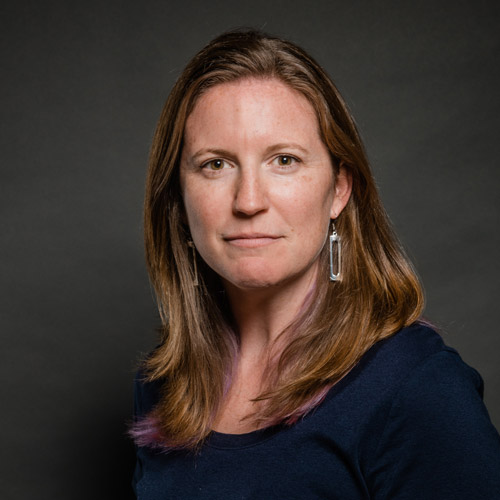
Boston University researchers Britta Lassmann (left) and Nahid Bhadelia are both infectious diseases experts and part of the BEACON leadership team.
Measles, Cholera, and Mpox: BU-Based Outbreak Tracker Monitors World’s Most Dangerous Infectious Diseases
In its first year, BEACON has helped direct public health responses globally, monitoring 181 pathogens in 169 countries—and 1 in space
Last year alone, more than 500,000 people globally were sickened by cholera—and 6,500 died. Chikungunya, a mosquito-spread disease that can cause disabling joint pain, afflicted a similar number, though more patients survived. And measles, once considered eliminated in many countries, came roaring back, reaching levels in the United States not seen in over three decades.
Not all of these outbreaks made headlines. But in a connected world, tracking the threat of infectious diseases is essential: the earlier authorities can intervene, the higher the chances of restricting an outbreak and limiting its potentially devastating impact.
Since April 2025, that surveillance has been boosted by a global infectious diseases tracker based at Boston University’s Center on Emerging Infectious Diseases (CEID).
In its first year, Biothreats Emergence, Analysis and Communications Network (BEACON) has tracked 181 pathogens in 169 countries and territories, providing crucial updates on each outbreak’s progress—and even flagged newly discovered bacteria in China’s space station. Designed to enable quick public health responses, its more than 34,000 active users include national and international public health organizations, foreign and state governments, journalists, doctors, and the public.
Our goal was to create a program that democratizes knowledge about outbreaks.
“Our goal was to create a program that democratizes knowledge about outbreaks,” says Nahid Bhadelia, a BU infectious diseases expert and founding director of both CEID and BEACON. She says although other disease trackers are available, BEACON is the only open-source platform of its kind—free to use and designed with more than experts in mind.
“We have heard from multiple international governments that they use BEACON as part of their daily horizon scanning for threats. But the best emails we get are from individual clinicians on the front line who tell us they use BEACON and thank us for the detail and assessment we put into our reports.”
The tracker—which is run in partnership with BU’s Hariri Institute for Computing and Computational Science & Engineering and Boston Children’s Hospital’s automated disease surveillance tool, HealthMap—has informed rapid vaccine response, guided local doctors watching for unexplained symptoms in travelers, and helped keep athletes healthy at the Winter Olympics.
To mark BEACON’s one-year anniversary, The Brink asked Bhadelia and her CEID colleagues about the infectious diseases that have swirled around our planet in the past 12 months, including the pathogens keeping them awake at night, and how they’ll be helping to keep soccer fans and players safe at the summer’s World Cup.
From Mpox in Switzerland to Microbes in Space
Even before its official public launch, BEACON’s experts were already tracking a potentially dangerous situation: a case of mpox, formerly known as monkeypox, in a traveler returning to Switzerland from Africa in early April 2025.
Thanks to the Swiss authorities’ speedy contact tracing and quick isolation of the patient, a major crisis was averted. But mpox would pop up again and again over the coming year, with BEACON reporting on around 100 incidents of the viral disease in just about every corner of the globe.
A map showing countries with a BEACON-tracked mpox outbreak in the past year. Courtesy of BEACON, BU Center on Emerging Infectious Diseases
Whenever an outbreak pings on the radar, whether it’s flagged by a public health partner on the ground, spotted in a media account, or part of a HealthMap alert, BEACON’s team of experts—both at CEID and in 12 countries—analyzes the threat. The team verifies with local officials, then prioritizes those that require additional monitoring, publishing a report with information on the disease and context on the event. Their work is supplemented by artificial intelligence, with a large language model developed by the Hariri Institute helping to evaluate a source’s quality, extract key information, score the severity of a disease, and inform the BEACON team’s final reports.
The team has even spotlighted new insights into microbes in space. In May 2025, it shared confirmation that a bacterial species—not found on Earth—had been discovered on the Chinese Tiangong space station. The bacteria was found in samples taken from the station by astronauts, then studied by Chinese scientists on Earth. In their report, which featured the findings, BEACON experts said the bacteria didn’t “pose a known threat to astronaut health,” but raised “questions about the behavior of microbes in space and the need for biosecurity protocols in human space habitats.”

Closer to home, BEACON has highlighted more than 100 outbreaks and events in the United States alone, from headline grabbers, such as rising numbers of measles cases, to the more obscure—like a burst of Shope papillomavirus in South Dakota and Colorado that caused rabbits to develop hornlike growths.
According to Bhadelia, the uptick in vaccine-preventable diseases, most notably measles, is a phenomenon that BEACON has played a particularly important role in tracking. In the past year, Canada, Spain, and the United Kingdom were among the countries to lose their measles elimination status, as the highly contagious disease took advantage of rising vaccine hesitancy. Elimination status is given to countries that have a year without large outbreaks or out-of-control transmission. Many experts predict the United States will soon also lose its elimination designation.
Since its launch, BEACON has published 61 reports monitoring measles outbreaks in the US, from the death of a single child in Los Angeles to 789 cases in South Carolina—the largest outbreak since the disease was eliminated in the country.
A map showing US states that had a BEACON-tracked measles outbreak in the past year. Courtesy of BEACON, BU Center on Emerging Infectious Diseases
“We have effective vaccines, but we’re seeing a pullback of public trust in these tools,” says Bhadelia, a BU Chobanian & Avedisian School of Medicine associate professor of infectious diseases. “That’s where the grander work of CEID plays a role.”
One part of CEID’s research is studying and raising trust in public health communication. Led by Traci Hong, a BU College of Communication professor of media science, an interdisciplinary team has analyzed the spread of misinformation and vaccine hesitancy, studied ways to improve health literacy, and looked at how social media shapes human behavior.
Bhadelia says that Hong’s team is working on a “big data analysis of what messaging works with community engagement,” and that BEACON has helped researchers “see the scale of what’s happening in real time.” The tracker itself, she adds, is an important tool for combating misinformation: reports can contain a summary of a disease and the outbreak, the potential public health impact, and the outlook—all in everyday language and with sources listed.
What we offer is not just awareness, we offer context, intelligence. Sometimes our role is not to raise an alarm, but to tell people not to worry.
“What we offer is not just awareness, we offer context, intelligence,” says Bhadelia. “Sometimes our role is not to raise an alarm, but to tell people not to worry. For example, when media reports sparked panic after a cluster of Nipah virus cases, a viral hemorrhagic illness, in Bangladesh, BEACON reports underscored the low risk of international spread.
“We don’t just report, we go through and explain it—the expert contextualization is part of the way we combat mis- and disinformation.”
Sparking Outbreak Response, Vaccine Delivery in Senegal
CEID launched in 2021 with a mission to make societies around the world more resilient to infectious diseases and to help health professionals, policymakers, and the public better prepare for future outbreaks. The center’s experts, drawn from across BU, study public health and disease policies, train health professionals, and partner with nations and organizations to strengthen monitoring and response capacity.
Bhadelia expects BEACON to become an increasingly valuable data source for the center’s researchers—like those in its One Health and Climate Change research core, who are studying how disease-carrying insects are expanding their range as global temperatures shift.

“We’re building a research database that will be useful to BU researchers, as well as researchers around the world,” she says. “Our next challenge is how to conduct responsible epidemiological research on that data to move forward initiatives that help the global community.”
Launching and running the tracker has also given Bhadelia and her team fresh opportunities to create and cement relationships with partners around the world. One of those organizations—and a BEACON funder—is CEPI, the Coalition for Epidemic Preparedness Innovations, a global social welfare foundation that supports the development of vaccines to protect against emerging viruses.
In fall 2025, Bhadelia says, CEPI used BEACON alerts to help direct novel vaccines to Senegal as the African nation battled Rift Valley fever, a mosquito-spread disease that can lead to vision problems and, in rare cases, brain inflammation and fatal bleeding.

“Of any of the monitoring systems, we were the first to report publicly on Rift Valley fever,” says Britta Lassmann, a research associate professor of infectious diseases at BU’s medical school. “That’s a very crisp example of an outbreak that we reported that brought a public health emergency to attention and led to downstream attention.”
Just under four months after flagging the Rift Valley outbreak, BEACON confirmed it was over.
Tracking Disease Spread at the Olympics; World Cup Next
BEACON’s next major test is this summer’s soccer World Cup. The planet’s biggest sporting event is expected to attract more than five million fans to its 104 matches in host nations Canada, Mexico, and the US. And those supporters may bring more than their soccer fever with them.
BEACON will track outbreaks, and Bhadelia and her team have already connected with local departments of public health to provide proactive information on potential and emerging threats. Kayoko Shioda, a BU School of Public Health assistant professor of global health, will help monitor wastewater—as authorities did during COVID—for signals of infectious diseases.
Many of the services BEACON will provide during the tournament were tested during the Milano Cortina 2026 Winter Olympics.
“That was our first trial move into the mass gathering space,” says Lassmann, a BEACON cofounder and codirector, as well as its editor in chief. Although the influx of athletes didn’t spark many outbreaks—mosquitoes, for example, not being a major threat in the snowy Italian mountains—the team did post updates on cases of flu, COVID, and gastrointestinal issues. They even reported on a condom shortage in the Olympic Village—which was a chance to “address the issues around sexually transmitted diseases at mass gathering events,” says Lassmann.
“We also received requests from the local community to have a global [infectious diseases] snapshot, letting them know of any significant outbreaks happening around the world,” she says. “If a traveler presented to an emergency room, people would be aware they might need to think about a particular disease.”
Over the coming years, Bhadelia says the BEACON team wants to add more layers of data—like local geographic information, from population density to land use to weather—and connect with more partners to expand the tracker’s reach. She also hopes it fosters more partnerships between CEID and other BU researchers, particularly students, who she wants to involve in both managing the database and exploring its wealth of information. But the main goals match those of CEID: to help make our world better prepared for future outbreaks, and ready to prevent them when possible.
“Our goals,” says Bhadelia, “are to continue to reduce the response time to outbreaks, which then reduces the human cost of these events; to raise awareness of threats that carry a big human cost, but which people don’t usually pay attention to; and to be a resource to our public health partners during this tough time with funding.”
BEACON statistics and graphics provided by Oona Moorhead (SPH’26), a CEID graduate student researcher.
BEACON’s funders include the Tianqiao and Chrissy Chen Institute, the Gates Foundation, the National Science Foundation, PAX sapiens, and CEPI. The Hariri Institute’s Software & Application Innovation Lab (SAIL) helped build the database architecture and application programming interface (API) for BEACON; Boston Children’s Hospital helped build the editorial system and public website used by CEID-based outbreak analysts. Ioannis (Yannis) Paschalidis, a BU College of Engineering Distinguished Professor of Engineering and Hariri Institute director, and John Brownstein, Boston Children’s Hospital’s chief innovation officer, are both BEACON codirectors and cofounders.