Polarized Parents Are Raising Ideologically Divided Kids. How Do We Stop the Cycle?
Boston University’s Kathleen Corriveau, who studies why children believe what they do, says social exposure may be the key to ending the transmission of polarized beliefs

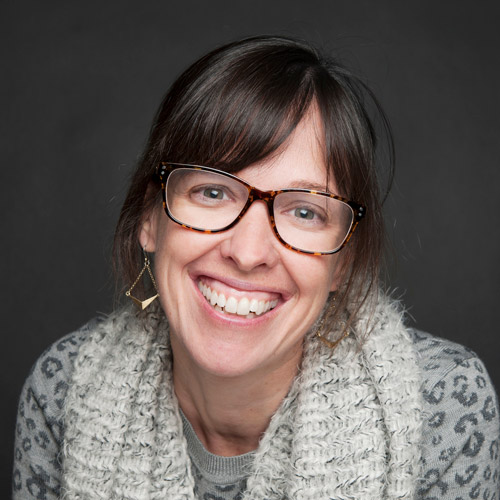
Kathleen Corriveau studies children around the world to learn how they pick up beliefs from adults, and what, if anything, might persuade them to change their minds.
Polarized Parents Are Raising Ideologically Divided Kids. How Do We Stop the Cycle?
Boston University’s Kathleen Corriveau, who studies why children believe what they do, says social exposure may be the key to ending the transmission of polarized beliefs
Fifty-three percent of US adults say their fellow Americans are morally bad, making the United States the only country among 25 surveyed by the Pew Research Center to report such elevated mutual disdain. How does this polarization—defined as people dividing into ideological extremes that question each other’s moral legitimacy—arise in the first place? And can it be reduced?
Kathleen Corriveau, a Boston University Wheelock College of Education & Human Development professor of applied human development, will spend the next three years studying those questions—focusing on children, here and in other nations.
The research, funded by $2 million from the Templeton World Charity Foundation, will center on kids ages 8 to 12 in six countries, along with their caregivers, to examine the roles of universal, human-development factors and specific cultural influences in seeding children’s beliefs. The work follows a longer, five-year study—spanning 18 countries from the US and Australia to nations in Europe, Asia, and Africa—that probed how religious beliefs in particular shape attitudes of even younger children (ages 4 to 12). That study, in turn, built on Corriveau’s past research on how children decide what information they can trust.
For the new work, she will partner with colleagues in the Developing Belief Network, a global collaborative studying the development of religious awareness, in which Corriveau is one of two principal investigators. She is also associate dean for faculty affairs at Wheelock and director of its Social Learning Laboratory.
The Brink spoke with Corriveau about her research, how children pick up beliefs, and what to do about America’s polarization problem.
Q&A
with Kathleen Corriveau
The Brink: What did you learn in the five-year study?
Corriveau: We asked how religious beliefs impact children’s social judgments and if they are making friendship choices based on that or inferences about how good someone is. There are conflicts around the world based on religious beliefs, so this has important implications.
We asked questions about moral violations. When children form opinions, some things are moral—you shouldn’t hit people, you shouldn’t steal—and others are conventional: you shouldn’t wear socks on your hands. Our question was, how are children judging religious violations—as moral or conventional? We asked children about people who were part of their religious group who were doing some sort of violation—like, “You’re Jewish and you’re eating pork”—and [then asked] about someone that’s not Jewish and is eating pork.
What we’re finding—and this is hopeful—is when the person they’re making a judgment [about] is a member of their religious group, they’re viewing it more as a moral violation; it’s really bad. But if that same violation is by someone that’s not a member of their religious group, they’re more accepting. In some locations, children treat religion as a highly essentialized category, like gender, [but] in other locations, children treat it like a preference for a baseball team—not a big deal.
The Brink: Are there any strategies for raising nonpolarized kids?
Corriveau: We’re looking at that in the current study. One of the questions we’re asking kids: Is there anything that would change your mind? What if you had a friend that had a [different] opinion? We’re focusing on a variety of polarized topics: vaccines, whether or not religion should be taught in schools, the role of humans in climate change. These [participants] are going to be a little bit older [than the prior study]. They’ve acquired some beliefs, they’ve thought about these things, they’ve interacted socially in school already. That will help us understand how these beliefs are acquired, and what might it take for people to modify them.
One of the questions we’re asking kids: Is there anything that would change your mind? What if you had a friend that had a [different] opinion?
The Brink: Are other cultures doing better in raising nonpolarized children?
They are if Pew is right. We collected data in some places where there are strong historical intergroup conflicts, like Northern Ireland, and in locations like Singapore, where there’s a variety of religious groups that interact with no conflict. One thing we’ve found is that if you’re a member of a minority group, you really pay attention to who’s talking to you. And there are strong relations between what parents believe and what kids believe when you’re a minority within a particular society. For example, we’ve collected data from Chinese Christians and more secular Chinese families. There are strong relations between beliefs [transmitted from parents to kids] in the minority Christian families but not the secular families.
The Brink: What are different ways around the world by which children pick up beliefs?
In the US and Western cultures, the ways that people teach and learn are explicit mechanisms, like formal schooling, formal lessons, or reading textbooks. In a lot of other countries, teaching and learning happen by watching and observing what the elders are doing. We collected data from a historically Mayan village in Mexico, where we couldn’t even have caregiver-child conversations, because it just wasn’t done. Same thing happened in Bolivia, where it just wasn’t appropriate to be engaging in these types of interactions.
The Brink: Some may find it depressing that more than half of this country thinks their fellow Americans are bad morally. Does your research suggest that can be reversed?
Research shows that things like social exposure play a huge role. If you’re in a classroom with a variety of races and ethnicities and paired in groups with them, that helps mitigate [hostile] beliefs early on. It needs to be positive interaction; just seeing someone different from you isn’t enough. The US has become more stratified in terms of the types of schools and the types of social experiences that people are involved in. If you’re not getting that social exposure, are there other ways to help to mitigate some of those harmful beliefs and behaviors?
It would be hard to do the work that I do if I believed that polarized adults necessarily raise polarized kids. We’re hoping to highlight points along development where interventions might be successful [and], at a later stage in this work, think through the best interventions to reduce polarization.
The interview was edited for clarity and brevity.