What Motivates Black Women Voters?
In a new study, Boston University political scientist Christine Slaughter explores how they viewed Kamala Harris’ 2024 presidential campaign

Photo by LordHenriVoton/iStock
What Motivates Black Women Voters?
In a new study, Boston University political scientist Christine Slaughter explores how Black women viewed Kamala Harris’ 2024 presidential campaign
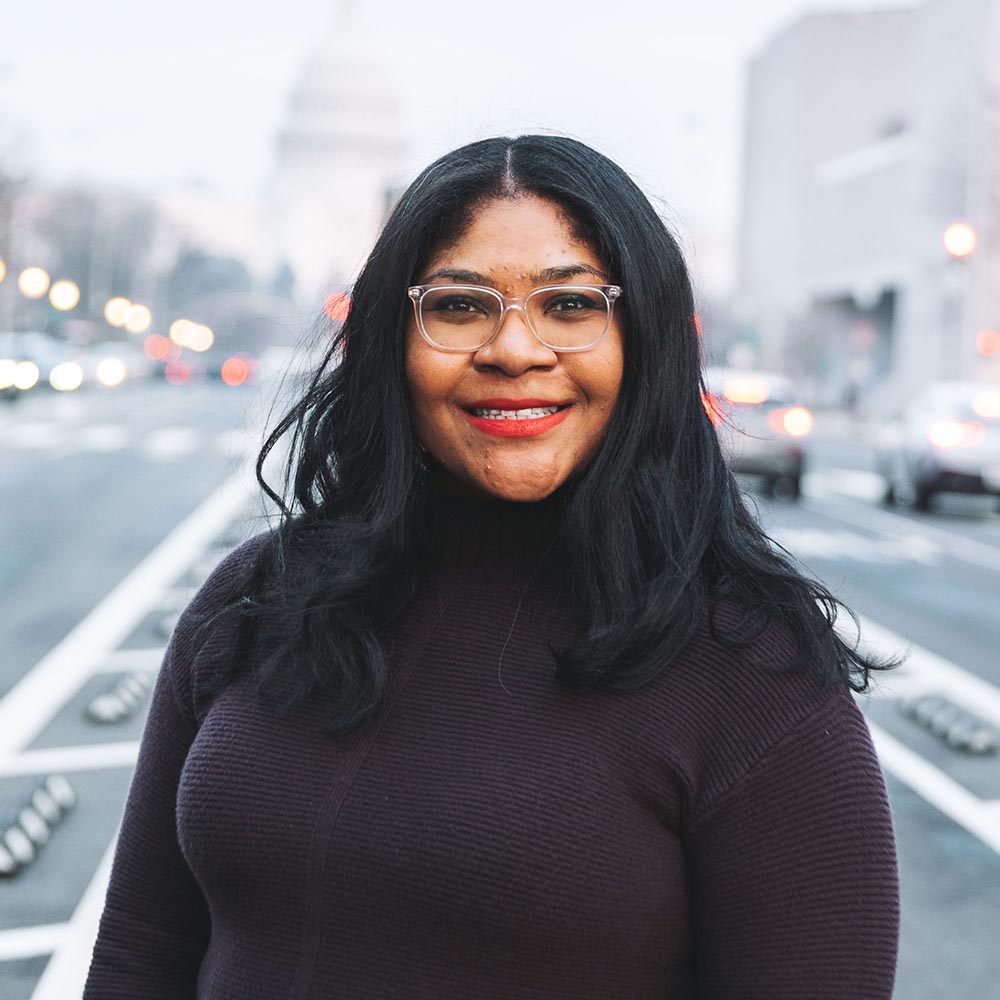
When exit polls showed that 92 percent of Black women voters supported Kamala Harris in the 2024 presidential election, the numbers appeared to tell a straightforward story. But according to Boston University political scientist Christine Slaughter, the reality was far more complex.
In a new study, Slaughter explores how Black women felt about Harris’ candidacy before and after the election. Through a series of focus groups, she found that while Black women overwhelmingly supported Harris, their emotions, motivations, and experiences varied widely. Some women threw themselves into active campaigning, for example, while others were more tepid in their support—even harboring negative feelings about Harris’ campaign.
Slaughter, who coauthored the study with researchers from Villanova University and Georgetown University, also discovered a generational divide: many older women were energized by their connection to a candidate who shared their identity, but younger study participants felt excluded by Harris’ policies. The findings were published in an article in Political Behavior.
A BU College of Arts & Sciences assistant professor of political science, Slaughter studies American politics, African American politics, political psychology, and political and gender inequality. Her research focuses on the diversity of Black political perspectives and how identity shapes political behavior. She was recently named an Institute for Citizens & Scholars 2026 Mellon Emerging Faculty Leader.
The Brink spoke with Slaughter about her latest study’s findings and what political campaigns can learn from Black women voters.
Q&A
with Christine Slaughter
The Brink: What inspired this study?
Slaughter: We wanted to better understand how Black women felt about Vice President Harris’ campaign. The paper’s title, “Even Among the 92%,” refers to exit polls showing that 92 percent of Black women supported Harris. But vote choice is only one political indicator. There are also things that lead to vote choice, like enthusiasm, mobilization, and information. So, we thought it was important to understand their emotions and attitudes leading up to the election rather than their vote choice on the day of the election.
The Brink: What makes this study different from previous research?
Slaughter: Few studies examine Black women’s emotions in isolation. Often when we think about emotions [in political science], we’re thinking about either a racial group broadly or about gender. There have been fewer studies that focus on qualitative methods, that is, talking to voters. So, we used focus groups and were able to examine how views change after the outcome of the election is revealed.
The Brink: What was the most important takeaway from the research?
Slaughter: We must understand that there’s complexity within voting blocs. Black women have complex and contradictory feelings toward Harris as a political candidate, as well as where she fits within the American political landscape.
The Brink: Your study found important generational differences among Black women voters. What did those look like?
Slaughter: Many in the boomer group were surprised that Americans could support President Trump. They also felt grief, despair—and disrespect, which they felt was directed toward Harris during the campaign. Black women millennials did not feel a sense of enthusiasm because of Harris’ policies or, for instance, her stance on the war in Gaza.
The Brink: What role did emotions play in shaping political engagement?
The emotions that we talked about were enthusiasm, hope, optimism, exhaustion, and the desire to step away from politics. These complex feelings that Black women have shaped their evaluations, judgment, and actions.
The Brink: Were there any comments from participants that stayed with you after the study concluded?
One participant, Tanisha, discussed supporting Harris while being frustrated with the Biden-Harris administration. Despite these frustrations, she was strategic in her vote choice and decision-making. [Her comments] challenged the common narrative that Black women supported Harris simply because she is a Black woman. Our focus groups showed that many participants engaged in sophisticated political reasoning, weighing representation alongside experience, policy performance, and the broader implications of the election for American democracy. Even though Tanisha felt frustrated, she didn’t withdraw from electoral politics overall.
Another participant in a different focus group shared a perspective that we haven’t heard much from pundits. Denise, one of the baby boomers, wasn’t just disappointed with the outcome of the election, she was disappointed with how Harris was treated—by the media, the party, politicians, pundits. For Denise, Harris was treated as a spectacle, not a serious contender. We write in the article that Denise also felt a sense of betrayal; her statement that “it feels like everyone was in on the joke except for Black women” captures that profoundly. For her, the gap between the excitement surrounding the campaign and the election results suggested that Black women had invested emotionally in Harris’ candidacy in ways that were not reciprocated by the broader electorate.
Throughout the 107 day campaign, public polling suggested a highly competitive race, and Harris’ rallies generated enormous enthusiasm among some sectors of the electorate. I think Denise is challenging everyone to think about the perception and reality in politics—and perhaps the limits of polls. [She used a] “freak show” analogy, which was her way of expressing the feeling that many Americans were willing to watch history unfold but not willing to make history themselves. Everyone processes the outcome of an election differently.
The Brink: What do your findings suggest about how campaigns should engage Black women voters?
Campaigns often are driven by analytics, things such as poll data or other aggregate quantitative metrics. These analyses flatten the complexity of what Black women feel, how they think, how they act, and their electoral behavior. Black women voters deserve just as much attention as any group within the American electorate. We should not think that there is uniformity, especially among historically marginalized and intersectional groups. To better understand [voters], ask them.
The Brink: How do you hope political leaders use these findings?
Party leaders will benefit from reading the article to better understand that even the most loyal Democratic voters have different reasons to support candidates, different feelings about the party and the process, and different emotional attachments. Both Republicans and Democrats should better understand the role of emotions in politics.
The Brink: If readers take one lesson from this study, what do you hope it is?
Listen to Black women.