
The Program in Ecology, Behavior & Evolution (EBE) includes exciting and innovative courses and cutting-edge research opportunities in behavioral ecology and sociobiology, molecular ecology and evolution, community ecology, biochemical ecology, population biology, tropical ecology, ecosystem ecology, and conservation biology. Integrative and cross-disciplinary research is strongly encouraged and a broad organismal perspective is emphasized. Faculty research investigates a broad array of organisms, including microbes, protists, fungi, plants, insects, fish, amphibians, reptiles, birds, and mammals living in freshwater, marine, and terrestrial ecosystems in both temperate and tropical regions.
The group has a particularly strong track record of training international students and conducting research in tropical regions around the world. We have recently expanded our expertise in community and ecosystem ecology with faculty conducting research on temperate forests in New England. Faculty laboratories and other shared facilities on campus are well equipped for microscopy, molecular genetics, stable isotope analyses, mass spectrometry, and other methods necessary for modern integrative research.
The EBE program is greatly enriched by its affiliation with faculty from the Center for Ecology & Conservation Biology, the Marine Program, and the Departments of Earth & Environment and Anthropology. Field research and training opportunities are available at the Tiputini Biodiversity Station in the Amazonian rainforest of eastern Ecuador. Many of our faculty also have affiliations with other research centers supporting field-based research.
Faculty with Related Research
-

Kelly Aho
Assistant Professor of Biology
-

Jennifer Bhatnagar
Associate Professor of Biology; Director, Biogeoscience Program; Associate Chair, Ecology, Behavior & Evolution
-

Peter Buston
Professor of Biology; Associate Dean of the Faculty for the Natural Sciences
-

Sofía Casasa
Assistant Professor of Biology
-

Sarah W. Davies
Associate Professor of Biology, Associate Director of the BU Marine Program
-

John R. Finnerty
Associate Professor of Biology
-

Robin Francis
Lecturer in Biology
-

Robinson W. Fulweiler
Professor of Biology and Earth & Environment
-
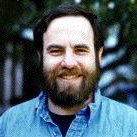
Les Kaufman
Professor of Biology
-

Cheryl Knott
Professor of Anthropology, Biology, and Women’s Gender and Sexuality Studies
-
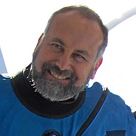
Phillip S. Lobel
Professor of Biology
-

Jeffrey Marlow
Assistant Professor of Biology; Chair, Graduate Committee
-

Sean P. Mullen
Professor of Biology
-

Mario Muscedere
Master Lecturer in Biology; Director, Undergraduate Program in Neuroscience
-

Richard B. Primack
Professor of Biology
-

Karina Scavo Lord
Lecturer in Biology and the Boston University Marine Program (BUMP); Director, Postdoctoral Associate Teaching Scholars Program
-

Christopher Schmitt
Associate Professor of Anthropology and Biology;
Affiliated Faculty, Women’s, Gender, and Sexuality Studies -

Michael D. Sorenson
Professor of Biology
-

Kathryn Spilios
Master Lecturer in Biology; Director, Instructional Labs; Director, Learning Assistant Program; Director, Academic Planning
-

Lynette Strickland
Assistant Professor of Biology
-
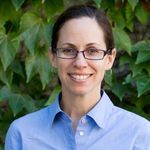
Pamela Templer
Distinguished Professor and Chair of Biology
-
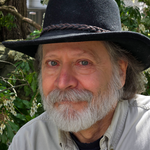
James F. A. Traniello
Professor of Biology
-

Karen Warkentin
Professor of Biology; Professor of Women’s, Gender & Sexuality Studies
-

Fred E. Wasserman
Associate Professor of Biology