Finding Equity and Belonging in Higher Education
Finding Equity and Belonging in Higher Education
How the experiences of women of color offer insights that reveal systemic challenges
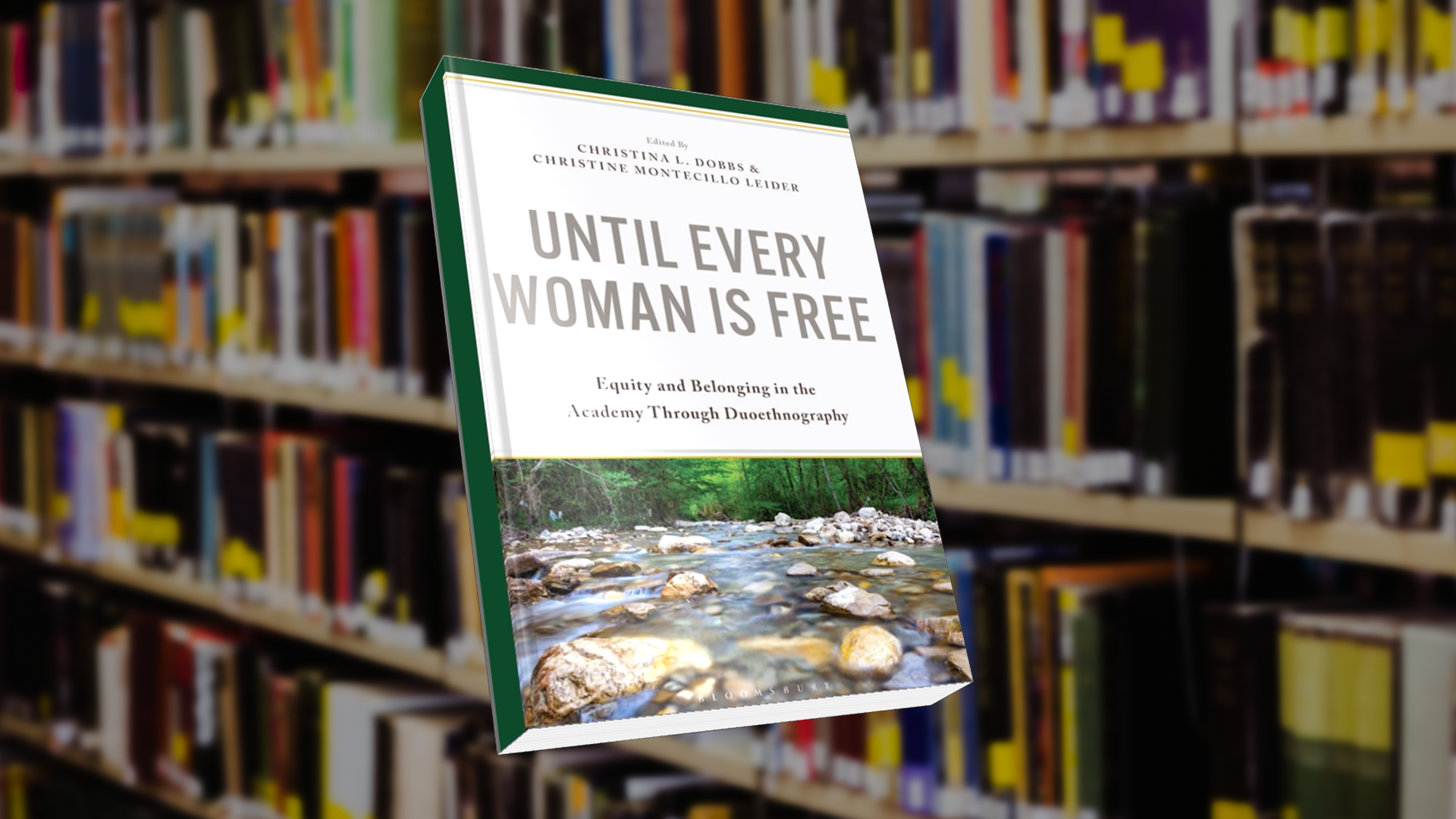
What does it feel like to navigate higher education as a woman—especially as a woman of color? In a new book, Until Every Woman Is Free: Equity and Belonging in the Academy through Duoethnography (Bloomsbury), BU Wheelock’s Christina Dobbs and co-editor Christine Montecillo Leider of UMass Lowell bring together voices from across academia to examine the challenges, barriers, and possibilities experienced by women of color at every stage of their careers. The book includes contributions from BU Wheelock’s Eleonora Villegas-Reimers, Pipier Smith-Mumford, Grace Kim, and Stephanie Cox Suárez.
In this interview, Dobbs reflects on the complex dynamics of higher education and shares how the book’s insights can extend beyond academia to better support women of color navigating institutional spaces. She is an associate professor in the English Education for Equity & Justice program at BU Wheelock. She is the author of several books, including The Impacts of Censorship, Volume 1 and Preparing Antiracist Teachers: Fostering Anti-Bias and Equity in Teacher Preparation.
This interview has been edited for length and clarity.
Q&A
with Christina Dobbs
BU Wheelock: As co-editor of Until Every Woman Is Free, who did you have in mind when putting this book together, and who do you hope will read it?
Dobbs: The book is for anyone who has sometimes felt like an outsider in higher ed—as an academic, as a researcher, as a scholar or teacher. It’s for anybody who wants to think about analyzing their personal experience and trying to understand it in a deeper way.
My coauthor [Christine Montecillo Lieder] and I also sort of made it for each other, and to honor one another’s experiences, but now I’m learning there are a lot of people out there who want to learn what our experiences are like. I think they can read the book and learn some things about that if they’re interested in knowing how it feels or what kinds of supports faculty who are women of color might need.
BU Wheelock: What issues or challenges is the book addressing?
Dobbs: Part of what we’re trying to deconstruct is this idea that there’s only room for a few of us or that we must compete with one another when we could just support each other. And so, we hope that people who have felt marginalized and or left out could read the book and find a connection to make with the people who shared their stories.
BU Wheelock: You talk about the importance of building supportive community in higher education settings. How did this book help you build community?
Dobbs: Chris and I wrote one paper in this, but there were 11 other groups of authors who also wrote about their experience—some from BU Wheelock and some from across the United States. That was a community that I don’t think we tried to build intentionally, but I now could not live without.
It is hard to write about your experiences sometimes, especially when that experience is painful. But it is also so wonderful to get to go into spaces and see people presenting what has happened to them. I feel lucky to have participated in writing this book and to have watched everyone taking their ideas and their experiences and use them to make bigger change in their institutions.
Comments & Discussion
Boston University moderates comments to facilitate an informed, substantive, civil conversation. Abusive, profane, self-promotional, misleading, incoherent or off-topic comments will be rejected. Moderators are staffed during regular business hours (EST) and can only accept comments written in English. Statistics or facts must include a citation or a link to the citation.