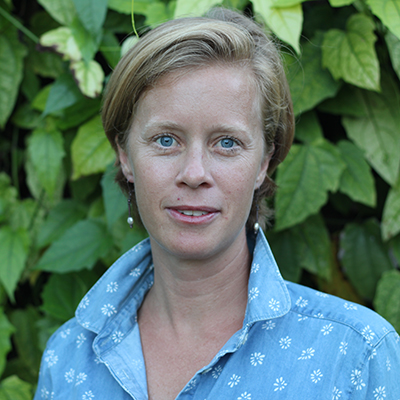
Naomi Mann Leads BU Law’s Growing Experiential Education Program as the New Associate Dean
Mann plans to forge new partnerships with local and national organizations on initiatives that advance civil justice and expand access to legal representation.

Naomi Mann Leads BU Law’s Growing Experiential Education Program as the New Associate Dean
Mann plans to forge new partnerships with local and national organizations on initiatives that advance civil justice and expand access to legal representation.
In the past three years, Boston University School of Law’s experiential learning program has expanded its offerings across the board, adding new clinics and practicums for students on topics ranging from consumer economic justice and appellate law to prisoner education and reproductive rights, and increasing training opportunities for clinical faculty.
“Watching these programs come to life has honestly been one of the most exciting parts of the job,” says BU Law Clinical Professor Julie A. Dahlstrom.
Now, overseeing experiential programming and curricular innovation will be the job of Clinical Professor Naomi M. Mann, who took over for Dahlstrom as associate dean for experiential education on July 1. Mann will build on the initiatives created and strengthened by Dahlstrom, who was the second person—after Professor Karen Pita Loor—to hold the leadership role since it became a rotating position. Professor Emerita Peggy Maisel led the program in its first five years.
“What we’re seeing in the last decade or so is a greater appreciation within law schools across the country for clinical offerings, as well as from employers who highly value the types of experiences law students have had in our clinics,” says Mann, who most recently served as executive director of the Civil Litigation and Justice Program. “Our clinical and experiential faculty are so talented and so thoughtful, so it’s really exciting to see what new directions we can take the program in.”

In her three-year term, Dahlstrom oversaw an expansion of programming for faculty, building on anti-bias and cross-cultural competency trainings spearheaded by Loor. Among these initiatives were biannual workshops led by practitioners in the field, exploring issues such as professional identity formation and resistance lawyering. Off campus, Dahlstrom also co-chaired the Association of American Law Schools clinical legal education section in 2025. In May, she received the Clinical Legal Education Association’s Outstanding Advocate for Clinical Teachers Award.
“It was truly a recognition of all the work our clinical faculty at BU Law have done nationally to champion experiential legal education,” Dahlstrom says.

Mann praised the efforts of both Loor and Dahlstrom.
“Julie really is an incredible leader,” she says. “She’s a very nuanced thinker and keeps a pulse on what’s happening and what our current issues are. She built out the community—building on the blocks [Loor] had set in place. It’s been really inspiring.”
Mann has a long career in legal practice to draw on. Before joining BU Law in 2013, she led an economic advocacy and literacy program for women, represented domestic violence and sexual assault survivors, and worked in the U.S. Department of Education’s Office for Civil Rights, among other roles. At BU Law, she also founded the Access to Justice Clinic, in which students represent poverty law clients of Greater Boston Legal Services in civil litigation and work on access to justice projects in partnership with local or national organizations.
If someone has a dream about what they want to do, how can I be part of making that happen?
In her role as executive director of the Civil Litigation and Justice Program, Mann helped two clinical faculty develop and launch their own stand-alone programs: Clinical Associate Professor Madeline H. Meth formed the Appellate Clinic, and Clinical Associate Professor Jade Brown (’16) created the Consumer Economic Justice Clinic.
“I’m thinking about my role as associate dean as a facilitator of all the great ideas and experience that our clinical faculty have,” she says. “If someone has a dream about what they want to do, how can I be part of making that happen?”
One of Mann’s first actions has been to convene a faculty group—including Brown, BU/MIT Student Innovations Law Clinic Lecturers Ari Lipsitz, Chris Conley, Vivian Etter, and Jef Pearlman; Corporate Counsel Externship Program Director Cecily Banks; and Program on Reproductive Justice Executive Director Sapna Khatri—to help clinical faculty think through the use of AI with their students. She has also organized a high-level training with practitioners on the issue. This training will cover the intersections of AI and attorney-client privilege, the relative benefits of current AI legal tools, and how AI can be leveraged to assist low-income clients.
“Courts are actively working out how and when lawyers can use AI while also meeting our ethical duties to our clients. There are critical implications for practicing attorneys if we rely on AI in specific ways,” she says. “At the same time, it’s the future of the practice and has exciting implications for improving access to justice. As the folks who are teaching students to be out in the world, we have a special responsibility to prepare them for current realities.”
Mann also hopes to increase connections between clinical students and other disciplines and fields across the university. For instance, Maisel helped create a program pairing social work students with law students in criminal and immigration cases; Mann hopes to bring public health students in on cases related to housing law.
“Forging partnerships within BU is definitely a goal of mine,” Mann says. “I’m really excited about the creative potential of partnering with other schools and of creating new programs that are responsive to the ever-changing needs of law in our society.”
Dahlstrom says Mann is more than up to the task.
“She brings years of leadership and experience with her,” she says. “I have no doubt she’s going to carry forward the tradition of excellence that’s always defined our experiential program.”