Fall 2026 Term Courses
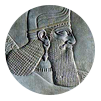 CAS CC 101: Core Humanities I: Ancient Worlds. Fall 2026; coursepage here. An interdisciplinary study of the origins of narrative, epic, tragedy, and philosophical thought including works from ancient Mesopotamia, the Hebrew Bible, and Classical Greece. Focusing on close reading and effective writing, we consider the contrasting values of different cultures and explore the long-standing narrative and visual traditions motivated by creative readings and interpretations of these texts. A visit to the MFA Boston enables students to explore the rich interpretive visual traditions that follow these texts. Authors include: Homer, Thucydides, Sophocles, Euripides, and Plato; books include Gilgamesh, Genesis and Exodus. Hub requirements: Aesthetic Exploration, Creativity/Innovation, a First-Year Writing Seminar (e.g., WR 120).
 CAS CC 111: Core Natural Science I: Origins—of the Big Bang, Earth, Life and Humanity. Fall 2026; coursepage via learn.bu.edu. Explores the origin of the cosmos, earth, life, and humanity from a scientific perspective. This course provides an introduction to the fields of astronomy, earth science, biology, and anthropology, as each seeks to understand the origins of our world, and ourselves, through the lens of science. Topics include the Big Bang, the evolution of stars and earth, the origin and evolution of life, and the origins of early humans and civilizations. Assignments include computer-based and experimental laboratory work, as well as team-based investigation and original research. This course meets the CAS Natural Sciences Laboratory Requirement. Hub requirements: Scientific Inquiry I; Quantitative Reasoning I; Teamwork/Collaboration.
 CAS CC 201: Core Humanities III: Renaissance, Rediscovery, and Reformation.Fall 2026; coursepage here. Encountering works by Petrarch, Machiavelli, Montaigne, Cervantes, Shakespeare, Descartes, Cavendish, and Milton, this third semester of Core humanities considers the revival and imitation of the classics and explore the formation of genre and the emergence of the self. A study of works by Michelangelo and Rembrandt add a visual component to the course. A focus on writing and research complements our emphasis on authorship and source material. Note: Students who complete CC 201 have the opportunity to go to Florence over the January 2027 winter break. Hub requirements: Aesthetic Exploration, Research and Information Literacy, Writing, Research & Inquiry (e.g., WR 150).
Undergraduate Prerequisites: First Year Writing Seminar (e.g., CASCC 101 or WR 120).
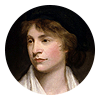 CAS CC 221: Core Social Science I: Making the Modern World: Progress, Politics, and Economics. Fall 2026; coursepage here. Applying careful readings of Western social, political, and economic thinkers between 1600-1900, this foundational course asks: How did “society” emerge as a distinctive object of political engineering, normative discourse, and social scientific inquiry? And what economic transformations helped shape theories of justice and social contract? This course works well as a companion to CC 222. Hub requirements: Writing-Intensive Course, Historical Consciousness, Social Inquiry II.
Undergraduate Prerequisites: First Year Writing Seminar (e.g., CASCC 101 or WR 120).
CAS CC 320: Extended Multimedia Encounters with Core Texts. Invites students to re-imagine Core texts in new, digital formats and contexts. Each section focuses on a particular Core text or texts to consider, reflect on and develop new mediations of the work. Prerequisite: Students must demonstrate previous experience of studying, performing, or otherwise engaging with the text on a sophisticated level, or must receive consent from the instructor. In Fall 2026, sections individually focus on: Confucian Analects; in Spring 2027, sections focus on Gilgamesh and Don Quixote. Hub requirements: Digital/Multimedia Expression, Teamwork/Collaboration, Creativity/Innovation.
Spring 2027 Term Courses
 CAS CC 102: Core Humanities II: The Way: Antiquity and the Medieval World. Spring 2027; coursepage here. Reading late antiquity and medieval texts in conversation, students compare and contrast pre-modern values of “The Way” one should live and asks: What is the best human life? This second semester of Core humanities focuses on oral and written communication to help students articulate and interpret the influence these texts have had globally, and a visit to the MFA Boston enables students to explore the rich interpretive visual traditions that follow these texts. Authors include: Aristotle, Confucius, Laozi, Virgil, Hrotsvitha, and Dante. We also read select New Testament Gospels and the Bhagavad Gita. Hub requirements: Oral and/or Signed Communication, Writing-Intensive Course, Global Citizenship and Intercultural Literacy.
Undergraduate Prerequisites: First Year Writing Seminar (e.g., CASCC 101 or WR 120).
 CAS CC 202: Core Humanities IV: Enlightenment, Romanticism, and Modernity. Spring 2027; coursepage here. In this fourth semester of Core humanities, we explore works of philosophy and literature that interrogate Enlightenment and Romantic ideals of social hierarchy, what it means to know, the relationship between subjectivity and reason, and how freedom can be found. Works by Voltaire, Kant, Austen, Shelley, the English Romantic Poets, Beethoven, Goethe, Whitman, Dickinson, and Douglass are included. We cross into the twentieth century with drama by Chekhov, the perspectivism of Nietzsche, and a critique of inequality by W.E.B. Du Bois. Hub requirements: Philosophical Inquiry and Life’s Meanings, Ethical Reasoning, Writing- Intensive Course.
Undergraduate Prerequisites: First Year Writing Seminar (e.g., CASCC 101 or WR 120). This is a reading-intensive course, and we also recommend taking CC201 first. See the reading list here.
 CAS CC 212: Core Natural Science II: Science, Reality and the Modern World. Spring 2027; coursepage via learn.bu.edu. Reality, Science, and the Modern World emphasizes scientific and mathematical reasoning to introduce students to the world of modern scientific questions and controversies. Students will also explore questions related to paradigm-shifting theories and the debates surrounding them. Topics include vaccines, special relativity, global climate change, modern neuroscience, and quantum mechanics. Through mathematical, theoretical, and analytical investigations, students will learn about the implications of discovery and the complexity of scientific “truth.” Students will learn how to analyze various approaches to argumentation, analyze data from credible sources, and evaluate and communicate results and conclusions in much the same way modern science is practiced. Hub requirements: Scientific Inquiry II; Quantitative Reasoning II; Critical Thinking.
 CAS CC 222: Core Social Science II: “Unmaking” the Modern World: the Psychology, Politics, and Economics of the Self. Spring 2027; coursepage here. Confronting the legacy of Enlightenment philosophy in the modern era, students encounter the postmodern psychological, political, and economic theories that expose the paradoxes behind freedom and individual rights ideologies framing slavery, colonialism, ethno-nationalism, capitalist exploitation, sexism, and institutional racism. This course works well as a companion to CC 221. Hub requirements: Philosophical Inquiry and Life’s Meanings; Social Inquiry II; Critical Thinking.
Undergraduate Prerequisites: First Year Writing Seminar (e.g., CASCC 101 or WR 120). This is a very reading-intensive course, and we also recommend taking CC221 first.
Core Digital/Multimedia Expression and Public Speaking Courses
CAS CC 318: Public Speaking. Four units. Fall 2026 and Spring 2027. How can you make a connection with an audience when you speak? How can you find ways to make a rhetorical argument? This course puts students in conversation with texts and ideas that guide them to find authentic voices when constructing narratives, arguments, and presentations to different audiences. Students may not receive credit for both CAS CC 318 and CAS WR 318. Hub requirements: Writing-Intensive Course, Oral and/or Signed Communication, Teamwork/Collaboration.
CAS CC 220: Multimedia Encounters with Core Texts. Two units. Allows Core students to reimagine a favorite Core text in a new, digital format. Each section has students develop a new mediation of a particular Core work to be made available to the Core community and beyond. Hub requirements: Digital/Multimedia Expression.
CAS CC 320: Extended Multimedia Encounters with Core Texts. Four units. Invites students to re-imagine Core texts in new, digital formats and contexts. Each section focuses on a particular Core text or texts to consider, reflect on and develop new mediations of the work. Prerequisite: Students must demonstrate previous experience of studying, performing, or otherwise engaging with the text on a sophisticated level, or must receive consent from the instructor. In Fall 2026, sections individually focus on: Confucian Analects; in Spring 2027, sections focus on Gilgamesh and Don Quixote. Hub requirements: Digital/Multimedia Expression; Creativity/Innovation; Teamwork/Collaboration.
Core Hub Cocurriculars
>> Related factsheet: “How Core courses satisfy the BU Hub”
HUB (not CAS!) CC 182: Co-curricular Core Docent Program. Spring 2026. Introduces students to ways of looking, thinking, and speaking about works of art. Through guest lectures, in-class activities, and museum events, students will discover a range of object-based teaching approaches and philosophies. Students will also develop their own abilities in public speaking, storytelling, facilitating conversation, and organizing learning experiences outside of the traditional classroom space. Students will leave the course with a deeper understanding of how to engage diverse communities through encounters with art and material culture. Prerequisite: completion of at least one CAS CC course. Hub requirements: The Individual in Community.
HUB (not CAS!) CC 192: Collegiate Publishing – The Core Journal. Spring 2026. This BU Hub co-curricular is designed to run as a hands-on publishing workshop. Over the course of the semester, students will produce The Journal of the Core Curriculum, the annual print anthology of the Core community. Throughout the stages of editorial and production work, we will consider how social and professional aspects of publishing mediate the relationship between individuals and communities. Prerequisite: completion of at least one CAS CC course. Hub requirements: Teamwork/Collaboration.