
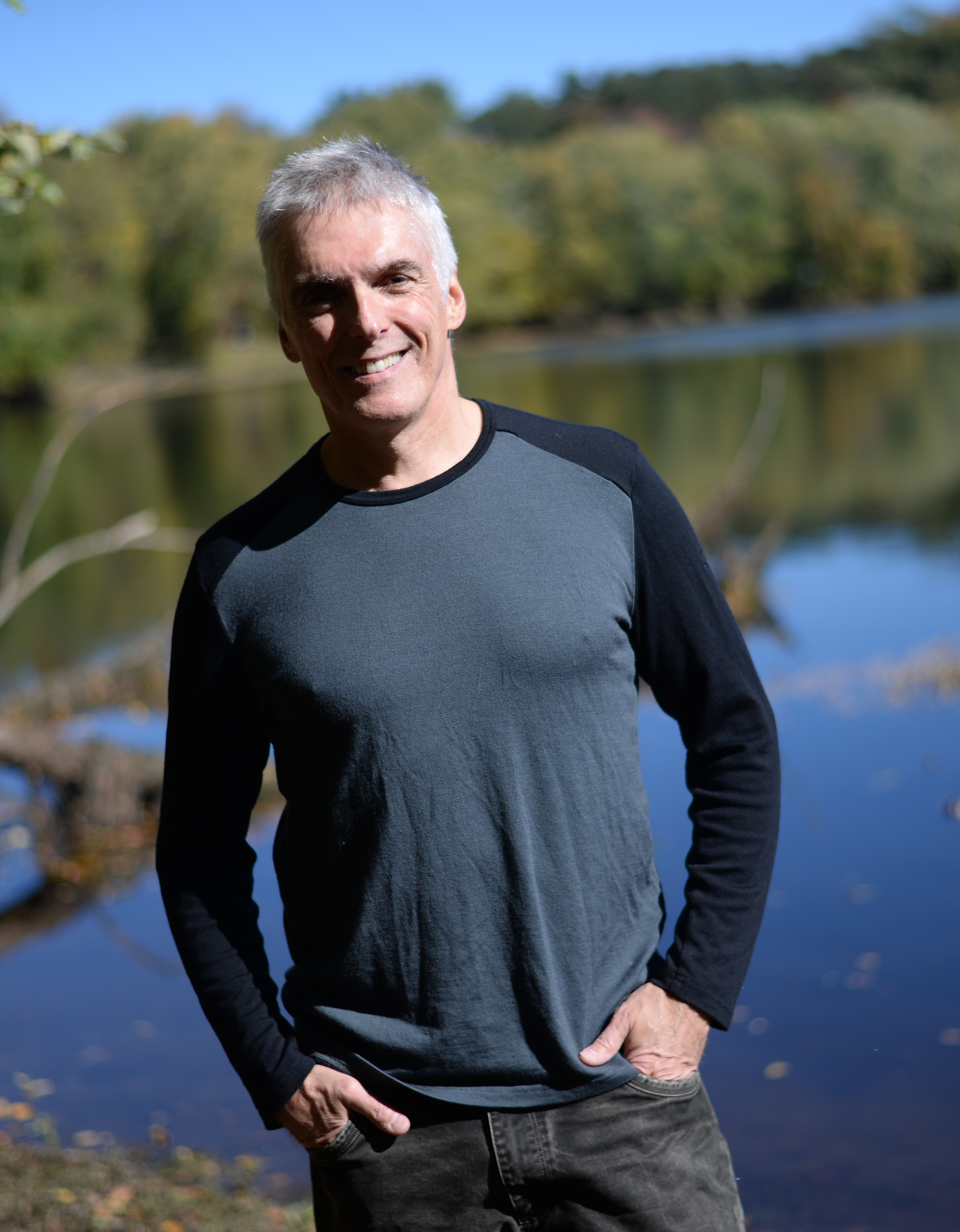
Boston noir fiction: Q&A with Jay Atkinson
Jay Atkinson, a lecturer at Boston University’s College of Communication, has taught writing to COM students for 18 years – leveraging his experience writing 10 books, both novels such as Caveman Politics and nonfiction such as Legends of Winter Hill, plus dozens of stories for magazines and newspapers.
His latest, Storrow Drive, is work of fiction, but it’s steeped in the deep reporting and research of investigative crime journalism. Named after the avenue running between Boston University’s campus and the Charles River, the book explores an FBI campaign to disrupt street gangs and drug dealing in the city.
COM spoke with Atkinson on the eve of the book’s publication on March 28.
Q&A
with Jay Atkinson
COM: What is the origin of the idea behind Storrow Drive?
Jay Atkinson: I had been writing crime stories related to gang interdiction. I did a magazine piece about how they use confidential informants, and then I got a subpoena while teaching class at another school. So then I was like, hmm, I’m onto something here. I thought I was doing individual stories about gang interdiction, but there’s a bigger story here. After more magazine pieces, I realized all the stories that I couldn’t tell because of the limitation of the magazine story. That’s a book.
COM: How did you get the kind of access you needed for a project like this?
Jay Atkinson: Unlike most journalists, I had complete access to the FBI gang task force, because I knew someone in the Boston FBI office. So I got to go see things that most journalists never see. So I had this access which included really funny, profane stuff. There’s danger. The people are characters in a movie. So said, “This is a book.” Well, it took three-and-a-half years.
COM: You’ve written both novels and narrative nonfiction. Why treat this story as a novel rather than nonfiction?
Jay Atkinson: I wrote nonfiction on this topic for Commonwealth Magazine, Boston Magazine twice, the (Boston) Globe maybe four or five times. I had already produced 18,000 words of narrative nonfiction. And I thought, now I’m going to use all the interstitial material, everything that happened, like, off the cuff or whatever, because that’s gonna be more the territory of a novel.
COM: Storrow Drive is steeped in Boston imagery and locales. Why is Boston such a fertile setting for this kind of story?
Jay Atkinson: Look at the famous neighborhoods in Boston, Revere, all the rough and tumble neighborhoods. Look at all the crime films that have been shot here. Like, Storrow Drive is sort of a section of the crime history of Boston.
COM: True crime and gritty crime dramas seem especially popular now. Why do you think that is?
Jay Atkinson: The thing that makes the modern sort of noir would be the good guys ain’t all good, and the bad guys are mostly bad, but not always.
COM: After writing ten books—five nonfiction and five novels—has your approach to teaching changed? What are you emphasizing with students today?
Jay Atkinson: I split my career with novels and narrative non-fiction. So I’ve had a double, life as a writer. But one of the things you learn from journalism is that the best stories are told in brief, simple and clear prose. And if you look at Storrow Drive compared to some of my other work, it’s sort of terse, like noir. Reminds me of watching masons down at Marsh Chapel. They exhume these broken pieces of slate after a storm, then they would have to replace them. They would put one on the ground, and stand back, and they would look at it. Just study the grain, putting the broken pieces together by sight and feel.


