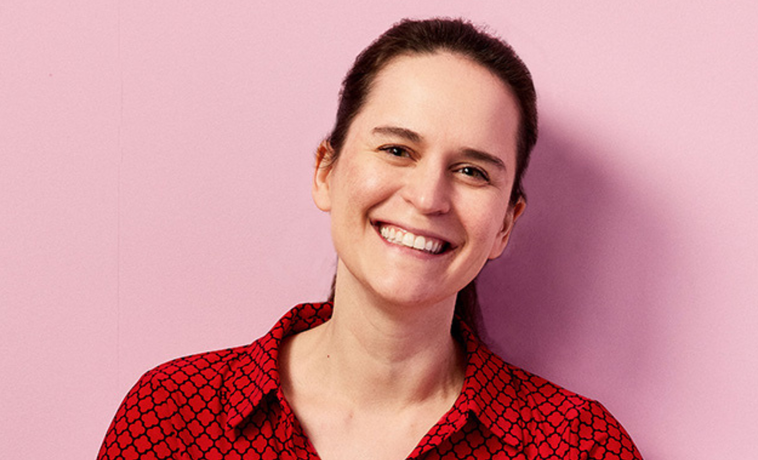
Photo/Steven Cao
Mentoring is a Two-Way Street: Students and Alumni Learn from Each Other
Philippines native Miguel Lukban (COM’25) had never interned or worked in the United States, and he wasn’t sure if his resume positioned him for the public relations roles he was targeting.
Stacey Gandler (COM’96) knew exactly how to help. She had volunteered with the College of Communication Career Services as a mentor, and counseled Lukban to present himself as a can-do candidate.
“Frame internships as a learning opportunity,” she told him. “Be someone willing to do anything and everything.”
During their meetings in the spring semester of 2025, Gandler—the managing director of public relations and brand ideation at Calcium+Company, a health care communications group—also critiqued Lukban’s resume. She suggested using the active voice to emphasize Lukban’s contributions and show agency.
When Lukban scored a job interview, he drew on the talking points he’d reviewed with Gandler and ultimately was hired at a Boston public relations firm. “The mentorship was a great way to get more information and understand how to look for a job here plus learn how to present myself and what to put on my resume,” he says.
The COM mentor program, which serves about 55 students annually, isn’t a boon only to mentees, says Colleen DelVecchio (CAS’92), a consultant who runs the program. “Alumni love to hear what’s going on with students, and they say their professional skills get better because mentoring helps them practice coaching and supervision skills.”
Mentor Will Nunnally (COM’08) was happy to share his experiences as a Georgia Public Broadcasting videographer and editor. He was also curious about the challenges COM students face as they enter the job market and scramble to keep pace with technological advances.
“Mentoring is a two-way street,” the Atlanta-area resident says. “I’ve been out of college for about 15 years, and I wanted to hear what students were working on and pursuing as careers. My expectation wasn’t that I would give information and not receive anything in return.”
The career ambitions of his mentees have ranged from jobs in film and TV to social media and advertising. In conversations over the course of a semester, they’ve sought Nunnally’s guidance on career paths and requested his feedback on their portfolios. He encourages them to build their social skills by participating in virtual COM mixers and to network extensively to build broad industry connections.
Mentors also model how to carve out a work-life balance in a world of 24-hour news cycles, and their work histories reassure students that career paths are rarely linear, says Heather Fink, director of COM Career Services.
Since launching in 2022, the COM mentorship program has made 261 student-alumni pairings. It began as a spring semester activity for juniors, seniors, and graduate students but now runs from November to March and welcomes sophomores. Organizers this fall debuted virtual sessions where students and mentors can meet before students request a mentor.
Placing students in internships at their mentors’ companies isn’t the program’s aim. Rather, organizers emphasize the value of forging connections and exchanging knowledge. Before Lukban was paired with Gandler, he knew nothing about health care communications. Now, he’s considering it as a career option.
“You should go into the mentoring program thinking about your career and what you can learn from your mentor as a whole,” he says. “But you should also take note of where else you could go.”