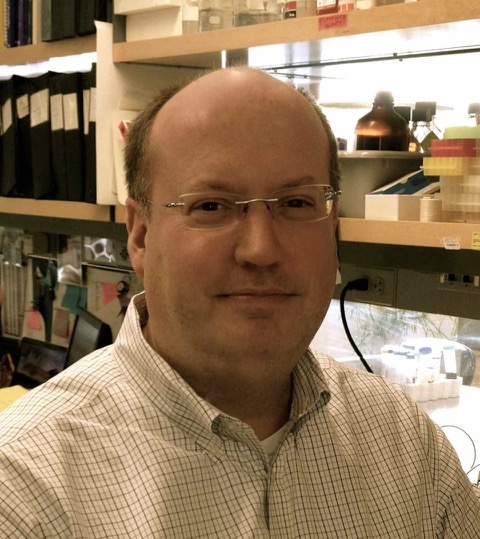
Senior Lecturer in Neuroscience and Biology
he/him
Current Research
Dr. Tullai is not currently accepting applicants for graduate study or postdoctoral appointments
Dr. John Tullai began his scientific career training at Mount Sinai School of Medicine with Drs. Marc Glucksman and James L. Roberts. There, he investigated the protein biochemistry, enzymology and cellular aspects of the regulation of the peptide-metabolizing enzyme EC 3.4.24.15, an enzyme with important neuroendocrine regulatory roles in mammalian reproductive control and cardiovascular function. He was the first to establish that the enzyme’s activity is regulated by PKA phosphorylation. Dr. Tullai also delineated its subcellular trafficking with novel fractionation methodologies.
Following these studies, Dr. Tullai was awarded an NIH Ruth L. Kirschstein National Research Service award as a Fellow in Dr. Geoffrey Cooper’s laboratory in the BU Department of Biology. These studies integrated experimental and systems biological/genomic methodologies to study the transcription regulation of phosphatidylinositol-3-kinase (PI3K)/Akt-mediated survival signals and induction of apoptosis in human glioblastoma multiforme cell models (GBM, among the most deadly forms of brain cancer).
During his tenure as a Research Assistant Professor with Dr. Cooper, Dr. Tullai expanded his interests and role in undergraduate education in the Department of Biology at Boston University. In addition to instructing Introductory Biology, Cell Biology and Carcinogenesis, Dr. Tullai accrued extensive laboratory teaching experience in the Systems Biology course, including authoring the course lab manual. Dr. Tullai also has significant experience in student mentoring, undergraduate research advising, laboratory safety supervision, and serving as a member of Ph.D., Master’s Degree and undergraduate Honors Thesis Committees. Dr. Tullai joined the Undergraduate Program in Neuroscience in 2019.
As an undergraduate STEM Educator, Dr. Tullai uses evidence-based pedagogy to introduce undergraduate Neuroscience students to real life Neuroscience research. His aims are to continuously employ the most effective learning methods and technologies to both the lecture classroom and the teaching laboratory.
Selected Publications
- Tullai JW†, Moss ME, Sepulveda SM, Brennan JF, Naya FJ, Cooper GM (2016) Role of GSK-3 in CREB-mediated transcription regulation, hypertrophy and survival in cardiomyocytes. In revision. PLoS ONE. †Corresponding Author
- Tullai JW, Graham JR, Cooper GM(2011) A GSK-3-mediated transcription network maintains repression of immediate early genes in quiescent cells. Cell Cycle. 10 (18): 3072-3077. Review Article.
- Tullai JW, Owens LJ, Tacheva S, Graham JR, Cooper GM (2011) AP-1 is a Component of the Transcriptional Network Regulated by GSK-3 in Quiescent Cells. PLoS ONE. 6(5): e20150.
- Graham JR, Tullai JW, Cooper GM (2010) GSK-3 represses growth factor-inducible genes by inhibiting NF-kB in quiescent cells. J. Biol. Chem. 285: 4472-4480.
- Terragni J, Graham JR, Schaffer ME, Tullai JW, Cooper GM (2008) The roles of forkhead and NF-kB in the transcription regulation of the phosphatidylinositol 3-kinase pathway. BMC Cell Biol. 9: 6.
- Tullai JW, Schaffer ME, Mullenbrock S, Sholder G, Kasif S,Cooper GM (2007) Immediate-early and delayed primary response genes are distinct in function and genomic architecture. J. Biol. Chem. 282: 23981-95.
- Tullai JW, Chen J, Schaffer ME, Kamenetsky E, Kasif S, Cooper GM (2007) Glycogen synthase kinase-3 represses cyclic AMP response element-binding protein (CREB)-targeted immediate early genes in quiescent cells. J. Biol. Chem. 282: 9482-91.
- Tullai JW, Schaffer ME, Mullenbrock S, Kasif S, Cooper GM (2004) Identification of transcription factor binding sites upstream of human genes regulated by the phosphatidylinositol 3-kinase and MEK/ERK signaling pathways. J. Biol. Chem. 279: 20167-77.