Laboratory Testing
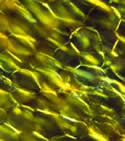 The sine qua non for the diagnosis of amyloidosis is a tissue biopsy staining positive with Congo red and demonstrating green birefringence under polarized light microscopy. Electron microscopy will also show a classical fibrillar appearance in the extracellular matrix.
It is important to avoid over-staining the tissue with Congo red as this may give false results. The technique of subcutaneous fat pad aspiration offers a simple and relatively non-invasive approach to the diagnosis of systemic amyloidosis and is positive in 70-80 % of patients with systemic amyloidosis. If the fat is negative, but suspicion of disease is high, a biopsy of an involved organ system (e.g., heart, kidney, or liver) may need to be done to make the diagnosis. An involved organ is positive nearly 100% of the time.
Physicians who would like a second opinion for case review, re-staining, or additional testing should submit a consultation request form with the relevant slides and/or tissue blocks to the Boston Medical Center Anatomic Pathology Department. Materials will be returned after evaluation is complete.
Request for second opinion must be submitted by the referring provider and accompany Amyloid Pathology Consultation Form. Address to send biopsy material is below:
Boston Medical Center
Department of Anatomic Pathology
670 Albany Street, 6th Floor, Admins
Boston, MA 02118
Phone: 617-638-5310
Sending Tissue Samples for Amyloid Histopathology
Abdominal Fat Aspirate Procedure
Abdominal Fat Aspirate Staining Technique
Amyloid Pathology Consultation Form