news
Notes on Contributors
Ecem Arslanay is an interior architect with a focus on stage and production design. Having completed the History, Theory, and Criticism in Architecture MA program at İstanbul Bilgi University, she is now a Proficiency in Arts student at Yaşar University, Izmir. She also writes essays, short stories, and poems for various publications.
Maria V. Garth is a Ph.D. student in Art History at Rutgers University studying modern and contemporary art and the history and theory of photography. She works at the Zimmerli Art Museum as a graduate curatorial assistant (Dodge Avenir Fellow) in the Department of Russian and Soviet Nonconformist Art.
Stephen Kerr is a doctoral researcher at the University of York, England. Based in Frankfurt, Germany, his research is focussed on modernist interiors and the material culture of the Weimar Republic.
Chloe Lovelace is an M.A. student at the Institute of Fine Arts, New York University, studying Roman and Late Antique art history, architecture, and archaeology.
Naz Önen works as a Research Assistant in Başkent University's Communication and Design Department. Program, After graduating from Bilkent University’s Media and Design MFA Program in 2018, she is currently a Ph.D. student in Hacettepe University's Communication Sciences.
Althea Ruoppo is a Ph.D. student in the Department of History of Art and Architecture at Boston University. She studies postwar and contemporary art, with a particular interest in German art, collective memory and memorialization, and artworks that reflect notions of precariousness and destabilize visual perception.
Constanza Robles is a Ph.D. student in the Department of History of Art and Architecture at Boston University. Her primary focus is American Art of the Twentieth Century, particularly Latin American art and its relation to North America and Europe through world fairs.
Laura Stowell is a Ph.D. student in Art History at the University of Washington where she focuses on post-war and contemporary feminist art. Her dissertation explores the work of artist Alina Szapocznikow in relation to issues of gender, performativity, affect, and the body in Poland and France during the 1960 and 1970s.
Kimberly Windham is a Ph.D. student of American cultural history at Florida State University. Trained as a visual-arts librarian, she is the former head of the Florida A&M University Architecture Library and past president of the Art Libraries Society, Southeast Chapter. Her research for this article was supported by a fellowship from the Library of Congress.
Fauxssilles for the Future: Cyanotype Expressions on Plastic Waste
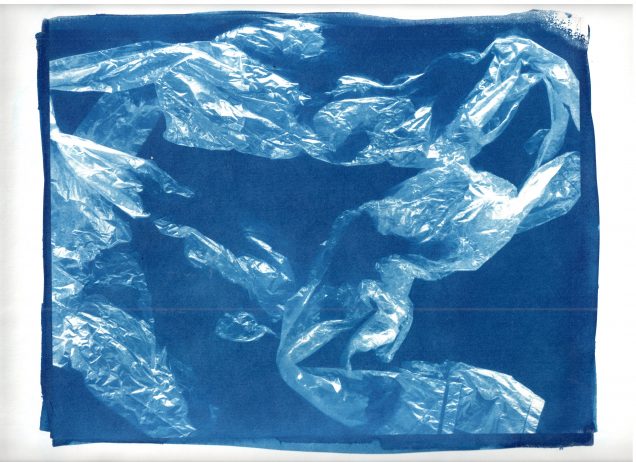
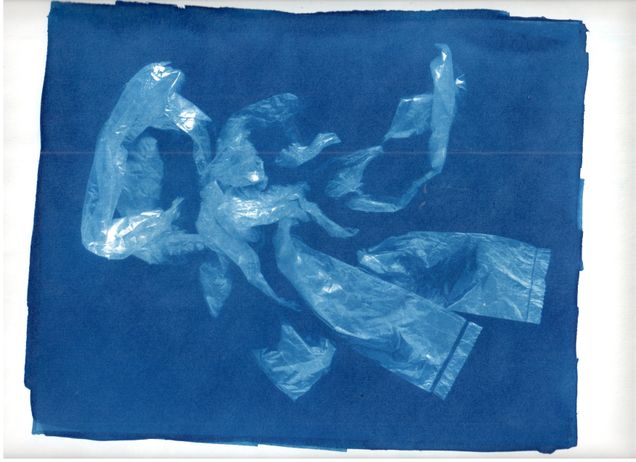
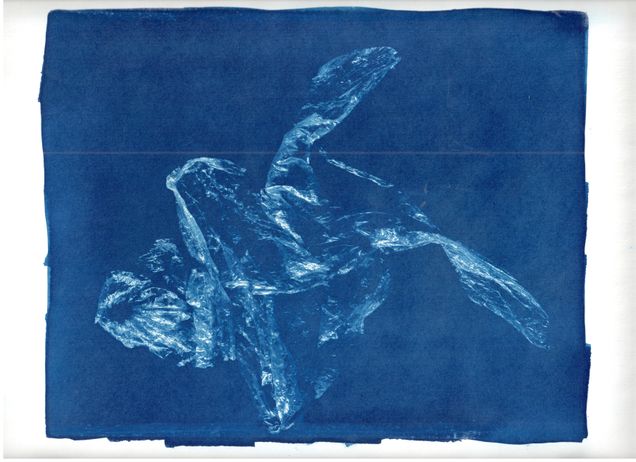

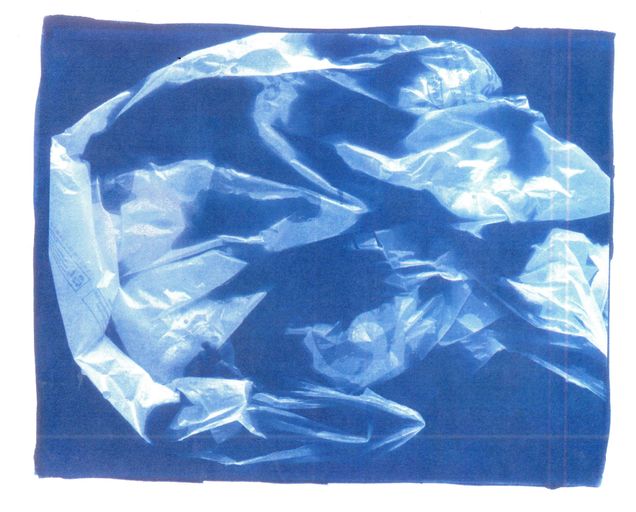

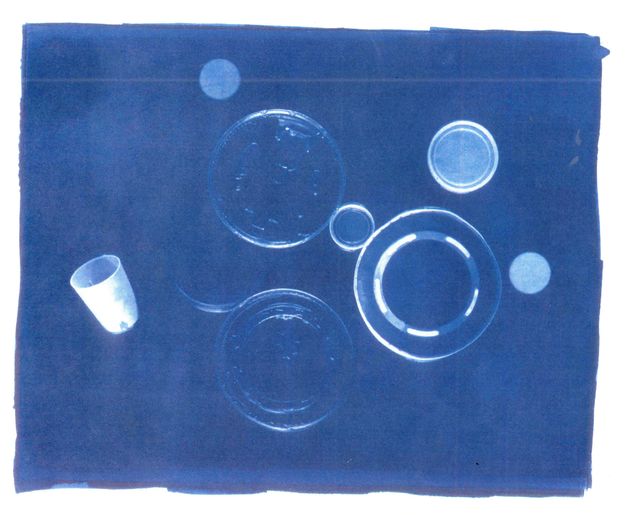
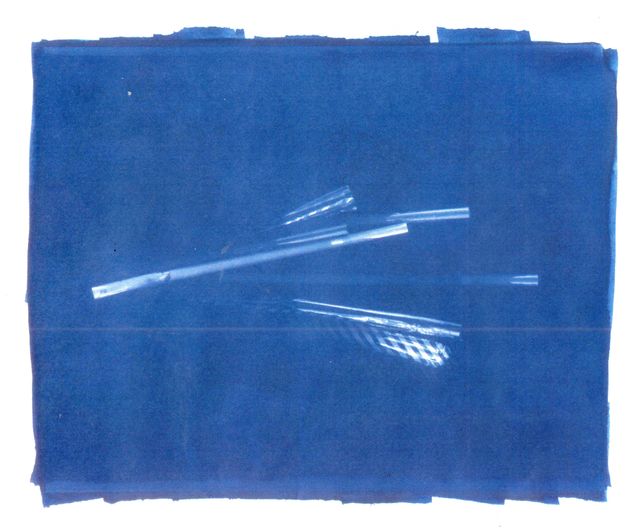

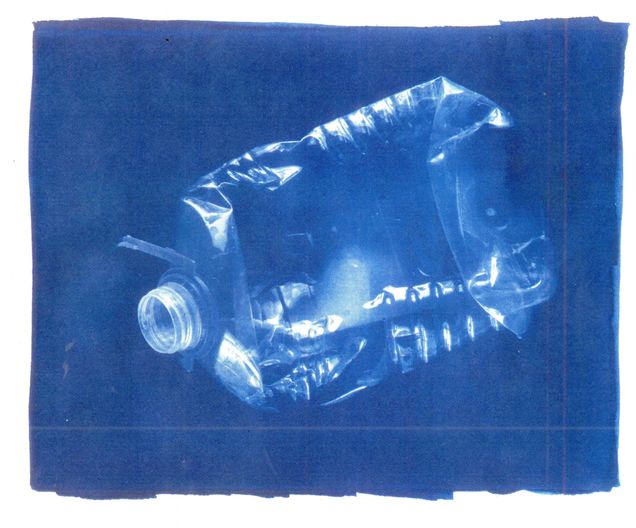
This project focuses on the emerging plastic waste problem in the marine environment through a photographic series. In order to create a visual reflection, the project highlights the relationship between found plastic objects and cyanotype photography. Cyanotype is most commonly known as technical “blueprints” and was also the technique of the first photographic book, made in 1843 by Anna Atkins. The photographed objects in this series were selected based on the Ocean Conservancy 2017 report, which details the most commonly found items on ocean shores. In my studio, plastic objects floating in cyan-blue spheres mimic the marine environment as a result of the Anthropocene.
The title “Fauxssilles” emphasizes the dual faux states of being. It refers both to the falseness of plastics’ expansion within the marine ecosystem around them, and to the fakeness of the photographed objects compared to real and natural fossils. In order to conceptually merge the photographed objects with their destined marine environment, digital negatives have been used instead of creating photograms. Thus the photograms illustrate floating, instead of the abstracted forms of two-dimensional exposure.
The photographs function as fossils conceptually since they both create and preserve traces. The project approaches the plastic objects with the consideration of a photograph as a “transparent window” to, or as an “evidence” of, reality. Considering the presence of a photograph is indicative of its subject’s absence, the project moves towards the concept of a fossil, where object and image portray one complete presence. “Fauxssilles” also refers to the object-subject parallelism of durability on a chemical level, as the cyanotype technique makes these prints (which are chemically durable for long periods) as resistant to decay as the photographed plastics (which are also highly durable unlike the biological organisms sharing the same marine environment). Both the print and the plastics can last up to thousands of years, merging the image and the material of a “Fauxssille” into one totality.
The creative process is inspired by Gestalt's figure-background principle, which also refers to this relationship. In this photographic series, fossils are referred memory carriers and the storytellers of the past life, echoing that there would be more plastic than fish in the oceans by the year 2050. Through these visually informative and chemically durable cyanotypes, “Fauxssilles” highlights the inevitable fate of plastic waste in the marine environment. The project tries to visualize the “faux” transference of memory. Photographs as souvenirs have the function to envelop the present within the past. Accordingly, by encapsulating lived moments of today for the archeologists of the future, the series offers a new way of visualizing the plastic waste problem in order to be critically evaluated.
Naz Önen
____________________
Living Inside the White Box: Dweller-arranged Interiors in the Earliest Modern Mass-housing Developments
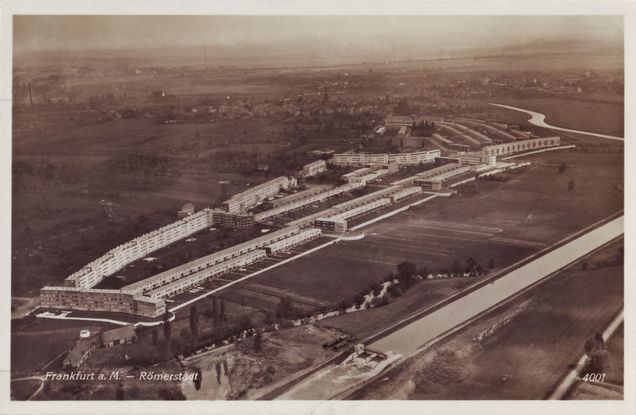
Known collectively by the name of their lead planner and architect, the eighteen Ernst-May-Settlements are residential developments containing almost 15,000 houses and apartments around Frankfurt, Germany (fig. 1). Constructed mainly between 1925 and 1930, they were a response by the recently-elected socialist government of the city to a housing crisis triggered by rapid population growth due to urbanisation, wartime industrialisation and the neglect of the housing stock during and after World War I. Being amongst the first modern mass-housing developments, they moved beyond the individual projects by collaborative groups such as Bauhaus into the practical business of providing decent-quality homes for the poorly housed working people of Frankfurt. May led a team of architects working for the city who were responsible for the process from town planning and domestic and public building design and construction through to the smallest details of fixtures and fittings and furniture design.[1]
These settlements are unique in the history of domestic interiors. For the first time, residents in a modern mass-housing environment had access to modern furniture; serially produced, designed with the size, layout and style of the houses in mind and made available at affordable prices by using the financial power of the city government (fig. 2).
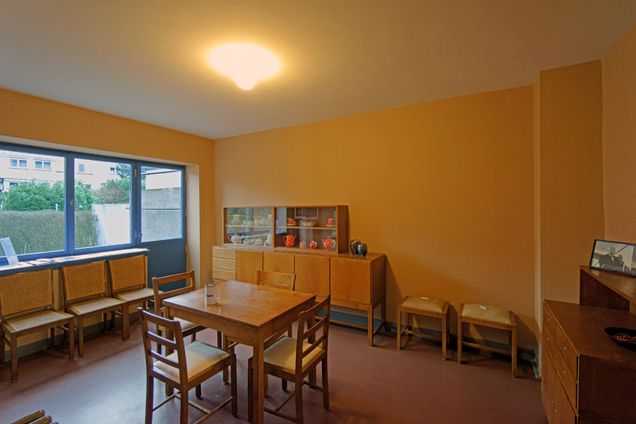
For art and architectural historians, the starting point for the analysis of domestic interiors has been an examination of images supplemented by a connoisseurial examination of objects considered significant by the researcher. This approach has inevitably led to a focus on noble and wealthy households, whose interiors have been recorded in paintings and from which there are extant inventories and valuable objects. Only in the last quarter of the twentieth century did sociologists and anthropologists move beyond this class barrier to examine the links between identity and domestic interiors in mass-housing contexts.
There has still not been a scholarly examination, however, of the intersection of the earliest developments, modernist design, and mass-housing; and the literature produced so far has focused on external design rather than the interiors. Initially, I sought to close this gap by interviewing families who had lived for many years in these early mass-housing settlements. I hoped to find photographs of family celebrations or special occasions for which the background would be as significant to my research as the individuals themselves. Locating long-term residents was not simple, but by attending residents’ association meetings, forum discussions, and exhibitions, I gradually built up a network of contacts. This group directed me to their friends, relations, and neighbors, who were early occupants of the developments. With a list of about fifteen, I felt confident that there were enough to go ahead with the project on this basis.
To date, I have interviewed ten residents, ranging from those in their nineties who have spent their whole lives in the settlements to others who remember their parents’ or grandparents’ houses. My work has been helped by the existence of a substantial group of residents whose families have remained in the same house for three or more generations, fostered by a strong sense of community and the introduction of inheritable tenancy rights after World War II.
While these interviewees have indeed provided me with some photographs, I was able to tap into a much richer seam of information about family connections to the location and about the provenance of objects still in their possession. Our discussions usually open with a description of the house in which they grew up--which is sometimes still their home--and how the space used to be furnished, as they remember it.
Residents also reveal attitudes and approaches to the interior arrangements of the interwar period, suggesting a broad spectrum of ways in which furnishings were acquired, inherited, crafted, re-worked and disposed of. An example can be found in the frequent references to furniture which had been hand-crafted by the interviewee’s fathers or grandfathers. As some of these makers were not trained carpenters, this indicates a longer tail of the tradition of handiwork found amongst the families of manual labourers than might be supposed in a modern, urban environment. Conversely, there has been little to suggest that boundless consumption, an issue which has been at the heart of the discourse on domestic interiors since the middle of the twentieth century, had an antecedent in these settlements.
The accounts of the residents have also drawn out a particular characteristic of domestic interiors which is central to their accounts of lived-in interiors; that they are in a constant state of flux but also offer a historical continuity between present and past generations. My revised research approach now draws on oral history methodologies, as a means of collecting information and to provide a critical framework to deal with issues such as the unreliability of memory and the extent to which interviewees can ever be objective observers in their own homes.
The domestic interiors of interwar mass-housing may seem to have passed into collective, rather than individual, memory. However, my work reveals that we are just on the cusp of that change and still have an opportunity to capture valuable art and architectural historical data, provided we are ready to act now and to employ a wider range of research and interpretative methods than have been adopted in the past.
Stephen Kerr
____________________
[1] For those interested in these lesser-known settlements in Frankfurt, I recommend reading Susan R. Henderson’s Building Culture: Ernst May and the New Frankfurt Initiative, 1926-1931 (2013) and viewing the settlements, as they were and as they are now, on the website of the Ernst-May-Gesellschaft, www.ernst-may-gesellschaft.de.
“A West That Never Was”: David Levinthal at the Smithsonian American Art Museum

The work of photographer David Levinthal is notorious for its “moral indeterminacy.”[1] For decades, Levinthal has photographed dolls, toys, and collectibles, using playthings to depict controversial themes. In 1996, Philadelphia’s Institute of Contemporary Art cancelled a planned exhibition of Levinthal’s “Blackface” (1995–98), a series of large-format Polaroid photographs depicting racist memorabilia. While the cancelled show was exhibited at an alternate location in New York City, no gallery or museum has ever mounted shows of Levinthal’s similarly controversial series “Porno” (1975–76) or “Mein Kampf” (1993–94).[2] Exclusion of the most problematic of Levinthal’s works from the exhibition American Myth & Memory: David Levinthal Photographs at the Smithsonian American Art Museum (SAAM) not only elides some of the difficult conversations surrounding the photographer’s work, but also presents a truncated view of his oeuvre. The vision at SAAM represents not that of the artist, but that of the curator, Joanna Marsh.
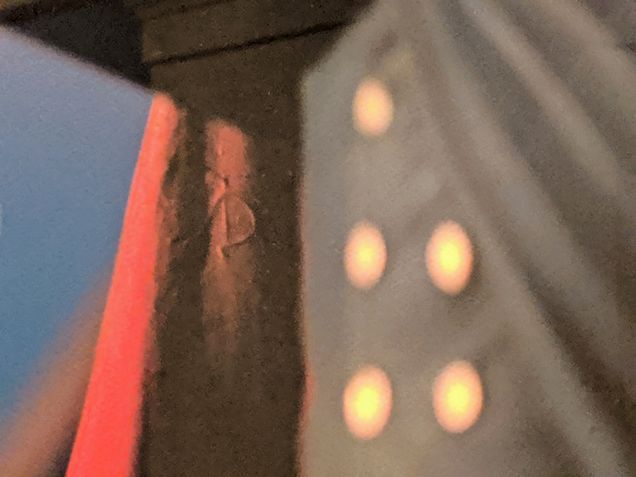
In this exhibition, Marsh succeeds in locating both conceptual continuity and formal contrast in the artist’s oeuvre. When Polaroid ceased to produce instant film in 2008, Levinthal transitioned from instant to digital photography, creating a formal rupture of medium. Still, his conceptual vision has remained remarkably consistent over time. This is particularly apparent in the photographer’s insistence on inserting himself into his images. In digital prints from the “History” series (2010–18), Levinthal is present not only behind the camera, but also within the frame. In Dallas 1963 (2013), the photographer appears twice, both as an outsize figure in the green background and as a reflection in the toy car’s front hubcap (fig. 1). In Washington Crossing the Delaware (2013), Levinthal’s first initial, a cursive “D,” is unmistakable on George Washington’s plastic cloak (fig. 2). The photographer’s presence within the frame allows him to function like the toy figures themselves, both observing and performing in the narrative. By juxtaposing these later works with the artist’s early Polaroids in which rückenfigur dolls contemplate their surroundings while still performing within them, curator Joanna Marsh skillfully reveals a theme that runs throughout Levinthal’s work. The pairing suggests the toys and their nuanced interaction with image-making serve as stand-ins for the artist (fig. 3).

Despite this curatorial coup, the signage framing the seventy-four Levinthal photographs on display invites visitors to do what the show itself ultimately does not (fig. 4): disentangle memory from myth, truth from legend, and fact from fiction.

American Myth & Memory claims to dismantle inaccurate and distorted national myths by closely examining them, blown up by many times their typical size. Instead, the exhibition perpetuates the accretion of myth about the American West at SAAM. Hegemonic visions of the West hang throughout the institution: George Catlin’s portraits of Native Americans, numbered as if specimens; Thomas Moran’s sublime western landscapes, asserted in luminous oils and devoid of indigenous inhabitants; Levinthal’s Hollywood-inspired cowboys, all white. These imperial visions act as “cultural filters,” images that shape perception.[3] Rather than successfully pointing out these filters, David Levinthal’s vision of the American West at SAAM perpetuates the image of “a West that never was,” ensuring that it “always will be.”[4]

Kimberly Windham
____________________
[1] Sarah Boxer, “Hardly Child’s Play: Shoving Toys into Darkest Corners,” The New York Times, January 24, 1997, https://nyti.ms/2IYqwas.
[2] David Levinthal, “Exhibitions,” accessed November 11, 2019, http://davidlevinthal.com/exhibitions/.
[3] Anne F. Hyde, “Cultural Filters: The Significance of Perception in the History of the American West,” The Western Historical Quarterly, no. 3 (1993): 351–74.
[4] David Levinthal, “Conversation with Artist David Levinthal,” interview by Joanna Marsh, Smithsonian American Art Museum, Washington, D.C., June 7, 2019.
Revisioning the Dead Body: Green Death
Are we human? With the aim of observing the invention of the “human” category in historical layers, the Third İstanbul Design Biennial (2016) regarded the simple yet bizarre question as simultaneously urgent and ancient. Beatriz Colomina and Mark Wigley, curators of the Biennial, conducted an archeological excavation that extends from the smallest subatomic level to the furthest point in outer space, where Voyager—the probe advancing one-million miles every day since 1977—has reached. As their archeological site, they have selected that of “human,” and all that it touches. This infinite stretching of the human sphere was the subject of the iconic 1977 Powers of Ten video by Ray and Charles Eames, zooming 1016 meters inwards and 1024 meters outwards. The Powers of Ten are actually the powers of the human, with all its ascending (and descending) skills.
As Colomina and Wigley point out, design is the reverse operation of archeology: it looks forward for all possible futures, whereas archeology tries to retain the possible pasts. [1] But to compile an anthology of all possible futures ever dreamt of, one must consult archeology. Instead of focusing on the last two years of design, this biennial focused on the phenomenon of design—which is the same age as Homo sapiens. It examined the human as an entity who lives in its own design “like a spider lives inside the web constructed from inside its own body.” [2] Stretching from the human’s two-second-old social-media representations of itself to its two-hundred-year-old industrial design adventure, the biennial contained the entire two-hundred-thousand-year-old human experience on earth. By becoming a multimedia documentary of the human, the 3rd İstanbul Design Biennial was liberated from biennials’ two-year protocol. Perceiving design as a geological layer on earth, the biennial indicated that our daily lives consist of the “experience of thousands of layers of design that reach to outer space but also reach deep into our bodies and brains.”[3] All is designed, “from our carefully crafted individual looks and online identities, to the surrounding galaxies of personal devices, new materials, interfaces, networks, systems, infrastructures, data, chemicals, organisms, and genetic codes.”[4] There is no place design hasn’t touched. It has permeated the everyday circulation of organic and synthetic systems. The heat, movement, and chemistry of all water has been affected.[5] Even the most ordinary breath taken in a city has an “ingredients” list, one likely containing pasta-water vapor, deodorant, fly-repellent spray, and smoke.
In the little book published as a part of the biennial by Lars Müller Publishers, there is a photograph by Chris Jordan of a dead bird body washed up onto the shore on a reef in the North Pacific.[6] It also has an ingredients list: plastic-bottle caps, plastic-fork pieces, dowels, and plastic-bag remnants. It comes as no surprise that many species face habitat loss and extinction due to environmental pollution and overhunting—realities designed by humans. As the biennial manifesto attests, “design is even the design of neglect,”[7] and this type of design can take interesting forms. There are, of course, more explicit forms of human-designed domination. Like other omnivorous species, the human feeds on animals. Unlike other omnivores, it also turns dead animal bodies into products. In other words, the human designs them. With a toolset it has perfected, the human even designs alternatives to the operation of hunting. Homo sapiens breeds the animal it utilizes, conserving time and energy in food production, while designing operations to prevent other animals from hunting those bred animals. It even breeds different animals to herd those to be utilized and develops chemicals to harm animals that might in turn harm the food production.
The newest operation designed by the human is artificial intelligence to manage all its other operations. Farms have turned into digitized and even digitalized industrial settings that use the animal body as raw material. That body might have to go through genetic modifications in order to become a desirable product with a high profit margin—the process of designing the dead animal body starts before it is born. Once born, it receives love and heat from incubators. But while growing up, the animal body is also exposed to artificial illumination that stimulates its pituitary gland and speeds up the process of reaching sexual maturity and fertility, tricking the body into utilizing its full genetic capacity. After reaching sufficient growth, it is killed, plucked, broken into pieces, and packaged. Robots (humans’ faithful terminators) then create schnitzel packages out of dead chicken bodies. For those few tasks that robots can’t accomplish, “unqualified” human workers are used, who then imitate the robots with their bodies and souls. For many city dwellers, besieged by human artifice and fed by grocery products, the first image that the word “chicken” alludes to is this packaged version of its dead body, or even just the body after it is cooked.
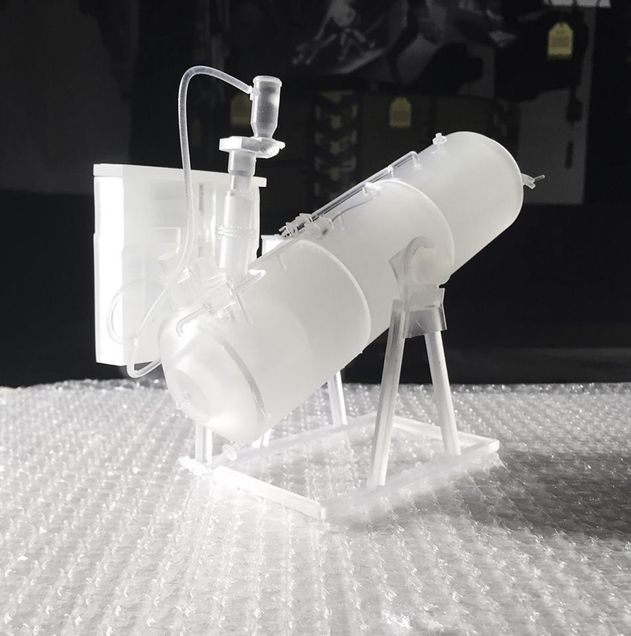
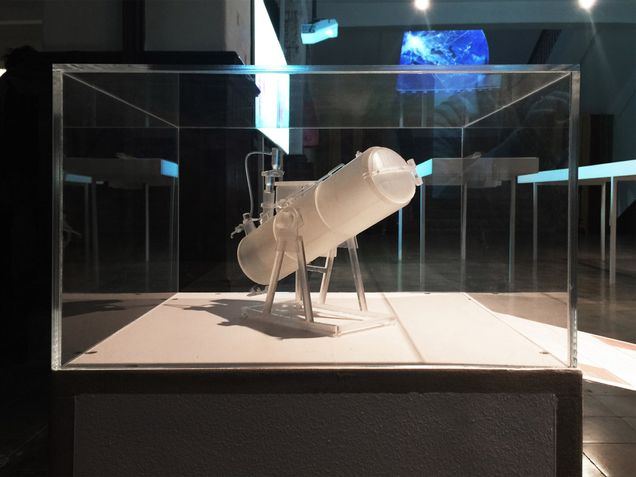
What about the dead human body? In an age of maximum efficiency, dead humans turn into something to be utilized as well: bio capital. (Or bio waste?) In a rather concealed area of the biennial’s large installation “Going Fluid: The Cosmetic Protocols of Gangnam” (2016), the architect duo Common Accounts placed a small-scale model of the LT-28, or the Alkaline Hydrolysis System for Human Disposition. This system dissolves the human body in a lye solution into a nutritious mixture for plants, leaving otherwise only bone fragments. By replicating the normal decay of the human body within just a few hours, this new technology goes beyond just introducing a new death custom—it presents a brand-new understanding of time after death. The sudden transmutation of the dead human body into a fertile object asks questions about the status of that body at a pivotal moment in humanity’s history of exchanges with nature. Originally an animal-waste service, alkaline hydrolysis is now employed by Homo sapiens to dispose of the human body not just for its own benefit, but for the benefit of all organisms. Also known as resomation, bio-cremation, or green cremation, alkaline hydrolysis has a far smaller carbon footprint than regular cremation. It is the eco-friendliest post-mortem option yet—except, perhaps, Buddhism’s sky burial, where the body is broken up and fed to vultures until there are only bones left, or Zoroastrianism’s Tower of Silence, a structure designed for bodies to be left to decompose and be consumed by scavengers. Compared to these options, the modern alkaline-hydrolysis process is perhaps quieter and cleaner, although only based on the sterile contemporary conceptions of hygiene. Regardless, whether under the soil, above in the sky, or encased in steel machines, human bio capital is food for other organisms.
The limited capacity of current burial and cremation practices and the rising anxiety regarding the adverse environmental effects of most traditional body-disposal methods has pushed humans to consider alternatives like this one. If the alkaline-hydrolysis process becomes prevalent, there will be nutritious liquids systematically flowing and spreading everywhere, leaking into the terrestrial globe, into our space and our living beings—a brand new layer of design, still in flux, demanding interrogation in varied spheres of meaning. This is exactly why Common Accounts used the phrase “Going Fluid” for their installation title. It explored the alkaline-hydrolysis process but also the growth of body-designing in the titular Gangnam neighborhood. As the home base of South Korea’s thriving plastic-surgery industry, Gangnam’s urban texture is being redesigned in order to accommodate a human population that is also being surgically redesigned. As another method of body processing, alkaline hydrolysis is similarly redesigning its immediate environment, changing how humans dispose of dead human bodies and how we organize the spaces of our cities.
If cemeteries are considered as functionless spaces that contradict with the hygienic ideal of the modern city, it is also possible to think of alkaline hydrolysis as a continuity of the “good design” tradition. A world released from religion makes it possible. Theorist Michel Foucault claimed that the category of time was released from its religious sanctity in the nineteenth century, though the desanctification of space has been more obstinate.[8] Cemeteries remain contested, semi-sacred spaces—or, as Foucault terms them, heterotopias. This partial desanctification allowed for cemeteries to be moved from the heart of the city, next to churches, and into the periphery, as death increasingly becomes viewed as a disease, something that could be transmitted to the living.[9] Is alkaline hydrolysis the final stage of this desanctifying process? Still—it must be acknowledged that our world faces an increasing lack of space. Even Foucault draws attention to the practical problems of body classification, storage, and circulation in modern cities.
The increasing obsession with hygiene, the expanding metropole population and corresponding lack of space, the dissolution of certain spaces as sanctified, over-industrialization, the obsession with maximum productivity, and ever-growing ecological concerns might explain why a design like the alkaline-hydrolysis process has emerged. Nonetheless, potent criticisms remain: From a religious standpoint, is the process disrespectful to human bodies? The consideration of human bodies as waste, excess, or disease is also controversial in secular schools of thought, which place the human body at the center of the universe. A thousand years before Da Vinci’s Vitruvian Man, done in 1490, there was Vastu Shastra, a scientific piece in Sanskrit, which viewed the human body both as microcosm and macrocosm and took it as a base to decide on the location, function, height, and construction order of the construction elements.[10]
When considered as part of the “human-centered” design approach, alkaline hydrolysis is radical. The human’s newest design might be an important sign of a paradigm shift regarding the status of the human body. Can turning fresh human corpses into plant food supplant the transformation of fossils into petroleum-based products? If design is indeed the reverse operation of archeology, it should keep excavating for better futures, no matter how gloomy the contemporary setting might be.
A longer version of this essay was published in Turkish at Istanbul-based online publication Manifold on April 4, 2017: https://manifold.press/olu-beden-tasarimi-yesil-olum
Ecem Arslanay
____________________
[1]Beatriz Colomina and Mark Wigley, Are We Human? Notes on an Archeology of Design (Zürich: Lars Müller, 2016), 10.
[2]Ibid., 9.
[3]Beatriz Colomina and Mark Wigley, “Theme: The Design of the Species: 2 Seconds, 2 Days, 2 Years, 200 Years, 200,000 Years,” Are We Human?, 3rd İstanbul Design Biennial, accessed November 7, 2019, http://arewehuman.iksv.org/exhibition/.
[4]Ibid., 9.
[5]Ibid., 12.
[6]Ibid., 14
[7]Colomina and Wigley, “Theme: The Design of the Species," http://arewehuman.iksv.org/exhibition/.
[8]Michel Foucault, “Of Other Spaces, Heterotopias,” trans. Jay Miskowiec, Architecture, Mouvement, Continuité, (October 1984): 1–2.
[9]Ibid., 5–6.
[10]Colomina and Wigley, Are We Human? (Zürich: Lars Müller, 2016), 146.
“Spolia: Transcripts of the Stones of the Little Metropolis”
Makryiannis Wing of the Gennadius Library, American School of Classical Studies at Athens, Athens, Greece
September 10, – November 2, 2019
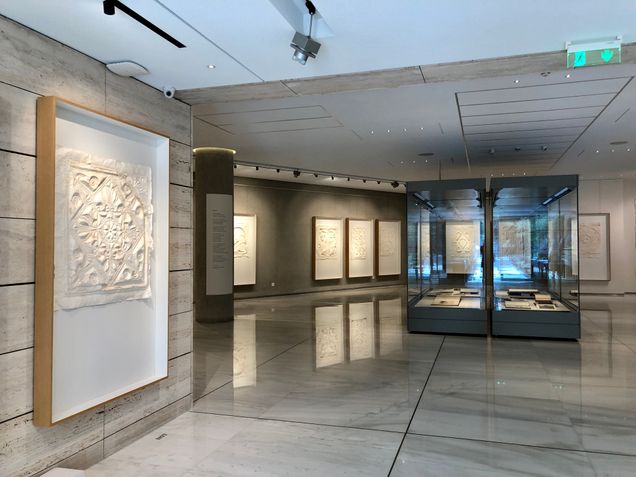
Housed in the Gennadius Library of the American School of Classical Studies at Athens, Nora Okka’s “Spolia: Transcripts of the Stones of the Little Metropolis” (Fig. 1) brings new life to the relief sculpture on the church colloquially known as the Little Metropolis, so named because of its towering neighbor, the Metropolis Church.
The Little Metropolis (also known as the Church of Agios Eleftherios or the Panagia Gorgoepikoos) was built sometime between the 12th and15th centuries. Although Athens is full of monuments both grander and more ancient, the Little Metropolis boasts a unique architectural quality – it is built entirely out of spolia, or reused materials (Fig. 2). Okka, an artist and architect currently based at the Institute for Advanced Study in Princeton, highlights these reused materials as the focus of her artistic enterprise. For this exhibition, Okka made what are called “squeezes” of the church reliefs, which are displayed throughout the gallery space (Fig.3). Traditionally used to document epigraphy at archaeological sites, squeezes are made by hammering layers of paper against stone to create a copy of the relief. There is a tenderness towards the church that is evident in Okka’s careful documentation of the reliefs. A close observer will notice smatterings of surface dirt and rocks from the church on the squeezes themselves, brushed across the peaks and valleys of the reliefs. One can easily imagine the diligence and care that Okka had to take to create successful squeezes. It is an arduous process that requires a great deal of strength in order to properly hammer the paper; focus as to not damage the original stone; and a sensitivity to the object itself so that the artist can reproduce its relief in an honest way.


At first glance, the exhibition strikes the visitor as a repetition of white: each squeeze appearing plaster-like in its white mount and wooden frame, reflected upon the marble floor of the I. Makryiannis Wing. The surprise comes when you look closely at each individual squeeze. Each has its own texture, covered in relief both high and low, and allows the visitor to think about the reliefs on their own merit, divorced from the architectural program of the church for the first time since the Little Metropolis was built (Fig. 4). Being able to process the reliefs as distinct objects is a transformative experience, allowing one to think about the life of the spolia prior to its inclusion in the church: as part of a funerary stele, temple, or doorway. Simultaneously, the viewer also is faced with the competing idea of the squeeze as an original work of art. It copies the relief, but does not exactly reproduce it, as it shows the work in negative.

In the center of the room, visitors can look at archival material from both the ASCSA’s own archives and from the Benaki Museum, which shows images of the church from the 19th century onward, ranging from architectural plans and photographs to an 1890 watercolor by artist Mary Hogarth (Fig. 5). These images serve to both place the visitor within the context of the church and as a tool to place the reliefs, seen in negative on the gallery walls, on their Byzantine building. More than that, the archival material functions as a lens, illuminating how this building has been seen over time. Often these images have the same perspective on the Little Metropolis—a slightly askew picture of the front of the building, surrounded by either people or plants or construction. Sometimes, they show independent spolia, prompting an eagle-eyed visitor to find its imprinted counterpart in the exhibition. Consistently, however, they are able to demonstrate both the persistent, if sometimes repetitive, nature of interest in the church and the durability of the Little Metropolis. as a living monument in the center of Athens.

Chloe Lovelace
Alina Szapocznikow: To Exalt the Ephemeral, 1962-1972
Hauser & Wirth, New York City
October 29, – October 26, 2018
“My gesture is addressed to the human body, ‘that complete erogenous zone,’ to its most vague and ephemeral sensations. I want to exalt the ephemeral in the folds of our body, in the traces of our passage.” - Alina Szapocznikow, March 1972 [1]
So opens Hauser & Wirth’s first solo exhibition featuring Alina Szapocznikow (1926-1973) since beginning to represent her estate in May 2018. Concentrating on the last decade of her life, which was spent between Poland and Paris, and including works from the Ursula Hauser Collection, Szapocznikow’s estate, and private collections, the exhibition presents a rich glimpse into the work of an artist well known in her native Poland but only beginning to be appreciated by a broader international audience.
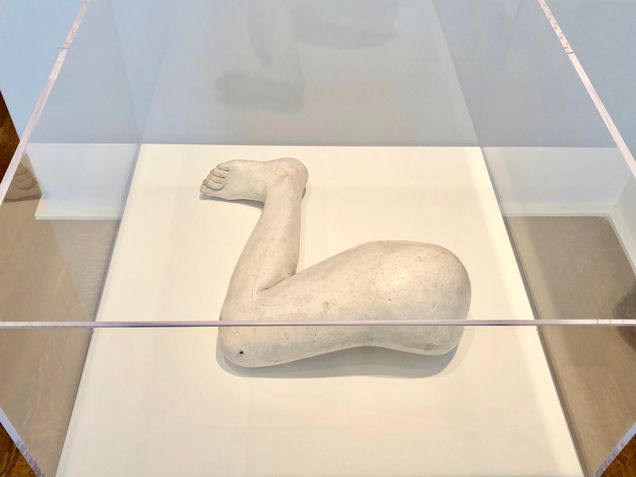
Adjacent to the opening wall text, in a minimal white vitrine is Noga (Leg), 1962, (Fig. 1) the artist’s first foray into casting from her own body. This revelation resulted in casts of lips, breasts, and bellies, both hers and friends’ that appear in many of the works on view in seven rooms over the gallery’s three floors. The use of her own body as a material, fragmented and eroticized, connects Szapocznikow to the “radical narcissism” of proto-feminist art of the early 1960s, and has also led to a biographical reading of her work.[2] As a Holocaust survivor who battled tuberculosis and eventually died of breast cancer, reception of her work outside of Poland has largely focused on her biography.[3] Recent critical attention, including this exhibition, demonstrates that while her work is sometimes hauntingly evocative of mortality, it also poses questions on subjects ranging from sexuality to commodity culture in post-war Poland and France and offers more than an excavation of personal trauma.[4]
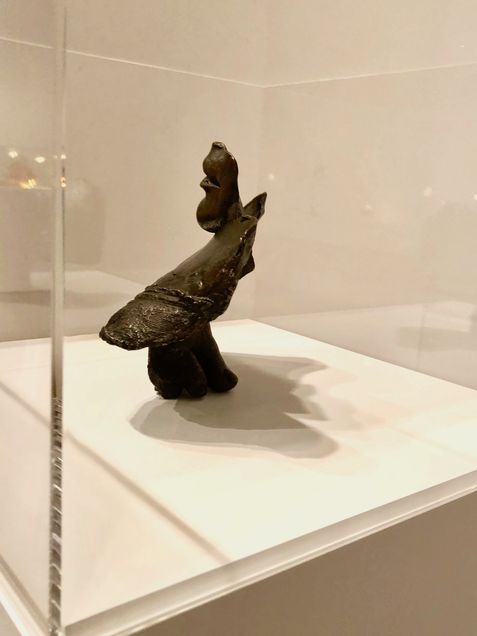
While the exhibition is elegantly installed, some works are difficult to see from behind, obstructing our access to their three-dimensionality. In the second of three rooms on the first floor, the small bronze Autoportret II (Self-portrait II), 1966, features what seems like a solid support for cast lips and cleavage from the front that reveals itself to be an unsettling partial cast of a foot from the back (Fig. 2). Surprising oscillations between humor and horror, tenderness and violence, beauty and abjection occur throughout the exhibition as sculptures appear to shift in form and affect as one moves around them.
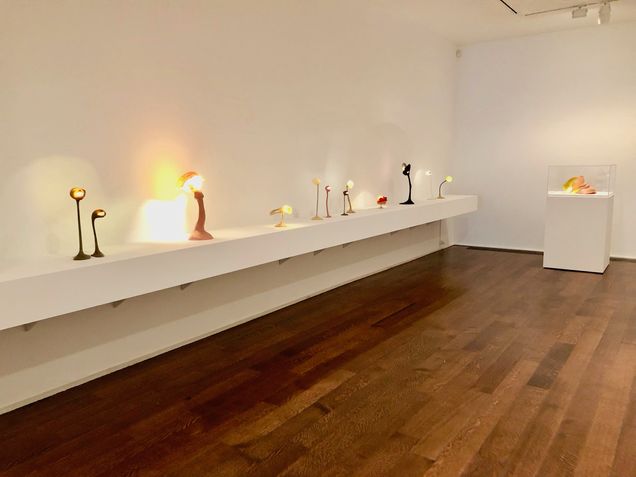
The second room also features a row of functioning lamps made of colored polyester resin. Mouths and breasts suspended on delicate stems like mutant flowers, exemplifying resin’s versatility: sometimes opaque as plastic, other times translucent as skin (Fig. 3). The serial display suggests traditional sculpture’s fraught relationship with mass production, connecting Szapocznikow to the thematic concerns of European Pop art. With the lamps and a series of bellies made into polyurethane cushions, one of which is on view on the third floor, utilitarian household items are transformed into uncanny examples of the grotesque objectification of the female body.

The four rooms of the two upper floors emphasize Szapocznikow’s experimentation with media, ranging from a series of conceptual black and white photographs of masticated chewing gum; to Duchampian sculptural combinations of cement and car parts; to amalgamations of photographs and fibers embedded in resin. Lingerie makes an appearance (Fig. 4), as do cigarette butts, all are intimate parts of the artist’s everyday life playfully suspended in resin and forever given the status of artistic objects.
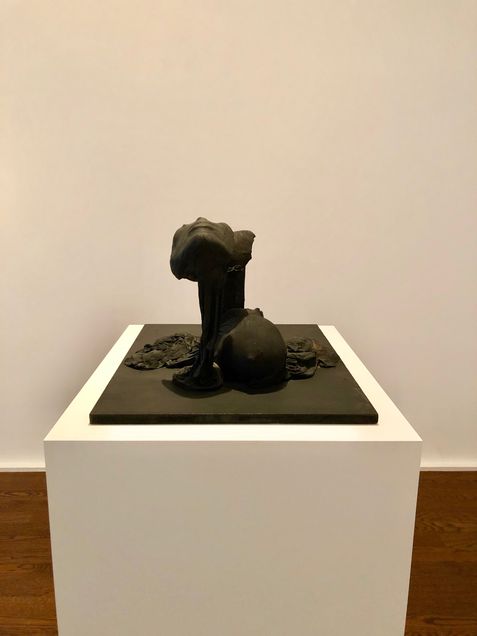
The artist’s drawings, some digitized and made available on an iPad in a small room of archival material, attest to her persistence in trying and failing to materially register the inherently ephemeral “traces of our passage.”[5] This powerful exhibition warrants an extended visit to experience Szapocznikow’s remarkable body of work—a series of affectively complex and aesthetically challenging explorations—that, like so many artists left outside the Western, male-centric canon and only “rediscovered” in recent years, has been long overlooked.
Laura Stowell
____________________
[1]Wall text, Alina Szapocznikow: To Exalt the Ephemeral, 1962-1972, Hauser & Wirth, New York, October 29-December 21, 2019. Quoted from an Untitled artist statement sent from Alina Szapocznikow to Pierre Restany, March 27, 2019, reproduced in Alina Szapocznikow: Sculpture Undone, 1955-1972 (New York: Brussels: Museum of Modern Art: Mercatorfonds, 2011), 28.
[2]For an analysis of this idea of “radical narcissism” see Amelia Jones, “The Rhetoric of the Pose: Hannah Wilke and the Radical Narcissism of Feminist Body Art” in Body Art: Performing the Subject (Minneapolis: University of Minnesota Press, 1998) and Rebecca Schneider, The Explicit Body in Performance (London; New York: Routledge, 1997).
[3]For a discussion of the critical reception of Alina Szapocznikow’s work see Joanna Mytkowska, “From Sculptures to Awkward Objects: A Short History of the Changing Reception of the work of Alina Szapocznikow,” in Elena Filipovic et al. Alina Szapocznikow: Sculpture Undone, 1955-1972 (New York: Brussels: Museum of Modern Art: Mercatorfonds, 2011), 122-135.
[4]Recent exhibitions include: “Alina Szapocznikow. Human Landscapes,” at The Hepworth Wakefield, United Kingdom in 2017; Alina Szapocznikow: Awkward Objects” at the Museum of Modern Art Warsaw in 2011; “Alina Szapocznikow: Sculpture Undone: 1955-1972” which traveled from the Wiels Center in Brussels to the Hammer Museum in Los Angeles and the Museum of Modern Art in New York from 2011-2012, among others. All produced catalogues with new scholarship on the artist, as will this exhibition at Hauser & Wirth.
[5]Wall text, Alina Szapocznikow: To Exalt the Ephemeral, 1962-1972.
Women Take the Floor

Museum of Fine Arts, Boston
September 13, 2019 - May 3, 2021
Extreme times call for extreme heroines.
-Betye Saar
At the Museum of Fine Arts, Boston, visitors are drawn into the third level of the Art of the Americas Wing by a number of converging speech bubbles featuring provocative statements by radical women thinkers and makers, including 93-year old Betye Saar, whose work is finally getting attention from major museums.[1] This provides a fitting entry point for the exhibition Women Take the Floor, which contends with “the dominant history of 20th-century American art by focusing on the overlooked and underrepresented work and stories of women artists.”[2]
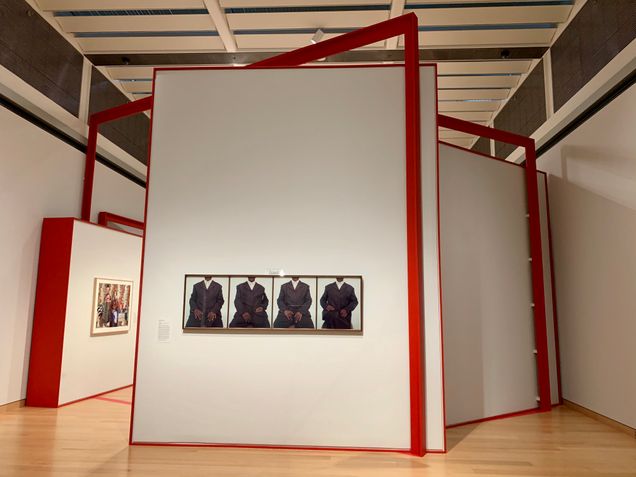
As one makes one’s way into the main gallery space, comprised of portraits of women by women, one sees Alice Neel’s painting, Linda Nochlin and Daisy (1973) (Fig. 1). This encounter sets the tone of what’s to come.[3] An accompanying video features Nochlin discussing the portrait, allowing her voice as a feminist art historian to flow through the exhibition. She was well known for her 1971 essay “Why Have There Been No Great Women Artists?,” where she discusses possible answers for said gender disparity, including issues of class and institutional discrimination. In spite of these forces, Nochlin argues that women can capitalize on their outsider position to unveil the fragility of the establishment.[4] As Lorna Simpson’s challenge to stereotypical notions of gender makes clear, the hegemonic narrative is in an ongoing process of destabilization of which this exhibition aims to be a part (Fig. 2).
Organized on the occasion of the 100th anniversary of the 19th Amendment to the U.S. Constitution, which granted white American women the right to vote, and the 150th anniversary of the MFA’s founding, Women Take the Floor signals the museum’s recognition of its own inconsistent history of supporting women artists. Mining the collection, Weems Senior Curator of American Decorative Arts and Sculpture, Nonie Gadsen and her curatorial team position the show as a necessary corrective to previous exhibitions and collecting practices that have neglected women artists. In keeping with the museum’s larger mission to advance equity, diversity, and inclusion, museum staff selected more than two hundred works by nearly one hundred women from the last century, many of them historically overlooked and underrepresented.
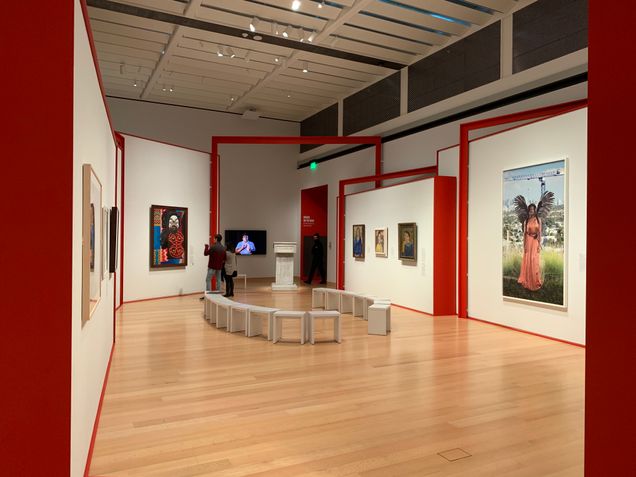
Moving further into the core gallery, just behind Simpson’s “female” portraits, viewers are struck by a fractured installation of walls of uneven size—far from the traditional white cube—framed in vivid red paint (Fig. 3). They recall the provocative graphic aesthetic of Barbara Kruger, who is known for layering white Futura Bold typeface against red text bars over found imagery.
Yet Kruger’s Untitled (You Construct Intricate Rituals) (1981), which entered the MFA’s collection in 1993, is strangely absent from this reinstallation—or “takeover”—which seems like a missed opportunity given the MFA’s appropriation of her iconic aesthetic. Highlights of this room include Frida Kahlo’s dignified double-portrait of Mexican-working class women and Andrea Bowers’ large-scale photograph of black trans-feminist activist CeCe McDonald.
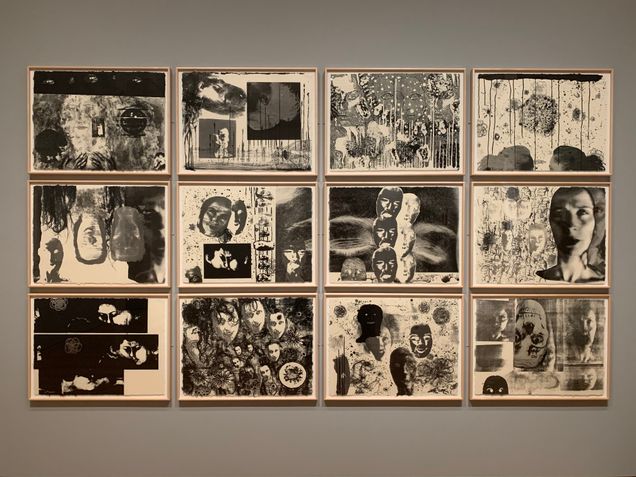
The dynamism of “Women Depicting Women” is downplayed in the six other exhibition galleries, which, at times, explore overfamiliar themes. There are several paintings by well-known artist Georgia O’Keeffe; large-scale canvases by women Abstract Expressionist painters; and gendered landscapes. Perhaps more engrossing are the fiber sculptures by Lenore Tawney and Olga de Amaral; prints that artists including Kiki Smith and Lee Bontecou made at Tatyana Grosman’s lithography workshop, Universal Limited Art Editions; and the juxtaposition of Carmen Herrera’s geometric abstract painting, Blanco y Verde (1959), with the gown that it inspired (Fig. 4). One of the show’s greatest strengths is its presentation of works in various media, from paintings, prints, and photographs to ceramics, textiles, furniture, and jewelry, reflecting the diversity of approaches women have taken in the decades following the campaign for women’s suffrage.
As one exits the exhibition, they may notice Alexander Calder’s Mobile blanc (Fig. 5). Made in 1971 — the same year Nochlin published her famous essay – it looms high above the space, quietly propelled by air currents. One could chalk this up, of course, to the challenges of de-installing a Calder mobile, but some might find its intrusion quite curious, and a little unwelcome.[5] Its monumentality, however, is defused by Alice Neel, Lorna Simpson, and Louise Bourgeois, whose artistic achievements “take the floor” and the walls in what was (and still is) a male-defined domain. As Nonie Gadsden explained at the MFA’s press preview, the phrase “Nevertheless, she persisted” applies to every woman artist who persists in spite of numerous obstacles. Women Take the Floor succeeds in showcasing not merely their creative vision but also their unapologetic presence.[6]

Constanza Robles and Althea Ruoppo
____________________
[1]In a recent interview with Holland Cotter, Betye Saar, whose work is the subject of two concurrent solo exhibitions at the Museum of Modern Art in New York and the Los Angeles County Museum of Art, declared, “...it’s about time! “I’ve had to wait till I’m practically 100.” Holland Cotter, “‘It’s About Time!’ Betye Saar’s Long Climb to the Summit,” New York Times, September 4, 2019. https://www.nytimes.com/2019/09/04/arts/design/betye-saar.html. Accessed October 21, 2019.
[2]Museum of Fine Arts, Boston, Women Take the Floor, https://www.mfa.org/exhibition/women-take-the-floor. Accessed October 21, 2019.
[3]Broad in scope and ambitious in aim, Women Take the Floor is divided into seven thematic sections over just as many galleries: “Women Depicting Women: Her Vision, Her Voice;” “Women of Action;” “Women Publish Women: The Print Boom;” “Women on the Move: Art and Design in the 1920s and ’30s;” “Women and Abstraction at Midcentury;” “No Man’s Land;” and “Beyond the Loom: Fiber as Sculpture / Subversive Threads.”
[4]Linda Nochlin. “Why have there been no great women artists?” In Hess, Thomas, and Baker, Elizabeth. Art and Sexual Politics; Women’s Liberation, Women Artists, and Art History. Art News Series (New York: Macmillan, 1973), 37.
[5]In 1943, the Museum of Modern Art in New York hosted Alexander Calder: Sculptures and Constructions, making Calder, then just 45 years old, the youngest artist at that point to have been given a retrospective there.
[6]The authors would like to thank the Museum of Fine Arts, Boston, for providing the opportunity to attend the season preview on September 12, 2019.
Painting, Photography, and Radical Depictions of Gender: Franz Gertsch and Lissa Rivera
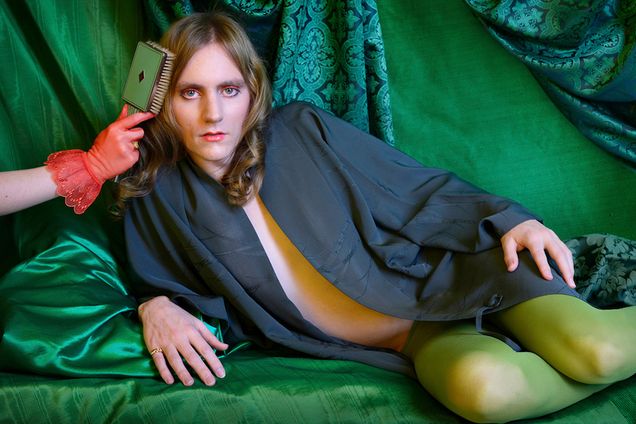
In representations of gender in art, storytelling operates on a political level by either affirming or subverting normative tropes. The artist’s power to control visibility, to selectively reveal or hide, becomes a political gesture. This paper examines the radical potential of photography and Photorealist painting within this sphere. It applies a case-study approach to read Swiss painter Franz Gertsch’s late-1970s paintings against American photographer Lissa Rivera’s ongoing photographic series Beautiful Boy. I argue that for both Gertsch and Rivera, pushing at established codes of social legitimacy and concepts of truth is an emancipatory project that challenges dominant power relations in art and society. In disrupting the dominant status quo by embracing difference as a form of political resistance, both artists construct alternative realities, imagining new worlds through art.
Photography’s ability to trouble the binary between fact and fiction can be deployed as a radical tactic for subverting rigid constructions of gender. Working collaboratively with their respective subjects, Gertsch and Rivera deploy the narrative shorthand of a portrait and the indexical associations of photography to explore the relationship between reality and fantasy. In her book Self/Image, art historian and theorist Amelia Jones writes, “the tension earmarked by aesthetics between subjectivity and objectivity is…at the core of how humans exist in the world.”[1] While many artists obscure or avoid this disjuncture, Rivera and Gertsch produce work which is consistent with what Jones categorizes as “retain[ing] rather that attempting to resolve or disavow this tension between the subjective and objective world.”[2] Invoking critic Roland Barthes, Jones notes “that representation can only deliver what we think we (want to) know about the other, who is never real but always (somewhere) Real.”[3] When it comes to cultural paradigms such as heteronormative gender categories, art can reveal the tenuous relationship between these social constructions: subject, object, and real. Making these constructions visible, Rivera’s and Gertsch’s works depict people performing a compendium of possible selves embedded in the medium.
Known for her bold colors and opulent compositions, Lissa Rivera mines the history of art and the historical conventions of painting through photography. In the series Beautiful Boy, Rivera works with her genderqueer collaborator and partner, BJ Lillis, to explore representations of the body through references to the aesthetics of classical paintings, fashion photography, and avant-garde cinema. Although conceived as a series, each composition stands alone, presenting an independent narrative. Although Lillis appears in each photograph, he performs a different role in each: a bold model, staring down the viewer; a fashionable urbanite; a downcast figure upon a bed. In aggregate, the multiplicity of images represents a variety of gender expressions of one body. They show that the self is never static, but rather, context-specific, fluid, and unconstrained.
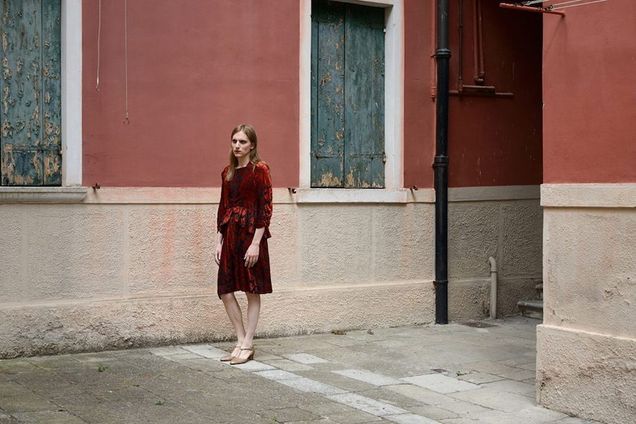

A political project underlies the arguably seductive visual appeal of these saturated colors and sumptuously detailed backgrounds. In an interview for this essay, Lillis described his perception of viewers’ responses to the photographs. He noted:
They like them already before they have time to think about their own politics or how they might feel about what we’re doing on the political level. By the time they even register my genderqueer-ness, they already like the photos because of the colors and the way that they’re composed.[4]
By putting into circulation easily-appealing photographs of an individual whose marginalized identity is not immediately apprehensible, Rivera and Lillis play with the viewers’ expectations of the image, while simultaneously commenting on the political and aesthetic possibilities of the photographic medium. For Rivera, the process of their photographs’ integration into mass visual culture through the internet, print publications, and exhibition spaces is political because it serves to balance pervasive depictions of bodies that conform to rigid gender-norms.[5] When interviewed for this essay, Rivera also noted that, “BJ is able to express this Baroque version of femininity that I could never express myself. In a way, he’s dressing up as my fantasy self.”[6] Thus, Rivera and Lillis explore gender as a construct, using staged performance to work through various depictions of both their gender expressions.

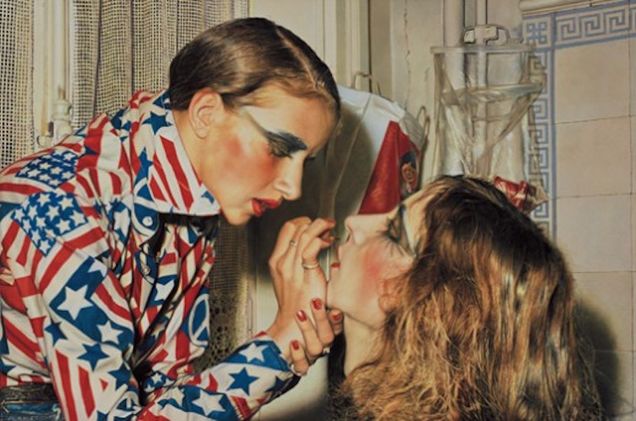
Gertsch’s large format Photorealist paintings from the 1970s explore the potential for remediation in photography and painting through the depictions of his frequent portrait subject, friend, and fellow artist, Luciano Castelli. His three-part sequence of paintings, At Luciano’s House (1973), Barbara and Gaby (1974), and Marina Makes Up Luciano (1975), is especially evocative. Derived from three photographs taken on the same day, the three paintings depict a group of the artist’s close friends, named in Gertsch’s titles. By selecting three distinct moments from the same evening, the artist invites the viewer to imagine a narrative, leaving open the possibility of interpreting these compositions along different story arcs.
Unlike Rivera, who only uses natural light and long exposures, Gertsch utilized a bright flash to photograph these indoor situations. The resultant stark contrast and sharply outlined, saturated silhouettes of the source photographs heightens the desired hyper-real style of Gertsch’s paintings. By mimicking the effects of a short focal length and close cropping, these paintings reproduce the formal characteristics of voyeuristic and unposed snapshot color photographs. Yet, due to their large size and Gertsch’s meticulous attention to detail, the paintings were completed over a three-year period.[7] This paradoxical elongation of time—from a momentary flash to a prolonged painting project—lends tension to the relationship between the photographic and painterly in Gertsch’s Photorealist paintings.
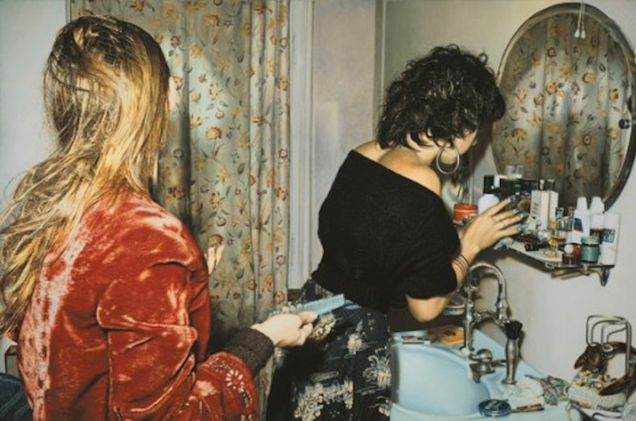
Like Rivera’s portraits of Lillis, these group portraits by Gertsch also deeply engage with the politics of gender. The painting At Luciano’s House shows the group in Castelli’s home as they dress for a party. Marina (as identified in another painting) is caught in motion as she either puts on or removes a jacket, her hands clutching the lapels while she looks at something outside the frame. The next painting, Barbara and Gaby, follows an implied course of events that evening as the friends apply makeup and style their hair using an abundance of toiletries. In this painting, the two figures stand with their heads turned toward the mirror, concealing their faces. They are nevertheless coded as female bodies, their hairstyles, clothing, and grooming accessories functioning as the culturally-constructed identifiers of femininity.
In the third and final painting of the sequence, Marina Makes Up Luciano, Gertsch complicates this normative portrayal of gender expression. Marina is poised above Castelli, the closely cropped composition accentuating the action of the painting: her finger smudging the crimson lipstick on his lips. Gertsch emphasizes the frozen motion of her hand by centering the two figures within the close framing of the image. Castelli’s face is turned upwards toward Marina. She stabilize one of her hands with the other, bracing it against his chin. With their makeup applied identically—the heavy eye shadow, elongated black eyeliner, and radiant red blush—they seem like reflections of each other. The overall mirroring effect of their makeup, tandem poses, and matching facial expressions produces an uncanny doubling effect. Paradoxically, they are at once similar yet distinct. The assertion within the title—that Marina “makes up” Luciano—suggests that she does more than apply makeup to his face. In a strongly evocative way, the title implies that she somehow “makes up” Luciano in the sense of conjuring a fabrication, thus hinting at and blurring the binary distinction between fiction and reality in the painting. The ambiguous and constitutive nature of their gender identities is part of the point.
When viewed together, the works of Rivera and Gertsch prompt us to consider gender and identity as boundless constructs. Comparing Gertsch’s Marina Makes Up Luciano with Rivera’s Boudoir (2015), we can see how both artists embrace the interplay between truth and performativity. Each composition purports to capture a moment of action, frozen in time, as the subject is transformed through the gesture of the hand within the frame. In Boudoir, Rivera’s gloved hand reaches into the space of the photograph to smooth Lillis’s hair with a brush. The artist’s involvement reveals the carefully-staged nature of the work. The tension between artifice and performativity is embraced, not resolved or concealed. This interplay of subjectivities and mediums that occurs in both Marina Makes Up Luciano and Boudoir is reminiscent of what Jones terms “the contingency and embeddedness of the self on/in the other.”[8] Both works show how gender and identity are not individually constituted, but socially constructed. Gertsch and Rivera offer us a way of conceptualizing gender through the complex relationship between photography, painting, and performativity.
Maria V. Garth
____________________
[1] Amelia Jones, Self/Image: Technology, Representation, and the Contemporary Subject (London: Routledge, 2006), 10.
[2] Ibid., 10-11.
[3] Ibid., 248. See also Roland Barthes, Camera Lucida: Reflections on Photography, translated by Richard Howard (New York: Hill & Wang, 1981).
[4] B. J. Lillis, interview with the author, February 10, 2019.
[5] Lissa Rivera, interview with the author, February 10, 2019.
[6] Ibid.
[7] Ulrich Loock, “Group Portraits from the Early Seventies,” in Franz Gertsch: Retrospective, edited by Franz Gertsch, Reinhard Spieler, and Samuel Vitali (Ostfildern: Hatje Cantz, 2006), 113.
[8] Amelia Jones, Self/Image, 10.
Botticelli: Heroines + Heroes

Isabella Stewart Gardner Museum, Boston
February 14 - May 19, 2019
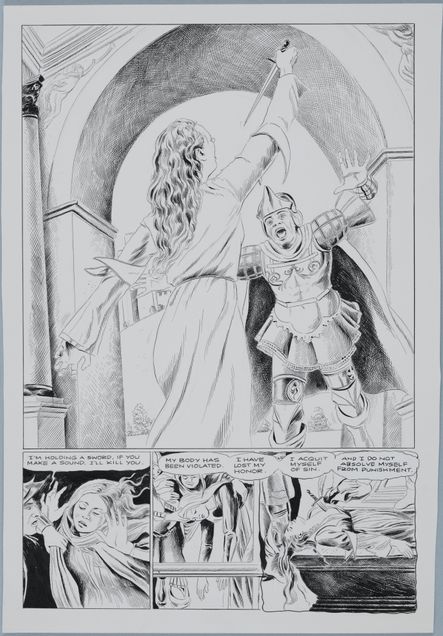
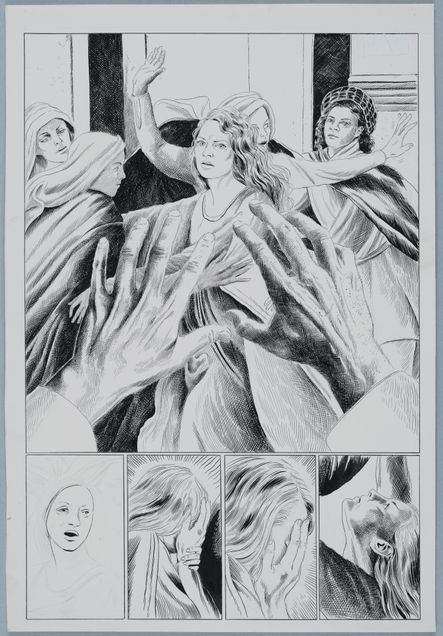
The Isabella Stewart Gardner Museum’s exhibition, Botticelli: Heroines + Heroes, brings together paintings by the Renaissance master Sandro Botticelli (c. 1445-1510), showing how Roman and early Christian figures were depicted as role models in his own time. Paintings and drawings created by the artist in the last decade of his life appear alongside drawings by the graphic novelist Karl Stevens that provide contemporary commentary on the paintings’ subjects. Displayed against fuchsia and grey walls, the Renaissance artworks are contrasted in both style and color to Stevens’ black and white graphics.


The highlight of the exhibition is the reunion of two paintings: the Gardner Museum’s own The Story of Lucretia (Fig. 1) and The Story of Virginia (Fig. 2), on loan from the Accademia Carrara, Bergamo. The first gallery of the exhibition is dedicated to the acquisition of Lucretia, carried out by Isabella Stewart Gardner herself in 1894 and includes early museum records and correspondences regarding the purchase.[1] A twelve-panel comic by Stevens (Fig. 3) re-envisions the narrative of the acquisition, providing context and humor through its dramatic dialogue between Gardner and art historian Bernard Berenson.

The second gallery has an octagonal structure at its center, recalling the iconic Baptistery of St. Giovanni in Florence, the city where Lucretia and Virginia probably originated.[2] Within the geometric space, the two works are paired side-by-side, facing three paintings with scenes from the life of Saint Zenobius. One of the exhibition’s greatest strengths is its treatment of the theme of male aggression and violence against women, a subject with poignant relevance today. Lucretia and Virginia are Roman heroines celebrated for their mortal sacrifices that preserved their female virtue and familial honor.[3] Botticelli’s paintings depict traumatic scenes leading up to the women’s deaths by suicide and murder. Steven’s drawings augment these themes by providing a sense of female perspective and anxiety, captured, for example, in the man lunging towards Lucretia and in the large and powerful hands reaching for Virginia (Figs. 4-5). However, the thematic impact of heroinism in the face of adversity is downplayed by the display of Lucretia and Virginia directly across from images of Saint Zenobius. Paired with Stevens’ drawings of Florentine landmarks that lack critical commentary on the Zenobius imagery, paintings of the male saint celebrate his life and miracles in comparison to the women’s martyrdoms. An opportunity to emphasize the stark visual differences of male and female heroisms seems missed.
Botticelli: Heroines + Heroes asks visitors to rethink the meanings of Botticelli’s paintings, whether as parts of a museum collection or as commentary on changing (or unchanging) attitudes towards the treatment of women. Despite its somewhat disconnected themes—heroism, the museum’s Botticelli acquisition, and the violent experiences of women—the combination of artworks alongside Stevens’ drawings provides visitors with a visual array of Botticelli’s later works and juxtaposes issues surrounding women's experiences today with images from the past.
Jillianne Laceste
____________________
[1] Nathaniel Silver, ed. Botticelli: Heroines + Heroes (Boston: Isabella Stewart Gardner Museum; London: Paul Holberton Publishing, 2019), 101.
[2] The two paintings were “probably commissioned by or for Giovanni di Guidantonio Vespucci (1476-1534) on the occasion of his wedding to Namicina di Benedetto di Tanai de’ Nerli, Palazzo Vespucci, Florence.” Botticelli: Heroines + Heroes, 101.
[3] Botticelli: Heroines + Heroes, 96.