
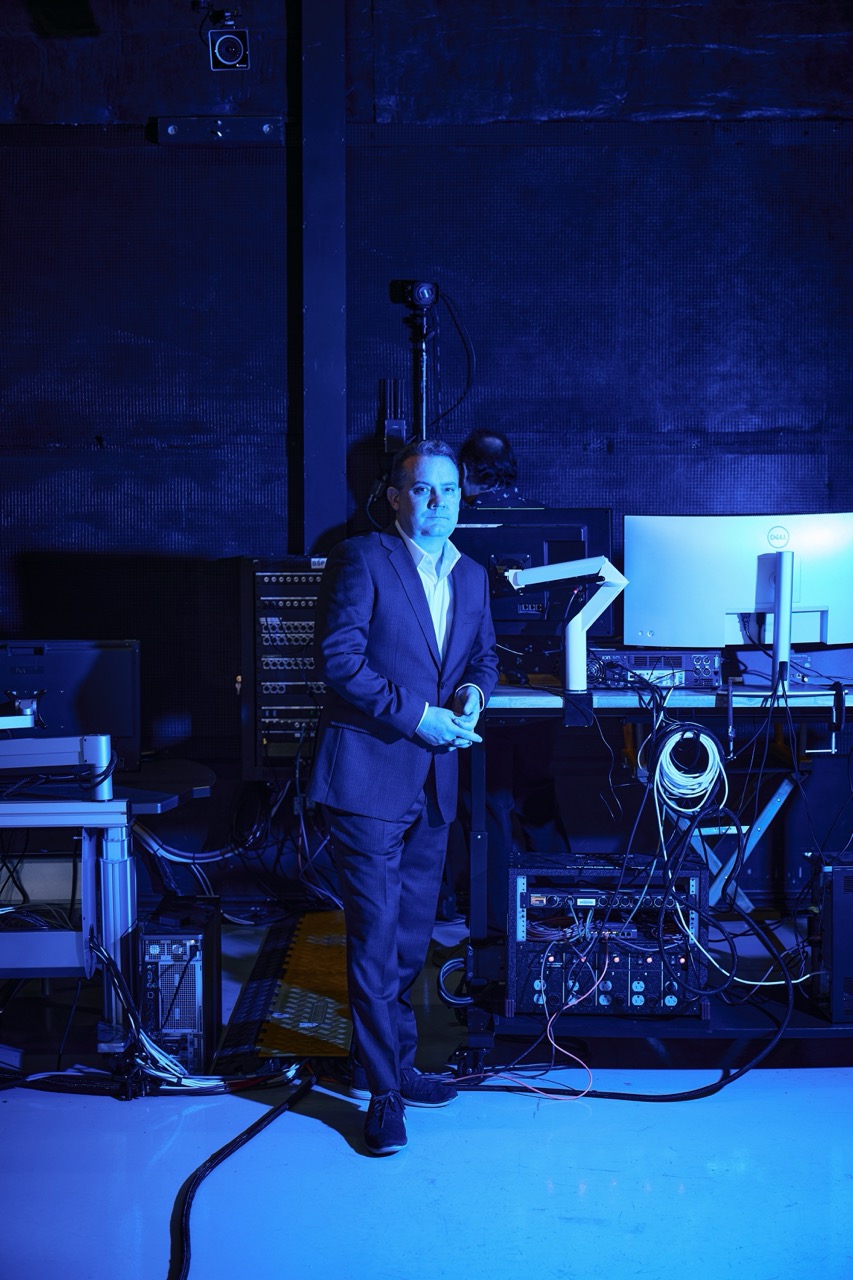
Matthew Braatz (’90) oversees infrastructure and services for NBCUniversal’s sprawling film and television production operations.
Smooth Operator
In an ever-changing entertainment landscape, Matthew Braatz (’90) oversees studio operations at NBCUniversal
The 2011 Comcast purchase of NBCUniversal—for an eye-popping $13.75 billion—created a colossal task: combine the Los Angeles broadcast operations of two of the country’s biggest media companies on one lot. The merger, which resulted in America’s largest media and entertainment company, required the relocation of NBC’s cable and local news properties and all the Comcast broadcast facilities to the famed Universal Studios Lot northwest of Los Angeles. NBCUniversal needed a proven executive to oversee the construction of a new broadcast center for all of them. In early 2013, they tapped Matthew Braatz (’90), an operations manager at its New York City headquarters, for what was intended to be a temporary posting on the West Coast. By that summer, Braatz was leading the consolidation.
“It was bringing together the cultures of two different companies, two different operational areas,” Braatz says. It was also a logistical challenge. “How do you throw the light switch when you finish broadcasting on the NBC lot in Burbank, and then the next day you’re on the Universal lot?”
The result, like the merger process itself, was massive: the 150,000-square-foot Brokaw News Center, named for the retired veteran NBC News anchor Tom Brokaw, which opened in early 2014 and houses most of the conglomerate’s news properties. Braatz’s successful shepherding of what turned out to be a multiyear project vaulted him into a permanent role in California as senior vice president of broadcast operations at NBCUniversal. In 2024, Braatz was promoted again, to senior vice president of studio operations, a position in which he oversees NBCUniversal’s infrastructure and services related to television or movie production—including the stages, back lot, set lighting and grips, costume department, property department and transportation.
“One of the great things NBCUniversal has given me is the ability to grow, change and try new things,” he says. And now, at the pinnacle of his career, Braatz is finding ways to help COM students launch theirs.
Back Lot Tour to the Boardroom
When Braatz was growing up, his family made the trip to California from Wilton, Conn., three times to visit the Universal Studios Lot. He remembers taking the studio tour through the makeup department, marveling at the size of the stages, getting spooked by the great white shark from Jaws. “They had a part of the tour where you could be a stuntman. You could pick up a car, and they had giant foam rocks you could throw,” he says. “It was just really cool. And now, to be here, years later, it’s a thrill. It doesn’t grow old.”

But before he hit Hollywood, Braatz was firmly planted in television news. His first taste came as a film and television student at COM, when he took a job as a news photographer at Providence, RI, broadcast station WLNE, working the evening shift after class. “It was a great combination, being at BU, learning from the best there, and then actually getting to practice shooting, editing and producing news stories every evening,” he says. “That station took a risk on me, and I was able to come through and learn a lot.”
Braatz stayed on at WLNE for a year after graduation; jobs in Houston and Washington, D.C., followed. In 1997, he moved to WNBC in New York City to manage day-to-day newsroom operations; he covered events ranging from hurricanes to the pope’s 2000 visit to Jerusalem. Braatz was WNBC’s director of engineering and operations on September 11, 2001. That day, he lost a colleague, Bill Steckman; the station’s transmission facility crumbled with the North Tower of the World Trade Center. Braatz led the construction of temporary transmitter facilities to get the station back on the air a week after the attacks and a permanent antenna on the Empire State Building within a month.
In 2004, Braatz moved up to the NBC network as its vice president of technology for local media, and he’s been on a steady rise through the company, on both coasts, ever since.
Since early 2024, Braatz has been responsible for all of the studio operations on the NBCUniversal lot. On any given day, he’s in charge of up to 12 productions, including a live taping of The Voice, Access Hollywood, scripted television and scenes for a feature film. It’s a big job. But he felt well prepared.
“The education I got at BU really set me up for success here,” he says. “There were the contacts I made and the people I met, but the other piece was that it wasn’t just about the craft of creating content. There was the base liberal arts knowledge that we got.”
Shifts in the Industry
From his perch at NBCUniversal, Braatz has watched an industry evolve. He remembers a time, for instance, when network television had defined seasons, studios filmed pilots, and he could plan more predictably how and when the stages and equipment would be in use. Streaming has changed that model entirely, with productions filming year-round and chasing tax incentives so they can shoot on locations far beyond Los Angeles. Meanwhile, rapid advances in visual effects require directors to work more closely with Braatz’s team to deliver unique set configurations.
How can we take the resources we have in the LA production community and partner with BULA to enhance that program?
—Matthew Braatz
Besides the merger itself, the trickiest—and most fun—operations problem Braatz has had to solve was partnering with the production team on a live airing of Hairspray that NBC broadcast in 2016. Using two of the studio’s largest stages for the interior shots, the production re-created downtown Baltimore on 15 to 20 acres across the back lot. The A-list cast, which included Ariana Grande and Martin Short, had to race between locations in golf carts during the commercial breaks. “To watch how the broadcast crew came together, the actors, we had an audience out there, it was just an amazing thing to be a part of and to see,” he says.
But make no mistake, “it was nerve-wracking as hell,” he says. “All it takes is one cable getting cut, and if you don’t have the proper backups in place, you’re in big trouble.”
Training the Next Generation
Braatz says it’s been during times of industry change when his career has progressed. For this reason, he’s working to create opportunities for BU students to learn on the job in Los Angeles. Braatz, who is also a member of the Dean’s Advisory Board, and Craig H. Shepherd, chair of the film and television program at COM, have been thinking big. They envision studios, including NBCUniversal, expanding study abroad and internship opportunities for BU students that provide hands-on experience in production, writing and other aspects of filmmaking. Braatz, recalling the valuable experience he gained working nights behind the camera in Providence, wonders, “Can we provide opportunities for film students to interface in our back lot, to work with some of the creative community here? How can we take the resources we have in the LA production community and partner with BULA to enhance that program?”
“What Matt is helping us build in Los Angeles gives our students a front-row seat to the industry as it evolves,” Shepherd says. “We’re incredibly grateful for his leadership and partnership in making sure BU students don’t just study the business, but step right into it.”


