Journalist David Rohde Is COM’s 2026 Writer in Residence
Two-time Pulitzer Prize winner will visit classes, lead workshops and deliver a lecture in March
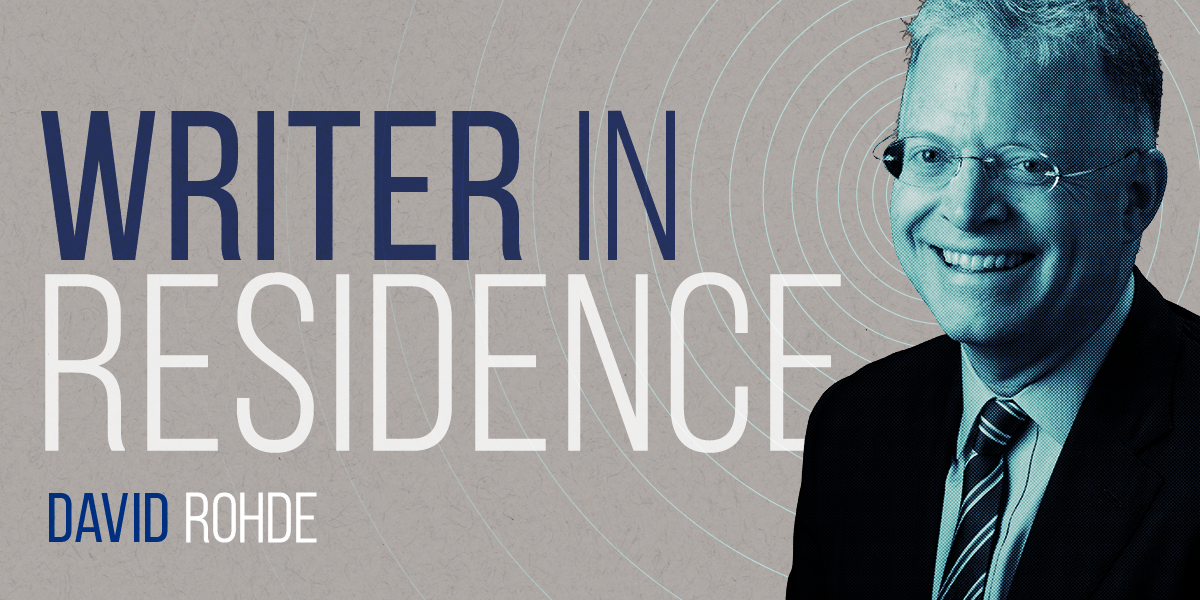
Journalist David Rohde has worked for some of the most prestigious media outlets in the US, including the New York Times, The New Yorker, Reuters and NBC News. He won the 1996 Pulitzer Prize in International Reporting for his Christian Science Monitor stories exposing the massacre of Muslims in Bosnia and Herzegovina and was a member of the New York Times team that was awarded the 2009 Pulitzer in International Reporting for their coverage of Afghanistan and Pakistan. His personal account of being held captive by—and then escaping from—the Taliban was a Pulitzer finalist in 2010. Rohde spent years as a newspaper reporter, coedited Ronan Farrow’s investigative series on the crimes of Hollywood producer Harvey Weinstein, and now appears on television as a national security reporter for MS Now.
In March, Rohde will visit campus as COM’s fourth Writer in Residence, a program that aims to bring prominent writers from across communication disciplines to BU to interact with students. Past residents have included a Pulitzer Prize winning journalist, an Emmy nominated screenwriter and a decorated advertising copywriter.
Writers in residence spend a week on campus and visit classes, host workshops and deliver a plenary lecture. Rohde’s visit is scheduled for March 23–27, with his lecture taking place on Wednesday, March 25, at 6:30 pm in Questrom’s HAR-105 auditorium.
Rohde spoke with COMtalk about lessons he’s learned during his career and his hopes for the residency.
Q&A
With David Rohde
COMtalk: You’ve taught journalism and now you’ll be sharing your experiences with COM students. What draws you to mentoring the next generation?
David Rohde: It’s my generation’s responsibility to reform journalism right now, and keep it economically vibrant and strong. I think it’s unfair to say, “It’s all on your generation to figure it out.” We should all be working on this together. And despite all the headwinds and all the challenges that the journalism industry faces, there are young people who, like me, are neurotic, curious, stubborn, empathetic people with wanderlust who are drawn to journalism. It’s a thrilling opportunity to help encourage them and guide them.
COMtalk: How do you think your advice to students differs from the advice you received at their age?
David Rohde: There was a much bigger newspaper industry [then]. There was a way to go from the Philadelphia Inquirer to the Christian Science Monitor to the New York Times. That just doesn’t exist anymore. I think that the online world and streaming also represent an opportunity, and the core skills of reporting and fact-finding and then storytelling are the same.
COMtalk: As you look at the journalism landscape, what gives you hope? What’s your biggest concern?
David Rohde: I’m at MS Now, which is trying to expand into streaming and podcasting. To survive, it has to stop being cable TV. I have a colleague who covers the legal system, and she’s doing TikTok shorts—60-second videos—and getting millions of views. People want information, but they’re getting it in a different way. And so I feel optimistic that there’s ways to deliver what people want.
And I’ll say this: I think that AI is a danger. It’s a huge challenge, and there’s certain kinds of reporting that are not going to exist. Spot news, quarterly earnings—that’s gone. But there’s a hope in the industry, too, that having a news organization verifying that something is real is going to be valuable.
COMtalk: You’ve reported from war zones where you took great risks. How do you talk to young journalists about that?
David Rohde: There are certain stories that are worth calculated risks. I was arrested in Bosnia while discovering mass graves and confirming that roughly 8,000 Muslim men and boys had been massacred. That was a risk worth taking. I had a second incident where I went to interview a Taliban commander. He had done interviews with two European journalists and not kidnapped them, but he kidnapped me. That was not worth the risk. It depends on the importance of the story. Take calculated risks for stories you feel are worthwhile.
COMtalk: What do you hope students take away from your visit to campus?
David Rohde: What an amazing, wonderful, warm calling and community this is. Fact remains absolutely crucial, and something the public deserves. And ground truth—when you actually go somewhere and talk to people and see what’s happening—is valuable. I wish it was a more thriving, stable industry, but I’ve loved it—just loved it.