Papers & Publications
Religious Vibrancy: A Look at the Numbers
 Gina Zurlo co-edited the Yearbook of International Religious Demography, the first in an annual series that gives a snapshot of the world's religious landscape, coupled with social scientific articles on specific countries and trends in religion around the world.
Now available: the CGCM Fall 2014 newsletter
The CGCM's Fall 2014 newsletter is now available. You can pick up a free hard copy at the School of Theology or read it in PDF form online at CGCM Newsletter 2014 Fall. Get your copy today!
Narratives of World Christianity
 Dana L. Robert, CGCM director, presented, “Twentieth-Century Mission Studies and the Narrative of ‘World Christianity’.’” The audio file is a fascinating historical study on the rise of the term, “World Christianity.”
Global Ecumenism and the Rise of Sociology
Histories of American sociology generally acknowledge, to varying degrees, Christian involvement in the development of the field. Much of this attention, however, underemphasizes two highly influential movements in early-twentieth-century Christian thought, the social gospel movement (1870s–1920s) and the rise of the global ecumenical movement (beginning in 1910). One under-researched, yet particularly revealing example of the impact of these movements is the Institute of Social and Religious Research (“the Institute”; 1921–1934), founded in 1921 under the leadership of global Christian leader John R. Mott and funded by John D. Rockefeller, Jr. The Institute was comprised of Christian social scientific researchers who promoted interdenominational cooperation by engaging in scientific inquiry regarding the structure, current status, and functions of religious institutions and life in the United States. The Institute strived to maintain a high level of academic rigor while also retaining a religious motivation that included service to others, a classic struggle in the early history of American sociology.
The publications produced by the Institute were groundbreaking in their applications of social scientific methods to the study of religion in the United States, most notable of which included Robert S. Lynd and Helen Merrell Lynd’s highly generative and controversial Middletown study. In an overview of the largely unexplored tenure of the Institute, this paper brings together important trends in the early twentieth century to provide a unique perspective on the historical and theological contexts for the development of American sociology as an academic discipline.
To learn more, see "The Social Gospel, Ecumenical Movement, and Christian Sociology: The Institute of Social and Religious Research" (June 2014) by Gina Zurlo, a CGCM student associate, in the online version of The American Sociologist. Boston University students can access the journal through JStor and other hosts, and the article will appear in print version in 2015.
Mission and a Geographic Imagination
 The July 2014 issue of the International Bulletin of Missionary Research contains a new article by alumnus Dr. David Scott, entitled "The Geographic Imagination and the Expansion of Methodist Missions in Southeast Asia," IBMR 38:3 (July 2014): 130–34.
Synopsis: Missionary work by the Methodist Episcopal Church began in Southeast Asia in 1885 in Singapore. The Malaysia Mission spread throughout Southeast Asia, establishing work in Singapore, Penang, peninsular Malaysia, Borneo, Java, and Sumatra, as well as maintaining nominal oversight of mission work in the Philippines. By using geography to justify its extension across distance, the Malaysia Mission acted similarly to other global systems.
The article is available for free to online subscribers.
The Spring 2014 newsletter is here!
The Spring 2014 newsletter, CGCM News is now available in print and digital forms. You can pick one up at various location in the School of Theology, and it is available for download and viewing here: Spring 2014 Newsletter.
Christian Healing and Women Leaders in Madagascar
Michele Sigg, PhD student and Project Manager for the Dictionary of African Christian Biography, has recently published an article entitled "Carrying Living Water for the Healing of God's People: Women Leaders in the Fifohazana Revival and the Reformed Church in Madagascar," in the journal Studies in World Christianity, Volume 20 (April 2014), pp. 19-38. Well done Michele! You can read the abstract below, and link to the article here.
Abstract: For over one hundred years the Fifohazana Revival has played a key role in the spread of Christianity in Madagascar. The Fifohazana is an indigenous Christian movement that seeks to serve Malagasy society through the preaching of the Gospel and a holistic ministry of healing in community.
This article summarises the findings of a study that explored the role of women leaders as holistic healers in the Fifohazana revival movement and the Reformed Church (FJKM) in Madagascar. Based on interviews with four women ministering in the Fifohazana or the Reformed Church, including a rising leader in the revival movement, this study highlights the importance of women leaders as radical disciples and subversive apostles in the Fifohazana revival movement and in the Reformed Church. As such, these women have been instrumental in bringing renewal into the church through the work of the Holy Spirit in the holistic healing ministry of the Fifohazana.
Chris James’ review of Perspectives on Ecclesiology and Ethnography
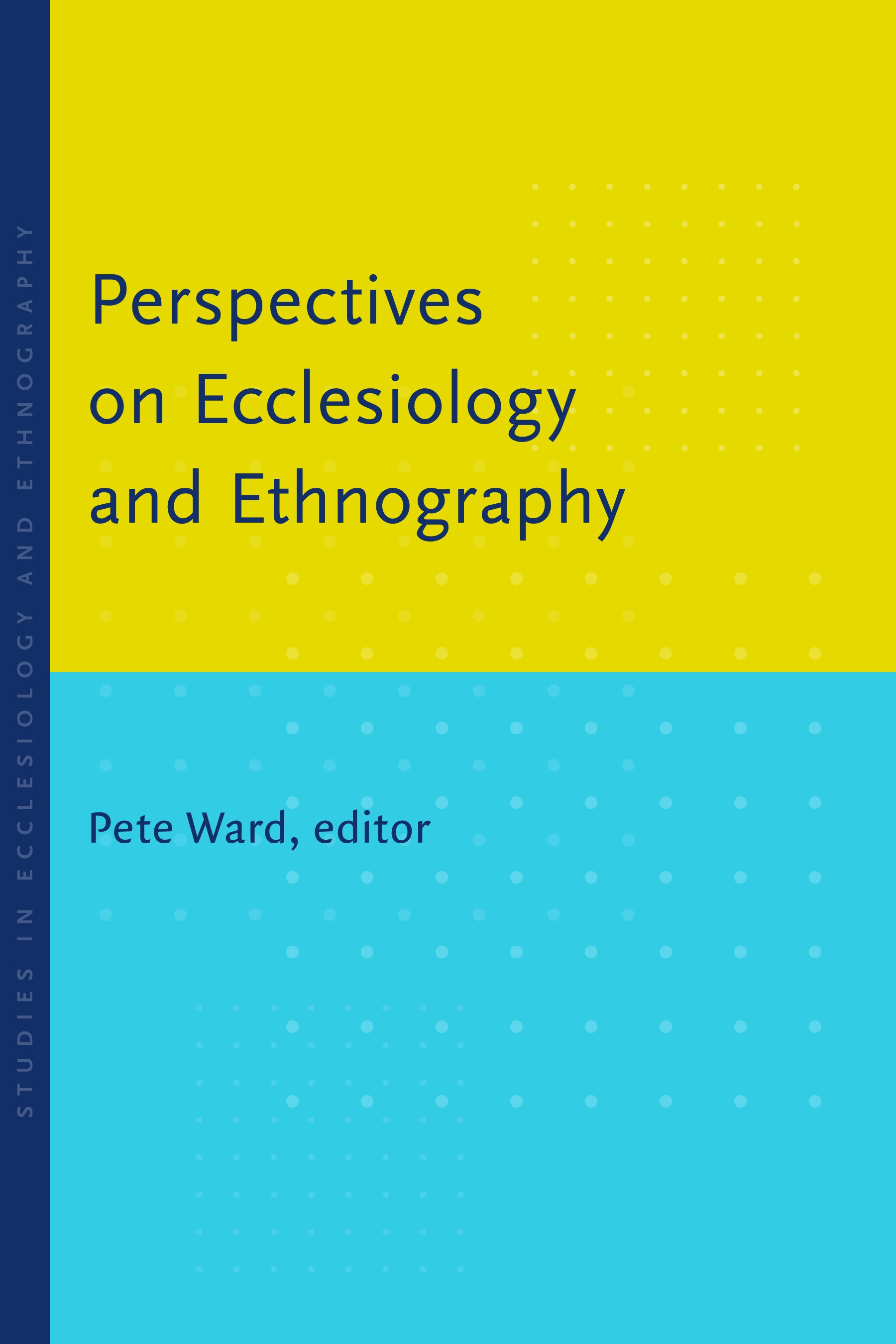 Doctoral student Christopher James has recently reviewed a book on the intersection of ecclesiology and anthropology, Perspectives on Ecclesiology and Ethnography, edited by Pete Ward. Check out the review in Missiology: An International Review 42 (1), January 2014, 92-93.
The Future of Christianity by the Numbers
Gina Bellofatto, student affiliate of the CGCM, and Dr. Todd Johnson’s described, “Key Findings of Christianity in Its Global Context, 1970–2020.” The article appeared in the International Bulletin of Missionary Research and is available for free to online subscribers.
Mission and Church Planting
PhD student Christopher James has been busy publishing several articles on missiology. Chris' two peer-reviewed journal articles are: “Missional Acuity: 20th Century Insights Toward a Redemptive Way of Seeing," in Witness: Journal of the Academy for Evangelism in Theological Education, vol. 26 (2012); and “Some Fell On Good Soil: Church Planting in Religious Ecologies,” Witness: Journal of the Academy for Evangelism in Theological Education, vol. 27 (2013). Well done! We look forward to sharing more of his work.