The Social Justice for Data Science Lecture Series, hosted by the Faculty of Computing and Data Sciences, brings together leading scholars in law, computer science, humanities, and social science to examine the current state of data science and social justice. The goal of the series is to engage with the relationship between justice (as a historically contingent and value-laden category) and data science (with a focus on datafication, automation, predictive analytics, and algorithmic decision-making).
The series, developed by Ngozi Okidegbe, Moorman-Simon Interdisciplinary Career Development Assistant Professor of Computing & Data Sciences and Associate Professor of Law, and Allison McDonald, Assistant Professor of Computing & Data Sciences, will delve into the ways data science operates to advance, transform, and hinder justice-oriented movements by underrepresented and politically marginalized communities in different areas of life, and draw lessons that can help reorient the field of data science toward justice.
Fall 2026 Speaker Lineup
The Data of Confinement: Open Records, Data Science, and U.S. Prison Conditions
Presenter:Jessica Simes, Associate Professor of Sociology, Affiliated Faculty of Computing & Data Sciences, and Principal Investigator of the Open Justice Lab at Boston University
Date:Monday, October 5, 4:30-6:00 PM
Location: Duan Family Center for Computing & Data Sciences Room 1101, 665 Commonwealth Avenue, Boston, MA
Abstract: U.S. prisons are unusually harsh institutions, yet the conditions experienced by incarcerated people remain remarkably difficult to observe and measure. In this talk, I ask how data science and computational methods can help make these hidden conditions visible in data. Drawing on a series of projects examining prison crowding, exposure to extreme temperatures, and access to health care, I show how requesting, engineering, linking, and analyzing fragmented administrative, spatial, environmental, and health data can reveal dimensions of incarceration that are largely absent from conventional measures of punishment. Prison conditions offer an important case for thinking about how data science can be used in the public interest to build new forms of measurement around conditions that existing data systems routinely obscure.
About the Speaker: Jessica Simes is Associate Professor of Sociology, Affiliated Faculty of Computing & Data Sciences, and Principal Investigator of the Open Justice Lab at Boston University. She is the author of Punishing Places: The Geography of Mass Imprisonment (University of California Press, 2021) and is currently completing a second book on solitary confinement (Russell Sage Foundation). Her work combines administrative and spatial data, computational methods, causal inference, and qualitative research to understand how institutions of punishment shape social inequality, population health, and community life.
Protecting Civil Rights in the Age of AI
Presenter:Pauline Kim, Daniel Noyes Kirby Professor of Law at Washington University School of Law in St. Louis
Date:Monday, October 26, 4:30-6:00 PM
Location: Duan Family Center for Computing & Data Sciences Room 1646, 665 Commonwealth Avenue, Boston, MA
Abstract: Technological advances in data processing, machine learning and artificial intelligence offer new opportunities for building a more just society. They also risk encoding bias, reinforcing historical patterns of discrimination, and worsening inequality. These developments expose the limitations of existing laws which were developed with human decision-makers in mind. They also create novel challenges for policy-makers seeking to build governance frameworks that will make AI safer and fairer. This talk will explore the risks of discrimination and inequality posed by AI, the limitations of existing legal frameworks, and the challenges we face as a society in ensuring that these new technologies advance rather than undermine the rights and well-being of all.
About the Speaker: Pauline Kim is the Daniel Noyes Kirby Professor of Law at Washington University School of Law in St. Louis. An expert on the law governing the workplace, she has published dozens of articles and book chapters on issues affecting workers such as privacy, discrimination, and job security, as well as co-authoring one of the leading textbooks in the area. She has done foundational research on workers’ understanding of their legal rights, and on the risks of discrimination and unfairness posed by the use of automated decision systems and artificial intelligence (AI) in the workplace. Her current research centers on the legal and policy challenges raised when AI is used to make consequential decisions in employment, housing, and credit markets, focusing in particular on the risks of discrimination and increasing economic inequality. Professor Kim earned her A.B. and J.D. from Harvard University, and was a Henry Fellow at New College, Oxford University. Prior to joining Washington University’s law school faculty, she clerked for the Honorable Cecil F. Poole on the United States Court of Appeals for the Ninth Circuit and worked as a public interest lawyer representing low-income workers in San Francisco. In 2024, she was elected to the American Academy of Arts and Sciences.
Perfect Obedience: What We Lose When Government Automates Away Dissent
Presenter:Chinmayi Sharma, Associate Professor at Fordham Law School
Date:Monday, November 9, 4:30-6:00 PM
Location: Duan Family Center for Computing & Data Sciences Room 1646, 665 Commonwealth Avenue, Boston, MA
Abstract: Governments increasingly use algorithms, including AI, to do work once done by people: deciding who gets benefits, who gents flagged for fraud, who gets detained. These systems are sold as faster, fairer, and more accurate. Sometimes they are, often they aren’t—but something is lost either way. The deepest danger of government automation is not inaccuracy or bias but perfect obedience: the engineering away of the independent human judgment that lets bad policy be questioned, slowed, and corrected before it harms at scale. A government that respects the rule of law is one that sees its power as derived from the governed. Civil servants are the vehicle through which the governed get a say in how the executive exercises the power it is granted. A human bureaucracy invites this feedback, from its own ranks and from the public, and forces the reconciliation of differing perspectives and indeed, dissent, before executive will becomes law on the ground. That friction is the rule of law at work: ensuring that power remains answerable to the people. For a benevolent leader, automating it away is a lost opportunity to govern better; for a despot, it is fertile ground for democratic backsliding.
About the Speaker: Chinmayi Sharma is an Associate Professor at Fordham Law School. Her research and teaching focus on open source, artificial intelligence, cybersecurity, as well as regulation of and liability for technology harms.
She is an advisor to the American Law Institute’s Principles of Law, Civil Liability for Artificial Intelligence and a member of the Microsoft Responsible AI Committee. She is a Visiting Senior Fellow at the Institute for Law & AI, a member of the Global Academic Network at the Center for AI & Digital Policy, a Distinguished Fellow at the Georgetown Center on Privacy and Technology, as well as a Non-Resident Fellow at the Strauss Center, and the Atlantic Council.
She is a contributing editor to Lawfare and has been quoted by the New York Times, NPR, ProPublica, Fortune, Bloomberg, Bloomberg Law, The American Lawyer, and Law360. Her Article calling for professionalization of AI engineers, “AI’s Hippocratic Oath,” was featured in the New York Review and her papers have been recommended on the Legal Theory Blog. Her Article on open source software security, “Tragedy of the Digital Commons,” has been included in the Hague’s International Cyber Security Bibliography. Her work has been published in the California Law Review, North Carolina Law Review, Washington Law Review, Wisconsin Law Review, and BYU Law Review.
Before joining academia, Chinmayi worked at Harris, Wiltshire & Grannis LLP, a telecommunications law firm in Washington, D.C., clerked for Chief Judge Michael F. Urbanski of the Western District of Virginia, and co-founded a software development company.
Social Credit System and the Politics of Quantification in China
Presenter:Chuncheng Liu, Assistant Professor of Communication Studies and Sociology at Northeastern University
Date:Monday, November 30, 4:30-6:00 PM
Location: Duan Family Center for Computing & Data Sciences Room 1646, 665 Commonwealth Avenue, Boston, MA
Abstract: China's Social Credit System has been described as dystopian surveillance or dismissed as political theater. Drawing on ten months of ethnographic fieldwork, this book argues that neither account is adequate. Chinese officials, confronting a perceived "trust crisis," set out to govern citizens' trustworthiness — an invisible quality with no settled definition. Borrowing the architecture of financial credit, they operationalized it not by defining what trustworthiness was but by recording what people did. The book follows this construction through four enrollments — of behavior, data, people, and value — and shows how each encountered costs that limited the network's reach. Bureaucrats narrowed its scope until what remained was a "numerical farm": a small tract of social life yielding data on schedule, surrounded by a population the system had learned it was cheaper to leave alone. The state that set out to see everything ended up building a place where it could afford to look.
About the Speaker: Chuncheng Liu is an Assistant Professor of Communication Studies and Sociology at Northeastern University. He earned his Ph.D. in Sociology and Science Studies at the University of California, San Diego, and was a postdoctoral researcher at Microsoft Research New England. He studies the politics of data, quantification, and classification — how states and institutions turn people into numbers, and what happens when they do.
Past Speakers
Fall 2025 Speaker Lineup
Racializing Algorithms
Presenter:Jessica Eaglin, Professor of Law at Cornell Law School
Date:Tuesday, December 2, 3:30-5
Location:BU Computing & Data Sciences, 665 Commonwealth Avenue, Room 1101, Boston, MA (virtual)
Abstract: This talk will consider how to expand possibilities for law as a tool to engage in social justice at its intersection with technology in contemporary society. Using algorithms in criminal sentencing as an example, this talk examines how legal scholars tend to think about technology in law and provides pathways to expand the scope by centering race in law at the juncture with technology in criminal law’s administration going forward.
About the Speaker: Jessica M. Eaglin is a Professor of Law at Cornell Law School. She teaches and writes at the intersection of criminal law and policy, law and technology, and race and the law. She writes about criminal legal reforms adopted in response to the economic and social pressures of mass incarceration to illuminate how they will impact underlying sociopolitical transformations in criminal administration and society. Her recent work focuses on the proliferation of algorithms at sentencing, and the obscured perils they present for historically marginalized groups, the courts, and society more broadly.
Prior to joining the Cornell Law faculty, Professor Eaglin was a Professor of Law at Indiana University Maurer School of Law. She also served as Counsel in the Justice Program at the Brennan Center for Justice at NYU School of Law, where she assisted in a national campaign aimed at addressing mass incarceration in the United States. She clerked with the Honorable Damon J. Keith for the Sixth Circuit Court of Appeals, and began her law career as a Litigation Associate at Simpson Thacher & Bartlett, LLP in New York City. Professor Eaglin graduated from Spelman College. She earned her J.D. and M.A. in Literature from Duke University.
Taxis vs. Uber: Techno-capitalism and the Present Future of the Global Economy
Presenter:Jason Jackson, Associate Professor of Political Economy and Urban Planning, Head of the International Development Group, and Director of the Political Economy Lab at Massachusetts Institute of Technology
Date:Tuesday, November 18, 3:30-5:00 PM
Location:BU Computing & Data Sciences Room 1101, 665 Commonwealth Avenue, Boston, MA
Abstract: The last few decades have been characterized by the return of market liberalism: the belief that national societies and the global economy can and should be organized through the institutional mechanism of ‘self-regulating markets.’ The liberal ideal may well be exemplified by the rise of platform firms that offer the promise of perfect markets through computational techniques of connecting buyers and suppliers. These firms use algorithmic processes to construct and aggregate fragmented markets, thus capturing scale economies through network effects. The allure of platforms lies in the promise of economic efficiency and political liberty by providing market actors on both sides of the platform with freedom of choice. These technologies constitute a claim to modernity that is compelling to both policymakers and the public, enabling platforms’ role in the radical transformation of cities, while presenting a range of vexing challenges for democratic forms of urban governance. Platform firms claim to be technocratic and neutral even as they challenge the legitimacy of public sector control of urban spaces. Yet they rely on enabling legal rules that structure the distribution of power and authority as well as material gains and losses.
About the Speaker: Jason Jackson is Associate Professor of Political Economy in the Department of Urban Studies and Planning and Director of the Political Economy Lab at the Massachusetts Institute of Technology (MIT). Jason’s research is broadly concerned with the relationship between states and markets in processes of economic development and social transformation. Jason is currently engaged with projects on the role of anti-colonial economic nationalism in development; the rise of platform firms, the digital economy, and the future of work; the return of industrial policy; and the global governance of public health. He is the author of the forthcoming books Traders, Speculators, and Captains of Industry: How Capitalist Legitimacy Shaped Indian Foreign Investment Policy (Harvard University Press) and Varieties of Economic Nationalisms in Brazil and India (Cambridge University Press).
The Problem of Prediction
Presenter:Ari Waldman, Professor of Law and Professor of Sociology (by courtesy), University of California, Irvine School of Law
Date:Tuesday, October 21, 3:30-5:00 PM
Location:BU Computing & Data Sciences Room 1101, 665 Commonwealth Avenue, Boston, MA (virtual)
Abstract: Prediction is the lifeblood of artificial intelligence (AI). When a bank denies a mortgage, it relies on AI to statistically predict creditworthiness and the likelihood of on-time repayment. When a state denies parole, it uses AI to predict a likelihood of recidivism. When a digital platform returns search results or curates a news feed, it uses AI to predict, based on previous searches and other data, what users (and people like them) want to see. Scholars have identified many risks associated with these predictive uses of AI, including bias, errors, and discrimination. This talk focuses on the pathologies of prediction itself, which remain understudied. Its goal is to determine when, if ever, historic information can be a useful signal that should anchor predictions or decisions about a current problem, and when historic information should be cast aside as an unfair or inappropriate basis for decision-making.
About the Speaker: Ari Ezra Waldman is a professor of law and sociology at the University of California, Irvine. His research focuses on the effects of technology on society and on queer populations in particular. He holds a PhD in sociology from Columbia University and a JD from Harvard College.
The Immigration Enforcement Reporter: a BU Law x BU Spark! Collaboration
Presenters:Sarah Sherman-Stokes, Clinical Associate Professor of Law and Associate Director, Immigrants’ Rights and Human Trafficking Clinic at Boston University School of Law, and Ziba Cranmer, Director of BU Spark! at the Faculty of Computing & Data Sciences, Boston University
Date: Thursday, September 18, 3:30-5:00 PM
Location: BU Computing & Data Sciences Room 1101, 665 Commonwealth Avenue, Boston, MA
Abstract:This collaborative project, between the BU Law Immigrants' Rights Clinic and BU Spark!, is an attempt to respond to community needs. Nearly 1500 people were arrested by ICE in Massachusetts during May 2025 alone—this includes parents, children, longtime residents, and community leaders. With this interactive map, we hope to build a comprehensive database that sheds light on ICE enforcement actions across the Commonwealth. This map provides critical data for impacted communities, legal practitioners, activists, researchers,s and advocacy groups to document ICE enforcement and make informed decisions about how to remain safe.
About the Speakers:
Sarah Sherman-Stokes is a clinical associate professor at Boston University School of Law. Ms. Sherman-Stokes teaches Immigration Law and is the associate director of the Immigrants’ Rights & Human Trafficking Clinic. Her scholarship takes a critical look at immigration law and policy, including at the intersections of asylum law, detention and deportation, and immigrant surveillance, enforcement, and abolition. Her recent law review articles have been published in the Denver Law Review, Hastings Law Journal, Georgetown Immigration Law Journal, Villanova Law Review, andthe Indiana Law Review. She regularly speaks and appears in the media on issues including asylum, detention, and deportation. She has published op-eds in The Washington Post, USA Today, Cognoscenti, Bloomberg Law, and The Hill.
In 2021, Professor Sherman-Stokes was part of a team of lawyers and law school clinics awarded the Clinical Legal Education Association (CLEA) award for Excellence in a Public Interest Project, for their work in a federal class action on behalf of 12 women subjected to non-consensual medical procedures in ICE custody at the Irwin County Detention Center. In 2020, Professor Sherman-Stokes was awarded the Metcalf Cup and Prize for Excellence in Teaching, the highest teaching honor awarded by Boston University.
Professor Sherman-Stokes received her B.A. cum laude, Phi Beta Kappa, from Bates College and her J.D. cum laude from Boston College Law School. Previously, she was an Equal Justice Works Fellow at the Political Asylum/Immigration Representation (PAIR) Project, where she represented noncitizens in removal proceedings, with a special focus on the representation of detained immigrants with mental illness.
Ziba Cranmer is the Founding Director for BU Spark!, housed at the Faculty of Computing & Data Sciences. Ziba is an innovation leader with diverse experience spanning the public and private sectors. Ziba is passionate about interdisciplinary innovation fueled by technology. Before BU, Ziba led a national initiative supporting public sector innovators in cities across the United States to combat trafficking through technology. She spent over 11 years working in the private sector for companies like Nike Inc., where she was a Portfolio Director in the Sustainable Business and Innovation Lab, an internal venture unit responsible for driving new business opportunities and social impact. Ziba also worked in marketing and communications as a senior advisor and account lead to technology startups and many leading global brands, including FedEx, Disney, and Hilton Worldwide.
Fall 2024 Speaker Lineup
Afrofuturism, Policing, and Justice
Presenter:Bennett Capers, Associate Dean for Research, Stanley D. and Nikki Waxberg Chair, Professor of Law, and Director, Center on Race, Law, and Justice at Fordham Law School
Date: Monday, December 2, 4:30-6:15 PM
Location: BU Computing & Data Sciences, 665 Commonwealth Avenue, Room 1750, Boston, MA
Abstract: In this talk, Professor Capers will argue that we can learn a lot by examining how artists, cybertheorists, and speculative scholars of color—Afrofuturists and Critical Race Theorists—have imagined the future, especially when it comes to policing, race, and technology. Too often, policing technology is viewed as privacy diminishing, as Big Brother run amok, and as exacerbating racial inequities. But it doesn’t have to be this way. How can we harness policing technologies in ways that not only reduce crime but also de-racialize policing? How can we use technology to limit and even eliminate police abuses, including police violence? In short, how can we—legal scholars and non-legal scholars alike—use Afrofuturism and Critical Race Theory to map a way to a better, safer, and more egalitarian future for everyone?
About the Speaker: Bennett Capers is the Stanley D. and Nikki Waxberg Professor of Law at Fordham Law School, where he serves as the Associate Dean of Research; teaches Evidence, Criminal Law, and Criminal Procedure; and is also the Director of the Center on Race, Law, and Justice. His scholarship explores race, gender, crime, and technology, and his articles and essays have been published or are forthcoming in the California Law Review, Columbia Law Review, Cornell Law Review, Harvard Law Review, Michigan Law Review, Minnesota Law Review, New York University Law Review, UCLA Law Review, Vanderbilt Law Review, and Yale Law Journal, among others. In addition to co-editing Critical Race Judgments: Rewritten U.S. Court Opinions on Race and Law (Cambridge University Press), Feminist Judgments: Rewritten Criminal Law Opinions (Cambridge University Press), and Criminal Law: A Critical Approach (Foundation Press), he is working on a book Critical Evidence and another book about his time as a federal prosecutor.
Visible Barriers for Invisible People: Healthcare Access Among Stateless Populations
Presenter:Muhammad Zaman, Director of the Center on Forced Displacement and Howard Hughes Medical Institute Professor of Biomedical Engineering and International Health at Boston University
Date: Wednesday, November 20, 4:30-6:15 PM
Location: BU Computing & Data Sciences, 665 Commonwealth Avenue, Room 1750, Boston, MA
Abstract: Healthcare access among forcibly displaced communities is often shaped by dimensions of trust; trust in their own social network, trust or mistrust in information, trust or distrust of local authorities, and trust or mistrust in technology, to name a few. Using a series of case studies from Pakistan, Colombia, Lebanon, and South Sudan, this talk will explore the sources of trust and distrust and how they affect access to healthcare among forcibly displaced. Zaman will also analyze the impact of technology and information on simultaneously improving and undermining trust, especially among the stateless communities. Finally, this talk will discuss how healthcare access to forcibly displaced communities can be improved through an integrated system that prioritizes trust and what it may mean in a world shaped by conflict, persecution, and xenophobia.
About the Speaker: Muhammad Hamid Zaman is the Director of the Center on Forced Displacement and Howard Hughes Medical Institute Professor of Biomedical Engineering and International Health at Boston University. A key thrust of his research focuses on analyzing barriers and improving access to healthcare among forcibly displaced communities, including refugees, internally displaced persons, and stateless communities.
The School-to-Surveillance Pipeline: Mass School Shootings, Digital Securitization, and the Struggle for Data Justice
Presenter:Chaz Arnett, Professor of Law at the University of Maryland Francis King Carey School of Law
Abstract: Advancing data-centric technology is enabling schools to search, surveil, and gather information on students in unimaginably powerful ways. Sophisticated surveillance measures such as social media monitoring, facial recognition software, and AI-powered weapons detection systems have been promoted as necessary tools to prevent mass school shootings like the one witnessed in Uvalde, Texas. These new avenues for collecting and analyzing student personal, behavioral, and biometric data raise significant concerns about the effects of datafication on the school environment.
This lecture will examine how school surveillance practices, as they become increasingly digitized, can be understood not only as invoking concerns of criminalization, prosecution, and zero-tolerance discipline but also as data-based exploitation and stratification. This understanding necessitates the elevation and use of a critical data lens that recognizes the significant role of data production and extraction in the rise of the Datafied State. The lecture will also explore how data privacy concepts alone are insufficient in navigating this new fraught terrain, where big data surveillance raises issues not just of privacy, as traditionally understood, but also of social sorting and preemption. Instead, it will promote a Data Justice lens, with its emphasis on social and economic justice concerns, as a better approach to examining the implications of data-driven decision-making and governance in K-12 education.
About the Speaker: Chaz Arnett is a professor of law at the University of Maryland Francis King Carey School of Law. He is a race, privacy, and criminal law scholar whose work explores questions of ethics, justice, and governance in the context of emerging surveillance technologies.
Fall 2023 Speaker Lineup
The Case Against Normalizing Surveillance
Presenter:Woodrow Hartzog,Professor of Law and Class of 1960 Scholar, BU School of Law
Date: Monday, September 25, 4:30-6:15 PM
Location: BU Computing & Data Sciences, 665 Commonwealth Avenue, Boston, Room 1750
Abstract: Despite ample lip service for privacy, society is normalizing surveillance. People are slowly but surely being acclimated to all kinds of exposure by ignoring smaller, more frequent, and more mundane privacy diminutions. The proliferation of cameras and biometric sensors on doorbells, glasses, and watches, and the drift of data analytics into new areas of our lives like travel, exercise, and social gatherings have caused surveillance practices to recede into the backdrop of our lives. Invasive practices become routine through repeated exposures that acclimate us to being vulnerable and watched in increasingly intimate ways. In this talk, Professor Hartzog will make the case against normalizing surveillance, starting with the law. Because the law looks to norms and people’s expectations to set thresholds, the normalization of small privacy encroachments results in a constant re-negotiation of privacy standards to society’s disadvantage. This is particularly true for marginalized groups that bear the brunt of surveillance first and hardest. The result of normalizing surveillance is that the legal and social threshold for rejecting invasive new practices keeps getting redrawn, excusing ever more aggressive intrusions. In short, privacy law permits whatever people can be conditioned to tolerate. We are on track to tolerate everything.
About the Speaker: Woodrow Hartzog is a Professor of Law and Class of 1960 Scholar at Boston University School of Law. He is also a Faculty Associate at the Berkman Klein Center for Internet & Society at Harvard University, a Non-resident Fellow at The Cordell Institute for Policy in Medicine & Law at Washington University, and an Affiliate Scholar at the Center for Internet and Society at Stanford Law School. He is the author of Privacy’s Blueprint: The Battle to Control the Design of New Technologies, published in 2018 by Harvard University Press, and the co-author of Breached! Why Data Security Law Fails and How to Improve It, published in 2022 by Oxford University Press.
Data-fied Personae: Recognition and Splintered Self
Presenter:Patricia Williams, University Distinguished Professor of Law and Humanities, Director of Law, Technology & Ethics Initiatives, Northeastern University
Date: Monday, October 16, 4:30-6:15 PM
Location: BU Computing & Data Sciences, 665 Commonwealth Avenue, Boston, Room 1750
Abstract: Governance is the general ability to organize society into groups, whether as circles of citizens, friends, consumers, competitors, rights-holders, or as those beyond the pale of esteem, dignity, or mutual regard. The systems of liberal democracy that we commonly identify as governance are being challenged, eroded, or are increasingly misaligned in purpose and function. Legal institutions--which promise fairness, transparency, opportunity to be heard, and collective repair--are frequently bypassed by the dissociative and de-socializing effects of immersive new computational technologies that exceed the influence of many normative legal regimes. Pervasive algorithmic ordering is surely recognized for its potential as a “distractive-extractive” force, or as a panopticon of serial exposure, or as a meme generator whose suggestive force invites us into mass hypnosis, seamless normativity and cult-like parasociality…but pervasive algorithmic ordering simultaneously distributes disciplinary power inconsistently, in vast networks of incommensurable incentives, a welter of uncoordinated performance baselines, and stern but incoherent “meaning-making” word-spew. These incongruities place stresses on the human organism at an individual level as well as on the stability of larger social organizations, and they corrode the trust mechanisms that legitimate structures of law and civil ordering. They are making us unhappy.
One simple question for lawyers is how to reconcile the comparative meanings of a data-fied self with a civilly righted “person” or legal subject. There are so many conversations about how data and social justice could serve or disserve each other that the very notion of a “self”—as a data configuration or otherwise--can sometimes feel abstracted, ineffable. This paper will be an attempt to materialize the granular disruptions of those abstractions; it will be a crude (auto)biography of one self’s various technologically-asserted identificatory “brands.” I will disaggregate and introduce some of the machine-assorted bits and pieces that compose (or discompose) each one of us: I’ll look at the vivid reality of my own epistemological and epidemiological trail: my medical score, my credit score, my consumer preferences, my job proficiency, my popularity. I will look at the narrative logics of the distributed agencies being generated in figurations of the virtual me, the social media me, the bio-me, the productive me, the reproductive me, the geo-located me, the writerly me, the overwritten me, the archival me—in other words, how the very mechanics of accumulating complex data make a corporatized data complex of me in relation to the complexity of all other “me’s.” The goal of this inquiry will be to compare mathematical and predictive modeling of human behavior with legal models of a “rights-endowed” legal subject or dignitary construct of legal personhood. This comparison will hopefully highlight, amidst the vast social restructuring we are living through, both failures in and opportunities for the continued guarantee of values that are at least nominally idealized as humanitarian and central to human happiness in liberal democracy: fairness, legibility, room to think, opportunity to talk back and dispute, and collective remediation.
About the Speaker: Patricia Williams is University Distinguished Professor of Law and Humanities at Northeastern University and Director of Law, Technology and Ethics Initiatives. A pioneer of both the law and literature and critical race theory movements in American legal theory, she has published widely in the areas of bias, language, and law. Her interrogations raise core questions of individual autonomy and identity in the context of legal and ethical debates on science and technology. A MacArthur Fellowship recipient, she is a frequent contributor to The Nation Magazine.
Data Driven: Truckers, Technology, and the New Workplace Surveillance
Presenter:Karen Levy, Associate Professor, Department of Information Science, Cornell University
Date: Wednesday, November 15, 4:30-6:15 PM
Location: BU Computing & Data Sciences, 665 Commonwealth Avenue, Boston, Room 1750
Abstract
Abstract: Much attention has been paid to the risk artificial intelligence poses to employment, particularly in low-wage industries. Long-haul truck driving is perceived as a prime target for such displacement, due to the fast-developing technical capabilities of autonomous vehicles, characteristics of trucking labor, and the political economy of the industry. In most of the public rhetoric about the threat of the self-driving truck, the trucker is seen as a displaced party. He is displaced both physically and economically: removed from the cab of the truck, and from his means of economic provision. But the reality is more complicated. The intrusion of automation into the truck cab certainly presents a threat to the trucker, but the threat is not solely or even primarily experienced as displacement. The trucker is still in the cab, doing the work of truck driving-but he is joined there by intelligent systems that monitor his body directly. As more trucking firms integrate such technologies into their safety programs, truckers are not being displaced by intelligent systems so much as they are experiencing the emergence of intelligent systems as a compelled hybridization, a very intimate incursion into their work and bodies. This talk considers the dual, conflicting narratives of job replacement by robots and of bodily integration with robots, to assess the true range of AI's potential effects on low-wage work.
About the Speaker: Karen Levy is Associate Professor in the Department of Information Science at Cornell University and Associate Faculty at Cornell Law School. She studies the legal, social, and ethical dimensions of emerging technologies.
Myth & Measurement of Digitized Wages in Platform Work
Presenter:Veena Dubal, Professor of Law, Irvine School of Law, University of California
About the Speaker:Professor Veena Dubal’s research focuses broadly on law, technology, and precarious workers, combining legal and empirical analysis to explore issues of labor and inequality. Her work encompasses a range of topics, including the impact of digital technologies and emerging legal frameworks on workers' lives, the interplay between law, work, and identity, and the role of law and lawyers in solidarity movements.
Professor Dubal has written numerous articles in top law and social science journals and publishes essays in the popular press. Her research has been cited internationally in legal decisions, including by the California Supreme Court, and her research and commentary are regularly featured in media outlets, including The New York Times, The Washington Post, The Wall Street Journal, The Los Angeles Times, NPR, CNN, etc. TechCrunch has called Prof. Dubal an “unlikely star in the tech world,” and her expertise is frequently sought by regulatory bodies, legislators, judges, workers, and unions in the U.S. and Europe. Professor Dubal is completing a book manuscript that presents a theoretical reappraisal of how low-income immigrant and racial minority workers experience and respond to shifting technologies and regulatory regimes. The manuscript draws upon a decade of interdisciplinary ethnographic research on taxi and ride-hail regulations and worker organizing and advocacy in San Francisco.
Prof. Dubal received a B.A. from Stanford University and holds J.D. and Ph.D. degrees from the University of California, Berkeley, where she conducted an ethnography of the San Francisco taxi industry. The subject of her doctoral research arose from her work as a public interest attorney and Berkeley Law Foundation Fellow at the Asian Law Caucus, where she founded a taxi worker project and represented Muslim Americans in civil rights cases. Prof. Dubal completed a post-doctoral fellowship at her alma mater, Stanford University. She returned to Stanford again in 2022 as a Residential Fellow at the Center for Advanced Study in the Behavioral Sciences. Prof. Dubal is the recipient of numerous awards and grants, including the Fulbright, for her scholarship and previous work as a public interest lawyer.
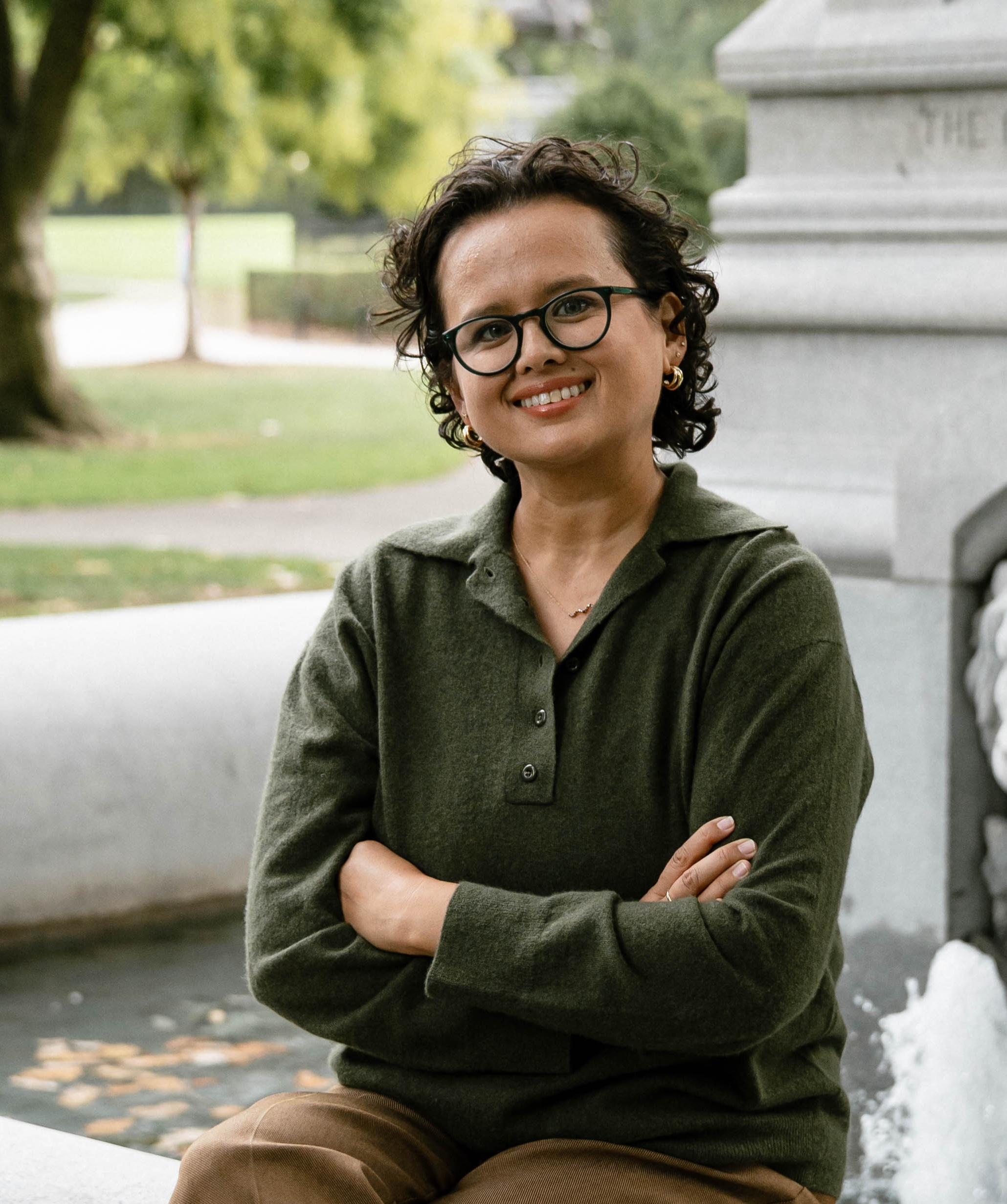
 Presenter: Pauline Kim, Daniel Noyes Kirby Professor of Law at Washington University School of Law in St. Louis
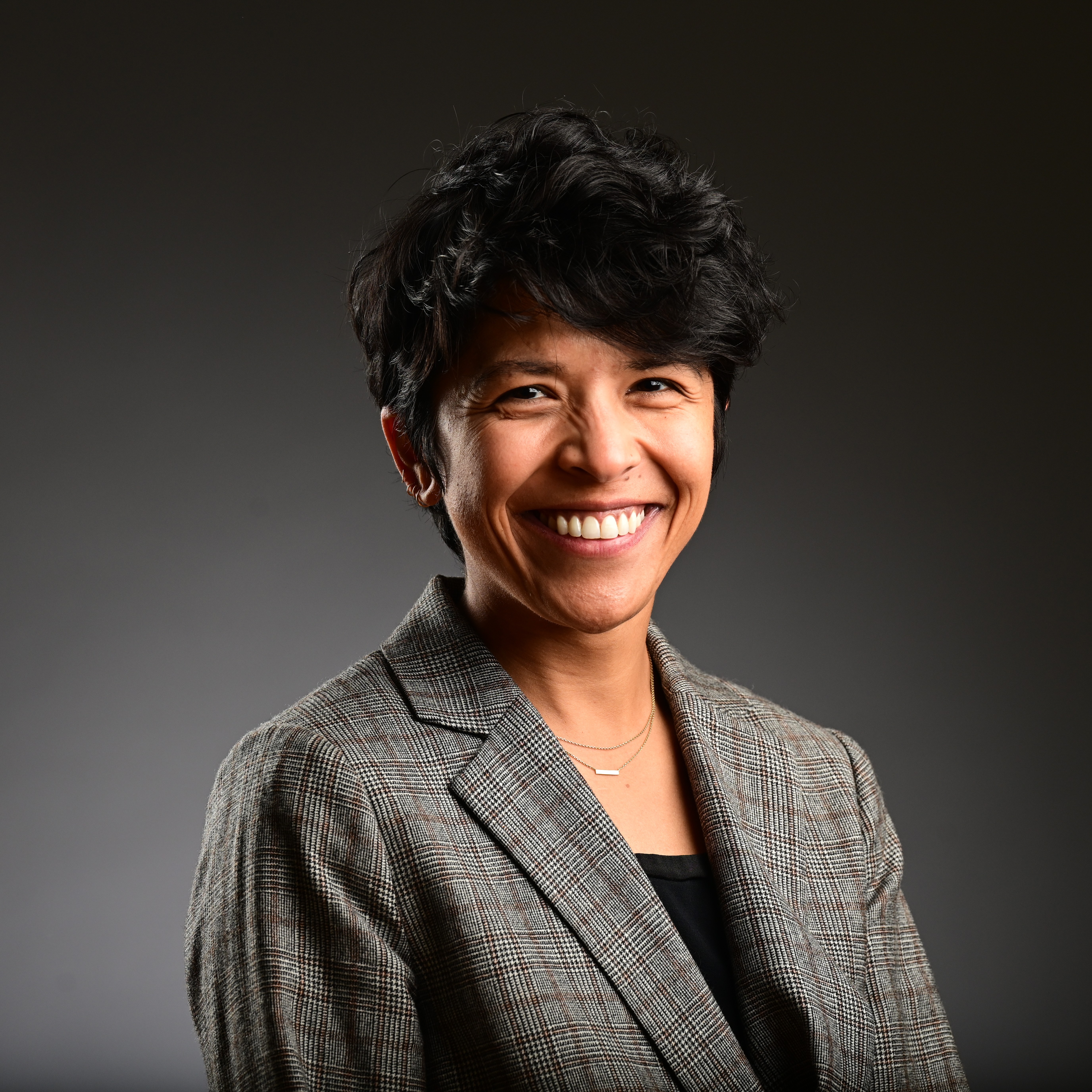 Presenter: Chinmayi Sharma, Associate Professor at Fordham Law School
 Presenter: Chuncheng Liu, Assistant Professor of Communication Studies and Sociology at Northeastern University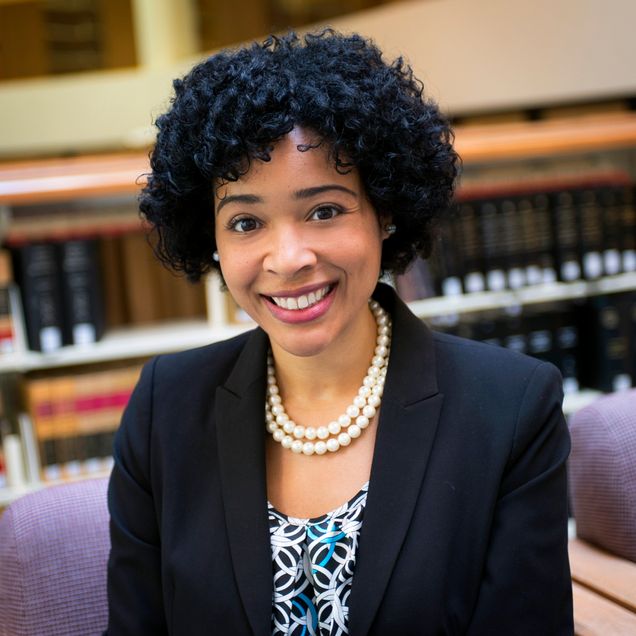
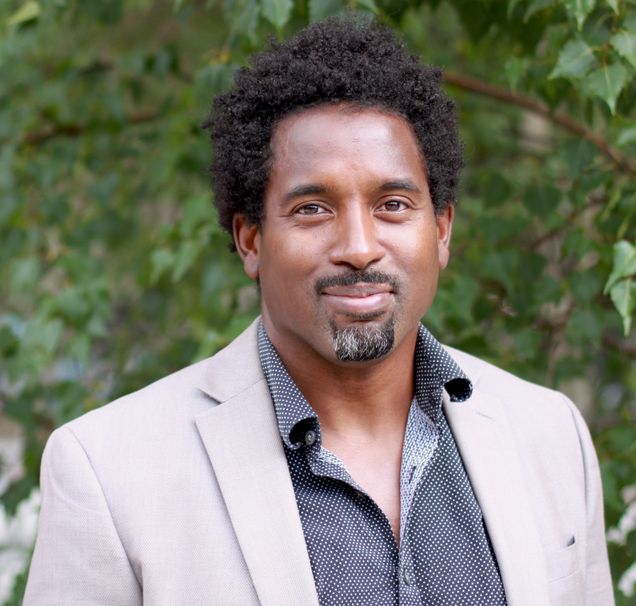
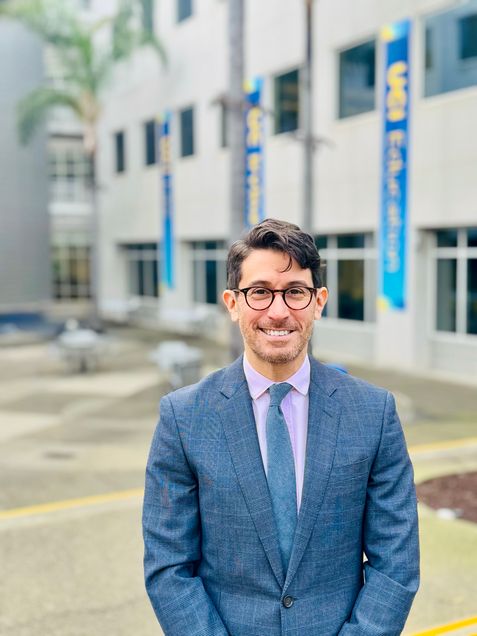
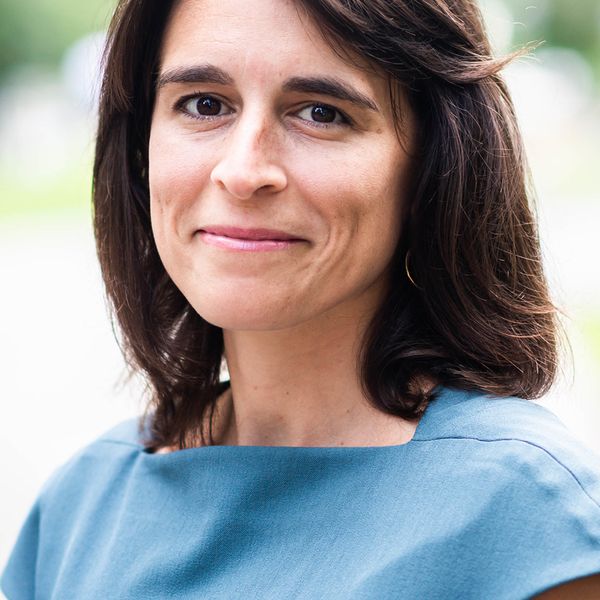 Sarah Sherman-Stokes is a clinical associate professor at Boston University School of Law. Ms. Sherman-Stokes teaches Immigration Law and is the associate director of the Immigrants’ Rights & Human Trafficking Clinic. Her scholarship takes a critical look at immigration law and policy, including at the intersections of asylum law, detention and deportation, and immigrant surveillance, enforcement, and abolition. Her recent law review articles have been published in the Denver Law Review, Hastings Law Journal, Georgetown Immigration Law Journal, Villanova Law Review, and the Indiana Law Review. She regularly speaks and appears in the media on issues including asylum, detention, and deportation. She has published op-eds in The Washington Post, USA Today, Cognoscenti, Bloomberg Law, and The Hill.
 Presenter:
  Presenter:
  Presenter:
 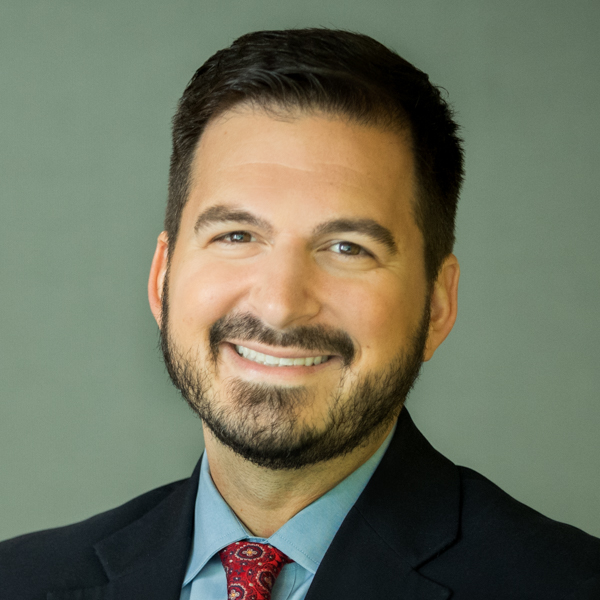 The Case Against Normalizing Surveillance
 Presenter:
