Brink Bites: Color-Changing Wipes Can Detect Lead, BU Researcher Named Ecological Society President
Other research news, stories, and tidbits from around BU, including a study of opioid use disorder treatment and new insights into Ebola and Marburg

Testing for lead—perhaps from old paint—in homes can involve expensive lab tests; a new BU study found color-changing wipes could offer a cheaper alternative. Photo via iStock/XiFotos
Brink Bites: Color-Changing Wipes Can Detect Lead, BU Researcher Named Ecological Society President
Other research news, stories, and tidbits from around Boston University, including a study of opioid use disorder treatment and new insights into Ebola and Marburg
The Brink’s latest collection of news nuggets, short stories, and other thought-provoking snippets from the world of Boston University research—including a national honor for a biology researcher and an innovative infectious diseases study using mini 3D structures that mimic the human gut.
Boston University Researcher Named Ecological Society of America President

BU biologist Pamela Templer has been elected president of the Ecological Society of America (ESA). The nonpartisan, nonprofit organization, which was founded in 1915, is reportedly the world’s largest for professional ecologists. “I am honored to serve ESA and work alongside such a dedicated community of ecologists,” said Templer, a BU College of Arts & Sciences distinguished professor and chair of biology, in an ESA press release. “In a time when science faces mounting challenges, it is vital that we support research, training, and collaboration across sectors. I look forward to helping strengthen connections among scientists, policymakers, and the public to advance ecological knowledge and address pressing global challenges.”
Study Finds Gaps in Opioid Use Disorder Medication Access
Many Medicaid enrollees with an opioid use disorder (OUD) are not receiving timely medication, according to a study coled by BU School of Social Work researcher Peter Treitler. With colleagues from Rutgers University, he found 69.2 percent of Medicaid patients with a new OUD diagnosis were not given access to buprenorphine, methadone, or naltrexone within 180 days. The results were published in the American Journal of Drug and Alcohol Abuse. The researchers discovered that Black and Hispanic patients were more likely to miss out compared to their white peers. “State and local policies aimed at increasing timely, equitable, and sustained treatment receipt are needed to address the opioid epidemic and reduce disparities,” Treitler, an SSW assistant professor, and his colleagues wrote.
“Mini Guts” on a Chip Could Help in Fight Against Ebola and Marburg
BU researchers have discovered how the Ebola and Marburg viruses—which both cause life-threatening diarrhea and dehydration—damage the gastrointestinal tract. The findings could help scientists explore new treatment options. To safely observe how these viruses damage the human body, the researchers created mini 3D structures, called organoids, to mimic intestinal and colonic tissue. The organoids—which they call “mini guts”—allowed them to study the viruses’ impact on tissue in a secure lab environment without any risk to patients. “This research enhances our understanding of how filovirus infections damage the gut and identifies potential cellular pathways for targeted treatments,” says Elke Mühlberger, a BU Chobanian & Avedisian School of Medicine professor of virology, immunology, and microbiology, and an investigator at the University’s National Emerging Infectious Diseases Laboratories (NEIDL). The study’s lead author was recent BU PhD graduate Elizabeth Yvonne Flores (CAMED’25). Researchers found more severe impacts in the organoids resembling the colon than those mimicking the small intestine, finding the viruses disrupted “ion and fluid transport in the gut and damaged the structure of the gut lining,” according to a BU medical school news release. “These changes may help explain how these viruses cause the massive fluid loss that leads to life-threatening diarrhea.”
Worried About Lead in Your Home? Color-Changing Wipes Could Help Detect It
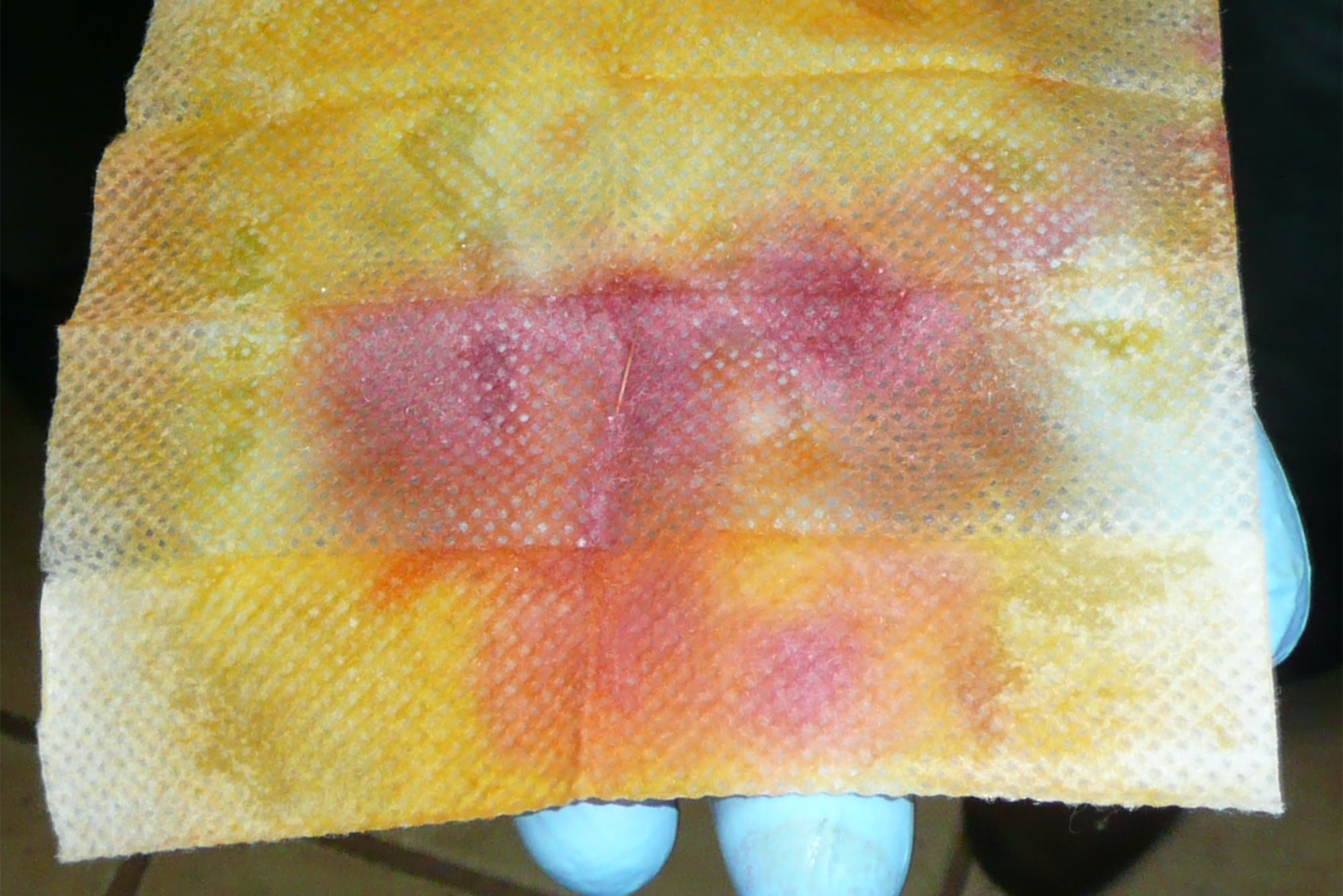
Colorimetric wipes that change to red or orange when they detect lead are a reliable and low-cost alternative to expensive lab tests, according to a new study from BU School of Public Health and University of Washington School of Public Health researchers. After testing the wipes’ effectiveness in the homes and cars of construction workers who spent time in hazardous environments, the researchers found the wipes “were able to correctly identify the majority of contaminated and uncontaminated surfaces, with a low rate of false negatives,” reports the SPH news team. While lab tests for lead can cost more than $100, the National Institute for Occupational Safety and Health–developed wipes reportedly sell for less than $10 per sample. That means “they can be used more often and in more places,” said study coauthor Jonathan Levy, SPH chair and professor of environmental health. “Knowing which surfaces have elevated lead can allow for targeted remediation and effective exposure reduction strategies.”
