The series is made possible by the generosity of Bill (LAW’71) and Patty Kleh and the Kleh Family Foundation.
London: The Kleh Family Foundation Distinguished Lecture
Wednesday, May 6, 2026
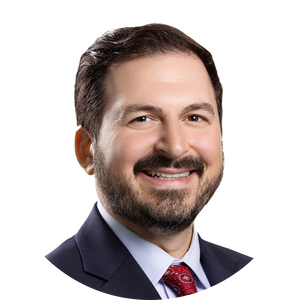
Boston University London Academic Centre hosted The Kleh Family Foundation Distinguished Lecture given by Woodrow Hartzog, the Andrew R. Randall Professor of Law at Boston University School of Law.
The evening featured Hartzog’s lecture “How AI Destroys Institutions.”
About the Lecture: “How AI Destroys Institutions”
Civic institutions like the rule of law, universities, and a free press are the backbone of democratic life. They are the mechanisms through which complex societies encourage cooperation and stability, while also adapting to changing circumstances. The real superpower of social institutions is their ability to adapt to change while maintaining social legitimacy. Purpose-driven institutions built around transparency, cooperation, and accountability empower individuals to take intellectual risks and challenge the status quo. Institutions flourish thanks to interpersonal relationships, which broaden perspectives and strengthen shared commitment to civic goals.
Unfortunately, the affordances of AI systems extinguish these institutional features at every turn. This talk will make one simple point: Curren AI systems are built to function in ways that degrade and, if left unchallenged, are likely to destroy our crucial civic institutions. The current pathologies of AI systems have the effect of eroding expertise, short-circuiting decision-making, and isolating people from each other. These features are anathema to the kind of evolution, transparency, cooperation, and accountability that give vital human institutions their purpose and sustainability. In short, modern AI systems are a death sentence for civic institutions, and we should treat them as such.
About the series
Over the past decade and a half, some of the greatest minds at Boston University have had a rare opportunity: to travel to London and present their best thinking to one of the world’s more discerning audiences.
The event is the William H. and Patricia M. Kleh Lecture, held annually since 2001. As the roster attests, the speakers have been outstanding by any measure. They have addressed an almost astonishing range of topics: from art to politics to journalism to global health—and many, many more. The late Elie Wiesel challenged his audience to embrace peace and fight indifference, and to remain engaged as citizens in times of crisis. Ed Damiano described how his “bionic pancreas”—tantalizingly close to going to clinical trials—might soon revolutionize diabetes care. Even within a single field represented by multiple Kleh Lectures, the diversity of viewpoints has been impressive—music from Bach to Dylan, and empires from the United Kingdom to the United States.
If anything, the Kleh Lecture has exceeded expectations. It has done more for our faculty than anticipated. Far more than we could have hoped, it has reinforced Boston University’s reputation as a global crucible of powerful ideas. And perhaps it’s fair to say that each year, it educates, entertains, and delights its London audiences beyond their already high standards.
Today, on both sides of the Atlantic, people look forward to the Kleh Lecture.
Roster of past speakers
Professor Taylor Boas
Change at All Costs: The Anti-Establishment Electoral Trend in Western Democracies
Boston University London Centre and online – November 6, 2024
Photo gallery
Azer Bestavros
Redefining Tomorrow: The Unprecedented Opportunities and Challenges of Generative AI
Boston University London Centre and online – November 15, 2023
Photo gallery
Muhammad H. Zaman
Global Refugee Crisis: What can scientists and engineers do to ease the suffering and protect the vulnerable?
Boston University London Centre and online – October 6, 2022
Photo gallery
Nahid Bhadelia
Surviving the Age of Epidemics: How do we build resilience against new infectious diseases?
Boston University London Centre and online – October 14, 2021
Photo gallery
Virginia Sapiro
Seeking Solace from History? Elections and Threats to Democracy
Online—October 28, 2020
Cathie Jo Martin
Neoliberalism, Social Investment, and the Fortunes of Low-skill Youth: Literary Memes from the Anglo and Nordic Worlds
Boston University London Centre – November 21, 2019
Photo gallery
Maureen A. O’Rourke
Copyright Law in the Digital Age
Boston University London Centre – November 8, 2018
Photo gallery
Adil Najam
The New World Disorder: The Politics of Anti-politics
Boston University London Centre – November 1, 2017
Photo gallery
Kevin Outterson
Ready for a World Without Antibiotics? The Global Threat of Antibiotic Resistance and How to Address It
Boston University London Centre – November 3, 2016
Photo gallery
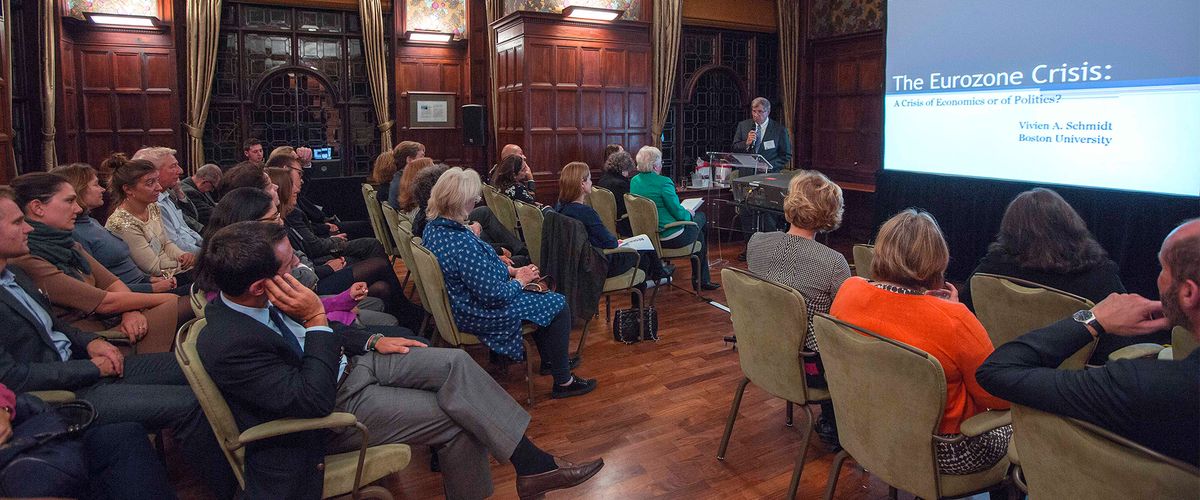
Vivien A. Schmidt
The Eurozone Crisis: A Problem of Economics or Politics?
Boston University London Centre – 21 October 2015
Photo gallery
Edward Damiano
BU’s Bionic Pancreas – A Revolutionary Technology for Diabetes Treatment
Boston University London Centre—9 October 2014
Jonathon L. Simon
The Proof is in the Population: Evidence for Action for Global Health
Boston University London Centre—4 October 2013
Photo gallery
Robert Brown
The Chemistry of Quality: Research Universities in a Rapidly Changing World
Boston University London Centre—8 November 2012
Photo gallery
Andrew Bacevich
9/11 Plus Ten: Reflecting on the Strategic Implications of a Wasted Decade
Boston University London Centre—26 October 2011
Tom Fiedler
Good News or Bad News: Journalism in a State of Flux on Both Sides of the Atlantic
Boston University London Centre—3 November 2010
Hugh O’Donnell
Site-Specific Art: Collaboration Between Art & Industry
Boston University London Centre—7 October 2009
Simon Gilchrist
The U.S. Financial Crisis: How Did It Start? How Will It End?
Two Temple Place—13 November 2008
Husain Haqqani
Pakistan: The West’s Troubled & Troubling Ally
Two Temple Place—25 October 2007
Gerald Keusch
Saving Ourselves: Global Warming & Global Health
Westminster Hall, St. James Hotel—14 November 2006
Peter Hawkins
Lost & Found: The Bible in Contemporary America
Two Temple Place—10 November 2005
André de Quadros
J. S. Bach
Royal College of Music—4 November 2004
Andrew Bacevich
Dynamics of America’s Global Leadership
Imperial College—25 March 2004
Diana Wylie
Lessons of Empire: Britain & America
The American School in London—10 March 2003
Elie Wiesel
Imagining Peace, Against Indifference
Freemasons’ Hall—23 October 2002
Ronald A. Cass
Terrorism, the Rule of Law & Trade: The Aftershocks of 9/11
Royal Geographical Society—10 April 2002
Lord Hugh Thomas
Why “America”?
The American School in London—1 November 2001
Christopher Ricks
Bob Dylan’s Art & the Art of Poetry
Royal Geographical Society—18 April 2001