Gerard Lawler
Physics ’16
- Title Physics ’16
UROP Award
Low Energy Antiproton Beam Extractor for use in Antihydrogen Production
Gerard Lawler spent his summer working under the mentorship of Professor Lawrence Sulak in the Physics Department. His research was conducted at CERN in Geneva, Switzerland. Gerard worked with AEgIS (Antihydrogen Experiment: Gravity, Interferometry, Spectroscopy), which uses a beam of antiprotons from the Antiproton Decelerator to measure the value of Earth’s gravitational acceleration. The AEgIS experiment will represent the first direct measurement of a gravitational effect on an antimatter system, with the goal of determining if antimatter falls up.
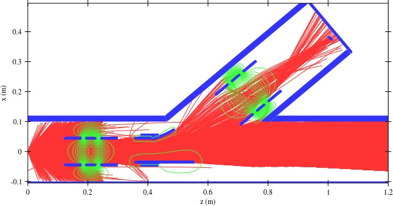
Using a device called an interferometer, the effect of gravity can be measured on an antihydrogen atom. AEgIS aims to create a beam of antihydrogen atoms to send through the interferometer. The idea is to take one beam of antiprotons and another of positronium (which contains an antielectron), and combine them to produce the beam of antihydrogen. Gerard’s project focused on creating a beam of antiprotons appropriate for these purposes. He helped craft a device used for Generating a Reduced-Energy Antiproton beam using Channeling Electrostatics, or GRACE for short. GRACE extracts the lowest energy particles from the higher energy beam and makes a second beam with a much lower average energy.
 During his experience, Gerard’s mentors gave him an unexpected sense of autonomy. This independence allowed him to work with his own ideas, spending a large amount of time performing background research and using it to formulate his own conclusions. Gerard believes his research will eventually help realize the ultimate goal of creating an antihydrogen beam measuring the effects of gravity on antimatter, which will give humanity a more complete understanding of the universe. He believes “the collaboration itself in its pursuit of an answer is also pushing the boundaries of many technologies such as vacuum and cryogenic technology, spectrometry, and interferometry, all of which have many applications outside of particle physics.” Knowledge of these subjects is essential in many fields, including medical treatments such as ion therapy, industrial applications for manufacturing, and mass spectrometry.
Next summer, Gerard will return to CERN to continue his work with the AEgIS collaboration. He plans to pursue a PhD in accelerator and beam physics, with the ultimate goal of making a tabletop-sized particle accelerator. Gerard feels his research experience has been an incredibly valuable part of his undergraduate education. “Be confident in yourself,” he advises undergraduate researchers. “If you think you know the answer to a question, then say it.”
- Profiles
- Gerard Lawler