K23 Career Development Award Supports Dr. Emily Evans’ Research to Improve Long-Term Traumatic Brain Injury Care
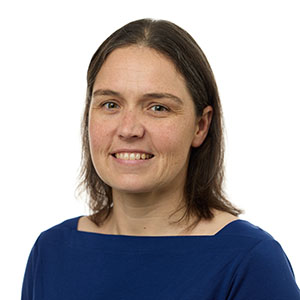 Emily Evans, PT, DPT, PhD, NCS, assistant professor of physical therapy at Boston University’s Sargent College of Health and Rehabilitation Sciences, has received the National Institutes of Health K23 Mentored Patient-Oriented Research Career Development Award. The K23 award is a competitive award that aids researchers in conducting patient-oriented research while receiving advanced research training and mentorship. The five-year career development award supports her patient-oriented research on long-term traumatic brain injury (TBI) care. Funded by the Eunice Kennedy Shriver National Institute of Child Health and Human Development (NICHD) in the amount of $166,752, her research project began in April of 2026 and is set to conclude in March of 2031.
Advancing Long-Term TBI Care
Dr. Evans’ research project aims to assess the use of self-management training for patients with traumatic brain injury and its integration into routine care. The goal being to improve the long-term health and quality of life for people living with the condition, reflecting a much larger shift in the field towards recognizing the lifelong effects of brain injury. Traditionally, TBI care has focused on stabilizing a patient immediately after injury and restoring function through rehabilitation. While rehabilitation has traditionally emphasized the acute and subacute phases of recovery, recent work has placed a greater focus on lasting consequences, as well as health after formal rehabilitation. “The conversation has shifted towards TBI as a chronic condition, really, within the last 15 years,” said Dr. Evans, “even people who were focused on acute management are starting to think about the longer-term consequences of early interventions.”
This new given attention to the post-acute and chronic treatment of traumatic brain injury is one foundation behind Dr. Evans’ research project. Over the next five years, her research will assess how evidence-based self-management training can be integrated into routine care for traumatic brain injury. The emphasis, she says, is on implementation: assessing a program that works for a population of patients who would benefit from additional tools to manage their health long after their initial injury. Additionally, Dr. Evans’ hopes to identify barriers preventing the evidence-based program from becoming part of routine care.
At its core, self-management is intended for people with chronic conditions, and encompasses a variety of skills used to manage health and well-being.
“Self-management itself is really just people managing their health and well-being in the presence of a chronic health condition.”
Traditional applications of the program include: diabetes, heart disease, arthritis, and chronic respiratory illnesses, where patients generally expected to monitor symptoms and make daily decisions independently. Although self-management has been studied at length in these, and various other patient populations, its use in traumatic brain injury care has received relatively little attention. The chronic condition itself requires consideration of many of the skills that self-management depends on, including memory, attention, planning, emotional regulation, and problem-solving, as well as how the program must be adjusted to be accessible to a new patient population. Dr. Evans’ work in identifying medical, behavioral, and social challenges associated with brain injury aims to do exactly that.
Examining Self-Management in TBI Rehabilitation
While self-management has proved successful in various chronic conditions, Dr. Evans research is driven by one question: how can an intervention developed for broad patient populations effectively address the unique challenges associated with traumatic brain injury? Her research project doesn’t aim to create a new program, but to examine how a successful model can be adapted to meet the needs of people living with TBI.
Before evaluating how self-management training can be implemented, Dr. Evans first aims to understand how people with traumatic brain injury interact with the healthcare system as is. In analyzing electronic health records from Boston Medical Center, the research will “identify people who might be exhibiting some patterns of inefficient healthcare utilization.” These patterns, Dr. Evans says, may look like patients bouncing between providers, utilizing emergency care as opposed to primary care, or otherwise struggling to navigate the healthcare system after injury. Having a steady relationship with healthcare providers is something Dr. Evans’ specified as pivotal for patients struggling to manage fluctuations in their condition. For Dr. Evans, these disruptions in care point to a need for additional support, identifying traumatic brain injury patients who may benefit from self-management.
The second aim of the research project lies in understanding the lived experience of patience with traumatic brain injury. Dr. Evans explained that the team hopes to “understand the experiences of people with brain injury, both their self-management needs and then what challenges they might experience in accessing a community-based program.” She emphasizes that, while the self-management program was designed to be “condition-agnostic,” a thorough evaluation and understanding has never been extended to the brain injury population.
“The program that we’re looking at is existing. It goes on in the community now. It is supposed to be condition-agnostic, but it hasn’t really been evaluated specifically in a brain injury population.”
Through interviews and other mixed-method approaches, Dr. Evans’ hopes to identify the specific barriers, needs, and priorities that shape how people with TBI have and would engage with self-management programs.

Laying the Groundwork for Self-Management Research
Dr. Evans’ NIH-funded research project is the culmination of years of work spent analyzing how patients with TBI operate and continue to manage their condition beyond a hospital and rehabilitation setting. Through large-scale data analysis, her previous work has explored not only the lasting consequences of traumatic brain injury, but also the factors that shape long-term recovery.
In a 2025 study published in the Archives of Physical Medicine and Rehabilitation, titled “Alignment Between Self-management Training and the Needs of Individuals with Chronic Traumatic Brain Injury: A Qualitative Analysis,” Dr. Evans and her colleagues performed a qualitative analysis of 22 traumatic brain injury patients participating in the Chronic Disease Self-Management Program (CDSMP). CDSMP, developed at Stanford University in the 1990s, is a structured, evidence-based self-management education program developed to treat arthritis, heart disease, and lung disease, and other chronic conditions. The project identified a significant overlap between the needs of TBI patients and CDSMP skills, as well as significant gaps where TBI-specific adaptations could be made to the program.
“I think we found a lot of alignment, but not perfect alignment,”
The goal of the current research project, Dr. Evans says, is to “see how this existing program that has infrastructure, that has research support behind it, can help address a need that this new population—the brain injury population—has, with full acknowledgment that it may not be perfect”. In recognizing that the existing program may be useful but, for the brain injury population, incomplete, the long-term goal became identifying the modifications necessary before broader implementation. The current research project is a major step in that ongoing process.
Connecting Evidence and Practice
Driving Dr. Evans’ NIH-funded work is a commitment to bridging the gap between research findings and clinical practice.
“My whole goal in being a researcher is to decrease the disconnect between research knowledge generation… and what people are experiencing in practice.”
For her, this means ensuring research addresses challenges that patients actually face, with the goal of translating those findings into real-world care.
That philosophy guides the Rehabilitation Learning, Innovation, and Care (LINC) Lab, which Dr. Evans directs at Sargent College. In quantifying electronic health records, administrative data, and patient/caregiver/clinician interviews, the lab aims to increase efficiency, effectiveness, and quality of rehabilitation care, learning from previous rehabilitation practice to inform improvements. “We do a lot of work connecting evidence into addressing real-world challenges that people have,” Dr. Evans said, “The goal of the LINC lab, and LINC is the name, purposefully, is the idea that we’re going to learn from current practices with the goal of continually improving care and quality of life for individuals with various conditions.”
Implementation research serves as a central focus of the Rehabilitation LINC Lab’s work. This research includes how evidence-based practices can be adapted to real-world settings, how healthcare systems can adopt and sustain new interventions, and looking into the barriers that prevent those findings from reaching patients. The lab isn’t simply concerned with whether an intervention works, but also with its accessibility to patients and the feasibility of integrating it into routine care. Dr. Evans’ NIH-funded project applies that approach to traumatic brain injury by connecting research with the practical needs of patients, clinicians, and healthcare systems.

Looking Ahead
As Dr. Evans’ project progresses over the next five years, she hopes to transition from identifying healthcare-utilization patterns, how understanding how people with TBI navigate the healthcare system, to evaluating self-management interventions, and how they can be adapted for the brain injury population. In identifying barriers that prevent self-management training from becoming a routine part of TBI care, her research fosters the steadfast goal of improving support for the brain injury population after formal rehabilitation.
Dr. Evans indicated that the project may also present opportunities for students across Boston University to contribute to her rehabilitation research. While Dr. Evans expressed that the specifics are still being determined, in the past Dr. Evans has guided students in both qualitative and quantitative data analysis, as well as community-engaged research, gaining firsthand experience with patient-orientated research.
“We’ll sort of see how people’s academic needs and the opportunities align as things sort of move forward”
Engaging with students in Sargent College—some in the midst of their practicums within the physical therapy department—as well as students from the School of Public Health and various other disciplines.
As the understanding of traumatic brain injury continues to evolves, Dr. Evans hopes her work is representative of a broader shift towards sustained support for patients with traumatic brain injury, and further recognition of the condition as lifelong. She expressed that the challenge in research brain injury is the expansive variability in outcome and patient experience. Like her work, this progress takes patience, patience, collaboration, and an understanding that improving long-term care begins with meeting patients where they are.