
Master in Business Analytics: Alumni Panel
Thursday, April 23
12:00 PM

The MS in Business Analytics is a customizable 12 – or 16 – month STEM degree program that develops your ability to solve complex business problems using data. The curriculum builds not only your statistical and programming expertise through hands-on, real-world projects, but also your skills in strategic thinking, communication, and collaboration—all essential for turning insights into business impact.
Explore how each semester of the MSBA program applies AI and advanced analytics across industries and functions, preparing you to make data-informed decisions that drive measurable results.
Choose between two program track lengths and three designated concentrations to tailor your academic path to your career aspirations.
Or build your own path by selecting from Questrom’s range of electives.
| Summer and Launch |
|---|
| Classroom |
| Intensive, hands-on bootcamp designed to refresh skills and align expectations. |
| Careers |
| Résumé workshops, mock interviews, employer insights, and alumni career panels. |
| Community |
| Advising sessions and exposure to MSBA resources. |
| Fall Module 1 |
|---|
| Classroom |
| -Intro to Data Analytics -Storytelling with Data -Competing with Analytics -Teaming |
| Careers |
| Finalizing application materials |
| Community |
| Questrom Community Building |
| Fall Module 2 |
|---|
| Classroom |
| -Business Analytics Toolbox -Supervised Machine Learning -Competing with Analytics -Teaming |
| Careers |
| Internship Search for 16-Month Students |
| Community |
| Alumni Networking |
| Spring Module 1 |
|---|
| Classroom |
| – Data Ethics (Winter Break Intensive) – Unsupervised Machine Learning -Business Experimentation & Causal Methods -Optional Elective |
| Careers |
| Aligning your academic experiences and career goals |
| Community |
| New York City Trek |
| Spring Module 2 |
|---|
| Classroom |
| Three electives |
| Careers |
| Finalizing summer plans |
| Community |
| Final full MSBA community events |
| Summer |
|---|
| Classroom |
| – Capstone or Internship or Independent Project – Elective for 12-Month Students |
| Careers |
| Focus on job search for 12-Month students |
| Community |
| 12-Month Graduate Celebration |
| Final Fall |
|---|
| Classroom |
| – Elective 3 – Elective 4 – Internship or Practicum |
| Careers |
| Focus on job search for 16-Month students |
| Community |
| 16-Month Graduate Celebration |

“I benefited from the program’s hands-on, industry-focused projects and was surprised by how integral the friendships I formed became to my success.”

“The MSBA program offers a unique opportunity to explore my interests through coursework and focused projects. Through specialized courses, I have strengthened my ability to contribute to data-driven solutions across the healthcare landscape.”

The MS in Business Analytics program at the Questrom School of Business is currently designated by US Department of Homeland Security (DHS) as a STEM-eligible degree program. International students in F-1 student status may be able to apply for a 24-month extension of their 12-month Optional Practical Training (OPT) employment authorization. More information about STEM OPT eligibility is available from the BU International Students and Scholars Office (ISSO).
Build your Questrom MSBA experience to match your goals. All students complete the program in 3 semesters—two full-time and a final part-time semester—however you can choose the pace that works for you with a 12-month or 16-month track. Shape your path with varied electives or deepen your expertise through concentrations in Marketing Analytics, Healthcare Analytics, or Data & Methods. You don’t need to commit to a specific path before starting—the MSBA faculty and staff are there to guide you as deadlines approach, helping you make decisions that set you up for success.

The 12-Month MSBA track spans fall, pre-spring, spring, and summer semesters with final electives and a capstone industry project. Designed for early professionals with analytics exposure, it lets you add a concentration in Data & Methods or Marketing Analytics.
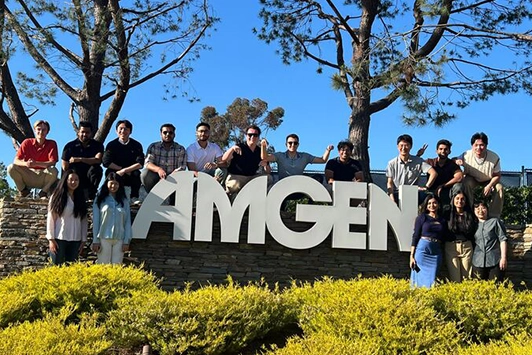
The 16-Month MSBA track spans fall, pre-spring, spring, summer, and a second fall semester, featuring a 3–6 month internship to gain real-world experience. Ideal for recent graduates or those new to advanced analytics, it also offers concentrations in Data & Methods, Marketing Analytics, or Healthcare Analytics.
Our MS in Business Analytics program offers three concentrations: Healthcare, Marketing, and Data & Methods. Through focused courses and hands-on projects, students build expertise in their chosen area. Whether new to the field or advancing prior experience, they gain practical, industry-ready skills to make an impact in analytics.
The Data & Methods concentration equips students with advanced analytical tools and techniques to tackle complex, real-world problems through data-driven decision-making. Through courses in neural networks, machine learning, optimization, and big data, students gain practical skills to extract insights and drive impact across industries.
The Healthcare Analytics concentration trains students to analyze diverse healthcare data to uncover insights that improve outcomes and operational efficiency. Through interdisciplinary coursework, students gain the analytical and strategic skills needed to lead in healthtech, biopharma, and healthcare systems.
The Marketing Analytics concentration prepares students to harness data to understand customer behavior, evaluate campaign performance, and inform strategic marketing decisions. With coursework spanning digital marketing, pricing, and consumer insights, students build the skills needed to drive impact across brand, product, and customer-focused roles.
Students engage in hands-on, real-world learning through internships, co-ops, capstone consulting projects, and independent research, applying advanced analytics and technical skills to meaningful business challenges.
Students in the 16-month track may complete an internship in the summer, during their final fall semester, or even pursue different internships across both terms—allowing them to gain hands-on experience with employers in the industries and functions that interest them most.
Students in the 12-month track work in collaborative peer teams on a consulting-style project for an industry client, applying and showcasing their strengths in communication, teamwork, and advanced technical skills to solve a real business challenge.
Students in the 16-month track may pursue a six-month co-op, immersing themselves in full-time, hands-on work with an employer. This extended experience allows them to deepen their technical skills, build professional confidence, and make meaningful contributions to a real organization.
Students in the 12-month and 16-Month track have the option to pursue independent analytics research projects, working with a faculty advisor to identify a specialized topic of their choosing. These projects allow students to deepen their technical expertise, apply analytical methods in meaningful ways, and produce work that reflects their individual interests and strengths.
Whether you choose between the 12-Month Track or the 16-Month Track, you start with the same fall semester and pre-spring semester courses.
Fall Semester
COURSE CODE: ba780
Further development of the concepts introduced in Introduction to Data Analytics I. Data munging will be the core of this course, where students will learn how to clean the data, handle missing values, perform data transformations and manipulations, and prepare it for analysis. Through learning data visualization, exploratory techniques, and summarizing methods students will become competent to perform exploratory data analysis. These techniques are typically applied before any modeling begins and can help to confirm the validity of the original business question or to refine it. They are also stepping stones in informing the development of more complex statistical models. The course will conclude with creating data reports and interactive dashboards, two major communication tools required in any data science project.
COURSE CODE: ba810
The internet has become a ubiquitous channel for reaching consumers and gathering massive amounts of business-intelligence data. This course will teach students how to perform hands-on analytics on such datasets using modern supervised machine learning techniques through series a lectures and in- class exercises. Students will analyze data using the R programming language, derive actionable insights from the data, and present their findings. The goal of the course is to create an understanding of modern analytics methods, and the types of problems they can be applied to. The course is open to students with or without a technical background who are interested in analytics. While no prior programming experience is required, students will learn the fundamentals of the R programming language to build and test predictive models.
COURSE CODE: ba815
COURSE CODE: es710
This course introduces the challenges of leading and participating in teams and project groups. It emphasizes the roles of team members and leaders, how to motivate within a team environment, and how to create an environment in which teams and their members increase their capabilities. This course also provides support for students as they work on program projects and helps students to gain both knowledge of team dynamics and the skills to shape them.
COURSE CODE: es729
COURSE CODE: ba775
This course will primarily focus on data and the key techniques that are necessary when working programmatically. Data is obtained from a data source; students will learn how to work with the most common data sources and how to load it into R. Once the data is loaded and before it can be analyzed one needs to apply a series of steps known as data munging to get a tidy and workable dataset.
Pre-Spring Semester
COURSE CODE: ba840
This class examines ethical issues of data, data science, and algorithms. We consider unintended consequences and transparency of algorithms, phenomena such as mass personalization and experimentation, and examine competing ideas about privacy and the sometimes blurry line between the private and the public spheres in the digital age. The course is intended to place analytics in a social context and equip students to anticipate and understand the ethical tradeoffs they will be making in the process of doing analytical work.
MSBA students enter the program with a diversity of academic and professional experiences and pursue a wide range of ambitions across industries and functions. One size does not fit all—that’s why you can select electives and concentrations that match your interests and choose the pace that fits your journey: 12-month capstone track or 16-month track with internship options.
Choose from three concentrations: Healthcare, Marketing, or Data & Methods, to sharpen your analytics acumen.
MSBA Curriculum by Concentration Pathway
Fall Semester
COURSE CODE: ba780
Further development of the concepts introduced in Introduction to Data Analytics I. Data munging will be the core of this course, where students will learn how to clean the data, handle missing values, perform data transformations and manipulations, and prepare it for analysis. Through learning data visualization, exploratory techniques, and summarizing methods students will become competent to perform exploratory data analysis. These techniques are typically applied before any modeling begins and can help to confirm the validity of the original business question or to refine it. They are also stepping stones in informing the development of more complex statistical models. The course will conclude with creating data reports and interactive dashboards, two major communication tools required in any data science project.
COURSE CODE: ba810
The internet has become a ubiquitous channel for reaching consumers and gathering massive amounts of business-intelligence data. This course will teach students how to perform hands-on analytics on such datasets using modern supervised machine learning techniques through series a lectures and in- class exercises. Students will analyze data using the R programming language, derive actionable insights from the data, and present their findings. The goal of the course is to create an understanding of modern analytics methods, and the types of problems they can be applied to. The course is open to students with or without a technical background who are interested in analytics. While no prior programming experience is required, students will learn the fundamentals of the R programming language to build and test predictive models.
COURSE CODE: ba815
COURSE CODE: es710
This course introduces the challenges of leading and participating in teams and project groups. It emphasizes the roles of team members and leaders, how to motivate within a team environment, and how to create an environment in which teams and their members increase their capabilities. This course also provides support for students as they work on program projects and helps students to gain both knowledge of team dynamics and the skills to shape them.
COURSE CODE: es729
COURSE CODE: ba775
This course will primarily focus on data and the key techniques that are necessary when working programmatically. Data is obtained from a data source; students will learn how to work with the most common data sources and how to load it into R. Once the data is loaded and before it can be analyzed one needs to apply a series of steps known as data munging to get a tidy and workable dataset.
Pre-Spring Semester
COURSE CODE: ba840
This class examines ethical issues of data, data science, and algorithms. We consider unintended consequences and transparency of algorithms, phenomena such as mass personalization and experimentation, and examine competing ideas about privacy and the sometimes blurry line between the private and the public spheres in the digital age. The course is intended to place analytics in a social context and equip students to anticipate and understand the ethical tradeoffs they will be making in the process of doing analytical work.
Spring Semester
COURSE CODE: ba840
This class examines ethical issues of data, data science, and algorithms. We consider unintended consequences and transparency of algorithms, phenomena such as mass personalization and experimentation, and examine competing ideas about privacy and the sometimes blurry line between the private and the public spheres in the digital age. The course is intended to place analytics in a social context and equip students to anticipate and understand the ethical tradeoffs they will be making in the process of doing analytical work.
COURSE CODE: ba830
This course teaches students how to measure impact in business situations and how to evaluate others’ claims of impact. We will draw on a branch of statistics called causal inference that studies when data can be used to measure cause and effect. The course will begin by discussing randomized controlled trials, the most reliable way of measuring effects, and will move onto other methods that can be used when experiments are not feasible or unavailable. We will learn how to implement these methods in R. Causal inference has become especially important for digital businesses because they are often able to run experiments and to harness ‘big data’ to make decisions. We will illustrate the methods we learn with examples drawn from digital businesses such as Airbnb, Ebay, and Uber and through topic areas such as price targeting, balancing digital marketplaces, reputation systems, measuring influence in social networks, and algorithmic design. We will also use data from other business and social science applications.
Choose 2 Electives
Summer Semester
COURSE CODE: ba885
In this course we will open the neural network (NN) "black box" and examine how these mathematical modeling tools evolved to become the powerful data analysis engines that many companies rely on today. We will start with simple, comprehensible, few neuron models that we can build from scratch on our devices, and byte by byte grow our skills to understand and manipulate the enterprise-scale networks with complex architectures that are currently used in businesses ranging from Alpha-Go to Tesla. As we explore the mathematical and computational representations of different network architectures, you will obtain a solid understanding of how to choose and customize NN models that fit best to the task at hand, aware of their strengths and challenges, and what these mean for practitioners in business analytics. Whenever possible, we will draw examples related to global challenges such as climate crisis.
COURSE CODE: ba888
The capstone project course will allow students to work on a data project in a team setting. The goal is for the students to solve a real-world problem using the knowledge, tools, and techniques acquired throughout the program and show their skills to potential employers. This course spans across the degree program and requires multi-semester efforts, however, the vast majority of the work will be done during the spring semester. The final product will be presented to a faculty panel at the end of the spring semester, followed by a poster session which will be open to the public.
BA889: Analytics Practicum
Fall Semester
COURSE CODE: ba780
Further development of the concepts introduced in Introduction to Data Analytics I. Data munging will be the core of this course, where students will learn how to clean the data, handle missing values, perform data transformations and manipulations, and prepare it for analysis. Through learning data visualization, exploratory techniques, and summarizing methods students will become competent to perform exploratory data analysis. These techniques are typically applied before any modeling begins and can help to confirm the validity of the original business question or to refine it. They are also stepping stones in informing the development of more complex statistical models. The course will conclude with creating data reports and interactive dashboards, two major communication tools required in any data science project.
COURSE CODE: ba810
The internet has become a ubiquitous channel for reaching consumers and gathering massive amounts of business-intelligence data. This course will teach students how to perform hands-on analytics on such datasets using modern supervised machine learning techniques through series a lectures and in- class exercises. Students will analyze data using the R programming language, derive actionable insights from the data, and present their findings. The goal of the course is to create an understanding of modern analytics methods, and the types of problems they can be applied to. The course is open to students with or without a technical background who are interested in analytics. While no prior programming experience is required, students will learn the fundamentals of the R programming language to build and test predictive models.
COURSE CODE: ba815
COURSE CODE: es710
This course introduces the challenges of leading and participating in teams and project groups. It emphasizes the roles of team members and leaders, how to motivate within a team environment, and how to create an environment in which teams and their members increase their capabilities. This course also provides support for students as they work on program projects and helps students to gain both knowledge of team dynamics and the skills to shape them.
COURSE CODE: es729
COURSE CODE: ba775
This course will primarily focus on data and the key techniques that are necessary when working programmatically. Data is obtained from a data source; students will learn how to work with the most common data sources and how to load it into R. Once the data is loaded and before it can be analyzed one needs to apply a series of steps known as data munging to get a tidy and workable dataset.
Pre-Spring Semester
COURSE CODE: ba840
This class examines ethical issues of data, data science, and algorithms. We consider unintended consequences and transparency of algorithms, phenomena such as mass personalization and experimentation, and examine competing ideas about privacy and the sometimes blurry line between the private and the public spheres in the digital age. The course is intended to place analytics in a social context and equip students to anticipate and understand the ethical tradeoffs they will be making in the process of doing analytical work.
Spring Semester
COURSE CODE: ba840
This class examines ethical issues of data, data science, and algorithms. We consider unintended consequences and transparency of algorithms, phenomena such as mass personalization and experimentation, and examine competing ideas about privacy and the sometimes blurry line between the private and the public spheres in the digital age. The course is intended to place analytics in a social context and equip students to anticipate and understand the ethical tradeoffs they will be making in the process of doing analytical work.
COURSE CODE: ba830
This course teaches students how to measure impact in business situations and how to evaluate others’ claims of impact. We will draw on a branch of statistics called causal inference that studies when data can be used to measure cause and effect. The course will begin by discussing randomized controlled trials, the most reliable way of measuring effects, and will move onto other methods that can be used when experiments are not feasible or unavailable. We will learn how to implement these methods in R. Causal inference has become especially important for digital businesses because they are often able to run experiments and to harness ‘big data’ to make decisions. We will illustrate the methods we learn with examples drawn from digital businesses such as Airbnb, Ebay, and Uber and through topic areas such as price targeting, balancing digital marketplaces, reputation systems, measuring influence in social networks, and algorithmic design. We will also use data from other business and social science applications.
Choose 2 Electives
COURSE CODE: ba843
COURSE CODE: ba865
This course will introduce you to the Python programming language and the ecosystem of software packages needed for Data Science and to build and train Neural Networks in Python, including: NumPy, Pandas, SKlearn, and PyTorch. After reviewing key Python building blocks, the course will focus on Neural Networks and Deep learning Concepts and implementation in PyTorch. This is an intensive course and the majority of it will be presented through interactive python notebooks (Google Colab).
Summer Semester
COURSE CODE: ba885
In this course we will open the neural network (NN) "black box" and examine how these mathematical modeling tools evolved to become the powerful data analysis engines that many companies rely on today. We will start with simple, comprehensible, few neuron models that we can build from scratch on our devices, and byte by byte grow our skills to understand and manipulate the enterprise-scale networks with complex architectures that are currently used in businesses ranging from Alpha-Go to Tesla. As we explore the mathematical and computational representations of different network architectures, you will obtain a solid understanding of how to choose and customize NN models that fit best to the task at hand, aware of their strengths and challenges, and what these mean for practitioners in business analytics. Whenever possible, we will draw examples related to global challenges such as climate crisis.
BA885: Advanced Analytics II (Applied Optimization)
COURSE CODE: ba888
The capstone project course will allow students to work on a data project in a team setting. The goal is for the students to solve a real-world problem using the knowledge, tools, and techniques acquired throughout the program and show their skills to potential employers. This course spans across the degree program and requires multi-semester efforts, however, the vast majority of the work will be done during the spring semester. The final product will be presented to a faculty panel at the end of the spring semester, followed by a poster session which will be open to the public.
BA889: Analytics Practicum
Fall Semester
COURSE CODE: ba780
Further development of the concepts introduced in Introduction to Data Analytics I. Data munging will be the core of this course, where students will learn how to clean the data, handle missing values, perform data transformations and manipulations, and prepare it for analysis. Through learning data visualization, exploratory techniques, and summarizing methods students will become competent to perform exploratory data analysis. These techniques are typically applied before any modeling begins and can help to confirm the validity of the original business question or to refine it. They are also stepping stones in informing the development of more complex statistical models. The course will conclude with creating data reports and interactive dashboards, two major communication tools required in any data science project.
COURSE CODE: ba810
The internet has become a ubiquitous channel for reaching consumers and gathering massive amounts of business-intelligence data. This course will teach students how to perform hands-on analytics on such datasets using modern supervised machine learning techniques through series a lectures and in- class exercises. Students will analyze data using the R programming language, derive actionable insights from the data, and present their findings. The goal of the course is to create an understanding of modern analytics methods, and the types of problems they can be applied to. The course is open to students with or without a technical background who are interested in analytics. While no prior programming experience is required, students will learn the fundamentals of the R programming language to build and test predictive models.
COURSE CODE: ba815
COURSE CODE: es710
This course introduces the challenges of leading and participating in teams and project groups. It emphasizes the roles of team members and leaders, how to motivate within a team environment, and how to create an environment in which teams and their members increase their capabilities. This course also provides support for students as they work on program projects and helps students to gain both knowledge of team dynamics and the skills to shape them.
COURSE CODE: es729
COURSE CODE: ba775
This course will primarily focus on data and the key techniques that are necessary when working programmatically. Data is obtained from a data source; students will learn how to work with the most common data sources and how to load it into R. Once the data is loaded and before it can be analyzed one needs to apply a series of steps known as data munging to get a tidy and workable dataset.
Pre-Spring Semester
COURSE CODE: ba840
This class examines ethical issues of data, data science, and algorithms. We consider unintended consequences and transparency of algorithms, phenomena such as mass personalization and experimentation, and examine competing ideas about privacy and the sometimes blurry line between the private and the public spheres in the digital age. The course is intended to place analytics in a social context and equip students to anticipate and understand the ethical tradeoffs they will be making in the process of doing analytical work.
Spring Semester
COURSE CODE: ba820
It has been reported that as much as eighty percent of the world’s data is unstructured. This course will cover the methods being applied to both unstructured and unlabeled datasets. Through a series of lectures and hands-on exercises, students will examine the techniques to unlock insights from data that appear to lack a known outcome. The goal of this course is to compare and contrast the application of various methods being applied today and provide the foundation to develop impactful insights from these datasets.
COURSE CODE: ba830
This course teaches students how to measure impact in business situations and how to evaluate others’ claims of impact. We will draw on a branch of statistics called causal inference that studies when data can be used to measure cause and effect. The course will begin by discussing randomized controlled trials, the most reliable way of measuring effects, and will move onto other methods that can be used when experiments are not feasible or unavailable. We will learn how to implement these methods in R. Causal inference has become especially important for digital businesses because they are often able to run experiments and to harness ‘big data’ to make decisions. We will illustrate the methods we learn with examples drawn from digital businesses such as Airbnb, Ebay, and Uber and through topic areas such as price targeting, balancing digital marketplaces, reputation systems, measuring influence in social networks, and algorithmic design. We will also use data from other business and social science applications.
COURSE CODE: ba860
This is an introductory course on Digital Marketing emphasizing analytics that seeks to familiarize students with digital marketing tactics. At the heart of marketing lies consumers and their marketing journey through the stages of awareness, intent, conversion and finally retention. In this course, we will learn how digital has revolutionized the interactions between firms and consumers along this journey. Digital offers powerful tactics to reach consumers along the funnel: online display ads raise awareness, search listings reach consumers with intent, on-site e-commerce marketing facilitate conversion, and social medial both energizes and retains customers.
COURSE CODE: ba881
TBA
COURSE CODE: mk852
This course will focus on developing marketing strategies driven by marketing analytics. Topics covered include market segmentation, targeting, and positioning, new product test marketing, market response models, customer profitability, social media, and marketing resource allocation. The course will draw on and extend students’ understanding of issues related to quantitative analysis and principles of marketing. The course will use a combination of cases, lectures, simulations, and a hands-on project to develop these skills.
Summer Semester
COURSE CODE: ba885
In this course we will open the neural network (NN) "black box" and examine how these mathematical modeling tools evolved to become the powerful data analysis engines that many companies rely on today. We will start with simple, comprehensible, few neuron models that we can build from scratch on our devices, and byte by byte grow our skills to understand and manipulate the enterprise-scale networks with complex architectures that are currently used in businesses ranging from Alpha-Go to Tesla. As we explore the mathematical and computational representations of different network architectures, you will obtain a solid understanding of how to choose and customize NN models that fit best to the task at hand, aware of their strengths and challenges, and what these mean for practitioners in business analytics. Whenever possible, we will draw examples related to global challenges such as climate crisis.
BA885: Advanced Analytics II (Applied Optimization)
COURSE CODE: ba888
The capstone project course will allow students to work on a data project in a team setting. The goal is for the students to solve a real-world problem using the knowledge, tools, and techniques acquired throughout the program and show their skills to potential employers. This course spans across the degree program and requires multi-semester efforts, however, the vast majority of the work will be done during the spring semester. The final product will be presented to a faculty panel at the end of the spring semester, followed by a poster session which will be open to the public.
BA889: Analytics Practicum
Fall Semester
COURSE CODE: ba780
Further development of the concepts introduced in Introduction to Data Analytics I. Data munging will be the core of this course, where students will learn how to clean the data, handle missing values, perform data transformations and manipulations, and prepare it for analysis. Through learning data visualization, exploratory techniques, and summarizing methods students will become competent to perform exploratory data analysis. These techniques are typically applied before any modeling begins and can help to confirm the validity of the original business question or to refine it. They are also stepping stones in informing the development of more complex statistical models. The course will conclude with creating data reports and interactive dashboards, two major communication tools required in any data science project.
COURSE CODE: ba810
The internet has become a ubiquitous channel for reaching consumers and gathering massive amounts of business-intelligence data. This course will teach students how to perform hands-on analytics on such datasets using modern supervised machine learning techniques through series a lectures and in- class exercises. Students will analyze data using the R programming language, derive actionable insights from the data, and present their findings. The goal of the course is to create an understanding of modern analytics methods, and the types of problems they can be applied to. The course is open to students with or without a technical background who are interested in analytics. While no prior programming experience is required, students will learn the fundamentals of the R programming language to build and test predictive models.
COURSE CODE: ba815
COURSE CODE: es710
This course introduces the challenges of leading and participating in teams and project groups. It emphasizes the roles of team members and leaders, how to motivate within a team environment, and how to create an environment in which teams and their members increase their capabilities. This course also provides support for students as they work on program projects and helps students to gain both knowledge of team dynamics and the skills to shape them.
COURSE CODE: es729
COURSE CODE: ba775
This course will primarily focus on data and the key techniques that are necessary when working programmatically. Data is obtained from a data source; students will learn how to work with the most common data sources and how to load it into R. Once the data is loaded and before it can be analyzed one needs to apply a series of steps known as data munging to get a tidy and workable dataset.
Pre-Spring Semester
COURSE CODE: ba840
This class examines ethical issues of data, data science, and algorithms. We consider unintended consequences and transparency of algorithms, phenomena such as mass personalization and experimentation, and examine competing ideas about privacy and the sometimes blurry line between the private and the public spheres in the digital age. The course is intended to place analytics in a social context and equip students to anticipate and understand the ethical tradeoffs they will be making in the process of doing analytical work.
Spring Semester
COURSE CODE: ba820
It has been reported that as much as eighty percent of the world’s data is unstructured. This course will cover the methods being applied to both unstructured and unlabeled datasets. Through a series of lectures and hands-on exercises, students will examine the techniques to unlock insights from data that appear to lack a known outcome. The goal of this course is to compare and contrast the application of various methods being applied today and provide the foundation to develop impactful insights from these datasets.
COURSE CODE: ba830
This course teaches students how to measure impact in business situations and how to evaluate others’ claims of impact. We will draw on a branch of statistics called causal inference that studies when data can be used to measure cause and effect. The course will begin by discussing randomized controlled trials, the most reliable way of measuring effects, and will move onto other methods that can be used when experiments are not feasible or unavailable. We will learn how to implement these methods in R. Causal inference has become especially important for digital businesses because they are often able to run experiments and to harness ‘big data’ to make decisions. We will illustrate the methods we learn with examples drawn from digital businesses such as Airbnb, Ebay, and Uber and through topic areas such as price targeting, balancing digital marketplaces, reputation systems, measuring influence in social networks, and algorithmic design. We will also use data from other business and social science applications.
Choose 2 Electives
Summer Semester
BA889: Analytics Practicum
Second Fall Semester
Choose 2 Electives
Fall Semester
COURSE CODE: ba780
Further development of the concepts introduced in Introduction to Data Analytics I. Data munging will be the core of this course, where students will learn how to clean the data, handle missing values, perform data transformations and manipulations, and prepare it for analysis. Through learning data visualization, exploratory techniques, and summarizing methods students will become competent to perform exploratory data analysis. These techniques are typically applied before any modeling begins and can help to confirm the validity of the original business question or to refine it. They are also stepping stones in informing the development of more complex statistical models. The course will conclude with creating data reports and interactive dashboards, two major communication tools required in any data science project.
COURSE CODE: ba810
The internet has become a ubiquitous channel for reaching consumers and gathering massive amounts of business-intelligence data. This course will teach students how to perform hands-on analytics on such datasets using modern supervised machine learning techniques through series a lectures and in- class exercises. Students will analyze data using the R programming language, derive actionable insights from the data, and present their findings. The goal of the course is to create an understanding of modern analytics methods, and the types of problems they can be applied to. The course is open to students with or without a technical background who are interested in analytics. While no prior programming experience is required, students will learn the fundamentals of the R programming language to build and test predictive models.
COURSE CODE: ba815
COURSE CODE: es710
This course introduces the challenges of leading and participating in teams and project groups. It emphasizes the roles of team members and leaders, how to motivate within a team environment, and how to create an environment in which teams and their members increase their capabilities. This course also provides support for students as they work on program projects and helps students to gain both knowledge of team dynamics and the skills to shape them.
COURSE CODE: es729
COURSE CODE: ba775
This course will primarily focus on data and the key techniques that are necessary when working programmatically. Data is obtained from a data source; students will learn how to work with the most common data sources and how to load it into R. Once the data is loaded and before it can be analyzed one needs to apply a series of steps known as data munging to get a tidy and workable dataset.
Pre-Spring Semester
COURSE CODE: ba840
This class examines ethical issues of data, data science, and algorithms. We consider unintended consequences and transparency of algorithms, phenomena such as mass personalization and experimentation, and examine competing ideas about privacy and the sometimes blurry line between the private and the public spheres in the digital age. The course is intended to place analytics in a social context and equip students to anticipate and understand the ethical tradeoffs they will be making in the process of doing analytical work.
Spring Semester
COURSE CODE: ba820
It has been reported that as much as eighty percent of the world’s data is unstructured. This course will cover the methods being applied to both unstructured and unlabeled datasets. Through a series of lectures and hands-on exercises, students will examine the techniques to unlock insights from data that appear to lack a known outcome. The goal of this course is to compare and contrast the application of various methods being applied today and provide the foundation to develop impactful insights from these datasets.
COURSE CODE: ba830
This course teaches students how to measure impact in business situations and how to evaluate others’ claims of impact. We will draw on a branch of statistics called causal inference that studies when data can be used to measure cause and effect. The course will begin by discussing randomized controlled trials, the most reliable way of measuring effects, and will move onto other methods that can be used when experiments are not feasible or unavailable. We will learn how to implement these methods in R. Causal inference has become especially important for digital businesses because they are often able to run experiments and to harness ‘big data’ to make decisions. We will illustrate the methods we learn with examples drawn from digital businesses such as Airbnb, Ebay, and Uber and through topic areas such as price targeting, balancing digital marketplaces, reputation systems, measuring influence in social networks, and algorithmic design. We will also use data from other business and social science applications.
COURSE CODE: ba843
COURSE CODE: ba865
This course will introduce you to the Python programming language and the ecosystem of software packages needed for Data Science and to build and train Neural Networks in Python, including: NumPy, Pandas, SKlearn, and PyTorch. After reviewing key Python building blocks, the course will focus on Neural Networks and Deep learning Concepts and implementation in PyTorch. This is an intensive course and the majority of it will be presented through interactive python notebooks (Google Colab).
Summer Semester
BA889: Analytics Practicum
Second Fall Semester
COURSE CODE: ba882
This course will equip students with the essential skills for transitioning data analysis and machine learning tasks to the cloud, supporting production workloads. It covers the creation and deployment of data and ML pipelines, including those for generative AI applications, with a focus on data integration strategies, cloud data warehousing, BI, and ML-Ops. Leveraging prior coursework in data management and machine learning, students will learn to implement ETL/ELT processes, monitor data quality, and deploy models as APIs using cloud services.
Choose 1 Elective
Fall Semester
COURSE CODE: ba780
Further development of the concepts introduced in Introduction to Data Analytics I. Data munging will be the core of this course, where students will learn how to clean the data, handle missing values, perform data transformations and manipulations, and prepare it for analysis. Through learning data visualization, exploratory techniques, and summarizing methods students will become competent to perform exploratory data analysis. These techniques are typically applied before any modeling begins and can help to confirm the validity of the original business question or to refine it. They are also stepping stones in informing the development of more complex statistical models. The course will conclude with creating data reports and interactive dashboards, two major communication tools required in any data science project.
COURSE CODE: ba810
The internet has become a ubiquitous channel for reaching consumers and gathering massive amounts of business-intelligence data. This course will teach students how to perform hands-on analytics on such datasets using modern supervised machine learning techniques through series a lectures and in- class exercises. Students will analyze data using the R programming language, derive actionable insights from the data, and present their findings. The goal of the course is to create an understanding of modern analytics methods, and the types of problems they can be applied to. The course is open to students with or without a technical background who are interested in analytics. While no prior programming experience is required, students will learn the fundamentals of the R programming language to build and test predictive models.
COURSE CODE: ba815
COURSE CODE: es710
This course introduces the challenges of leading and participating in teams and project groups. It emphasizes the roles of team members and leaders, how to motivate within a team environment, and how to create an environment in which teams and their members increase their capabilities. This course also provides support for students as they work on program projects and helps students to gain both knowledge of team dynamics and the skills to shape them.
COURSE CODE: es729
COURSE CODE: ba775
This course will primarily focus on data and the key techniques that are necessary when working programmatically. Data is obtained from a data source; students will learn how to work with the most common data sources and how to load it into R. Once the data is loaded and before it can be analyzed one needs to apply a series of steps known as data munging to get a tidy and workable dataset.
Pre-Spring Semester
COURSE CODE: ba840
This class examines ethical issues of data, data science, and algorithms. We consider unintended consequences and transparency of algorithms, phenomena such as mass personalization and experimentation, and examine competing ideas about privacy and the sometimes blurry line between the private and the public spheres in the digital age. The course is intended to place analytics in a social context and equip students to anticipate and understand the ethical tradeoffs they will be making in the process of doing analytical work.
Spring Semester
COURSE CODE: ba820
It has been reported that as much as eighty percent of the world’s data is unstructured. This course will cover the methods being applied to both unstructured and unlabeled datasets. Through a series of lectures and hands-on exercises, students will examine the techniques to unlock insights from data that appear to lack a known outcome. The goal of this course is to compare and contrast the application of various methods being applied today and provide the foundation to develop impactful insights from these datasets.
COURSE CODE: ba830
This course teaches students how to measure impact in business situations and how to evaluate others’ claims of impact. We will draw on a branch of statistics called causal inference that studies when data can be used to measure cause and effect. The course will begin by discussing randomized controlled trials, the most reliable way of measuring effects, and will move onto other methods that can be used when experiments are not feasible or unavailable. We will learn how to implement these methods in R. Causal inference has become especially important for digital businesses because they are often able to run experiments and to harness ‘big data’ to make decisions. We will illustrate the methods we learn with examples drawn from digital businesses such as Airbnb, Ebay, and Uber and through topic areas such as price targeting, balancing digital marketplaces, reputation systems, measuring influence in social networks, and algorithmic design. We will also use data from other business and social science applications.
COURSE CODE: ba860
This is an introductory course on Digital Marketing emphasizing analytics that seeks to familiarize students with digital marketing tactics. At the heart of marketing lies consumers and their marketing journey through the stages of awareness, intent, conversion and finally retention. In this course, we will learn how digital has revolutionized the interactions between firms and consumers along this journey. Digital offers powerful tactics to reach consumers along the funnel: online display ads raise awareness, search listings reach consumers with intent, on-site e-commerce marketing facilitate conversion, and social medial both energizes and retains customers.
COURSE CODE: ba881
TBA
Summer Semester
BA889: Analytics Practicum
Second Fall Semester
COURSE CODE: mk864
This course focuses on the practical needs of the marketing manager making pricing decisions. Students learn the techniques of strategic analysis necessary to price more profitably by evaluating the price sensitivity of buyers, determining relevant costs, anticipating and influencing competitors' pricing and formulating an appropriate pricing strategy.
Choose 1 Elective
Fall Semester
COURSE CODE: ba780
Further development of the concepts introduced in Introduction to Data Analytics I. Data munging will be the core of this course, where students will learn how to clean the data, handle missing values, perform data transformations and manipulations, and prepare it for analysis. Through learning data visualization, exploratory techniques, and summarizing methods students will become competent to perform exploratory data analysis. These techniques are typically applied before any modeling begins and can help to confirm the validity of the original business question or to refine it. They are also stepping stones in informing the development of more complex statistical models. The course will conclude with creating data reports and interactive dashboards, two major communication tools required in any data science project.
COURSE CODE: ba810
The internet has become a ubiquitous channel for reaching consumers and gathering massive amounts of business-intelligence data. This course will teach students how to perform hands-on analytics on such datasets using modern supervised machine learning techniques through series a lectures and in- class exercises. Students will analyze data using the R programming language, derive actionable insights from the data, and present their findings. The goal of the course is to create an understanding of modern analytics methods, and the types of problems they can be applied to. The course is open to students with or without a technical background who are interested in analytics. While no prior programming experience is required, students will learn the fundamentals of the R programming language to build and test predictive models.
COURSE CODE: ba815
COURSE CODE: es710
This course introduces the challenges of leading and participating in teams and project groups. It emphasizes the roles of team members and leaders, how to motivate within a team environment, and how to create an environment in which teams and their members increase their capabilities. This course also provides support for students as they work on program projects and helps students to gain both knowledge of team dynamics and the skills to shape them.
COURSE CODE: es729
COURSE CODE: ba775
This course will primarily focus on data and the key techniques that are necessary when working programmatically. Data is obtained from a data source; students will learn how to work with the most common data sources and how to load it into R. Once the data is loaded and before it can be analyzed one needs to apply a series of steps known as data munging to get a tidy and workable dataset.
Pre-Spring Semester
COURSE CODE: ba840
This class examines ethical issues of data, data science, and algorithms. We consider unintended consequences and transparency of algorithms, phenomena such as mass personalization and experimentation, and examine competing ideas about privacy and the sometimes blurry line between the private and the public spheres in the digital age. The course is intended to place analytics in a social context and equip students to anticipate and understand the ethical tradeoffs they will be making in the process of doing analytical work.
Spring Semester
COURSE CODE: ba820
It has been reported that as much as eighty percent of the world’s data is unstructured. This course will cover the methods being applied to both unstructured and unlabeled datasets. Through a series of lectures and hands-on exercises, students will examine the techniques to unlock insights from data that appear to lack a known outcome. The goal of this course is to compare and contrast the application of various methods being applied today and provide the foundation to develop impactful insights from these datasets.
COURSE CODE: ba830
This course teaches students how to measure impact in business situations and how to evaluate others’ claims of impact. We will draw on a branch of statistics called causal inference that studies when data can be used to measure cause and effect. The course will begin by discussing randomized controlled trials, the most reliable way of measuring effects, and will move onto other methods that can be used when experiments are not feasible or unavailable. We will learn how to implement these methods in R. Causal inference has become especially important for digital businesses because they are often able to run experiments and to harness ‘big data’ to make decisions. We will illustrate the methods we learn with examples drawn from digital businesses such as Airbnb, Ebay, and Uber and through topic areas such as price targeting, balancing digital marketplaces, reputation systems, measuring influence in social networks, and algorithmic design. We will also use data from other business and social science applications.
COURSE CODE: hm848
This course examines an array of compelling opportunities for innovation, incremental and disruptive, across products and services, created within existing organizations or by starting new businesses. It bridges design and implementation, examining the unique and complex array of elements that make successful innovation in the health sector so difficult, and developing the skills and knowledge needed to effectively address those challenges. The course provides a conceptual framework, and then emphasizes hands-on engagement, concrete exercises, written cases, and in-class speakers who are engaged in real-world innovation initiatives. Students will have the opportunity to focus on areas of particular interest and relevance to current or future work. They will leave better equipped to drive or support the viable, value-creating innovation so desperately needed in the health sector.
School of Public Health Course
Course Code: PM827
This course is designed to make the student aware of well-established and innovative best practices that are necessary for making strategic decisions in the competitive environment of health care. Each session offers an opportunity to explore various aspects of formulating, monitoring, and leading strategies while considering the complexity of the structure and processes in healthcare. Real-life projects engage the student in making evidence based and value driven decisions while being cognizant of culture, regulations and the dynamic nature of the industry. Discussions from the readings, case studies and assignments focus on developing systems thinking and strategic intuition that is vigilant of the drivers of change, leadership skills and countermeasures by competitors.
Summer Semester
BA889: Analytics Practicum
Second Fall Semester
COURSE CODE: ba878
This course is designed to provide students with a deeper understanding of the key concepts, methods, and tools in data science, machine learning, and data infrastructure applied to the world of health care. The course will cover both theoretical foundations and practical applications of these topics, with a focus on the integration of data science techniques with data infrastructure. The course will include hands-on examples from real world data sets the will enhance skills and experiences in health care. In addition to reviewing key steps in the data science process (i.e. data preparation, exploratory data analysis, feature engineering, model selection, model evaluation, and model deployment) and machine learning techniques, we’ll explore how to use, apply, and deploy them in various healthcare settings. Students will learn about data architectures, distributed data processing systems, data pipelines, data transformation, and data visualization tools, and how different healthcare players are solving data challenges at scale. By the end of the course, students will have developed a deeper understanding of data science, machine learning, and data infrastructure, and will be able to apply these concepts to solve complex problems in a variety of healthcare domains across a multitude of data types.
Choose 1 Elective

Fundamental tools of AI like Machine Learning are taught in our core curriculum. Students may delve deeper into the world of AI through our range of electives. Check out some of our in class AI experiences. In the first example, first semester students heard from experts in GenAI in Business Analytics Toolbox and had a visit from a Oscar, the robotic dog. In Supervised Machine Learning, students applied techniques across data sets from various industries in Fall 2025.
Our faculty brings decades of real-world business experience into the classroom. They are leading business scholars helping students master data science.

“We emphasize the responsible use of AI to minimize harm and maximize social welfare, teaching students to anticipate unintended consequences and systematically evaluate the pros and cons of data and AI usage from multiple stakeholder perspectives.”

“The MSBA experience uniquely combines rigorous data analytics training, real-world business applications, collaborative teamwork, and personalized career guidance—equipping students for immediate industry impact.”

“The MSBA program offers students a strong foundation in theory, complemented by hands-on skill development and real-world experience.”

“We’re equipping students with the technical foundations to analyze complex business challenges, identify opportunities, and enhance data-driven decision-making in today’s dynamic business environment.”

“The B in MSBA is key. In my classes, we keep asking: “so what?” How do the analytics inform strategic business decisions?
As a management consultant for over 30 years, I work with students to translate analytics into real business decisions.”

“Our MSBA program constantly strives to innovate and equip our students with the latest analytical tools and techniques, including cutting edge technologies like Generative AI.”

“Our MSBA students blend deep technical expertise, genuine curiosity, and sharp business acumen—turning diverse backgrounds into impactful careers across countless industries. That’s the power of this program.”
Attend an event and apply for free. Join us to discover program insights and enjoy a waived application fee when you apply to a Questrom graduate degree program.
Once you’ve submitted your materials, we’ll start the review process. We’re happy to answer your questions along the way.
*Last round for all international applicants who are not currently in the US and on an active F-1 visa
**Last round for domestic and international Students with a current, active F-1 visa