
| Pedestrian Space | Featured Events & Installations | Program | Abstracts |
Speakers
 Heba Alnajada, Assistant Professor of Global Modern and Contemporary Architecture, Boston University
Professor Alnajada is an architectural historian who works at the intersection of the built environment, refugees, the modern history of the Middle East, and (increasingly) the law. Her research and teaching focus on global architectural history, urbanism, migration, and the Arab and Muslim worlds.
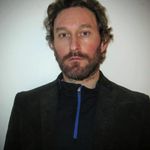 Liam Bierschenk, South London and Maudsley NHS Foundation Trust
Liam Bierschenk is a psychoanalyst working in private practice based in London. He also works as a psychotherapist in the National Health Service in a personality disorder service. He originally trained as an art psychotherapist and worked in therapeutic communities for people both with psychosis and personality disorder. He lectures on psychoanalysis at the Institute of Psychiatry, Psychology and Neuroscience, Kings College London and on the Foundation course at the British Psychoanalytic Association. He has published several papers on art therapy and psychoanalysis with a particular interest in creativity and how this is formed or inhibited, both in the therapeutic setting but also in the arts and sciences.
 Liisa Bourgeot, Grant-funded researcher, Aleksanteri Institute – Finnish Centre for Russian and East European Studies, University of Helsinki
Liisa Bourgeot is a researcher of Russophone philosophy and Russian/Soviet intellectual history. In her doctoral dissertation, she analysed Gustav Shpet’s interpretation of Husserl’s phenomenology as a foundation for his cultural theory. After receiving her PhD in 2022 from Helsinki University, she served as a Fulbright Visiting Scholar at the Department of Russian and Slavic Studies at NYU (2022–2023). As a postdoctoral researcher at the Aleksanteri Institute’s CUPOLA project (2024–2027), she explores the intellectual currents that persisted despite the ideological control of the late Stalin era. Focusing on Valentin Asmus, she examines the “rebirth” of logic in the USSR.
 María Clara Cortés, Professor of Art History, Universidad Nacional de Colombia
María Clara Cortés, is a Colombian Artist and Art Historian. Her research and publications focus on Colombian contemporary art history; more recently on new narratives of Landscapes in Colombian Art, specifically related to different forms of violence. Her artistic work includes actions, videos and photographs with which she has participated in various exhibitions. She is currently Associate Professor at Instituto de Investigaciones Estéticas at Universidad Nacional de Colombia in Bogotá. Cortés is a member of the MA Collective and the Red Conceptualismos del Sur.
 Margaret Crawford, Professor Emerita of Architecture and Urban Design, UC Berkeley
A historian of urban planning and architecture, her work has primarily focused on the American built environment, urban development, and public space, emphasizing ordinary landscapes and people. Her publications include books on the history of company towns, everyday urban practices, and the impact of the automobile on cities. She has also written numerous articles and book chapters on immigrant spatial practices, shopping malls, and suburban development. Since 2003, she has also been engaged in studies of villages in China’s Pearl River Delta. She has also taught urban design studios working with neglected places.
 Marta Gutman, Dean, Spitzer School of Architecture at the City College of New York
Marta Gutman, an architectural and urban historian, is dean of the Spitzer School of Architecture at the City College of New York | CUNY, the city’s premier public school of architecture. Expert in the history of public architecture for children and in repurposing architecture as a strategy for city-building, she studies ordinary places in cities. Through this work, she tackles power and culture in all walks of life, emphasizes the activism of women especially on behalf of children, and ties local stories to national and international histories. Gutman’s commitment to social justice has been manifest since she started her career as an architect designing housing for the New York City Housing Authority and shelters for battered women, abused children, and homeless New Yorkers.
Gutman’s A City for Children: Women, Architecture, and the Charitable Landscapes of Oakland, 1850-1950 won the Kenneth Jackson Award for Best Book (North American) in urban history (2015) and the Spiro Kostof Book Award (2017). Times Higher Education called A City for Children, “a monumental achievement.” A Distinguished CUNY Research Fellow in 2018, Gutman is past president of the Society for American City and Regional Planning History, a founding coeditor of PLATFORM, and a former coeditor of Buildings & Landscapes: Journal of the Vernacular Architecture Forum. Her chapter “Intermediate School 201: Race, Space, and Modern Architecture in Harlem,” in Educating Harlem: A Century of Schooling and Resistance in a Black Community, eds. Ansley T. Erickson and Ernest Morrell (Columbia, 2019), received the Catherine W. Bishir Prize in 2021. She’s currently writing Just Space: Modern Architecture, Public Schools, and Racial Inequality in New York City (University of Texas Press).
 Klaske Havik, Professor Methodsof Analysis and Imagination at the Faculty of Architecture and the Built Environment, Delft University of Technology
Klaske Havik is Professor of Methods of Analysis and Imagination at Delft University of Technology. Her work relates architectural and urban questions, such as the use, experience and imagination of place, to literary language. Her publications include Urban Literacy. Reading and Writing Architecture (2014). She initiated the platform Writingplace, with which she published edited volume Writingplace, Investigations in Architecture and Literature (2016), and initiated the Writingplace Journal for Architecture and Literature. She was and Chair of the European COST Research Network Writing Urban Places. Havik’s literary work appeared in Dutch literary magazines, and recently her collection Way and Further (2021) appeared in English with RightAngle Publishing. In 2022 she received an honorary doctorate of Tampere University, Finland, in recognition of her contribution to the study of architectural writing.
 Sandra Laugier, Professor of Philosophy, Université Paris 1 Panthéon Sorbonne
Sandra Laugier is a French philosopher who works on moral philosophy, political philosophy, philosophy of language, gender studies, and popular culture. She is a full professor of philosophy (classe exceptionnelle, University Professor) at the University of Paris 1 Panthéon-Sorbonne and a Senior member of the Institut Universitaire de France.
 Darien Pollock, Assistant Professor of Philosophy, Boston University
Darien Pollock is an Assistant Professor of Philosophy at Boston University. He received his PhD from Harvard University in 2022. His areas of specialization include Metaphysics and epistemology, social ontology, approaches to social ontology, and ontology of social domains.
 Ana María Reyes, Director, Center for Latin American Studies; Associate Professor of Latin American Art & Architecture
Ana María Reyes is an Associate Professor of Latin American Art History and Director of the Center for Latin American Studies, BU Frederick S. Pardee School of Global Studies. She is also Affiliated Researcher, David Rockefeller Center for Latin American Studies at Harvard University and founding member of the Symbolic Reparations Research Project. Professor Reyes received her PhD from the University of Chicago. She is the author of The Politics of Taste: Beatriz González and Cold War Aesthetics (Arvey Book Award, 2021); coedited with Maureen Shanahan Simón Bolívar: Travels and Transformations of a Cultural Icon; current book project To Weave and Repair: Symbolic Reparations in Colombia’s Peace Process.
 Laura Roush, Professor-Researcher, El Colegio de Michoacán
Laura Lee Roush is a committed pedestrian living in western Mexico. She studied anthropology and history at the New School, in New York, and now gives classes at the Colegio de Michoacán in Zamora. Her interest in night photography arose from fieldwork on the Santa Muerte, or Saint Death in Mexico City, but she practiced taking pictures on night walks in Michoacán during the pandemic. This walking led to insights and questions about social silencing, fear, and grief in a region with high rates of violence and disappearances. She took pictures of sidewalk memorials, and found that printing and returning the photos to local families opened doors to conversations usually avoided in ordinary daytime spaces. She hopes to build on lessons learned here, and is now returning to the Mexico City area with a more visual approach.
Lecturer in Criticism:
Susan Stewart, Avalon Foundation University Professor in the Humanities, Emeritus; Professor of English, Emeritus, Princeton University
A poet, critic, and translator, Susan Stewart is the Avalon Foundation University Professor in the Humanities and Professor of English. She is a member of the Associated Faculty of the Department of Art and Archaeology and serves as the editor of the Princeton Series of Contemporary Poets. From 2009 to 2017, she was the Director of Princeton’s Society of Fellows in the Liberal Arts. She teaches the history of poetry, literary criticism, and aesthetics.
 Edward A. Vazquez. Professor of History of Art and Architectural Studies, Middlebury College
Professor Vazquez specializes in the art of late modernism with a special interest in the wide-ranging material forms of conceptual art as well as strategies of abstraction in the wake of minimalism. His research focuses on art of the Americas and Europe since 1960, with an increasingly Latin American focus.
 Andrés Villaveces, Chair, Department of Mathematics, Universidad Nacional de Colombia
Professor Villaveces’s main subject of research is Mathematical Logic. More precisely, he researches Model Theory (Stability Theory in Abstract Elementary Classes), connections with Geometry (model theory of sheaves, model theory of modular invariants), connections with Set Theory, Infinitary Logic. He also work in the Philosophy of Mathematics .
Organizers & Further Participants
Organizers
 Juliet Floyd, Director, Center for the Humanities; Borden Parker Browne Professor of Philosophy, Boston University
Professor Floyd is a world-renowned scholar in the fields of Logic, Philosophy and History of Science, and Artificial Intelligence. Professor Floyd co-chaired the committee that wrote the first Charter for BUCH.
 Juliette Kennedy, Professor of Mathematics and Statistics, University of Helsinki
Juliette Kennedy is a logician and philosopher of mathematics working in the Department of Mathematics and Statistics at the University of Helsinki. Her work in mathematical logic is primarily in the area of set theory; her philosophical work is in the area of Gödel studies and more recently in the areas of logicality and metaphor, autonomy and formalism freeness, syntax and semantics. She was a Guggenheim fellow in 2022-23; she has worked with the Sandback estate on 4 exhibitions of Fred Sandback’s work, most recently Fred Sandback at the University of Helsinki opening in May 2023.
Exhibited Photographer
Samuel Fernando Rivera Andrade, Doctoral Candidate, Colegio de Michoacán
Samuel Fernando Rivera Andrade is a native of Mexico City. With prior education as a photographer, he studied anthropology at the Metropolitan Autonomous University at Iztapalapa, and is now a doctoral candidate at the Colegio de Michoacán, in western Mexico. In 2022 he received support from the Wenner-Gren foundation for dissertation research, and recently has been teaching at the National Autonomous University of Mexico (UNAM) and the Autonomous University of Costa Rica. He is part of the Critical Disabilities Studies research group at CLACSO, a scholarly council associated with UNESCO, and intermittently, he volunteers with migrant aid societies in Mexico and Honduras. His main interests are migration and refugee studies, critical disability studies, visual ethnographic methods, and critical studies of infrastructure.
Responders
Daniel M. Abramson, History of Art & Architecture, Boston University
Yuri Corrigan, World Langauges & Literatures, Boston University
David Gray, Fred Sandback Archive
Susan Mizruchi, English, Boston University
Gregory Williams, History of Art & Architecture, Boston University