News
Rising Democratic Star Ocasio-Cortez Urges Students to Become Activists
Congressional candidate, CAS alum: persistence, courage needed to achieve social justice
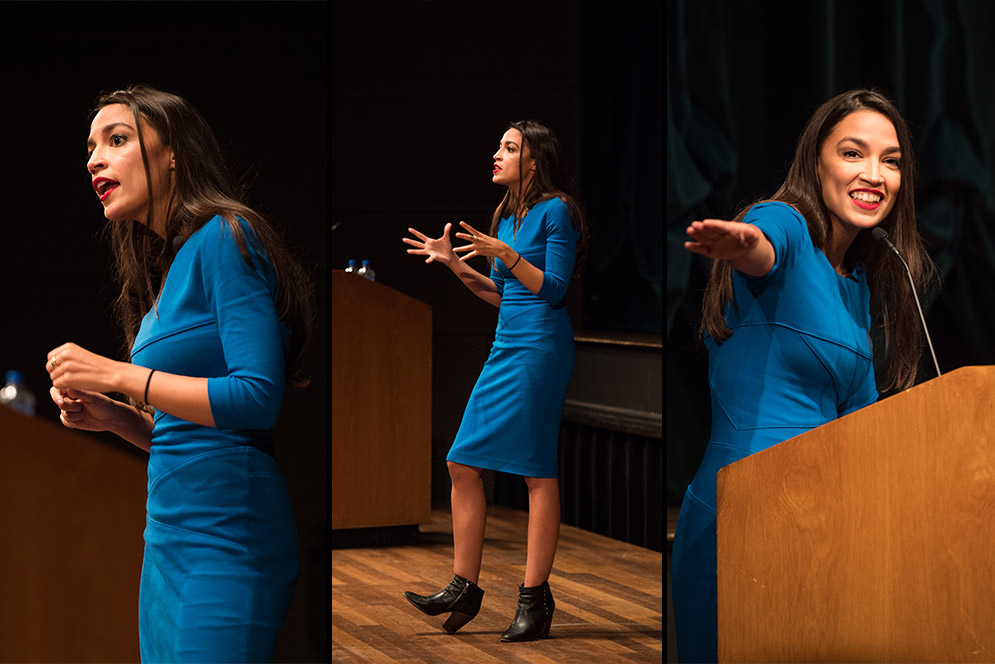
New York 4th District Congressional candidate Alexandria Ocasio-Cortez (CAS'11) delivered a powerful call to action to several hundred students at the Tsai Performance Center on Monday. Photo by Cydney Scott.
Alexandria Ocasio-Cortez, a rising star in the Democratic party, urged BU students to become activists for social justice despite the odds when she spoke at the Tsai Performance Center on Monday.
Using her own life and long-shot Congressional campaign as an example, Ocasio-Cortez (CAS’11) told the crowd of nearly 500: “I could not bear to be hopeless anymore, so I chose to do something….On June 26, we upended the political establishment.”
That’s when the 28-year-old stunned longtime US Representative Joe Crowley in the Democratic primary in New York’s 14th District, which includes areas of Queens and the Bronx. A first-generation Puerto Rican American long focused on social injustice, she ran on a platform that included Medicare for all and criminal justice and immigration reforms—at first campaigning between shifts at her restaurant job.
With her Congressional victory all but assured (the 14th District is overwhelmingly Democratic, and she’s expected to handily beat little-known Republican candidate Anthony Pappas in November’s general election) Ocasio-Cortez has been spending much of the last few weeks campaigning for other progressive candidates and causes around the country.
Earlier on Monday, she was one of several prominent Democrats who spoke at a large rally at City Hall Plaza, where protesters had gathered to urge the US Senate to vote no on confirming Supreme Court nominee Brett Kavanaugh, whose confirmation hearings have been marked by sexual assault allegations. “It’s traumatizing. I feel for every women and survivor in America to just live through this week,” she told the BU audience, but added that the problem extends beyond Kavanaugh.
“I cannot convey how serious and dangerous it is and how imperiled our most basic political institutions are right now,” she said. “When people say, how could this have happened—it is because of the slow slide of our public institutions, when too many people sat on the sidelines and read the news and said, ‘Wow, that’s crazy. Time to go to class.’
“We want to pretend that this moment is normal, just a little bit more partisan than usual,” she said. “But this is no longer a partisan battle. A generation ago, committing perjury and lying to Congress multiple times in your nomination hearing would have been an automatic disqualifier. To see the rules that we are willing to dismantle just to insert a partisan pick is truly concerning.”

Rising Democratic star Ocasio-Cortez spoke and took questions for nearly at hour on Monday. Photo by Cydney Scott.
Ocasio-Cortez said that the way the nation can get through this moment is through activism. The “tiny gesture” made by Senator Jeff Flake (R-Ariz.) last Friday, when he asked for a week’s delay in the Senate vote so the FBI could investigate the charges against Kavanaugh, she noted, was inspired by two activists who cornered him in an elevator and told him their stories of sexual assault. One of those women, she said, was an immigration activist from her district, who risked everything to speak out.
We need to be championing the causes of our neighbors, she went on, and make sure that the people experiencing injustice are not the only ones advocating for themselves.
“We cannot in this moment allow just women and survivors to be fighting for their own rights, because that makes it harder,” she said to loud applause. “So what I’m asking is for all of the men here to step up, because we’re not in the room when it’s all men and someone says something disgusting.…Sex assault is not about a crime of passion, it is about abuse of power. Men and allies, now is your moment.”
The students in the audience found her message compelling. “She was just so inspiring,” said Giancarlo Lobo (COM’20), a campus activist for divestment from fossil fuels. Ocasio-Cortez took questions after she spoke, and Lobo asked her for advice about grassroots campaigns and getting people to care about an issue. She emphasized the importance of two things: consistency of message and persistence, citing the old anecdote about record companies knowing they could make any record a hit if they could get it played on the radio enough.
“I’m just trying to grow our campaign and make it stronger,” Lobo said afterward, “and listening to a BU alum telling me how to do so is the most valuable thing I could ask for.”
“I admire her conviction and her faith in the truth and that the truth will eventually prevail,” said Masha Vernik (CAS’19). “That’s something I look for in myself a lot, and it’s so easy to steer away from that in a world where we’re told, for example, not to believe survivors of sexual assault and to doubt social justice and see it as something we have to fight for, not something that’s deserved. I look up to her as a inspiring person,t to remind myself to focus on what is true and what is right.”
Ocasio-Cortez’s visit was organized through the College of Arts & Sciences political science department, but many cited the efforts of Samantha Delgado (CAS’20), who introduced the congressional candidate. And the event wasn’t all geopolitics: Ocasio-Cortez managed a shout-out to her old dorm crew in Warren 16-B. The friends she made at BU, she said, remain her closest friends and helped her throughout her campaign.
Ocasio-Cortez “was a bright shining light” when she was at BU, recalled Raul Fernandez (COM’00, Wheelock’16), a Wheelock College of Education & Human Development lecturer, who was in the Tsai audience. Fernandez said she was a student ambassador at the Howard Thurman Center for Common Ground, when he was assistant director, and she came around often for the regular Coffee and Conversation events.
“Everybody knew her as one of the smartest people in the room for sure,” says Fernandez, who shares her Puerto Rican heritage. She didn’t talk about political ambitions then. “Her main focus was using the time she had on this planet to benefit people in the community.”
Author, Joel Brown can be reached at jbnbpt@bu.edu.
BU Proposes to Build Data Sciences Center, Aiming to Become Leader in Booming Field
Charles River Campus building would put math, statistics, computer science under one roof

This rendering of a bird’s-eye view of the proposed Data Sciences Center shows how the building would be an architectural statement for the BU of the future. Image courtesy of KPMB Architects.
- BU has announced plans to build the BU Data Sciences Center
- It would be the first major Charles River Campus teaching center in a half century and the tallest building on campus
- By bringing the mathematics and statistics and computer science departments under one roof, BU furthers its efforts to become one of the country’s leading urban interdisciplinary research institutions
Data scientist is the hottest occupation in the country, and on October 1 BU President Robert A. Brown announced that the University plans to be a leader in educating the next generation in the field by building a dramatic 17-floor tower on Commonwealth Avenue to house the new BU Data Sciences Center.
“This is the science that’s going to change the way we behave, driving our behavior for the next 50 or 100 years,” Brown says.
With the proposed project, BU would build the first major teaching center on the Charles River Campus in a half century, and the tallest building on campus. By bringing the mathematics and statistics and computer science departments under one roof, BU will also further its efforts to become one of the leading urban interdisciplinary research institutions in the country.
“What field today is not reliant on data?” says Azer Bestavros, a William Fairfield Warren Distinguished Professor and College of Arts & Sciences professor of computer science and founding director of the Rafik B. Hariri Institute for Computing and Computational Science & Engineering. “Students across every major want to take these courses. It’s becoming the bread and butter for every student’s education. Data science is now a unifier across disciplines.”
For good reason.
Google handles 40,000 searches every second, or 3.5 billion per day. Every minute, 4.1 million videos are watched on YouTube, nearly a million Tinder swipes are made, 456,000 tweets are sent on Twitter, and Instagram users share nearly 50,000 photos. Roughly 11 million Apple Pay transactions are made every day.
All of those actions generate unfathomable amounts of data that companies gobble up, analyze, and use to grow their business. All that data has also opened up a minefield of ethical and moral questions around privacy that the government and the private sector are both wrestling with how to contain or exploit.

Azer Bestavros Founding Director of the Hariri Institute
Jean Morrison, provost and chief academic officer, says that sheer numbers support BU’s major investment in data science. She says the University saw a 23 percent increase in teaching credit hours for math and statistics from the 2006-2007 to the 2016-2017 academic year. And computer science saw a 266 percent increase.
A major factor driving the growth is not just the increase in students who want to major in the computational science fields. It’s the rise in interest from nonmajors, who now recognize that no matter what their passion—public relations, engineering, business, nutrition, the arts—chances are high that data will play a role in it. And the more they understand the basics of computational science, the better position they will be in as they apply for jobs.
“So there’s just explosive demand for these disciplines by both undergraduates and graduate students at BU and nationally,” Morrison says. “This is a national-level trend.”
Creating employable students for a data-rich workforce
Wayfair, General Electric, Amazon, Google, Fidelity, TripAdvisor, Athenahealth, DraftKings, HubSpot, Partners HealthCare, Blue Cross Blue Shield. Greater Boston is overflowing with companies that live and breathe on data, creating an intensive demand for workers who understand how to decipher it.
“This is a defining moment, with what’s going on in Boston,” says Eric Kolaczyk, a CAS professor of mathematics and statistics, director of the Program in Statistics, and cochair of a group convened by the National Academies of Sciences, Engineering and Medicine to study data-science education. “The opportunities for synergy are incredible, not just for internships, but for work, and that’s one of the biggest selling points for students,” he says.
In a report this year from the job search website Glassdoor.com, which used tens of millions of its own data points to determine the fastest growing job categories, data scientist came out on top for the third straight year. Glassdoor cited high demand, good pay, and strong job satisfaction as the reasons. “Not only are tech companies scrambling to hire data scientists, but industries across the board, from health care to nonprofits to retail, are also searching for this talent,” says Andrew Chamberlain, Glassdoor chief economist.

This aerial photo of the Granby Street parking lot, between Bay State Road and Commonwealth Avenue, shows where the new BU Data Sciences Center would be built if approved, standing out as the new heart of the Charles River Campus. Photo by Jackie Ricciardi.
BU expects that its evolving computational science curriculum, renowned faculty and staff, and especially the new building at the corner of Comm Ave and Granby Street (where a parking lot now sits) will all be essential drivers of that changing workforce.
Tammy Qiu (CAS’19, CFA’19) came to BU from the Bay Area four years ago with a dilemma: “I was interested in art, but also art and science. I didn’t have an idea of how to integrate the two.” Four years later, she’s a dual major in graphic design and computer science and is set to graduate next spring.
Qiu says what students want from any university is to feel more employable. And she’s noticed more recruiting activity at BU in the last two years from major brands like Facebook and Google. “A significant amount of other graphic design majors are very much interested in visualization and embedding technology into their works,” she says. “They are realizing there isn’t much of a barrier anymore between art and technology.”
A building designed for the future
Designed by the Toronto architectural firm KPMB Architects, the proposed plans for the center start with a 4-story base, or “podium,” topped by 13 floors, each floor slightly off center from the one below it so that it resembles a stack of books. The 17 floors do not include the top floor and the basement, which will hold mechanical, electrical, and plumbing.
“They asked us for something—they used the word ‘iconic,’” says Marianne McKenna, a KPMB Architects founding partner.
McKenna says the building base is about engaging the student body, so that along Comm Ave, passersby can look in and look up and see people working on the collaborative terraces. She estimates that it would take 24 to 28 months to construct from the groundbreaking. And she says that when it’s done, it will be hard to miss from across the river, where Harvard and MIT sit.

Looking west down Comm Ave from Kenmore Square, this rendering shows how the proposed Data Sciences Center would immediately become the most recognizable and visible building on the Charles River Campus, an architectural statement unlike anything else at BU. Image courtesy of KPMB Architects.
“That brings a lot of pride to the University,” she says. “It’s important the University have that ambition.”
Brown agrees, and says he pushed for a design unlike anything Boston, or BU, has seen. “I always think about what someone said to me many years ago,” he says. ‘“A remarkable piece of architecture is architecture about which everyone makes a remark.’ That doesn’t mean they’ll love it or hate it, but it will be a remarkable piece of architecture.”
The plans call for sheltered pedestrian pathways, enhanced green space around the building, and seamless connections to both the historic brownstones on Bay State Road along the Charles River and to the bustle of Comm Ave.
Gary Nicksa, BU senior vice president for operations, describes the Data Sciences Center as a “vertical campus building,” because of the way the departments are designed like academic neighborhoods, connected by a central atrium and spiraling stairway that would foster collaboration and communication. He says the public approval process with the city will focus on the size and shape of the building, the wind tunnels it might create, and the shadows it will cast. But he also says that BU and KPMB took all of those issues seriously in the design process.
“The city has embraced the idea of more remarkable architecture,” Nicksa says. “The overall tone is that the city and community are encouraging better architecture. Which means there will be a lot of discussion about this.”

One element of the proposed Data Sciences Center that BU officials are especially excited about are the numerous collaboration spaces designed to encourage both spontaneous and planned conversations among people from the worlds of mathematics, statistics, and computer science. Image courtesy of KPMB Architects.
In addition to being a public building, the center will be an open, glass-enclosed space of learning labs, classrooms, and meeting spaces. Floors three through five will house the mathematics and statistics department, recognized in part for decades-long contributions to the landmark Framingham Heart Study, the nation’s longest running epidemiological study, begun in 1948 and run by BU since 1971, supported by the National Heart, Lung and Blood Institute.
The fifth floor will also have a lunch space and meeting rooms. Computer science will mostly fill floors 6 through 10. The interdisciplinary Hariri Institute will be in the top six floors. The first two floors will house administrative offices.
Inside, the design’s focus is on collaboration, with a series of terraced platforms intended for small-group interactions running almost the entire length of the building. Whiteboard walls will be everywhere to encourage scribbling and help turn hallway conversations into fleshed-out ideas. And a collaboration ramp will be dotted with small gathering spaces along the way for quick, spontaneous conversations.
“We wanted architecture that would signal to everyone that this was a special place, the center of campus,” Brown says. “Because it’s data science, we wanted it to mirror the century we’re in now, not centuries past. We weren’t looking to build a building that would have looked novel in 1900 or 1850. We wanted a building that in 2100 would stand up and mark the dynamic change in the University and talk about the century we’re in.”
Timing is everything
“Computer scientists have been around for decades,” says Kolaczyk. “Statisticians have been around for decades. But the availability of data, and measuring every element of data, that’s what’s changed so quickly.”
Big data is playing a particularly major role in healthcare, allowing hospitals and doctors to move toward more personalized medicine.
As one example, Boston University and Boston Medical Center, led by Iaonnis Paschalidis, a College of Engineering professor of electrical and computer engineering and director of the Center for Information & Systems Engineering, have won a three-year, $900,000 grant from the National Science Foundation to develop machine learning algorithms and identify high-risk patients for heart disease or diabetes. Those algorithms will then be used for early, highly personalized intervention.
“We can now analyze what happens to patients in real time and characterize the status and health condition of each individual,” Paschalidis recently told HealthITAnalytics.com.
The days when a few analysts in an office could plug a few hundred numbers into an Excel spreadsheet and compute valuable results are gone, Kolaczyk says. “We need to enable the world to intelligently consume data. This is where education comes in.”

Robert A. Brown Boston University President
And BU’s efforts in the field have already been paying off, he says. A new Master of Science in Statistical Practice has a class this year of 45 students, selected from a competitive group of 500 applicants. Alumni from the program have found employment throughout data-intensive industries like biomedicine (Boston Medical Center, Bristol-Myers Squibb, Novartis), finance (Bank of China, Citizens Bank, Lobel Financial), consulting (Deloitte), insurance (John Hancock, Liberty Mutual), and technology (Amazon, Criteo, Spotify).
Brown emphasizes that BU made the decision to invest in computational sciences because it was already a powerhouse discipline at the University. “We’re very good in these fields, so this is not about trying to build strength from weakness,” he says. “We just need to get bigger. Because of the demand in terms of applications, the areas we can cover are just growing so fast. Our computer scientists are very good; we have a very fine department. It’s stretched to its limits.”
Abraham Matta, a CAS professor and chair of computer science, says his daughter is an example of this new data-driven world. She studied economics, but she also took programming and statistics classes—and now she’s a data analyst and business analyst. “A little training in data science can open doors,” Matta says.
Both the Hariri Institute’s Bestavros and Matta acknowledge wishing that BU had acted sooner with this investment, maybe five years ago, before data science had fully exploded as a field. But by waiting, they also say, BU can now benefit by learning from the experiences of others and taking full advantage of the booming data workforce building in Boston.
“Now makes a lot of sense,” Bestavros says, “because now we’re doing it with eyes wide open. The breadth of BU, combined with its location, should make us the envy of many universities.
“If I were not at BU, I would envy BU.”
Author, Doug Most can be reached at dmost@bu.edu.
Midterm Election Panel Hosted by BU Women’s Guild

The BU Women’s Guild hosted a "Lunch & Learn: Midterm Election Panel" for a political preview on Thursday, September 27, 2018, from 12:00pm - 1:30pm.
Location:
8 Saint Mary's Street, 9th floor (West End Lounge)
Boston, MA 02215
Panelists:
- Diane Balser, Instructor, Co-Director of Undergraduate Studies, Women’s, Gender, & Sexuality Studies Program
- Emily Burlij, Associate Director for Federal Relations
- Dino P. Christenson, Associate Professor, Director of Advanced Programs, Department of Political Science
- Gina Sapiro, Professor, Department of Political Science
BUWG Host: Judith Sandonato, Assistant Vice President and Deputy Chief of Staff, Office of the President
This event was free to Members.
Congress Increases Research, Student Aid Funding
BU IN DC
Yannis Paschalidis of the College of Engineering participated in the Connections in Smart Health Workshop at the National Science Foundation from September 24 to September 26.
University Librarian K. Matthew Dames attended the Association of Research Libraries annual fall meeting on September 25 and 26.
School of Public Health Dean Sandro Galea delivered the keynote address at the Association of State and Territorial Health Officials annual meeting on September 26.
Michael Dietze of the College of Arts & Sciences gave a distinguished lecture on ecological forecasting at the National Science Foundation on September 27.
CONGRESS INCREASES RESEARCH, STUDENT AID FUNDING
Congress approved a two-bill spending package this week that would provide a fourth consecutive increase of at least $2 billion for the National Institutes of Health (NIH), increase basic research funding at the Department of Defense (DOD) by 8.0%, and raise the maximum Pell Grant for low-income students by $100. Under the measure, NIH will receive specific funding for research on Alzheimer's disease, a universal flu vaccine, and antibiotic resistance. DOD is directed to support research on hypersonics, machine learning and robotics, cyberspace, and brain injury. The President has indicated he will sign the bill, which also allows federal agencies that have not yet received their fiscal year 2019 budgets -- such as the National Science Foundation -- to continue operating at current funding levels through December 7.
COMMITTEE CONSIDERS FREE SPEECH ON CAMPUS
The House Education and the Workforce Committee held a hearing on Wednesday entitled "Examining First Amendment Rights on Campus." Joseph Cohn of the Foundation for Individual Rights in Education (FIRE) urged Congress to ban free speech zones on college campuses, which FIRE believes are used to stifle students' right to free speech. Suzanne Nossel of PEN America encouraged legislators not to politicize the issue of free speech or make it a partisan matter. The hearing follows assertions this year at several Congressional hearings and in speeches by Attorney General Jeff Sessions that universities suppress conservative speech.
EVENT NEWS YOU CAN USE
Your research and expertise are important, but how do you convey them to your peers, funders, and the public? BU Research and Public Relations are cohosting a workshop at 3 p.m. on October 4 to help researchers learn to better distill their message. Participants will learn methods, tools, and techniques to communicate complicated concepts succinctly and clearly through a blend of interactive demonstrations and hands on-learning.
BU Prof Named One of Scientific American’s 11 Rising Stars of Science
ENG’s Sahar Sharifzadeh chosen from 500 globally
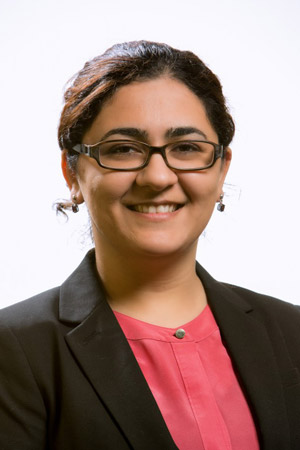
Iranian native Sahar Sharifzadeh came to BU as an ENG assistant professor in 2014. Photo (left) courtesy of the College of Engineering.
When 500 scientists from around the globe were assessed by the Nature Index and the League of Scholars Whole-of-Web (WoW), based on their curiosity, their initiative, their flexibility, their published research, and their links to industry, and the top names surfaced, Boston University’s Sahar Sharifzadeh was chosen one of 11 Rising Stars of Science.
The rankings were published this week on Scientific American. The list includes a system engineer from South Korea, an organic chemist from Italy, a physical geographer from Sweden, and physicist Sharifzadeh, a College of Engineering assistant professor of electrical and computer engineering and materials science and engineering, whose family moved to the United States from Iran when she was eight, and who balances her research with caring for a one-year-old daughter.
BU Today asked Sharifzadeh about how she became interested in physics, her research focus, and being a researcher and the parent of a young child.
BU Today: Can you explain briefly how you first became interested in physics? Was it as a child?
Sharifzadeh: I did become interested in physics as a child. From a very young age, I liked to read my older sister’s science books and at around age eight decided I would be a physicist (although I did not really understand what that meant). Through school, I continued to read and be interested in the physical sciences, focusing first on astronomy, then electromagnetics, then finally electrical engineering when I went to university.
Can you tell us about your arrival in Boston and BU and what you wanted to focus your research on, and why?
I came to BU in fall 2014 as an assistant professor. I was hired through the ENG materials science program, where the focus of faculty search was digital design of materials. When I came to BU, my goal was to be able to understand how certain classes of materials (excitonic materials) interact with light and to use that understanding to design new materials. I think the physics of excitonic materials is very interesting and there are still many open questions. Also, there are a variety of applications in optoelectronics, such as solar cells and sensors, and even the area of quantum computing.
In addition to being a scientist, you have a year-old daughter. How do you manage to juggle your research and your homelife? What are the keys?
I think homelife and research are very difficult to balance for anyone, with or without kids, because of the nature of research, but with a young child, it is much harder because they need their parents so much. I think I have been lucky to have dependable childcare, where I feel that my baby is well taken care of when I am at work. Additionally, having a supportive partner who takes an equal role in childcare is key in my opinion. Sometimes it is necessary for me to take weekends to work or travel to conferences, and my husband takes on more responsibility at those times to allow me to do that, even though he also has a demanding job. Flexible parental leave policies, for both parents, are also invaluable.
I also think rigorous time management is extremely important—I try to schedule every minute of my working time so that I can be as productive as possible. But it is also important to give myself the flexibility to rearrange my schedule when necessary. It’s definitely a challenge.
What advice would you give to a young physicist today?
I think that to be successful as a researcher, it is necessary to be creative as well as a good student. By that I mean one should be knowledgeable, but think creatively about how to address challenging questions. I would suggest to young people to explore creative ways of solving physics or engineering problems and build that confidence and vision that will allow them to be good researchers.
Authors, BU Today staff.
The Current Changing Landscape at NSF with Focus on Geosciences
NSF’s Bill Easterling Visits BU
Thursday, September 27, 2018 | 3:30-5 pm
Trustee Lounge
1 Silber Way, 9th Floor
Boston, MA 02215
The Geosciences Directorate at the National Science Foundation (GEO) seeks to improve our understanding of the physical global environment and the processes that affect its behavior. The Directorate provides 64% of all federal funding for academic research in the atmospheric, earth, ocean, and polar sciences, helping deepen our knowledge of ecosystems and better prepare society to respond to disruptive natural disasters. GEO is also the lead directorate for Navigating the Arctic, one of NSF’s 10 Big Ideas, and is involved in several others.
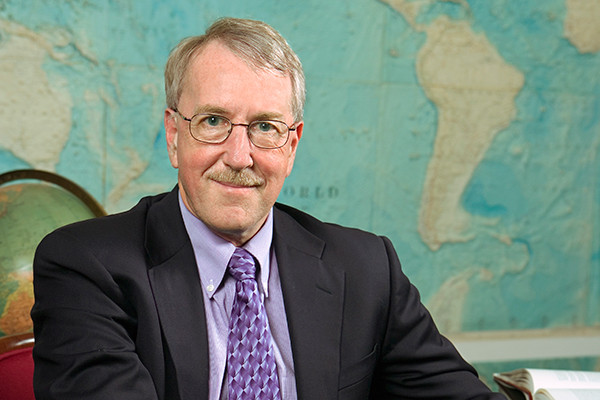
The Directorate is currently led by Dr. William E. Easterling, III, an internationally-renowned expert on climate change impacts on the global food chain and former dean of the College of Earth and Mineral Sciences at Pennsylvania State University. He has served on a number of governmental and international committees studying climate change, including the Intergovernmental Panel on Climate Change.
Come hear Dr. Easterling discuss his vision for the Directorate. He will provide BU researchers with insight into GEO’s funding priorities, NSF’s new initiatives, the agency’s budget, and how faculty can best interact with program officers. A reception will follow the event.
US News Lists BU Among Most Innovative Schools
 ON THE CHARLES RIVER
US News Lists BU Among Most Innovative Schools
Boston University was named one of the most innovative national universities in the US News & World Report rankings, recognizing the tremendous opportunities for students to transform their ideas into action. Get inspired

RESEARCH HIGHLIGHT
External Policy Changes Impact the Use of VA Services
States that expanded Medicaid following the Affordable Care Act saw a 9.1 percent reduction in health care use at the Department of Veterans Affairs (VA), amounting to $833 million less in VA spending, according to a BU study. Learn more
 STUDENT LIFE
BU Works to Reunite Immigrant Families
BU School of Law and School of Social Work faculty and students go to Arizona to help detained children and families. See how
IN CASE YOU MISSED IT...
Hear from three prominent BU alumnae in the media about truth in journalism on October 24th at the National Press Club... The New York Times says the BU School of Medicine is a national leader in combatting the opioid epidemic because it includes addiction training in all four years of medical school... the BU African Studies Center was awarded a $2.2 million federal grant to continue teaching African languages and advanced African studies... Erick Trickey of the BU College of Communication tells us that Rosie the Riveter isn't who you think she is.
Science Agencies Address Sexual Harassment
BU IN DC
Julie Wickstrom of Financial Assistance discussed federal student aid with federal officials and Congressional staff during the Higher Education Loan Coalition's fall meeting between September 16 and 18.
SCIENCE AGENCIES ADDRESS SEXUAL HARASSMENT
The National Science Foundation (NSF) announced a new anti-harassment policy on Wednesday that will require universities to alert the agency if they find that an NSF-funded researcher committed sexual harassment or if they place an NSF-funded investigator on administrative leave. The policy goes into effect on October 21. The National Institutes of Health (NIH) and the National Aeronautics and Space Administration also recently made announcements regarding their own anti-harassment policies. NIH Director Francis Collins plans to ask the National Science and Technology Council Committee on Science to develop government-wide "measures that would be most effective in changing the pervasive culture of sexual harassment in science."
NEW FACES COMING TO NIH, DEPT. OF EDUCATION
- The National Institutes of Health (NIH) announced that Bruce Tromberg will become director of the National Institute for Biomedical Imaging and Bioengineering in 2019. Dr. Tromberg is a biophotonics researcher at the University of California, Irvine.
- NIH also announced that Helene Langevin will serve as the next director of the National Center for Complementary and Integrative Health, starting in November. Dr. Langevin currently leads the Osher Center for Integrative Medicine in Boston.
- President Donald J. Trump announced his intent to nominate Robert King to serve as assistant secretary for postsecondary education at the U.S. Department of Education; he is awaiting Senate confirmation. Mr. King is the president of the Kentucky Council on Postsecondary Education and formerly served as the chancellor of the State University of New York System.
EVENTS NEWS YOU CAN USE
Dr. Bill Easterling will discuss his role as assistant director of the Geosciences Directorate (GEO) at the National Science Foundation (NSF) on campus on Thursday, September 27. The Directorate provides 64% of all federal funding for academic research in the atmospheric, earth, ocean, and polar sciences, helping deepen our knowledge of ecosystems and better prepare society to respond to disruptive natural disasters. Dr. Easterling will provide BU researchers with insight into GEO’s funding priorities, NSF’s new initiatives, the agency’s budget, and how faculty can best interact with program officers. A reception will follow the 3:30 p.m. discussion.
Congress Boosts Energy Research for Second Year
BU IN DC
Rebecca Ingber of the School of Law testified before the Senate Judiciary Committee regarding U.S. Supreme Court nominee Brett Kavanaugh on September 7.
Azer Bestavros and Mayank Varia of the Rafik B. Hariri Institute for Computing and Computational Science & Engineering met with members of the media, Capitol Hill staff, and U.S. Department of Education officials to discuss data privacy technologies on September 10.
Scott Solberg of the Wheelock College of Education & Human Development attended the National Career Development Summit on September 11 and 12.
CONGRESS BOOSTS ENERGY RESEARCH FOR SECOND YEAR
For the second year in a row, Congress has rejected major cuts proposed by the Trump Administration for basic and applied energy research programs and instead increased spending on those activities at the U.S. Department of Energy (DOE). Under a bill passed by both chambers of Congress on Thursday, DOE's Office of Science will receive a 5% funding increase in fiscal year 2019 and the Advanced Research Projects Agency - Energy (ARPA-E) will jump 4% above its current level. The funds will support existing priorities, as well as new efforts in artificial intelligence and photovoltaics manufacturing. The President is expected to sign the bill into law shortly, and DOE plans to move aggressively with new funding opportunities in the fall and early spring.
NSF, NASA TO SEE PERSONNEL CHANGES
- Karen Marrongelle will lead the National Science Foundation's (NSF) Education and Human Resources Directorate. Dr. Marrongelle is currently the dean of the College of Liberal Arts and Sciences at Portland State University; she will begin her NSF appointment on October 1.
- The Senate Commerce, Science, and Transportation Committee has forwarded the nomination of James Morhard as deputy administrator of the National Aeronautics and Space Administration (NASA) to the full U.S. Senate for a vote. Mr. Morhard, a former U.S. Senate staffer, was nominated by President Donald J. Trump in July and is expected to be confirmed shortly.
- Michael Freilich will step down as director of NASA's Earth Sciences Division in the Science Mission Directorate in February 2019. Dr. Freilich has been in his position since 2006.
EDUCATION DEPT. PLANS TO ROLL BACK REGULATIONS
The U.S. Department of Education has released several proposed regulatory changes affecting universities. The Department plans to rescind the Obama Administration's gainful employment regulations, which required career education programs to demonstrate their benefit to students, and replace them with an update to the College Scorecard. The enhanced Scorecard reporting would apply to all colleges and could include program-level earnings data for college graduates. The agency also announced a rulemaking on accreditation, state authorization, distance education, and competency-based education. Public listening sessions on these topics concluded yesterday and a negotiated rulemaking session is planned for early next year.
Nicolas Suarez (CAS’21, Pardee’21) on BU’s Instagram

bostonu #TerrierTuesdays: By all accounts, Nicolas Suarez (CAS’21, Pardee’21) is an incredibly accomplished sophomore – but if you ask him, he’s just getting started. The Port St. Lucie, FL native came to BU to study both political science and international relations and has aspirations of one day holding the most powerful seat in politics: President of the United States. He got his first taste for politics in 8th grade when he joined the Students Working Against Tobacco in his home state. @NSuarez1999 was inspired to join after seeing the health impacts smoking had on his own mother, who brought the habit with her from her native Colombia. What began as advocacy events and presentations at schools across Florida grew into a national role, where Suarez served as Youth Advocate of the Year for the southern region. In this role, he got to lobby in Washington D.C. with his home state senators to stop the tobacco industry’s misleading labeling efforts.
But that work didn’t stop when he came to BU. As a freshman, Suarez took the initiative of attending a town hall rally held by MA Senator Edward Markey in nearby Lowell. “I was familiar with his work standing up to Big Tobacco and wanted to meet him in person to tell him how much I appreciated that,” he says. One commuter rail ride later, Suarez had an internship offer from a Markey staffer. He spent the spring of his freshman year in the Senator’s office handling constituent cases, and became especially helpful in speaking with Puerto Rican residents displaced from Hurricane Maria as the only Spanish speaker on staff.
Suarez is continuing in the Senator’s office this semester, where he’s particularly energized around issues of immigration and healthcare. This summer, he was recognized for his contributions with the U.S. Congressional Award, traveling to D.C. for the ceremony. When he’s not talking politics, you can find him cheering on @RealMadrid or Team Colombia. His message to his fellow Terriers? “Keep doing what you’re doing. The people at BU are doing incredible things. And, if you ever see me walking down the sidewalk, say ‘hi’. I’m very outgoing and would love to talk!”