News
BU Alumni Association in DC: Serving Truth in News & Media
Date: October 24, 2018
Time: 6:30 PM to 8:30 PM
Location: National Press Club, The Holeman Lounge
The Boston University Alumni Association presented an evening of conversation with some of DC’s most distinguished BU Alumnae leaders in the media industry. This event was an interactive discussion that addressed honesty when it comes to serving the American people with accurate, quality information from credible sources.
The evening/discussion began with a networking reception.
Event Timeline:
6:30-7:30 pm: Networking Reception
7:00 pm: Opening Remarks by Dr. Christine Hunter (MED'80, CAS'80)
7:05 pm: Discussion begins
8:05 pm: Closing remarks/Discussion ends
8:30 pm: Event ends
Featuring:
 Jacqueline Policastro (COM ’06), Washington Bureau Chief, Gray TV
Jacqueline Policastro created the Gray Television Washington News Bureau and has a decade of experience covering Congress and the White House.
Jacqueline launched her first DC Bureau under Lilly Broadcasting as a one-woman-band in 2007. She also worked as a breaking news reporter and anchor at former CBS network affiliate WISH-TV in Indianapolis, IN, as an evening anchor at CBS WSEE in Erie, PA, and as a producer at Associated Press Television in Washington, DC.
Jacqueline graduated from Boston University with a B.S. in Broadcast Journalism and Political Science. She attended BU’s Sydney, Australia and Washington, DC journalism programs, served as a Paul Miller Washington Fellow, an NAB Professional Fellow, and a fellow with the International Women’s Media Foundation.
She is originally from New Jersey and is featured on the current cover of Bostonia, BU's alumni magazine.
 Kimberly Atkins (LAW '98, COM '98), Washington Bureau Chief
Kimberly Atkins is the chief Washington reporter for the Boston Herald, focusing her coverage on the White House, Congress, the U.S. Supreme Court and national news. She is also an MSNBC contributor, and has appeared as a political commentator on a host of television and radio networks, including CNN, Fox News, PBS, NPR, Sky News (UK), and CBC News (Canada). Kimberly was formerly guest host of C-SPAN’s morning call-in show ͞Washington Journal,͟ where she interviewed lawmakers, public policy experts and journalists about the issues on Capitol Hill. Kimberly rejoined the Herald’s staff in 2014 after previously helming paper’s State House and City Hall bureaus in Boston from 2004 to 2006, and also writing a freelance political column for the paper from 2012 to 2014. Prior to returning to the Herald, Kimberly served as the Washington bureau chief for the Dolan Company newspapers, a group of legal and business publications, where she focused primarily on covering the Supreme Court. She has also worked as a staff writer at the Boston Globe and the Journal News in Westchester County, New York. Kimberly is also a fashion designer. She’s the founder and designer of the Kim Elleen Collection womenswear line, and she currently serves as Regional Director of the Washington, D.C. chapter of Fashion Group International, a global non-profit trade organization of fashion, beauty and home design professionals. Before launching her journalism career, she was a trial and appellate litigation attorney in Boston. Kimberly is a native of Michigan, and a graduate of Wayne State University, Boston University School of Law and Boston University College of Communication, and the Columbia University Graduate School of Journalism.

Donna Borak, Senior Economics Writer, CNN
Donna Borak is a senior economics writer at CNN, where she reports on regulatory and economic policy. Her work has spanned everything from the unprecedented steps taken by the Trump administration to roll back regulations on U.S. businesses and Wall Street banks to the Treasury Department’s economic sanctions on North Korea.
Borak previously covered bank regulation following the aftermath of the 2008 financial crisis for The Wall Street Journal and the American Banker newspaper. She’s also been a business reporter for The Associated Press and United Press International, covering defense and international trade, respectively.
In 2014, Borak was selected as a John S. Knight Journalism Fellow at Stanford University. She now lives in Washington, D.C.
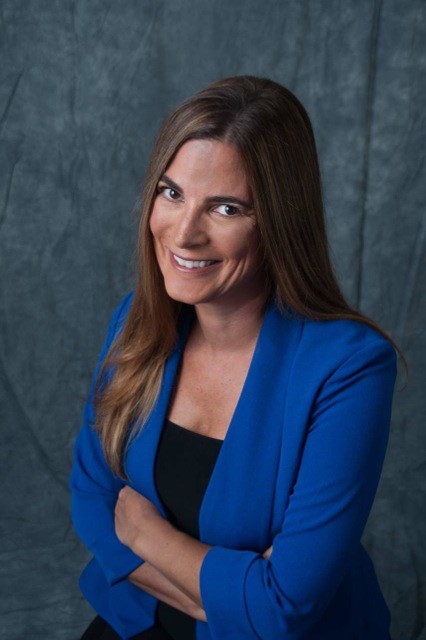 Moderated by Linda Roth (COM ’88), VP, External Relations, The Woodrow Wilson Center & former Sr. Producer, The Situation Room with Wolf Blitzer.
Linda Roth is a strategic communication executive and award winning journalist. She is the founder and CEO of Fern Strategies, a media consulting firm offering trusted advice to corporations, non-profits and individuals. Her expertise includes crisis communication, media training and journalism education. For more than a decade, she was Wolf Blitzer’s top producer at CNN, relied upon to manage nearly every aspect of his editorial projects, trips and newsmaker interviews. She is a veteran observer of presidential campaigns, covering every one since graduating from Boston University’s College of Communication. Her political journalism career includes eight years as the Executive Producer of CNN’s Sunday political talk show “Late Edition with Wolf Blitzer”. Guests of the newscast included world leaders, ambassadors, cabinet level officials, congressmen, CEOs and celebrities. She has interviewed Presidents Obama, Bush, Clinton and Carter — and almost all of this season’s past and present presidential candidates including Hillary Clinton, Donald Trump, Marco Rubio and Ted Cruz. Roth’s journalistic honors include Emmy, Peabody and Headliner awards. Her most recent Emmy award was for her contribution to CNN’s 2012 “Election Night in America” coverage that crushed the competition in the ratings. In his televised goodbye segment to his long time producer, Blitzer said: “I wouldn’t be where I am today without her. She’s a legendary producer here at CNN.”
As Vice President of External Relations at The Woodrow Wilson Center, Roth provides guidance on making their excellent content available to key audiences in Washington and around the world.
This event is presented by the BU Women's Leadership Council.
New Questrom Dean: Building a Brand
Susan Fournier applies marketing expertise to managing business school
 Susan Fournier, a professor at BU for 13 years, became dean of the Questrom School of Business on August 27, 2018. The school’s first woman dean, Fournier is a leading international expert on brand marketing and is credited with pioneering the subfield that explores the relationships consumers form with brands, products, and organizations. She was formerly a marketing professor and Questrom Professor in Management, an endowed chair. Her latest research examines the challenges of celebrity branding based on her 20-year analysis of Martha Stewart’s brand.
Fournier succeeds Kenneth W. Freeman, Questrom’s dean since 2010. During his tenure, undergraduate student enrollment increased by nearly 30 percent and BU trustee Allen Questrom (Questrom’64, Hon.’15) and Kelli Questrom (Hon.’15) and their foundation made the $50 million gift that led to the renaming of the school in 2015. The school also transformed its programs to emphasize ethics and global citizenship and to better meet changing student and employer needs.
“I intend to further establish our reputation as a preeminent academic institution with a reputation for research that matters, teaching that inspires, and faculty and staff who care,” says Fournier. “We need strong partnerships with industry and organizations that can provide data and questions for research that impact practices, policy, and society, and also collaborations in the development of courses and projects that provide hands-on, experiential learning. I have a deep appreciation for the stakeholder perspective from having worked and lived on the other side.”
Fournier says she also wants to increase Questrom’s focus on new, targeted master’s degree programs in healthcare, social impact, and digital specialties, while expanding interdisciplinary engagements between departments and with other schools at BU.
“Questrom has already begun breaking down barriers between traditional academic disciplines that operate in outmoded silos in favor of interdisciplinary programming,” she says. “Eliminating those boundaries in hiring, curriculum, research, and other interfaces is the future of business education and perhaps education in general.”
According to Robert A. Brown, BU president, Fournier will lead the school at an important point in its history. “Susan assumes the role of the dean of the Questrom School of Business during an exciting time for the school, for business education, and the University,” says Brown. “I look forward to working with her to continue the journey of increasing the quality and impact of the school’s education and research programs.”
BU Today spoke with Fournier about her leadership style, the future of the MBA, and her plans for getting alums more involved with the school.

BU Today: What lessons from your research will you apply in your new role?
Fournier: Building a strong brand is the goal of any organization. Strong brands require awareness, differentiation, commitment, and loyalty. Forging relationships across stakeholders is at the heart of any strong brand. It’s the same thing when you are running a business school.
I have in-depth knowledge of the psychology and sociology of relationships, how they develop, how they fall apart, what kind of flavors they come in. The whole point of my research is to understand the value people get out of forging brand relationships, what role the brand, product, or organization has for people in their lives, and how building those relationships creates value for the firm. It’s not about selling a product; it’s about understanding the foundation of those products in people’s lives and introducing solutions that help them.
My knowledge of branding will also inform initiatives dedicated to increasing the equity of the Questrom brand. We will leverage our faculty, our programs, our institutes, our research, and our alumni and stakeholders to increase awareness and build resonance with our brand.
What are some of the trends in graduate business education that you’re watching and how is Questrom responding to them?
The market for graduate business degrees is complex. There are areas for growth and trends that do cause concern. On a national scale, companies are no longer subsidizing tuition 100 percent, or, in some cases, not at all. Many organizations have taken training in-house and the big consulting firms have entered the game. Online programming has increased dramatically in quantity and quality, allowing companies to keep their employees on-site. International colleges and university competitors are getting really strong and upping their academic game. Politics around H-1B visas are affecting enrollments.

All of this puts pressure on US enrollments in the graduate business program space. An MBA is still the only degree that gives you a broad perspective on business problems and immerses you in all the disciplines of business. Leaders need breadth. While applications for the full-time MBA continue their downward trend across the nation, we have been fortunate enough to grow applications to select MBA programs, such as the part-time MBA and executive MBA. This is a tremendous credit to the quality of our faculty and our programs.
What’s really grown is the specialty market. When any market grows, it’s eventually going to fragment. We’ve been focusing on three areas over any others: health, digital technology—which is anything related to data-driven online business platforms like Uber—and social impact/sustainability.
We selected these sector-based growth areas because they are critical to the economy, embedded in the Boston ecosystem, and areas where we have comparative faculty advantage. We have master’s programs tied to these sectors, and we are exploring more program growth tied to segments in these spaces.
For Questrom, it’s about being aware. There are market opportunities and unserved or underserved segments. We have the experience and the discipline to find these opportunities and offer solutions.
What’s the significance of being the first academic appointed as dean in 40 years?
Through my status as a practicing academic with over 25 years of experience, I have deep empathy for, and understanding of, the research and teaching functions that are fundamental to an academic research institution such as ours—in other words, I get it. With all of the foundations we’ve been laying in terms of faculty hires, institutes, and program infrastructures, Questrom is at a stage of its development where an academic perspective can yield substantial value. Different times call for different leaders, and at this moment in time, the opinion of the trustees and University leadership is that Questrom can benefit significantly from a dean with academic experience. I’m honored to be the one to take on this new role.
How would you describe your leadership style?
My leadership style is threefold: relational, collaborative, and respectful. The first is self-explanatory: I study relationships, my area is brand relationships, and I brought relationship thinking to the world of branding.
I’ve also worked as senior associate dean for faculty and research, and that is a role that’s not always popular and requires you to make tough decisions. You have to build relationships so people can trust you.
Secondly, I’m collaborative; I seek to empower whoever works with me. I’m not going to pretend to be the one person in the room who knows it all. I know it takes a village to get something done.
Lastly, my leadership style is founded on the principle of respect. At the foundation of everything I do is the drive to create a healthy Questrom culture where we all work together in a culture of mutual respect.
What roles would you like alums to play in Questrom?
Alumni are critical stakeholders in our academic and research mission. They graduate and go out and change the world. They become our brand ambassadors. They can come back into the classroom, enhance our learning experiences, and provide connections for internships, mentorships, or job placements. They provide data for projects in hands-on classes.
Alums can also play a role as advisors as we develop new programs. They’re living today’s business issues and can offer a broader perspective. You can bring them to the classroom, on panels, and as mentors. Many are also accomplished businesspeople who can bring their wisdom, knowledge, and decision-making skills to bear on Questrom’s problems. I look forward to these engagements.
Will you bring a different perspective as Questrom’s first female dean?
I’m ecstatic, humbled, and honored to be Questrom’s first female dean. I’ve been lucky in that gender hasn’t been a defining element for me personally or for my leadership style, but I recognize that for a lot of women that’s not the case, especially in the current #MeToo era. For them, and for all women in business, I’m happy that I’m in this role and ready to do everything I can to help on that front. But I will say one thing: I look forward to a time when gender is not a question we need to probe. I’d rather be sought out as an outstanding dean, not a woman dean.
This interview has been condensed and edited for clarity.
Authors, BU staff. Photos by Dan Watkins.
Official Red Sox Photographer Captures Historic Season
 NOTABLE ALUMNI
Official Red Sox Photographer Captures Historic Season
Alumnus Billie Weiss (COM ’13) talks about 2018’s best images, Alex Cora’s photo wall, and his favorite Fenway Park spot.
Peek inside, Red Sox Nation
 COMMUNITY RESOURCE
Celebrating Boston's Black Newspaper
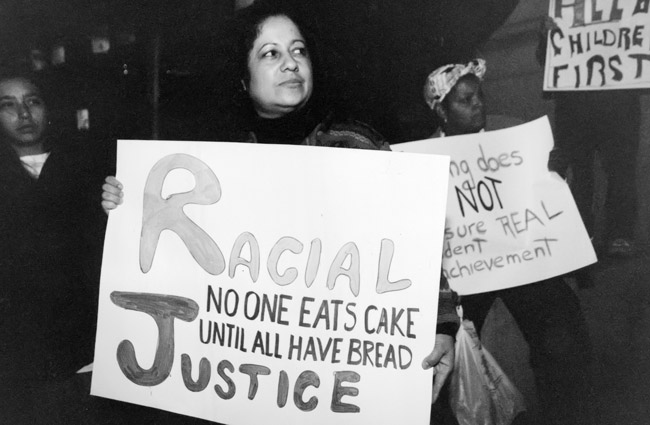
Boston University exhibits a half century of photographs from The Bay State Banner, which has chronicled the biggest stories in Boston’s African American community since 1965.
Come celebrate
 ON THE CHARLES RIVER
The Voice of BU for Almost Half a Century
Marie Gannon has worked as a BU switchboard operator since the year Nixon resigned -- and she's heard it all.
Take a look back
IN CASE YOU MISSED IT...
Rebecca Ingber of the BU School of Law explains to The Washington Post how Justice Kavanaugh might shift the Supreme Court's view of presidential wartime powers... Rena Conti of the BU Questrom School of Business sees big potential for direct to consumer healthcare delivery options in VOX... Nathan Phillips of the BU College of Arts & Sciences shares his views on the Merrimack Valley gas explosions with The Boston Globe... Michel Anteby of the BU Questrom School of Business talks to The Atlantic about how employer surveillance impacts employees... Renée Spencer of the BU School of Social Work is helping schools support military-connected students.
Ann McKee Elected to the National Academy of Medicine
BU neurologist studying concussions in athletes and soldiers

Photo by Asia Kepka.
The National Academy of Medicine (NAM) is made up of more than 2,000 international members, elected by their peers, for outstanding achievements in medicine. Ann McKee, a School of Medicine professor of neurology and pathology, director of the Chronic Traumatic Encephalopathy Center, and chief of neuropathology at the Boston VA Healthcare System, has been elected in recognition of the huge impact that her research on brain injuries in football players and military servicepeople has had on public health.
BU Today: Your work on concussions has been nothing short of groundbreaking. Can you recall the moment when you realized this was a defining issue that you wanted to pour your research into?
McKee: I had become very interested in the deterioration found in boxers’ brains, and when I saw the brain of John Grimsley, a 45-year-old football player in 2008, I was stunned to see the same pattern of pathology that I found in the boxers. I knew immediately that this was very important. I was a lifelong football fan; I knew that football players damaged their knees and hips, but it was a shock to find that they were damaging their brains as well. And with each additional case that came into the lab, the evidence grew stronger and the importance of the findings to public health became more evident.
We hear so much talk about head trauma from football. Can you talk about how prevalent head trauma is in the military and why that became a second focus of your work?
I’ve worked at the Veterans Affairs (VA) hospital for 25 years. Over 360,000 military service members were exposed to traumatic brain injury from blast and impact injury in the Iraq and Afghanistan conflicts. Although there are similarities between blast injury and athletic injury, we know far less about military-related injuries. We are hoping to raise the number of brain donations from veterans in order to solve this knowledge gap.
I read that you love to paint. Does art help your work in medicine in any way?
Medicine is an observational science, and being a visual person, with a strong visual memory, tends to increase your powers of observation. I also think that creativity, which is a central component of painting and visual arts, is absolutely essential to science.
If you were to look ahead one generation, say in 20 years, do you think football, as we know it today, will be the same game, with the same popularity?
The risk of CTE is directly related to the cumulative exposure to subconcussive hits. If football rules do not change, if players continue to experience hundreds of subconcussive hits per season, and if nothing is done to better detect and treat early brain injury, then I think that the future of football will parallel the trajectory of boxing. It will become less popular in mainstream America, less common in institutions of higher learning, and the province of the disadvantaged.
What would you tell a young mother today with a 10-year-old begging to play football? And what might you tell the child?
I would encourage the mother and son to play another sport with less head contact. The truth is inconvenient and unwelcome, but football damages brains, and young brains especially.
You have faced a lot of criticism with your findings. But I read that your nieces refer to you as “Auntie Badass.” Where did that come from?
In this case, it is a term of endearment. My nieces are proud of me, not just because I had the right cognitive skills at the right time, but because I’ve had to face dismissiveness and sexism, people trying to claim credit for my work, and people and organizations trying to derail me. I’ve had to fight for where I am with persistence and determination and my eyes focused straight ahead.
You’ve received so many honors and accolades; can you put this one from the National Academy of Medicine in perspective for us?
It is recognition of professional achievement and commitment to service; I am very honored to be recognized for my work to improve public health.
Authors, Kat McAlpine can be reached at katjmcal@bu.edu, and
Doug Most can be reached at dmost@bu.edu.
BUzz Bits
BU IN DC
Students in the Boston University Washington, DC Study Abroad Program met with staff in the offices of Senator Ed Markey (D-MA) and Representative Niki Tsongas (D-MA) on October 5.
BUZZ BITS...
- The Government Accountability Office (GAO) evaluated whether the United States adequately supports "research that could lead to transformational technological advances." GAO's report found that federal agencies should better collaborate in order to maintain leadership in both quantum computing and synthetic biology.
- The House Subcommittee on Information Technology issued a white paper detailing the impact of artificial intelligence on U.S. policy. The paper recommends federal investment in artificial intelligence research, education and training for the federal workforce, updates to federal privacy laws, and a review of existing federal regulations.
- The National Science and Technology Council (NSTC) is requesting comments on its update to the national strategy for artificial intelligence (AI) research and development. Investigators with ideas on which emerging AI research topics the government should support should comment by October 26.
ENERGY RESEARCH BILL SIGNED INTO LAW
On September 28, President Donald J. Trump signed into law the Department of Energy (DOE) Research and Innovation Act (Public Law 115-246), which sets Congressional research priorities for DOE's Office of Science for the first time in nearly a decade. The new law provides guidance across all six programs in the Office, enshrining key activities into law while directing new research activity as well. The Act formally authorizes Energy Frontier Research Centers and Energy Innovation Hubs for the first time, creates both solar fuels and energy storage cross-program initiatives, and mandates research on the biological impacts of radiation in small quantities.
GRANTS NEWS YOU CAN USE
Are you searching for new funding opportunities in the social sciences? Federal Relations has updated its compendium of federal funding opportunities in the behavioral and social sciences, arts, and humanities on its website. The overview provides detailed information about a wide range of federal agencies and programs, including opportunities at the National Science Foundation, Department of Justice, Department of Education, and National Endowments for the Arts and the Humanities.
A Note to Our Readers: With Congress departing for an extended District Work Period through the mid-term election, Beltway BUzz will not publish for the remainder of October. In the mean time, follow us on Twitter and visit our web site for updates. See you in November!
The Voice of BU for Almost Half a Century
Marie Gannon has worked BU’s switchboard since the year Nixon resigned
Marie Gannon has been working BU’s switchboard for four and a half decades. Over the years she’s seen a lot of changes, including the arrival of computers and cell phones. She says she loves her job and has no plans to retire…yet. Photo by Jackie Ricciardi.
It’s the first week of school and BU’s switchboard number, 617-353-2000, is lighting up in the basement of 111 Cummington Mall. An exasperated parent calls complaining about being unable to reach anyone in Financial Aid. Minutes later, it’s another parent, asking if she can march with her child during the parade leading to the annual Matriculation ceremony. A student calls to say that his flight to BU has been delayed and he needs to find out if he can move into his dorm after the 5 pm cutoff. And then there’s the parent calling to say she’s promised to stock her son’s fridge, but doesn’t know where to buy groceries.
Through it all, BU Call Center senior telephone operator Marie Gannon remains unflappable. She calmly assures the first caller that Financial Aid is deluged with calls this time of the year, and she stays on the line until he’s reached the office. She connects the second caller to the Dean of Students office, where the mother finds out that sorry, the parade is for students only. Gannon puts the harried student whose flight is delayed through to the South Campus Residence Life office. And for the last caller, she suggests the Shaw’s supermarket near West Campus. Over the next eight hours, she’ll field approximately 100 such calls.
Watching Gannon work from her cubicle is a little like studying a maestro conduct an orchestra. She has so many department and office phone numbers memorized that she rarely needs to consult her computer. And her institutional memory is phenomenal—she instinctively knows who best to reach out to and where to send a caller.
No wonder. She’s been working BU’s switchboard since 1973—a year when Steve Jobs, who would found Apple a decade later, was working for a small video game company called Atari.
“I call Marie the human directory,” says Call Center manager Roberta Contant, Gannon’s boss. “You can ask her for a department number and she’ll give it to you without even having to look it up. We had a parent who was lost trying to get to BU and Marie stayed on the phone with her and gave her directions and got her right where she needed to go. This woman asked Marie if she had a camera in her car, because Marie was telling her what she was going to see next.”
Then and now
Gannon was just 21 and working at a sub shop in South Boston when one of her regulars, Dan Mullen, came in one day to tell her he was leaving his job at the BU switchboard. He urged her to apply and said he’d recommend her. Four weeks later, she had the job.
When she started, the switchboard was at 771 Comm Ave (now the Citizens Bank in the George Sherman Union), and it operated 24 hours a day, 7 days a week. There were four full-time operators, aided by a team of work-study students, handling as many as 80,000 calls a month. And at the time (no computers, no cell phones), everything had to be done manually.
“We had a little book and we kept phone numbers for the departments,” Gannon recalls. “We had a paper printout of faculty and staff that was updated every summer. And the student directory was on microfilm. It took only a few seconds, but it was noisy.”
The campus looked a lot different, too. “There was a gas station where Questrom now is, and there was a big nightclub where the Barnes & Noble at BU is. And before they built a Burger King next to Sargent College, now a parking lot, there was a restaurant that looked like a spaceship,” Gannon says with a laugh. “I wish I had taken a picture of that place.”

When this photo of Gannon was taken in 1985, BU switchboard operators had to use microfilm to search for students’ phone numbers. Computers changed all that a few years later. Photo courtesy of Daily Free Press/Stuart Cahill.
What does it takes to be a good telephone operator? Well, Gannon says, you have to be able to remember phone numbers, but you also have to be a good listener. “Every call is different. I can almost always tell what’s going on with the person as soon as I answer the phone,” she says. “I can just tell by the person’s voice what kind of a call they are.”
Regardless of the caller, she is unfailingly patient and polite. Parents will call, worried about their homesick son or daughter, unsure who to reach out to. Gannon offers a sympathetic ear and might suggest they contact Residence Life or Behavioral Medicine. Sometimes a student calls saying they need help. After 45 years, she can reel off a list of available resources.
Her job requires the skills of a good hotel concierge. Students will call when their parents are coming into town and ask for advice on where to take them for a meal. Chinese, Italian, seafood, she knows where to send them. Others call asking where they can buy sheets and towels or how far the campus is from Logan Airport and how much a cab will cost. (Gannon warns that taxis are expensive and offers to give them directions for taking the MBTA to save money). One time, a student called because she wanted to cook a corned beef for her parents. It turned out that Gannon had a recipe—she knew it by heart—and walked the girl through it, step by step.
She remembers a time before students had a weather app at their fingertips and would call up thinking the switchboard was the weather service. “They’d want to know what the weather was going to be like that day, and I’d say, ‘Well, it’s raining out, in case you haven’t pulled your shade up or gotten out of bed yet.’ I’d tell them they’d better put on a raincoat and boots because it’s raining pretty heavy.”
And for years, at the beginning of the school year, one or two freshmen would call the switchboard and say they’d like to order room service. Gannon would ask, “Are you a freshman?” When they’d say yes, she’d explain that they’d had a prank played on them.
Smiles—and tears
There are memories, too, of more sobering events. Gannon recalls working through the night with colleagues on 9/11 to make sure anxious parents could connect with their kids and to put students seeking help in touch with counselors.
A lot has changed in the decades since she started at BU. The arrival of cell phones dramatically reduced the number of calls going through the switchboard. Today, she’s one of only two full-time operators (the other is Sonya Richburg). And the Call Center is no longer staffed 24/7. An automated system directs callers after 5 pm and on weekends.
What she cherishes most, Gannon says, are the friendships she’s made. For years, she’d put calls through from Steve Drenga, a former library technician at Mugar Memorial Library. They’d never met, but one day while standing in line in the cafeteria, she recognized his voice and introduced herself. The two became quick friends and would often meet for morning coffee with other friends at the long-gone Mal’s Diner on Comm Ave. The late Freda Rebelsky, a College of Arts & Sciences professor emerita of psychology, used to bring plates of cookies or chocolates to the switchboard staff every Christmas before she retired.
But one of Gannon’s favorite people was Michael Fleming, also a CAS professor of psychology, who died in 2013. Fleming would often try to disguise his voice when he’d call. Gannon says she always knew it was him. The two developed a close phone friendship. He stopped by the switchboard one day to meet the operators, but Gannon was out. They never did meet in person, but she went to his memorial service at Marsh Chapel.
Gannon lives in Winthrop with her husband, and when she’s not at work, likes to read, paint, and do ceramics. And while she’s not sure she’ll make it to her 50th anniversary, she says she has no plans to retire…yet. She still loves her job.
“You get different people on the phone every day,” she says. “It’s not the same thing every day. You’re always talking to new people.”
Author, John O’Rourke can be reached at orourkej@bu.edu.
A Big Building for Big Ideas
 ON THE CHARLES RIVER
A Big Building for Big Ideas
Boston University's new Data Sciences Center will bring mathematicians, computer scientists, and statisticians together under one roof to lead the way in data science. Take a look
 NOTABLE ALUMNI
Opening Doors
Erica Mosca (CGS '06, COM '08) is the founder of Leaders in Training, a nonprofit that empowers first-generation students to get into college—and graduate—and become leaders in their communities.
See how she opens doors
 RESEARCH HIGHLIGHT
The Search for a Coral Killer
Coral reefs are dying. With support from the National Science Foundation, BU marine biologist Sarah Davies will find out why.
Dive in
IN CASE YOU MISSED IT...
Sahar Sharifzadeh of the BU College of Engineering was named one of Scientific American's 11 Rising Stars of Science... Emily Rothman of the School of Public Health tells The Washington Post that rape prevention and education is "woefully underfunded"... Ahmed Ghappour of the BU School of Law explains why law enforcement can unlock phones with facial identification to Wired... Kevin Gallagher of the BU Global Development Policy Center was appointed to the United Nations Committee for Development Policy... BU alumnae in the media will discuss "Serving Truth in News & Media" at the National Press Club on October 24th.
President Brown Meets with Lawmakers
BU IN DC
Karen Jacobs of Sargent College met with Congressional staff as part of the American Occupational Therapy Association's annual Capitol Hill day on October 1.
College of Engineering Dean Kenneth Lutchen attended the National Science Foundation (NSF)/American Society for Engineering Education Engineering Deans Forum on Broadening Participation on October 2 and 3.
Sarah Hokanson of Professional Development & Postdoctoral Affairs participated in an event for grantees of the NSF Inclusion across the Nation of Communities of Learners of Underrepresented Discoverers in Engineering and Science (INCLUDES) program from October 2 to 4.
School of Public Health Dean Sandro Galea gave a talk about key challenges in population health research at the Interdisciplinary Association for Population Health Science annual meeting on October 3.
PRESIDENT BROWN MEETS WITH LAWMAKERS
President Robert A. Brown met with lawmakers, federal agency leaders, and science policy stakeholders in Washington, D.C., on Thursday to discuss BU's research and higher education priorities. Brown highlighted BU's space weather expertise with Senator Gary Peters (D-MI) and college affordability efforts with Senator Chris Coons (D-DE). He also met with Dr. Bindu Nair, the acting director of the Department of Defense's basic research enterprise.
QUANTUM INFORMATION SCIENCES INITIATIVE ANNOUNCED
Last week, the White House Office of Science and Technology Policy unveiled a strategic plan to implement a "national approach to quantum information research and development." The plan calls for greater coordination of federal quantum information sciences programs through a new subcommittee of the White House National Science and Technology Council. The interagency committee will have seven areas of focus, including workforce development, incentivizing public-private partnerships, infrastructure investment, and international cooperation. The strategy comes as Congress is considering legislation to provide more federal funding for quantum research at the U.S. Department of Energy and the National Science Foundation.
GRANTS NEWS YOU CAN USE
The National Science Foundation (NSF) has released two solicitations related to one of the agency's "10 Big Ideas" for future scientific investment, Understanding the Rules of Life:
- The Understanding the Rules of Life: Epigenetics program will invest up to $18 million to support between six and 12 awards for multidisciplinary research, education, and workforce training in the field of epigenetics. Proposals are due by February 1, 2019.
- The Understanding the Rules of Life: Building a Synthetic Cell program will invest up to $10 million for four to six transformative proposals that bring together multidisciplinary expertise to work towards “designing, fabricating, and validating synthetic cells that express specified phenotypes.” Preliminary proposals are due to NSF by December 28, and full proposals will be solicited by invitation only.
Making News: Alum Builds Washington News Bureau

C.D. “Budd” Ruffin,the District 2 commissioner from rural Choctaw County, Ala., is a big guy—defensive-lineman big—and he sweats a bit as he stands in the grand marble rotunda of the Russell Senate Office Building in his sport coat and scally cap. Ruffin came to Capitol Hill to lobby Alabama’s congressional delegation to fund workforce development, infrastructure, and Narcan kits for police and emergency workers fighting the opioid epidemic. Veteran D.C. broadcast journalist Jacqueline Policastro turns on her camera and helps Ruffin adjust the microphone clipped to his lapel.
“We want to make sure the opioid epidemic does not strangle our small communities, and our first responders should be equipped with anything that will help them do their job better,” Ruffin tells Policastro (COM’06). Ruffin’s lobbying efforts might easily go unnoticed by people back home. CNN and the New York Times aren’t interested, and local media in Alabama no longer have the resources to report from Washington, if they ever did. But a clip—of Ruffin talking about road funding, no less—makes the evening news on WTOK-TV in Meridian, Miss., a station watched by many of Ruffin’s constituents just across the state line.
Author, Joel Brown can be reached at jbnbpt@bu.edu.
Rising Democratic Star Ocasio-Cortez Urges Students to Become Activists
Congressional candidate, CAS alum: persistence, courage needed to achieve social justice
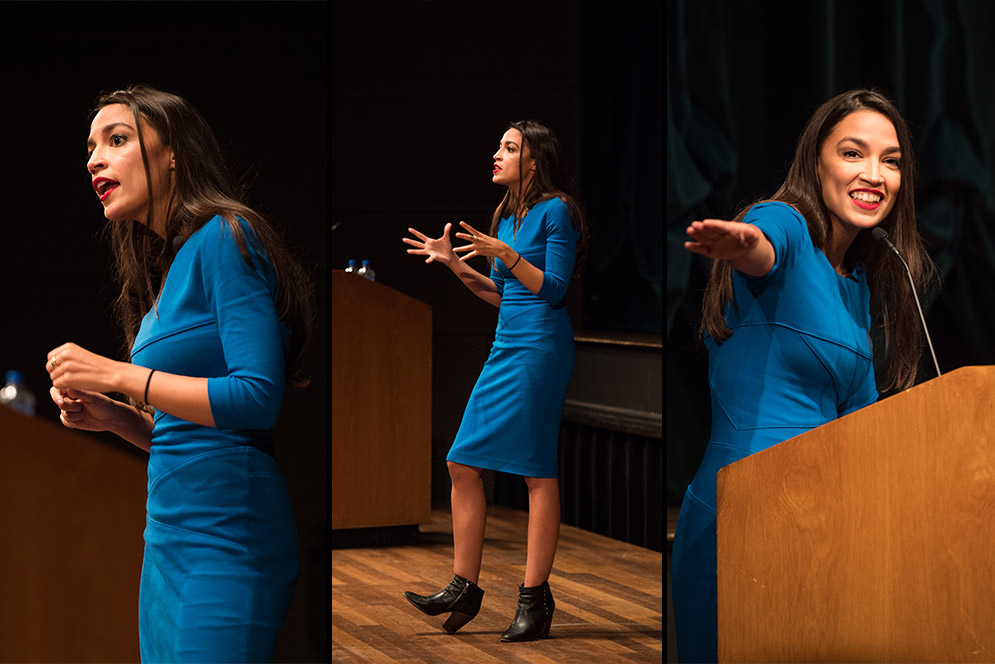
New York 4th District Congressional candidate Alexandria Ocasio-Cortez (CAS'11) delivered a powerful call to action to several hundred students at the Tsai Performance Center on Monday. Photo by Cydney Scott.
Alexandria Ocasio-Cortez, a rising star in the Democratic party, urged BU students to become activists for social justice despite the odds when she spoke at the Tsai Performance Center on Monday.
Using her own life and long-shot Congressional campaign as an example, Ocasio-Cortez (CAS’11) told the crowd of nearly 500: “I could not bear to be hopeless anymore, so I chose to do something….On June 26, we upended the political establishment.”
That’s when the 28-year-old stunned longtime US Representative Joe Crowley in the Democratic primary in New York’s 14th District, which includes areas of Queens and the Bronx. A first-generation Puerto Rican American long focused on social injustice, she ran on a platform that included Medicare for all and criminal justice and immigration reforms—at first campaigning between shifts at her restaurant job.
With her Congressional victory all but assured (the 14th District is overwhelmingly Democratic, and she’s expected to handily beat little-known Republican candidate Anthony Pappas in November’s general election) Ocasio-Cortez has been spending much of the last few weeks campaigning for other progressive candidates and causes around the country.
Earlier on Monday, she was one of several prominent Democrats who spoke at a large rally at City Hall Plaza, where protesters had gathered to urge the US Senate to vote no on confirming Supreme Court nominee Brett Kavanaugh, whose confirmation hearings have been marked by sexual assault allegations. “It’s traumatizing. I feel for every women and survivor in America to just live through this week,” she told the BU audience, but added that the problem extends beyond Kavanaugh.
“I cannot convey how serious and dangerous it is and how imperiled our most basic political institutions are right now,” she said. “When people say, how could this have happened—it is because of the slow slide of our public institutions, when too many people sat on the sidelines and read the news and said, ‘Wow, that’s crazy. Time to go to class.’
“We want to pretend that this moment is normal, just a little bit more partisan than usual,” she said. “But this is no longer a partisan battle. A generation ago, committing perjury and lying to Congress multiple times in your nomination hearing would have been an automatic disqualifier. To see the rules that we are willing to dismantle just to insert a partisan pick is truly concerning.”

Rising Democratic star Ocasio-Cortez spoke and took questions for nearly at hour on Monday. Photo by Cydney Scott.
Ocasio-Cortez said that the way the nation can get through this moment is through activism. The “tiny gesture” made by Senator Jeff Flake (R-Ariz.) last Friday, when he asked for a week’s delay in the Senate vote so the FBI could investigate the charges against Kavanaugh, she noted, was inspired by two activists who cornered him in an elevator and told him their stories of sexual assault. One of those women, she said, was an immigration activist from her district, who risked everything to speak out.
We need to be championing the causes of our neighbors, she went on, and make sure that the people experiencing injustice are not the only ones advocating for themselves.
“We cannot in this moment allow just women and survivors to be fighting for their own rights, because that makes it harder,” she said to loud applause. “So what I’m asking is for all of the men here to step up, because we’re not in the room when it’s all men and someone says something disgusting.…Sex assault is not about a crime of passion, it is about abuse of power. Men and allies, now is your moment.”
The students in the audience found her message compelling. “She was just so inspiring,” said Giancarlo Lobo (COM’20), a campus activist for divestment from fossil fuels. Ocasio-Cortez took questions after she spoke, and Lobo asked her for advice about grassroots campaigns and getting people to care about an issue. She emphasized the importance of two things: consistency of message and persistence, citing the old anecdote about record companies knowing they could make any record a hit if they could get it played on the radio enough.
“I’m just trying to grow our campaign and make it stronger,” Lobo said afterward, “and listening to a BU alum telling me how to do so is the most valuable thing I could ask for.”
“I admire her conviction and her faith in the truth and that the truth will eventually prevail,” said Masha Vernik (CAS’19). “That’s something I look for in myself a lot, and it’s so easy to steer away from that in a world where we’re told, for example, not to believe survivors of sexual assault and to doubt social justice and see it as something we have to fight for, not something that’s deserved. I look up to her as a inspiring person,t to remind myself to focus on what is true and what is right.”
Ocasio-Cortez’s visit was organized through the College of Arts & Sciences political science department, but many cited the efforts of Samantha Delgado (CAS’20), who introduced the congressional candidate. And the event wasn’t all geopolitics: Ocasio-Cortez managed a shout-out to her old dorm crew in Warren 16-B. The friends she made at BU, she said, remain her closest friends and helped her throughout her campaign.
Ocasio-Cortez “was a bright shining light” when she was at BU, recalled Raul Fernandez (COM’00, Wheelock’16), a Wheelock College of Education & Human Development lecturer, who was in the Tsai audience. Fernandez said she was a student ambassador at the Howard Thurman Center for Common Ground, when he was assistant director, and she came around often for the regular Coffee and Conversation events.
“Everybody knew her as one of the smartest people in the room for sure,” says Fernandez, who shares her Puerto Rican heritage. She didn’t talk about political ambitions then. “Her main focus was using the time she had on this planet to benefit people in the community.”
Author, Joel Brown can be reached at jbnbpt@bu.edu.