News
Introducing Affordable BU
 ON THE CHARLES RIVER
Introducing Affordable BU
Boston University will meet the full financial need of all domestic students, starting in fall 2020, with a planned investment of more than $290 million annually. Get introduced

STUDENT LIFE
BU's Online MBA To Launch in 2020
BU Questrom School of Business will team with edX to offer the online education provider's first Master of Business Administration degree to students worldwide. Glimpse the future
 RESEARCH HIGHLIGHT
Optimists Live Longer
With funding from the National Institutes of Health, BU and Harvard scientists find that optimism could boost our chances of living 85 years or more by over 50 percent.
Be optimistic
IN CASE YOU MISSED IT...
Danielle Citron of the BU School of Law discussed internet liability and Section 230 at the American Enterprise Institute on September 6... Cara Stepp of BU Sargent College and Steve Ramirez of BU College of Arts & Sciences received the Presidential Early Career Award for Scientists and Engineers... Michael Siegelof BU School of Public Health explains how specific types of gun laws reduce mass shootings in The Washington Post... Jack Beerman of the BU School of Law weighs in on lawsuits against white supremacists on NPR.
LAW Prof. Danielle Citron Speaks on Internet Liability in DC
Should we reform Section 230?
Friday, September 6, 2019 | 10:00 AM to 11:30 AM ET
AEI, Auditorium
1789 Massachusetts Avenue NW
Washington, DC 20036
White House Outlines Research Priorities
BU IN DC
President Robert A. Brown attended a board meeting of the Association of American Universities on July 29 and 30.
Danielle Citron of the School of Law met with Congressional staff to discuss "deepfakes" legislation on July 30.
Kim McCall of the College of Arts & Sciences spoke at the Training, Workforce Development, and Diversity Program Directors' meeting at the National Institute of General Medical Sciences on August 1.
Vice President for Alumni Relations Steven Hall and Kirsten Lundeen hosted an alumni meeting on August 29.
WHITE HOUSE OUTLINES RESEARCH PRIORITIES
On August 30, the Trump Administration released a memorandum on its science and research priorities for fiscal year 2021. Priorities such as artificial intelligence, quantum computing, and advanced manufacturing remain unchanged from last year. The memo adds new goals, such as understanding the economic opportunities and changes to the ocean system, developing resilient supply chains for critical minerals, modeling earth system predictability, and advancing biotechnology to support the American bioeconomy. The document also highlights the need to create "research environments that reflect American values."
BUZZ BITS...
- The U.S. Senate confirmed Michael Kratsios as the chief technology officer of the United States on August 1. Mr. Kratsios worked at a Silicon Valley investment firm before joining the White House in 2017.
- Dr. Thomas Engels became the acting administrator of the Health Resources and Services Administration at the U.S. Department of Health and Human Services on August 1. He replaced BU alumnus George Sigounas.
- The Consumer Financial Protection Bureau named Robert Cameron as its next student loan ombudsman on August 19. Mr. Cameron previously served as an executive for a student loan servicer.
EVENTS NEWS YOU CAN USE
BU Research is hosting its annual 'Navigating Research at BU' open house, which addresses the essentials of securing and managing funding, conducting research, and bringing your work to the attention of critical audiences. Participants will meet personnel from University departments that support your research endeavors. Faculty, staff, post-docs, and graduate students with any level of experience are welcome to attend on Wednesday, September 18 between 3 and 5 p.m. in the Kilachand Center.
RSVP today
Your Race May Factor in Which ER an Ambulance Takes You To
BU researchers also find that, regardless of race, 40 percent of patients transported by EMS are not brought to the nearest hospital

Researchers at Boston University School of Medicine have discovered large differences between the emergency department and hospital destinations of black and Hispanic patients transported by EMS in comparison with their white counterparts. Photo by Marco_Piunti/iStock.
Your race—not which hospital is nearest—may influence which emergency room you are transported to by emergency medical services (EMS).
National guidelines require EMS to transport patients to the nearest suitable hospital. But to what extent this occurs and whether this varies based on the race or ethnicity of patients has remained unknown. Until now, there has been scant research on the destination patterns of EMS-transported patients to hospitals.
In a first-of-its-kind study, researchers at the Boston University School of Medicine showed large differences between the EMS-transport destinations of black and Hispanic patients in comparison with their white counterparts. They also found that 40 percent of patients overall, regardless of race, were not taken to the nearest hospital. According to the researchers, these findings, published online in JAMA Network, suggest that the difference in these transportation destinations may be motivated by factors other than proximity or time.
Using national Medicare claims data, the study divided patients based on the zip code they lived in, and compared which emergency departments and hospitals non-Hispanic white, black, and Hispanic patients were brought to within the same zip code. The study also looked at how often black and Hispanic patients were transported to the destinations most frequently used for white patients.
The results of the study showed sizable differences by race and ethnicity in which medical centers patients were brought to by EMS. The widest disparities were seen in larger urban areas with multiple hospitals and emergency departments within the vicinity. The study also found that black and Hispanic patients were more likely to be transported to a “safety net” hospital—a type of medical center that by legal obligation or mission provides healthcare for individuals regardless of their insurance status—compared to their white counterparts living in the same zip code.
“This is not a causal study, so we really don’t know why we are seeing this pattern,” says study corresponding author Amresh Hanchate, a MED associate professor of medicine and a health economist at VA Boston Healthcare System. “It could be a benign phenomenon where people are being brought to the place that they’ve asked to go, because that’s where their regular doctor or cardiologist is located.”
This research is a necessary first step in order to examine the effects ambulance diversion has on patient care and understanding the relationship between emergency utilization and healthcare disparities.
EMS currently doesn’t keep track of the details that determine which hospital a patient is brought to. Hanchate hopes that this study may change that, and that EMS providers may document whether a patient requests to be brought to a specific medical center.
“This study raises interesting questions,” Hanchate says. “What are the potential issues with patients not being brought to the nearest place? Let’s say they go to the medical center where their doctors, their patient records are—we know that continuity of care is important. But at what point is the extra loss of time it takes to get there worthwhile or not worthwhile? We need more research to understand the role that patient choice, usual source of care, and clinical condition play in guiding EMS transportation decisions in diverse systems across the United States.”
“I think [our findings are] unlikely to represent racism or intrinsic bias because one of the important observations we’ve made is that the pattern could be related to favorable reasons for someone wanting to be taken to a usual site of care,” says coauthor James Feldman, a MED professor of emergency medicine and vice chair of research at the Boston Medical Center department of emergency medicine.
It’s also likely that ambulance diversion—a controversial practice where a hospital goes on “diversion” status, meaning its ER is at full capacity and patients must be routed to other medical centers—is impacting the data. Ambulance diversion has been banned in Massachusetts since 2009.
“Massachusetts was the first and remains the only state that has blocked ambulance diversion. [It] is unfortunately a practice that remains common throughout the country,” says Feldman. “This research is a necessary first step in order to examine the effects ambulance diversion has on patient care and understanding the relationship between emergency utilization and healthcare disparities.”
Funding for this study was provided by the National Institutes of Health (NIH) National Heart, Lung, and Blood Institute, and the NIH National Institute on Minority Health and Health Disparities.
Author: Gina DiGravio - View her profile
Class of 2023 Formally Welcomed into the BU Family at Annual Matriculation Ceremony
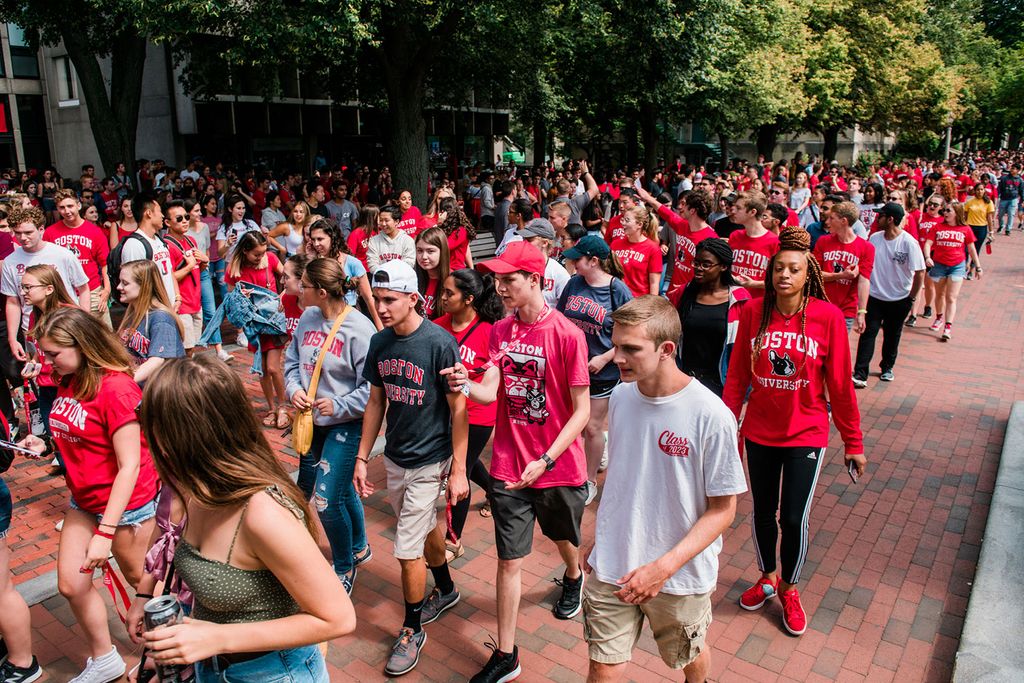
 Pumped-up Naomi Caines (CAS’23) (center, left) and Ying Chu (CAS’23) during the Class of 2023 Matriculation ceremony on September 1. Photo by Jackie Ricciardi.
In his Matriculation address to the approximately 3,100 newly arrived members of the Class of 2023 and their families on Sunday, BU President Robert A. Brown touched on themes of tolerance and diversity and spoke of the importance of taking advantage of everything the University has to offer. The annual welcoming ceremony was held at Agganis Arena.
The event marks the official enrollment of the incoming freshmen and is one of only two occasions the Class of 2023 will gather in its entirety. The second? Commencement, a point the president noted.
“You are poised to emerge from college at one of the most challenging and exciting times in the world’s history,” said Brown, who was garbed in his presidential doctoral gown and carried the academic mace in the procession of BU faculty and administrators to the stage. “The world is changing at a rate we have never seen before. When you stand on Nickerson Field at graduation in 2023, the world will be more global, more diverse, more urban, more interconnected and run by machines than at any time in our history. Our goal is for you to thrive and to lead in this rapidly changing world throughout your life. We believe that the BU experience…prepares you for this change if you set your goal to fully engage in the community.”
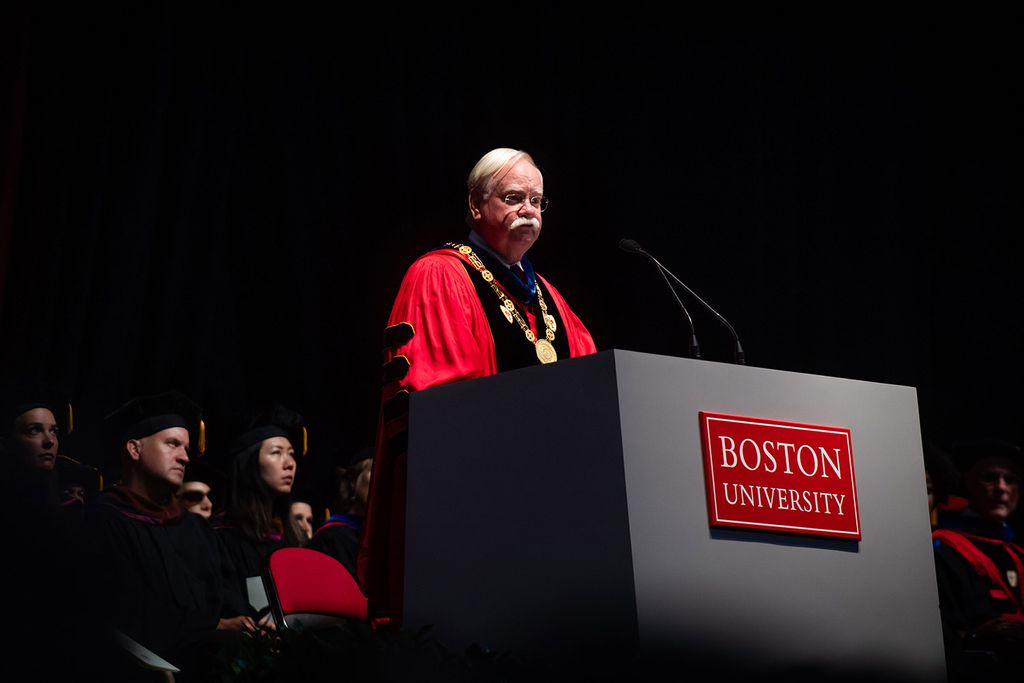
BU’s scale and breadth gives you choices, Brown said, citing examples like BU’s 174 undergraduate degrees (not counting combined undergraduate and master’s programs) and its 400 student-run organizations. He also made a point of emphasizing the diversity of the Class of 2023, noting that members hail from 42 states and 53 nations “and represent the future of this country.”
Students sat with their school or college during the ceremony, and practically all were clad in scarlet, the school color of BU. They filed into Agganis to music performed by the Boston University Faculty Brass Quintet and hummed along with Caroline Burg (CFA’20) as she sang “Clarissima,” the school’s anthem.
The president opened with a special welcome to students and families from Florida, Georgia, and the Carolinas, areas that could be severely impacted in the next few days by Hurricane Dorian, which was upgraded to a category 5 storm Sunday morning. On a lighter note, he gave special thanks to the family and friends of the Class of 2023. “Thank you for all of your assistance getting your BU students settled into their housing, for fighting the lines at Bed Bath & Beyond, for enduring Boston traffic during Move-in weekend, for everything you have done to make this weekend possible,” he said, to laughter.
Among the other points Brown touched on were the new Center for Computing & Data Sciences, scheduled for completion in two years, and BU’s chartering in 1869 and eventual transformation into a large research university, and he gave strong warnings against binge drinking and sexual misconduct. Noting that 2020 is an election year, he urged the freshmen to start preparing. “US citizens, we need you to vote,” he said. “Do as much as you can, exercise your right.”
Delivering the faculty salutation was Malika Jeffries-EL, a College of Arts & Sciences associate professor of chemistry, who told students, “Don’t forget to call your mother.” J. R. Hipple (COM’88), president of the BU Alumni Association, urged the class to “be a sponge” and absorb new knowledge.
The Class of 2023 also heard from Hafzat Akanni (CAS’20), student government president, whose speech was deeply personal and honest. She spoke of mistakes she had made, the personal struggles she’s experienced while at BU because of the death of some family members and friends, and even admitted that BU hadn’t been her first choice of colleges.
“Be intentional and take chances,” she said. “Opportunities will arise, and if not, don’t be afraid to open doors for yourself. Design your own course, start your own club, make the most of your time here… Open yourself to new experiences. You are not alone. Don’t be afraid to ask for help and guidance. Welcome—be bold, be brave, be you.”
As the ceremony wound down, Jean Morrison, University provost and chief academic officer, introduced the deans of the various schools and colleges, who in turn welcomed the new students into their individual schools.
Students and their families were invited to Nickerson Field following the ceremony to attend the 13th annual Terrier Tailgate, with free food, music giveaways, and prizes, and the BU men’s and women’s home-opener soccer games.
Author, Amy Laskowski graduated from Syracuse University in 2007 with a degree in English, and earned a master’s in journalism at the College of Communication in 2015. She helps edit the work of BU Today’s interns and is always hunting for interesting, quirky stories around BU. View profile
FYSOP, Celebrating Its 30th Anniversary, Launches
Annual volunteer service project for first-year students begins today
 Last year, FYSOP coordinators Lucina Hawkins (CAS’21) and Ana Paula Gushken (ENG’20) packed up paper lanterns while volunteering at Spontaneous Celebrations, a nonprofit arts group in Jamaica Plain. Photo by Jackie Ricciardi.
When BU’s First-Year Student Outreach Project (FYSOP), a weeklong community service program run by the Community Service Center, launched in 1989, it had fewer than three dozen student volunteers. In the intervening decades, the program has become an institution on campus, drawing students from every undergraduate school, who consistently rate it as one of their top undergrad experiences. Today, as FYSOP marks its 30th anniversary, 475 freshmen and transfer students arrive on campus to work on community service projects at nonprofits and community organizations throughout the Boston area. During the week, they’ll also have an opportunity to learn more about Boston and its diverse communities. Like last year’s program, this year’s FYSOP will be divided into seven focus areas centered around different MBTA lines and neighborhoods.
- Beantown volunteers travel to sites along the Red Line in Dorchester, Roxbury, and Mattapan.
- City of Champions pairs students with organizations on the Red and Orange Lines in Cambridge, Somerville, Charlestown, Malden, and Downtown Crossing.
- Cradle of Liberty participants take the Orange Line to partner with nonprofits in Jamaica Plain, Roslindale, West Roxbury, and Hyde Park.
- America’s Walking City brings volunteers using the Red and Silver Lines to sites in Dorchester, South Boston, Quincy, and the South Shore.
- The Biggest College Town in the World volunteers hop on Green Line B, C, and D trolleys to volunteer in Allston, Brighton, Brookline, Watertown, and the Metro West region.
- Hub of the Solar System students board the Green Line E trolley and the Silver Line to Fenway, Roxbury, and the South End.
- Olde Town students take the Blue and Silver Lines to volunteer in downtown Boston, East Boston, Chelsea, Revere, the North Shore, and the Metro North region.
Most students will use public transportation to travel to and from their volunteer sites, but van transportation will be required to reach some community partners. But a few of those partners are within walking distance of campus. This year’s FYSOP volunteers will be led by 3 program managers, 14 coordinators (2 per focus area), and 175 staff leaders.
Program managers Meghan Volcy (CAS’19), Gabby Florio (CAS’20), and Julia Martorell (CAS’19) came up with this year’s theme, Expand Your Circles, which is designed to encourage new students to connect with the diverse communities within and surrounding BU. “We came up with this theme after long late-night discussions about the past, present, and future of the program,” Volcy says. “Our personal desires of wanting to break out of the ‘BU bubble’ and create an environment where both returning and new participants are welcome and valued and to define our place in BU as well as in Boston came up often.”
Take advantage of the city and of all the people you meet—they are some of the coolest people you’ll get to know.
The program kicks off tonight, as it does each year, with a dinner and an opening ceremony. This year’s featured guest speaker is Kelsey Harris (GRS’22), a PhD student studying sociology, who will speak on the theme of expanding one’s circle through the exploration of community. On Tuesday, volunteers will participate in educational and community-building programs all day, followed by social events that night. The rest of the week, volunteers will visit a different community partner each day, with reflection programs at night.
Volcy, Florio, and Martorell say they’re especially excited by the new community partners that have come on board this year. Among them are the Dorchester Art Project, a community art space in the Fields Corner area that provides affordable studio, performance, gallery, and gathering space, and Mother’s Milk Bank Northeast in Newton, a nonprofit that provides donated pasteurized human milk to babies in fragile health.
Returning volunteer sites include Sherrill House, a nonprofit nursing and rehabilitation center in Jamaica Plain. “Our first-years will learn about music therapy and work with people who have dementia,” says Florio. Strongwater Farm, a therapeutic equestrian center in Tewksbury, is another returning community partner. The organization offers therapeutic programs to people with physical, cognitive, and emotional challenges. BU volunteers there will work with patients at various stations set up around the farm’s barn and help with maintenance tasks like washing horses. Also back by popular demand is Community Servings, a nonprofit food and nutrition program in Jamaica Plain that provides homemade meals to individuals and families living with critical and chronic illnesses. Volunteers will help pack meals and assist with cleanup of the space.
FYSOP leaders say the program is also about making connections and meeting people with shared values. “FYSOP has so many benefits across all levels of participation,” says Volcy. “There is such a strong sense of peer education and organic connections being made throughout the week. I know I would not be the person I am right now without those connections. There is a platform for people to speak about what they are passionate about, as well as a space for people to be vulnerable. There is a strong support system of peers.” That sentiment is echoed by Martorell, who says her hope for this year’s FYSOPers is that they use the experience to find a home at BU. “Take advantage of the city and of all the people you meet—they are some of the coolest people you’ll get to know.”
Author, Mara Sassoon wears many hats at BU. She handles the production and is the associate editor of BU’s alumni magazine, Bostonia, and writes for Bostonia, BU Today, and other BU publications. She also oversees BU Today‘s internship program. Originally from South Florida, she still hasn’t quite gotten used to Northeast winters—or the concept of layering. View Profile
BU Boosts Financial Aid to 100 Percent of Calculated Need
Initiative will meet full need for qualifying domestic students entering in fall 2020.

Photo by Cydney Scott.
In a continuing effort to make a BU education affordable and to create a more socioeconomically diverse campus, the University is expanding its financial aid program to meet the full need for all domestic students who qualify for financial aid, starting with the freshman class that arrives in fall 2020.
Robert A. Brown, president of BU, says the expansion of financial aid has been an important goal of the University for years. “For almost a decade, Boston University has been investing increasing support in undergraduate need-based financial aid in order to support academically talented students from all backgrounds and income levels,” says Brown. “The move to meet full financial need for our domestic students is the culmination of this investment.”
Christine McGuire, vice president and associate provost for enrollment and student administration, says the expanded benefit will apply to first-time domestic students, meaning those who have not attended another college and who are US citizens or permanent residents. The University has been increasing financial aid for the past several years, and currently meets over 90 percent of the calculated need for eligible students, McGuire says. Existing aid packages will continue as they are, under the BU Scholarship Assurance program, for currently enrolled students through their four years at the University.
Jean Morrison, University provost, says increasing financial aid is an important and strategic initiative for BU. “This will allow us to continue to compete for excellent students,” she says. “It demonstrates our commitment to access and affordability for students from all socioeconomic backgrounds.”
It demonstrates our commitment to access and affordability for students from all socioeconomic backgrounds.
Under the expanded program, students who are admitted will have their family contribution determined based on FAFSA (Free Application for Federal Student Aid) and CSS (College Scholarship Service) Profile applications. The difference between what the family can pay and the total cost of a year at BU, which is considered 100 percent of a student’s full need, will be made up by some combination of scholarships, loans, or work-study. Scholarships will be renewed each year for four years of undergraduate study as long as existing criteria are met, and will increase at the same percentage rate that tuition increases, allowing a family to plan for all four years. For students who are either eligible for federal Pell Grants or are Boston Public Schools graduates, the University’s existing policy of meeting full need without loans will continue.
BU’s expansion of financial aid accelerated two years ago when it began offering full-need financial aid to students receiving Pell Grants, a benefit made possible in part by support from BU trustee Richard D. Cohen (CGS’67, Questrom’69). In 2017, the year that program began, the number of Pell Grant recipients in the entering freshman class increased by 4.2 percent, and every subsequent year Pell Grant recipients have made up more than 15 percent of the entering class. From fall 2016 to fall 2019, the number of entering students from underrepresented groups has climbed, from 15.7 percent to a projected 19.4 percent.
In fiscal year 2020, the University expects its financial aid investment to reach $290 million.
The new initiative is among BU’s efforts toward building a more racially, ethnically, and socioeconomically diverse community on its campus. In 2018, the University joined the American Talent Initiative, an alliance of colleges and universities with a shared commitment to improve opportunities for students from low- to moderate-income families. And the University currently works with more than 100 community organizations that help create college-going cultures in underserved areas.
“These are all things that we need to be doing if we are really concerned about increasing access to a Boston University education,” says McGuire. “The new program is a really good thing to do, and now is the time to do it.”
SENIOR CONTRIBUTING EDITOR
Anthony Janetos Remembered for His Leadership, Dedication, and Scholarship
World-renowned CAS expert on climate change died Tuesday
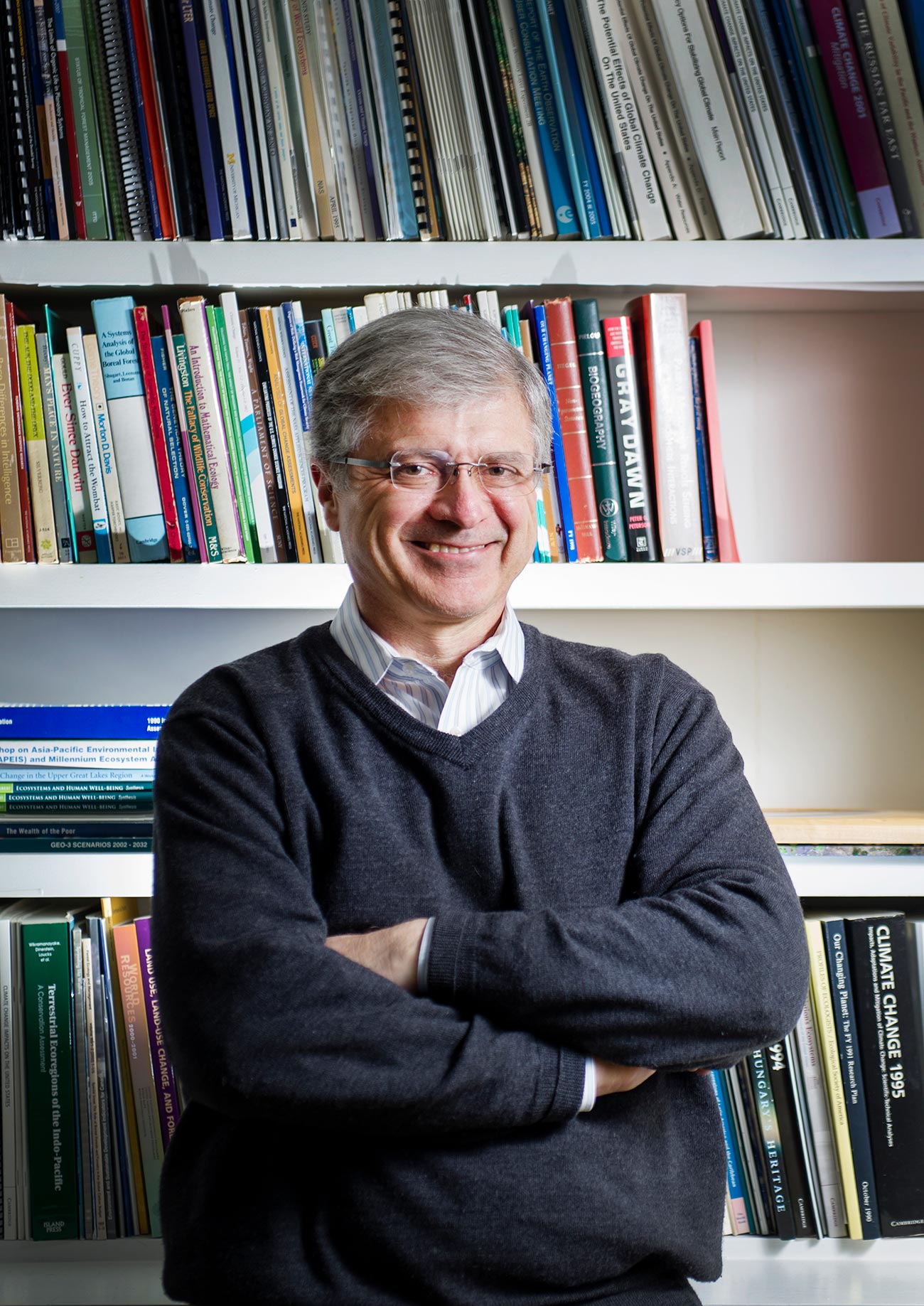 Anthony Janetos, an internationally renowned climate change researcher and director of BU’s Frederick S. Pardee Center for the Study of the Longer-Range Future, died August 6, following a brief illness. Photo (left) by Jackie Ricciardi.
Anthony Janetos was not only an internationally renowned expert on climate change, he was fearless in the face of deniers.
Janetos, who died August 6 of pancreatic cancer, cut short a lecture last winter at the Andover, Mass., library—he’d been invited as director of BU’s Frederick S. Pardee Center for the Study of the Longer-Range Future—when a heckler yelled “liar” at him. When other spectators grew disruptive as well, the moderator ended the talk and summoned police to make sure things remained calm.
Janetos shrugged off the tempest.
“I look at this as I’m not out to change anyone’s mind, but I’m just out to tell you the truth,” he told the Lawrence Eagle-Tribune.
Janetos was eminently qualified to discuss the truth of climate change science. Before coming to BU, where he was also a College of Arts & Sciences professor and chair of earth and environment, six years ago, he’d headed the Joint Global Change Research Institute at the University of Maryland, directing specialists in multiple fields in tracking climate change and mapping possible fixes. He had also held positions at NASA and the Environmental Protection Agency.
He also advised the United Nations on climate change, President Robert A. Brown wrote in announcing Janetos’ death to the faculty.
“Tony was (and will ever be remembered as such) vital, energetic, engaged, and intelligent,” Brown wrote. “His death is hard to countenance against the recollection of his vitality and because it comes out of what we prefer to hope are the normal seasons of life.” (As one example of that vigor, Janetos played what he called “old man baseball” in a summer adult league.)
“He issued warnings [about climate change],” the president wrote, “some necessarily urgent, but these were not proffered in the manner of a scold but with the judiciousness of the scientist steeped in evidence and concerned to make a difference.”
I look at this as I’m not out to change anyone’s mind, but I’m just out to tell you the truth.
Addressing lay audiences, as in Andover, showcased his “ability to be both scientist and communicator of the science, bridging the gap with which so many others struggle,” says BU sustainability director Lisa Tornatore (CAS’02).
Janetos’ scholarship blended disciplines to tackle issues like a warming planet, says Gloria Waters, vice president and associate provost for research. “He was able to look at global issues through a variety of lenses—scientific, environmental, policy, economic—and he brought together teams of natural scientists, social scientists, biologists, and engineers to work on these issues,” she says.
Waters cites his leadership role in several national and international climate change study groups, in particular as cochair of the US National Assessment of the Potential Consequences of Climate Variability and Change, part of a congressionally mandated program to coordinate federal research and investment.
As founding program manager of NASA’s Land-Cover and Land-Use Change Program more than two decades ago, Janetos was a “visionary in promoting understanding of the role that humans play” in global environmental change, particularly in society’s modifying land surfaces, says Mark Friedl, a CAS professor of earth and environment. Janetos also was a contributing author to last year’s National Climate Assessment, drafted by experts under a federal advisory committee.
Tackling “some of the hardest challenges facing society,” Janetos chaired BU’s Climate Action Plan Task Force, notes Lucy Hutyra, a CAS associate professor of earth and environment. The Task Force drafted the blueprint under which the University will spend $141 million over 10 years on capital improvements that will cut greenhouse gas emissions. It also recommended that BU invest in green power from outside New England’s relatively clean grid. That recommendation was one of the reasons for last year’s decision to buy power from a wind farm under construction in South Dakota, for resale in the midwestern United States.
“He pushed us forward on critical, systemic change at the University,” Hutyra says. She also notes his work with students, particularly Pardee’s Graduate Summer Fellows—“one of his favorite parts of the year”—providing BU grad students with research and writing opportunities.
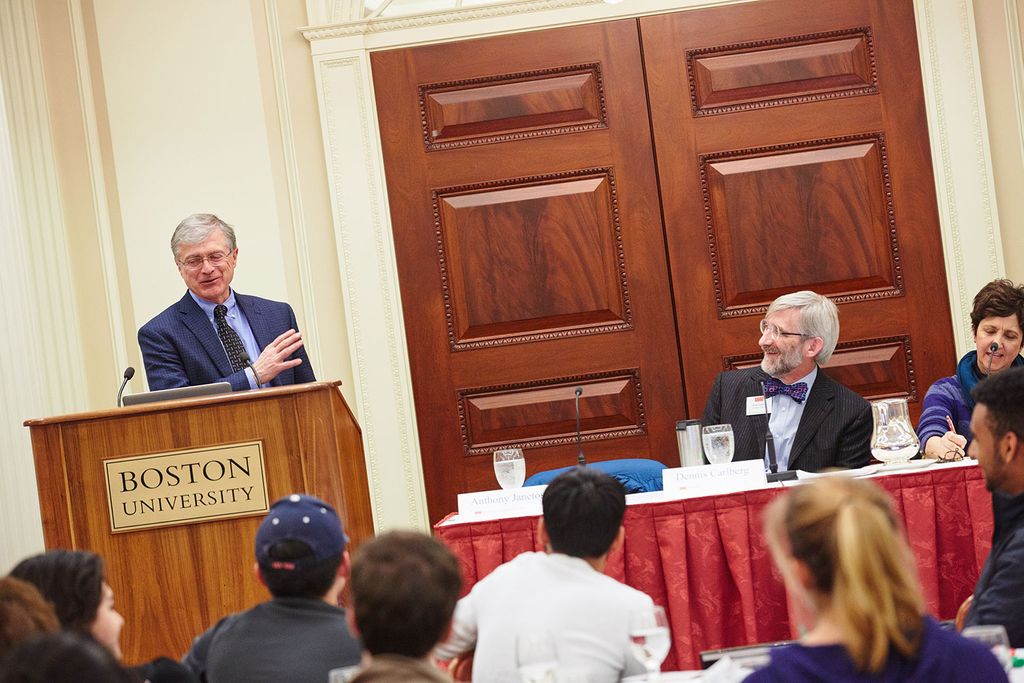
Dennis Carlberg, associate vice president for University sustainability, became close to Janetos while serving with him on the Climate Action Plan Task Force, “one of the greatest privileges in my professional career,” he says.
“Tony has been a critical partner in its implementation,” Carlberg says. “His loss is painful personally, but the loss of his future contributions to the University is what concerns me most.”
At the Pardee Center, Janetos “expanded the reach of our network to bring in other disciplines,” says center associate director Cynthia Barakatt. Among those efforts are the Faculty Research Fellows, who conduct two- or three-year interdisciplinary projects with seed money from the center.
That interdisciplinary focus found footing as well, Barakatt says, in his work to provide policymakers with models of both climate change and the financial costs from it. He coauthored a paper two years ago that proposed indices for measuring climate policies’ effects on industrial companies, investment funds, and governments.
Even after his cancer diagnosis, Janetos remained upbeat, says Guido Salvucci, a CAS professor of earth and environment and interim department chair. “In fact, he didn’t step down from the chair position at first, and instead worked through it until chemotherapy treatments started to tire him too much. He was extremely dedicated, positive, and optimistic.”
Waters, who met with Janetos monthly, says he and his wife, Valerie Gamache, recently moved from Boston to North Hampton, N.H., near where he grew up, and his “first topic of discussion was always the traffic on Route 1 and the Tobin Bridge. Next, we moved to his family—his kids, what they were doing, where they were traveling as a family, sometimes a little bit about the cats and dogs—and then it was on to business.”
He was as attentive to the families of others. Knowing Hutyra’s six-year-old son had a passion for geology, Janetos and his wife assembled a display box of rocks for him—cleaning, treating, and organizing the samples. “I brought the rocks home and my son was over the moon,” Hutyra says. “Tony regularly just did the little things to make our community a better place.”
A Red Sox and Celtics fan, he coached youth basketball when his children were growing up, Barakatt says.
“Tony Janetos was an outstanding and accomplished scientist, scholar, teacher, and leader,” Jean Morrison, University provost, says. “He was a tireless and eloquent advocate who devoted his career to imagining and working collaboratively to create a better world for all of us. Perhaps most importantly, he was a fantastic person and friend to so many across our campus and beyond.
“Someone so generous with both his time and himself—he was just a lovely human being. His impact will be felt for many, many years to come, and our hearts go out to his family and loved ones.”
Janetos earned a bachelor’s degree magna cum laude from Harvard in 1976 and a master’s and a PhD in biology from Princeton.
He is survived by his wife, his children, Peter and Anna (CAS’18), four brothers, and many nieces and nephews. Funeral arrangements are pending.
Author, Rich Barlow is a senior writer at BU Today and Bostonia magazine. Perhaps the only native of Trenton, N.J., who will volunteer his birthplace without police interrogation, he graduated from Dartmouth College, spent 20 years as a small-town newspaper reporter, and is a former Boston Globe religion columnist, book reviewer, and occasional op-ed contributor. View his profile
The FBI and CDC Datasets Agree: Who Has Guns—Not Which Guns—Linked to Murder Rates
Two BU studies, one shared finding: State gun laws restricting who has access to guns significantly reduces rates of firearm-related homicide
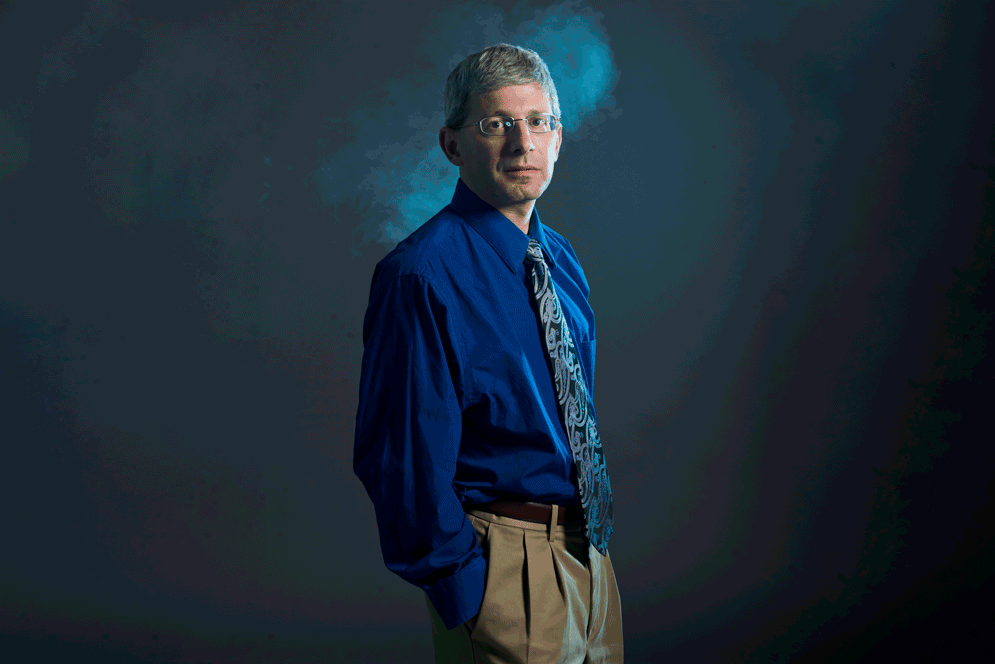
SPH Professor Michael Siegel. Photo by Cydney Scott.
As the United States reels from three back-to-back mass shootings—which occurred within the span of eight days in Gilroy, Calif., El Paso, Tex., and Dayton, Ohio—Boston University School of Public Health researcher Michael Siegel says that mirrored analyses of Federal Bureau of Investigation (FBI) and Centers for Disease Control & Prevention (CDC) homicide data serve to double down on evidence that controlling who has access to guns has much more impact on reducing gun-related homicides than controlling what guns people have.
“Using completely different datasets, we’ve confirmed the same thing,” says Siegel, an SPH professor of community health sciences. “The main lesson that comes out of this research is that we know which laws work. Despite the fact that opponents of gun regulation are saying, ‘We don’t know what’s going on, it’s mental health issues, it’s these crazy people,’ which doesn’t lend itself to a solution—the truth is that we have a pretty good grasp at what’s going on. People who shouldn’t have access to guns are getting access.”
Siegel’s latest study, published July 30, 2019, in the Journal of Rural Health,reinforces previous research findings that laws designed to regulate who has firearms are more effective in reducing shootings than laws designed to control what types of guns are permitted. The study looked at gun regulation state by state in comparison with FBI data about gun homicides, gathered from police departments around the country. Analysis revealed that universal background checks, permit requirements, “may issue” laws, and laws banning people convicted of violent misdemeanors from possessing firearms are, individually and collectively, significantly able to reduce gun-related deaths.
It’s a particularly compelling finding because in March 2019, Siegel and collaborators drew virtually the same conclusion by analyzing state laws in comparison with death certificate data collected nationally by the CDC.
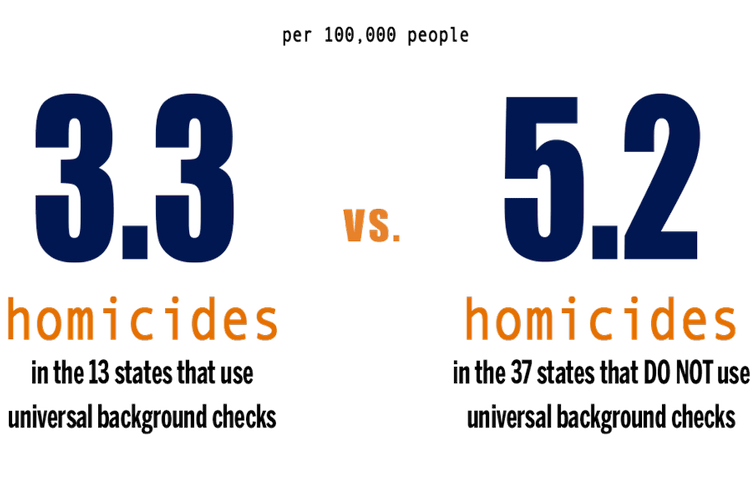
In that study, which was published March 28, 2019, in the Journal of General Internal Medicine, Siegel’s team analyzed 25 years of national data to examine the relationship between 10 different types of state laws and the number of deaths by homicide and suicide in all 50 states. State gun laws requiring universal background checks for all gun sales resulted in homicide rates 15 percent lower than states without such laws. Laws prohibiting the possession of firearms by people who have been convicted of a violent crime were associated with an 18 percent reduction in homicide rates. In contrast, Siegel found that laws regulating the type of firearms people have access to—such as assault weapon bans and large capacity ammunition magazine bans—and “stand your ground” laws have no effect on the rate of firearm-related homicide. None of the state gun laws studied were found to be related to overall suicide rates.
Universal background checks, which have long been a top priority for gun control advocates and policymakers in the United States, appear to have the biggest impact. Though there has been a push for federal gun regulations in recent years, the power to legislate gun sales and gun ownership is largely beholden to the states. And according to Siegel, the data don’t lie. The average firearm homicide rate in states without background checks is 58 percent higher than the average in states with background-check laws in place. As of 2017, only 13 states, including Massachusetts, had laws requiring universal background checks.
The Brink asked Siegel to take us on a deeper dive into the findings of these two studies.
The Brink: What’s different about the design of these studies?
Michael Siegel: There are numerous studies that have examined the effect of particular state firearm laws, but there are few studies, until now, that have investigated the impact of multiple state firearm laws at the same time, using the same statistical model. Our goal was to assess the impact of multiple state laws using a single statistical model, while controlling for the presence of each of the other laws. It’s important to recognize that states that have one law in place are more likely to have other laws in place as well. One must examine the impact of each law while controlling for the presence of other laws. We did twice—once using death certificate data collected by the CDC and a second time using police-reported homicide data collected by the FBI.
Which aspects of your findings are particularly striking to you?
Tight regulation of who has access to firearms, rather than the type of firearms that are allowed, differentiates states with the lowest rates of homicides. What surprised us the most was that in states that enacted a combination of universal background-check laws, laws prohibiting the sale of guns to people with violent misdemeanors, and concealed carry permit laws, the homicide rates were 35 percent lower than in states with none of those three kinds of laws. The practice of keeping guns out of the hands of people who are at the greatest risk for violence—based on a history of violence—appears to be the most closely associated with decreased rates of firearm homicide.
We also found that certain laws appear to be more effective depending on location. That makes sense because the nature of urban crime is somewhat different, and the populations in urban vs. suburban areas are different. In large cities with more than 100,000 people, we found background checks were even more effective at reducing rates of gun-related deaths than they were in suburban or rural areas. In contrast, we found that violent misdemeanor laws were more effective at reducing homicide rates in suburban and rural areas than they were in large cities. Permit requirements were robustly effective regardless of location. This is suggestive that applying a cluster of different types of state laws is necessary, because not every law will work the same for each local population.
Can you explain the relationship between two types of laws you found to reduce homicide rates: universal background checks and laws prohibiting possession of firearms by people with past records of violence, aka violent misdemeanor laws?
In a sense, universal background checks are the basic platform upon which you can effectively implement restrictions on who has access to a gun. States need to have two types of laws to be effective: first, restrictions on who can access a gun; and second, universal background checks so that you know whether a prospective buyer is subject to those restrictions.
Why do you think laws regulating the “who” have a substantial impact on firearm homicide, as opposed to laws regulating the “what”?
Laws regulating the sale of assault weapons are unlikely to have a large impact on homicide rates, because these weapons are used in only a very small proportion of homicides. The vast majority of firearm homicides in the United States are committed with handguns. In contrast, laws that restrict access to firearms among those people who are at the greatest risk for violence—namely, people with a history of violence—are intervening among a subpopulation of people who are likely to commit crimes. In other words, you are intervening in the most focused way possible—that is, in high-risk situations. That appears to give you the greatest bang for your buck, so to speak.
What’s your take on advocates pushing for both universal background checks and bans on assault weapons?
Although I completely understand the desire to ban assault weapons, I just don’t see empirical evidence that such bans have any substantial impact on homicide rates. These bans are most often based on characteristics of guns that are not directly tied to their lethality. In contrast, requiring universal background checks in all 50 states could have a substantial impact on gun violence because it would essentially set a minimum standard across the nation—that standard being very simply that people purchasing a gun need to be checked to see if they have a history that puts them at high risk for violence.
Public health advocates need to set priorities in terms of what policies are the most critical to enact. In fact, the primary purpose of our policy brief was to review the existing research and provide data on multiple laws in order to inform public health advocates and policymakers on this issue.
How, in your opinion, can lawmakers effectively reduce gun violence in their home states?
I believe that the three most important things that lawmakers can do to reduce gun violence in their home states are to pass laws that: one, require universal background checks; two, prohibit gun purchase or possession by anyone with a history of violence, whether it be a felony or a misdemeanor; and three, provide a mechanism, called red flag laws, to address people who are at an extreme risk of committing violence, not only to other people but to themselves.
In that regard, how do Massachusetts state laws stack up?
Massachusetts is one of the few states—also including California, New York, and New Jersey—that has a comprehensive set of laws regulating firearms. We have background checks, permit requirements, “may issue” laws where local police have lots of discretion in approving who can carry a concealed weapon, and a law that prevents most people convicted of a violent misdemeanor from carrying a weapon. We’re an example of state legislation that works—we have one of the lowest homicide rates in the nation.
That’s not to say we can be complacent, though. In the city of Boston, in certain neighborhoods, gun violence is a problem. We need to address that. But on the whole, the state does have strong laws.
However, it’s important to recognize that when other states surrounding you have weak policies, it undermines the effect of your own state laws, which is exactly what happened last week in Gilroy, California. The shooter went to Nevada to get a gun, because it’s harder to get a gun in California. That’s the argument for why federal legislation is important—individual states can’t do it all on their own.
Ohio has proposed a “red flag” law that would allow authorities to confiscate firearms from individuals that they have sufficient reason to believe pose a danger to others. Do you think this type of law would be effective?
In the case of the Dayton shooter, we know that this is a person who should have been flagged as someone not able to possess a firearm. This individual made threats to kill and sexually assault high school classmates, he had a hit list with names written out. The principal and local law enforcement knew about it. It’s a perfect situation of an example that shouldn’t exist. I think a “red flag” law could make an impact—it’s hard enough to control people who don’t make threats. So when someone does threaten violence, they should not have access to a gun. The general picture that we’re getting is that if we can intervene in situations where there’s the greatest risk for violence to occur, that’s where we can have the greatest impact.
This article was updated with new information on August 6, 2019. The original version of this article was published on March 29, 2019. These research studies were funded by the National Institute of Justice and the Robert Wood Johnson Foundation Evidence for Action Program.
SCIENCE WRITER
EDITOR, THE BRINK
Congress, White House Agree on Budget
BU IN DC
Steve Ramirez of the College of Arts & Sciences attended the award ceremony for recipients of the Presidential Early Career Award for Scientists and Engineers on July 25. He and and Cara Stepp of Sargent College both received awards.
Kevin Outterson of the School of Law addressed a National Academies of Sciences, Engineering, and Medicine workshop on drug development innovation on July 24 and 25.
CONGRESS, WHITE HOUSE AGREE ON BUDGET
The U.S. House of Representatives passed a budget bill (H.R. 3877) yesterday that would eliminate the statutory budget caps slated to go into effect on October 1, and increase the amount of federal spending permitted for the next two years. The bill reflects an agreement between Congressional leaders of both parties and the Trump Administration, and the U.S. Senate is expected to approve the measure next week. With a budget deal in place, Congress will spend the fall scrambling to enact spending bills to fund the federal government prior to the end of the fiscal year on September 30. The House has passed spending bills that significantly boost research and student aid, and advocates are cautiously optimistic the budget deal will allow Congress to lock in those proposed increases.
HOUSE APPROVES RESEARCH SECURITY BILL
Earlier this month, the U.S. House of Representatives passed its version of the National Defense Authorization Act of 2020 (NDAA), the annual bill which sets policy and spending priorities for the U.S. Department of Defense. The bill creates an interagency working group to develop best practices to protect federal research agencies from "foreign interference, cyberattacks, theft, or espionage." It also instructs the National Academies to establish a research security roundtable and authorizes a research program to examine malign foreign influence. The U.S. Senate passed a version of the NDAA in June that does not include these provisions. The two chambers will negotiate a compromise bill, which is expected to be finalized in the fall.
HOUSE, NASA ADDRESS HARASSMENT IN SCIENCE
The U.S. House of Representatives passed the Combating Sexual Harassment in Science Act (H.R. 36) on Tuesday. The bill would establish a federal interagency working group to determine how federal scientific agencies should handle reports of sexual harassment by grantees, authorize the National Science Foundation to fund research on harassment in science, and require the National Academies to update its report on the responsible conduct of research. It is unclear whether the U.S. Senate will vote on the measure. Separately, the National Aeronautics and Space Administration (NASA) proposed new rules last week that would require grantees to notify the agency about harassment committed by NASA-funded investigators.
A Note to Our Readers: With Congress departing for an extended District Work Period, Beltway BUzz will not publish in August. In the mean time, follow us on Twitter or visit our web site for updates. See you in September!