NIH Funds Schaus Lab to Develop Asymmetric Boron Chemistry
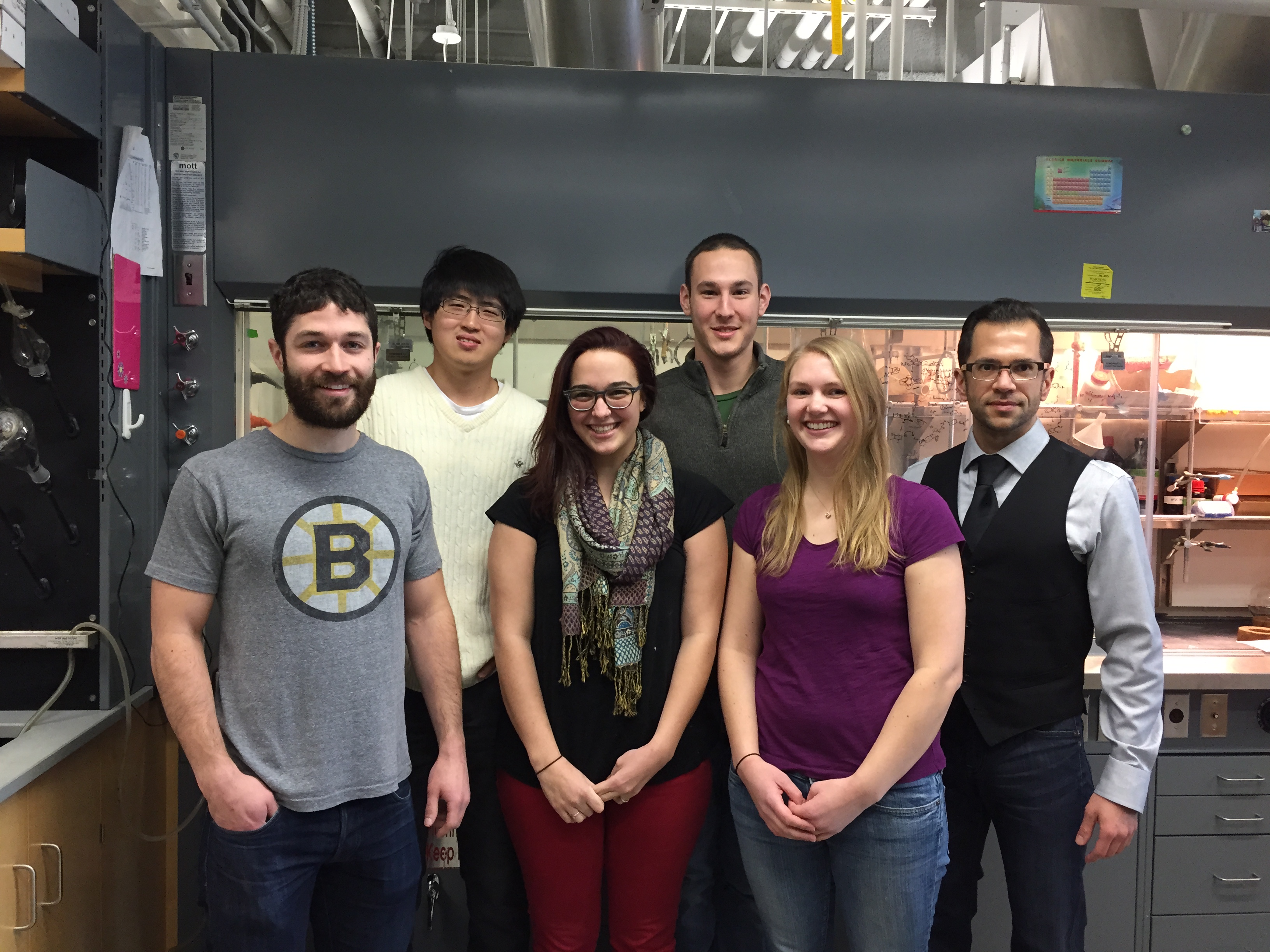
The cornerstone of organic synthesis is the development of novel chemical methodology that addresses key limitations in efficiency and reactivity. These synthetic methodologies are best demonstrated in the synthesis of biologically relevant molecules such as current drugs and compounds of study. The goal of this 5-year NIH-funded research program being conducted by Professor Scott Schaus and his Group is to develop operationally simple, highly effective methods for constructing building blocks using boron-containing carbon compounds.
The unique properties of boron and the ability to activate organic boronates to deliver carbon nucleophiles has yielded an impressive array of chemical methods and processes. The Schaus Research Laboratory will extend the ability of organoboranes and boronates to deliver carbanion equivalents in novel condensation reactions including chemoselective carbonyl con densations and multicomponent reactions. The reactions will be rendered asymmetric through the development of asymmetric catalysts and chiral boronate reagents and the utility of the methods developed demonstrated by the asymmetric synthesis of pharmaceuticals and natural products. The majority of top selling drugs are sold as a single enantiomer or isomer. The asymmetric construction of pharmaceuticals becomes increasingly more challenging. As it becomes a greater health concern, so will the need for novel methods and chemical substances that prevent and treat human disease.