New CDS Faculty Member Lauren Wheelock Brings Interdisciplinary Expertise in Data Science and AI to Boston University
In Fall 2025, Boston University’s Faculty of Computing & Data Sciences (CDS) welcomed Lauren Wheelock as a Clinical Assistant Professor. With a background spanning mathematical optimization, machine learning, and applied data science, Wheelock brings a deeply interdisciplinary approach to teaching and research—one that bridges theory, application, and ethical considerations in the fast-evolving world of data science and AI.
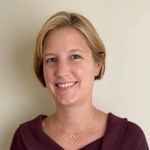
“Lauren’s expertise in optimization, machine learning, and interdisciplinary collaboration—paired with her commitment to teaching—makes her a tremendous addition to CDS,” said Azer Bestavros, Associate Provost for Computing & Data Sciences. “Her innovative approach to integrating AI into the classroom will prepare our students to think critically, act ethically, and apply their skills in impactful ways.”
Reflecting on what excites her most about joining CDS, Wheelock said, “It’s really great that BU is building this from the ground up and thinking intentionally about how to structure a data science education from the first semester. The pedagogical focus here is incredibly exciting, and I’m inspired by the deep appreciation for teaching faculty as full members of the academic community.”
In this Q&A, Wheelock shares what excites her most about joining CDS, her teaching philosophy, how she engages students with emerging tools, and the advice she offers students interested in interdisciplinary careers.
Q&A
What aspects of joining CDS are most meaningful to you, and what have you been looking forward to in your role?
I’m really excited that an academic unit like CDS exists. Many universities have a gap between the theory side of math and computer science and the applied, often business-oriented, side of data. My background in operations research sits right at that intersection, and I love that BU is building this intentionally from the ground up — designing courses specifically for data science rather than piecing them together from other departments. I’m also drawn to the pedagogical focus here and the appreciation for teaching faculty as full members of the academic community. The deeply interdisciplinary nature of the Faculty and courses is inspiring, and I’m eager to collaborate.
How would you describe your teaching philosophy?
I think of it in three parts:
- Teach what matters — today. Data science changes rapidly, so we need to constantly reevaluate what’s essential for students to learn.
- Serve all learners. I’m especially mindful of students who may feel reluctant or intimidated by math. I want to meet students where they are, leverage their strengths, and connect material to their individual goals — whether that’s research, entrepreneurship, or industry.
- Equip students for the future. Beyond technical skills, I focus on the ethical use of data and AI. I want students to understand their role in shaping models and decisions, rather than offloading responsibility to the tools.
Can you tell us about the courses you’re teaching?
This spring, I co-taught Linear Algebra with Professor Lisa Wobbes, and I taught a new course I created on LLM theory and applications. That course starts with the foundations of natural language processing, moves through the evolution of neural networks to transformers, and then shifts to hands-on applications. Students have the freedom to use AI tools, but with higher expectations — including maintaining a GitHub repository with weekly code and reflections, peer-reviewed mini projects, and a final project. In the fall, I’ll be teaching both sections of Programming for Data Science II.
What student projects do you envision coming out of your courses?
For the LLM course, I expect projects to range from fine-tuning models for specific tasks to building AI agents with real-world functionality. Students could work on chatbots, browser agents, or other applications that connect to their interests. My goal is for projects to be student-driven, so they can tailor them to their passions and career goals.
What tools, beyond AI, do you plan to introduce students to?
Git and GitHub will be core tools for collaboration and code management. We’ll use Python extensively, along with open-source packages and models — many from Hugging Face. I also plan to incorporate cloud development environments, so students can work with larger models and datasets than their personal machines might handle.
You’ve mentioned “the art of modeling.” What do you mean by that?
It’s about recognizing that models are not just technical constructs — they’re shaped by human choices, priorities, and biases. Students often come in thinking there’s a “right” answer, but in reality, design decisions matter as much as performance metrics. For example, in predictive modeling for parole violations, accuracy isn’t the only consideration — ethical implications and trade-offs between false positives and false negatives are critical. I want students to grapple with those complexities, balance interpretability with performance, and understand when an LLM is not the right tool.
How do you guide students toward interdisciplinary careers?
There are two main paths:
- Application-focused: Build deep expertise in a specific field, then apply data science within that domain.
- Tool-focused: Develop a robust, field-agnostic skill set and learn to translate it into new contexts.
I’ve taken the second path, moving from operations research into biotech without a formal biology background. Fresh perspectives can be an asset, and I encourage students to build confidence in applying their skills to unfamiliar problems — while learning enough domain knowledge to avoid major pitfalls.
What’s one piece of advice you give students working across disciplines?
Know your area well enough to explain it clearly, without jargon, to someone outside your field. Respect your collaborators’ expertise, and focus on finding shared language. Analogies and visuals are powerful tools — I often adapt them to my collaborators’ domains to make concepts click.
Beyond the Bio: What do you enjoy outside the classroom?
I have two young children, which takes up a lot of my time, and my wife is a busy physician. As a counterbalance, I maintain a dedicated meditation practice, go on retreat annually, and serve on the board of a foundation that supports people in attending meditation retreats who couldn’t otherwise afford it. I also have two black belts in Taekwondo (one from WT and one from ITF)!
By Maureen McCarthy