WHO Joins Forces with BU Center on Forced Displacement to Help Vulnerable Populations at Risk of Antimicrobial Resistance

The bacteria methicillin-resistant Staphylococcus aureus (MRSA) has developed resistance to many antibiotics; it has been found in high rates among refugees and asylum seekers. Artist’s rendering via iStock/Dr Microbe
WHO Joins Forces with BU Center on Forced Displacement to Help Vulnerable Populations at Risk of Antimicrobial Resistance
Collaboration will study link between environmental pollution and drug-resistant infections among refugees and asylum seekers
Antimicrobial resistance is one of the biggest threats to global health. Lifesaving drugs are losing their power as bacteria build fresh defenses against them. But not everyone is impacted equally. Among those potentially at increased risk of a deadly infection are refugees, asylum seekers, and other people displaced from their homes—their health often beset by overcrowded living conditions, poor sanitation, and barriers to care.
A new collaboration between Boston University and the World Health Organization (WHO) aims to investigate some of the issues fueling drug-resistant infections among the world’s most vulnerable populations—and find ways to better monitor and respond to the problem.
The five-year agreement between BU’s Center on Forced Displacement and the WHO’s Cairo, Egypt–based Regional Office for the Eastern Mediterranean will support a study of how environmental pollution might fuel antimicrobial resistance (AMR) in displaced communities. In announcing the linkup, the WHO lauded BU’s “interdisciplinary research expertise in displacement, environmental science, and community‑engaged fieldwork.”
The WHO recently reported that AMR jumped 40 percent between 2018 and 2023; it’s previously said the phenomenon is directly responsible for more than a million deaths a year and contributes to close to five million deaths.
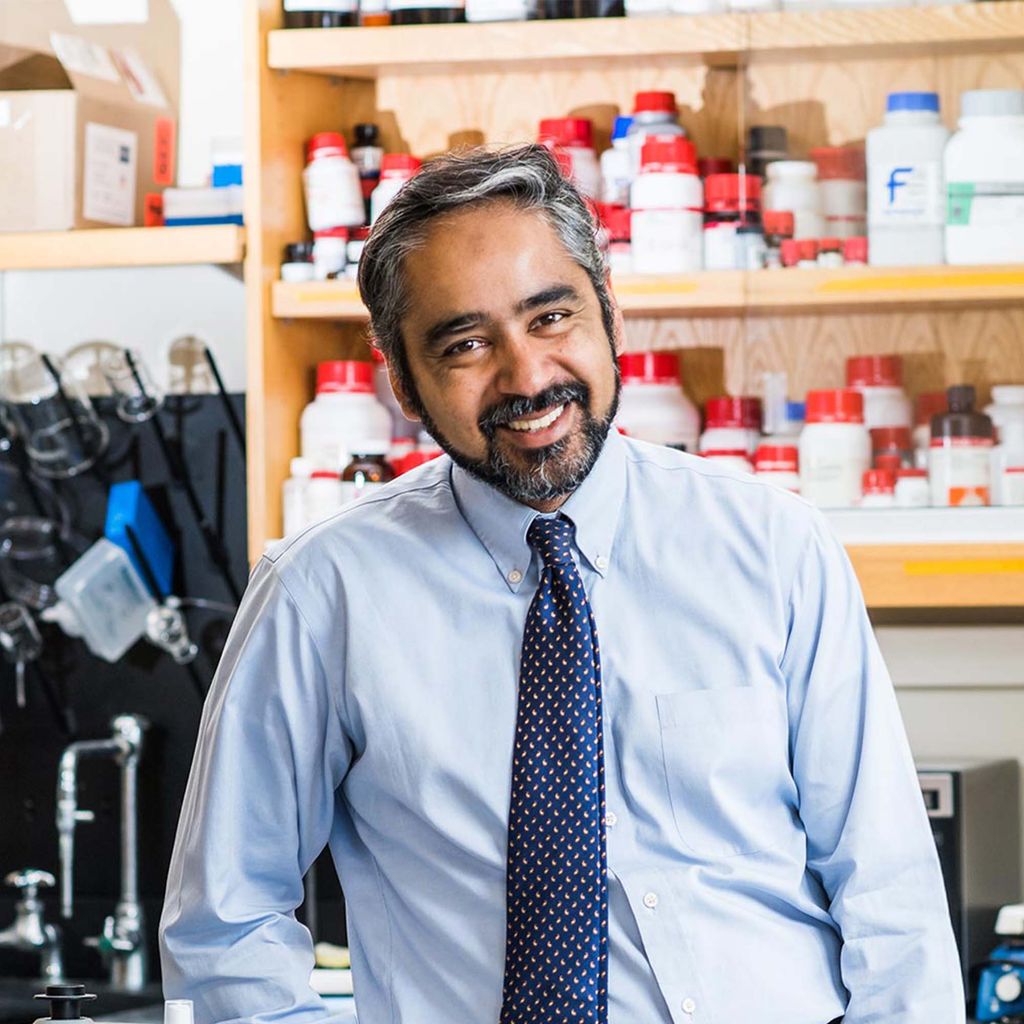
“We are very fortunate to embark on this partnership and believe that we are well suited to carry out these projects because of the interdisciplinary nature of our center,” says Muhammad Zaman, director of BU’s Center on Forced Displacement and author of Infected: How Power, Politics, and Privilege Use Science Against the World’s Most Vulnerable (New Press, 2025). “WHO’s Eastern Mediterranean office has rich experience dealing with complex health challenges in the region, and expertise in understanding the health systems of different countries. We have scientists, social scientists, engineers, and public health professionals, and will bring our expertise in basic science and discovery research.”
According to the United Nations’ refugee agency, there are more than 117 million displaced people in the world—victims of violence, persecution, and human rights violations. In 2006, that number stood below 40 million.
Link Between Microplastics and Antimicrobial Resistance
One focus of the BU and WHO collaboration will be a dive into the links between microplastics, environmental impacts, and antibiotic resistance. In a March 2025 study, Zaman and his colleagues found bacteria exposed to microplastics developed resistance to multiple common antibiotics. They discovered the tiny shards of plastic helped bacteria build supercharged shields that medicines couldn’t penetrate. According to Zaman, the accumulation of discarded plastic in areas like refugee camps could contribute to an increased AMR risk.
“The issue of how environmental degradation impacts drug-resistant infection has not gotten as much attention as some of the other drivers of drug-resistant infections,” he says. “In particular, the impact on communities that are forcibly displaced due to conflict remains poorly understood. This is particularly relevant in countries and communities impacted by conflict and that have a high burden of antimicrobial resistance.
“Our research has the potential to offer new insights in developing better health policies tackling AMR that can protect vulnerable communities.”
Our research has the potential to offer new insights in developing better health policies tackling [antimicrobial resistance] that can protect vulnerable communities.
In addition to investigating microplastics, the WHO said in a press release that it would join with BU experts to “build regional capacity through hands‑on training for ministry officials, local students, researchers, and public health practitioners.” And, it added, it would “develop inclusive, community‑engaged approaches to AMR surveillance, tailored to the realities of displaced communities.”
“This collaboration with Boston University brings needed scientific accuracy and community engagement to a critical but overlooked issue,” said Benedetta Allegranzi, acting director for health promotion and disease prevention and control at the WHO’s Eastern Mediterranean office, in the press release.
The Center on Forced Displacement is an interdisciplinary research and engagement hub, drawing experts from engineering, data sciences, health, law, sociology, international relations, and the arts and humanities. Its research has covered health and livelihoods, environmental and climate issues, and art by displaced people. BU is also home to CARB-X (Combating Antibiotic-Resistant Bacteria Biopharmaceutical Accelerator), a nonprofit that directs funding and expertise to companies and researchers developing new antibiotics, diagnostics, and vaccines.
Zaman, a BU College of Engineering Howard Hughes Medical Institute Professor of Biomedical Engineering and Global Health, hopes the WHO collaboration will produce tangible recommendations that can be used to improve understanding and surveillance of AMR—and the health of vulnerable people.
“Through this joint effort, we hope that we all are able to develop a richer understanding of AMR in complex settings and develop context appropriate solutions,” he says. “We have been studying the issue of environmental degradation—the presence of metals, microplastics, and other environmental contaminants—for some time, and our research has the potential to offer new insights in developing better health policies tackling AMR that can protect vulnerable communities.”
