Helping Create Special Education Policies to Benefit Students and Teachers

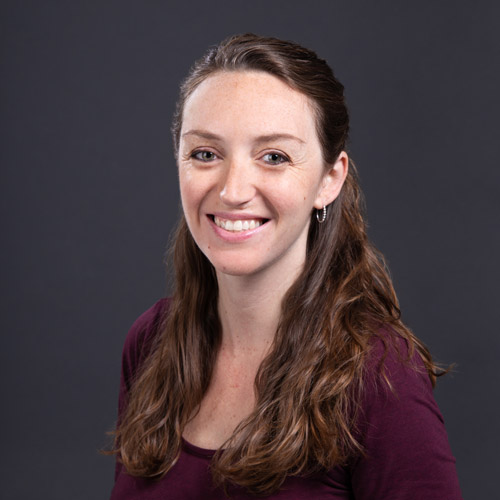
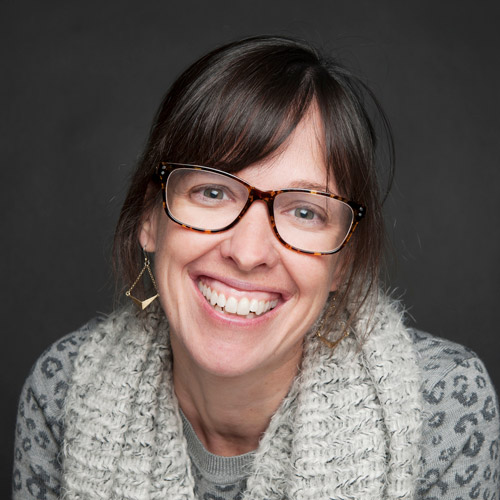
Researchers at BU’s Wheelock Educational Policy Center—including Nathan Jones (clockwise from left), Marcus Winters, Jo R. King, and Elizabeth Bettini—aim to transform special education research and partner with policymakers to improve educational opportunities.
Helping Create Special Education Policies to Benefit Students and Teachers
Researchers at Boston University’s Wheelock Educational Policy Center are studying ways to improve teacher retention and help more kids access special education
More than 7.5 million children ages 3 to 21 qualified for special education services in the United States in 2022–2023, an increase of more than 250,000 from the previous year. That figure now represents roughly 15 percent of all US students. While this increase may be due in part to better identification of students who need special education, and could indicate expanded access to services, it places more pressure on schools already struggling with rising costs and staffing shortages.
At Boston University’s Wheelock College of Education & Human Development, researchers are studying ways to improve the system and ensure more kids get the help they need.
The core of the US special education system is the Individuals with Disabilities Education Act (IDEA), the landmark 1975 law that guarantees students with disabilities a free, appropriate public education alongside their peers. The law has helped millions of students by promoting inclusion, reducing isolation, and supporting social and communication skills. Research shows that students who get high-quality, individualized services are more likely to graduate, pursue higher education or vocational training, and enter the workforce.
But 50 years later, the system is under strain. Families still struggle to secure services. Educators face mounting workloads and burnout. Policymakers often don’t have the data needed to understand how well the system is working or how to fix it.
Because services are determined through individualized education programs (IEPs) for each student, policymakers can’t see wider trends, and there’s not enough research on systemic issues, says Krystafer Redden, executive director of BU’s Wheelock Educational Policy Center (WEPC).

“There’s not great guidance for teachers or school district administrators on, for instance, if a student has a certain disability, should they be getting two hours of service a week or eight hours of service a week?” says Redden, who joined the center in July 2026 after a decade with the Rhode Island Department of Education. “There’s no threshold—based on what we know from at-scale administration—of these supports. That’s part of the research agenda that we’re pursuing.”
He and his WEPC colleagues aim to shift “the type of research that is being done around special education policy.” The center is an interdisciplinary research hub partnering with local, state, and federal policymakers to use data-driven methods to improve educational opportunities and outcomes for traditionally marginalized students.
Researchers regularly meet with state partners to form the questions they need answered and gather feedback, says Marcus Winters, faculty director of WEPC and a Wheelock professor and chair of educational leadership and policy studies. “By getting [state partners] invested in the work, it makes it more likely they will use our findings to inform decisions,” he says.
A New Way to Study Special Education
For decades, special education research has relied heavily on randomized controlled trials—studies that assign students to different interventions to measure how effective supports are. These methods work well for classroom-level questions, such as how a child learns to read, says Nathan Jones, a Wheelock associate dean for research and a professor of special education. But many important questions in special education can’t be answered through random assignment.
Instead, he and Winters, an economist by training, are turning to large administrative datasets to analyze how policies and services perform in real life. These approaches, once rare in special education, have “unlocked a whole bunch of questions that have been understudied for decades,” says Jones, who recently served as commissioner of the National Center for Special Education Research within the US Department of Education’s Institute of Education Sciences.
Winters recently co-led a multistate study examining what happens to student outcomes when they enter special education. While it may sound like the question all researchers would start with, Winters says it has been a difficult one to answer for a variety of methodological reasons. Using data from Connecticut, Massachusetts, and Indiana, the Wheelock researchers found that, on average, student achievement rises sharply after special education services begin, that achievement only grows over time, and public spending on individualized supports for students is more effective than previously thought.
Jones and Winters have also studied a co-teaching model, where general and special education teachers share responsibility for leading a classroom. Analyzing a decade of test scores for students in Massachusetts, where co-teaching has grown rapidly, they found test scores, on average, improve for students with and without disabilities during the years they are in co-taught classes. But, at the same time, the gains they found were much smaller than those reported in prior co-teaching studies, which involved fewer students and focused on short-term outcomes.
Another of their projects examined data from Indiana’s “service delivery models,” meaning the different ways students access special education services, such as general education, co-taught classrooms, pull-out sessions, or self-contained lessons. They found that the more inclusive settings have some benefits, though not as large as often assumed.
Jo R. King, a Wheelock assistant professor of educational leadership and policy studies who recently joined the faculty, also applies quantitative research methods to special education policy. Their work focuses on how exclusionary school discipline practices shape equitable outcomes for marginalized students. In particular, they study how schools respond to student behavior through measures such as suspension, police interventions, or special education classification.
Winters says the ultimate goal is to get WEPC’s findings and policy briefs in front of decision-makers and into schools.
“We understand that these choices that policymakers make are complex and have a variety of things involved, but we want research and evidence to be part of that conversation,” he says. “There are lots of different pieces to it, but the work that we’re doing is academically rigorous and meets an actual need that people have.”
Using Data in New Ways
The next frontier, according to Winters, is understanding what services are being recommended to students. “When a kid is placed in special education, they sit down with their teacher, with specialists, with their parents, and they all come up with a detailed plan,” he says. “And those plans can be very different from kid to kid.”
Through a partnership with Indiana, WEPC researchers are analyzing IEPs statewide using large language models—a type of artificial intelligence program—to identify trends in the services and goals for each student. While prior studies have attempted to do this on a small scale (around 100 students, or within a single district), this work aims to find patterns on a much larger scale.
You could have two kids with identical profiles, where it just happens that they are in different schools with different folks advocating for them, and they could end up with very different services. We’ve really never been able to unpack that, so it opens up important questions for the field of special education.
“You could have two kids with identical profiles, where it just happens that they are in different schools with different folks advocating for them, and they could end up with very different services,” Jones says. “We’ve really never been able to unpack that, so it opens up important questions for the field of special education.”
By making these patterns visible, researchers hope to give policymakers better tools to ensure the services are distributed more equitably.
A Workforce Under Strain
Even with better data, one major challenge in special education is its workforce. Across the country, special education teachers leave at high rates due to demanding workloads and difficult conditions. In Massachusetts, one out of every three instructors leaves the classroom each year, according to data collected by Special Educator Workforce: A Research Collaborative.
Elizabeth Bettini, a Wheelock associate professor of special education, says special educators often manage large caseloads and extensive paperwork. Teachers stress about having to triage instruction and services because they lack time and staff. In schools with high poverty rates, teacher demands are even higher.
“Oftentimes, the misconception is that [special educators] leave because of the kids,” says Bettini, a WEPC-affiliated faculty member. “The kids are what keep people there. We have some research on teachers’ emotions over the course of the day. The part of the day where they feel the best is when they’re interacting with kids.”
Oftentimes, the misconception is that [special educators] leave because of the kids. The kids are what keep people there. We have some research on teachers’ emotions over the course of the day. The part of the day where they feel the best is when they’re interacting with kids.”
As a result of the retention challenges, more experienced, fully licensed teachers tend to work in predominantly white schools with lower poverty rates, while schools with higher poverty rates, serving more students of color, rely more on less experienced or unlicensed staff. Research shows this difference contributes to widening achievement gaps, which “create different opportunities for students with disabilities, depending on race and socioeconomic status,” Bettini says.
Although the special education workforce is becoming more diverse, it’s still less so than the student population. A 2024 study, copublished by Bettini in the academic journal Exceptional Children, shows the workforce does not match student demographics.
While more than half of students with disabilities are students of color, only 20 percent of special educators are, according to her research. “The consequence is that the gap between the student and teacher populations is actually growing—we’re getting a less representative workforce over time,” Bettini says.
Attempts to address shortages have produced mixed results. Fast-tracking certification programs can bring more teachers into the field, but often leads to higher turnover. Bettini and Jones published a study showing how financial incentives in Hawaii reduced vacancies, but did little to keep teachers from leaving.
Instead, Bettini argues, improving working conditions is key: managing caseloads and offering strong leadership support and meaningful professional development. She leads Project Respect, under the Wheelock Institute for the Science of Education, which has designed an annual short survey for teachers to help districts identify strengths and areas for improvement. She is also working on a project led by Jennifer Lillis, a Wheelock special education research scientist, with public schools in Lowell, Mass., to develop a human resources strategy and training for paraeducators, who are too often “treated as an afterthought in our policy systems,” Bettini says.
The Road Ahead
The challenges facing special education are not new, but they are becoming more urgent as the number of students served grows. Federal oversight of special education has also shifted in recent years, raising questions about how the system will be supported going forward.
Wheelock researchers, combining large-scale analyses with on-the-ground insight, hope to bring clarity to the system and ultimately strengthen IDEA for the students and their families who need it. As Redden puts it: “Part of the novelty of some of our studies is we have gone in and leveraged data that was not necessarily built for that purpose.” And because of the Wheelock researchers’ unique skill sets and the WEPC’s supportive, partnership-based approach with policymakers, “they have been able to complement an understanding of best practices in special education with a methodological rigor around the economics of education, bringing new insights to some of the most pressing challenges in the field.”
This work is funded by numerous sources, including the Spencer Foundation, the Barr Foundation, the William T. Grant Foundation’s Institutional Challenge Grant, and federal support. Project RESPECT is funded by the US Department of Education’s Institute of Education Sciences.