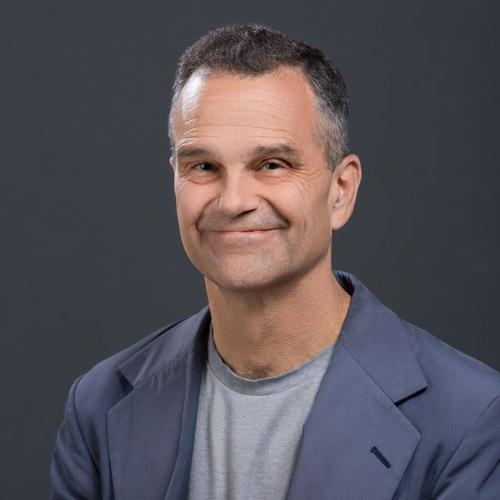
Finding Her Voice, in Song and Healing Research at Boston University

Laura Stein (STH’27) worked as an ordained cantor and social worker during COVID before researching clergy burnout at BU.
Finding Her Voice, in Song and Healing Research at Boston University
Being an ordained Jewish cantor informs Laura Stein’s studies of clergy burnout
“Voice is so precious to me,” says Laura Stein, who teaches and sings God’s praise on weekends as an ordained cantor at synagogues in New York. But “voice” means more than hitting the right notes.
A few years back, while studying simultaneously to be a cantor and a social worker, Stein learned of pay inequities between male and female Jewish clerics. Of course, she knew of broader inequities outside of Jewish life too.
“I wanted to shift the ‘using of my voice’ from singing and leading prayer to advocating for change,” she says. “My cantorial education taught me how to understand justice; my social work practice taught me how to live it.”
Following school, Stein served for a time at Mount Sinai Hospital’s transgender surgery center, speaking up for a marginalized population. She also worked as a chaplain at a nursing home, her voice sometimes the only one heard by older people who were isolated.
At Boston University School of Theology, Stein (STH’27) has found a new way of expressing her voice, advocating for fellow clergy members facing burnout—and researching a novel way to help treat them.
Stein is studying for a PhD in the psychology of religion and is a research fellow at BU’s Albert & Jessie Danielsen Institute, focusing on clergy members’ spiritual formation and their potential to suffer vicarious trauma from counseling people in distress.
As ordained Jewish clergy members, cantors lead the temple in songful worship and oversee life’s most meaningful moments, from baby namings to weddings. Click the play button above to hear Cantor Laura Stein (STH’27) sing “Zamru L’Adonai B’Chinor” (from Psalm 98). Courtesy of Stein
Her research’s big question—how do you care for caregivers?—was born of her own pandemic-era burnout at the nursing home, when it paused visits by residents’ families and friends. Staffers like Stein became the residents’ only connection to the outside world. “Some of them reminded me of my grandmother,” she recalls. “I was becoming enmeshed in the idea that I love this person; this person reminds me of someone in my own life, and it’s hard to witness their suffering. Those boundaries or those ethics that we rely on got a little blurred and caused me stress.”
The self-care suggestions she heard—bubble baths, getting cozy at home, listening to music—had limited effect. “That reactive response could work for an evening,” she says, “but what happens when you go back in the morning and [the stress] starts all over again?”
At BU, Stein is researching an alternative strategy. Clergy well-being is a topic that has long been studied—notably at BU—among Christian ministers, but Stein is one of the few in the country researching the mental and spiritual health of Jewish faith leaders. Driving her research—and her service during the pandemic—is tikkun olam, a Hebrew phrase meaning “repairing the world.”
If we focus on what it means to be healthy relationally with God and with others, that’s probably going to be the best way to help sustain us.
“What I’m learning here,” Stein says, “is that if we focus on what it means to be healthy relationally with God and with others, that’s probably going to be the best way to help sustain us.”
Becoming Aware of Injustice
Stein’s childhood in Scarsdale, N.Y., was shaped in large part by her family’s Jewishness: Friday Shabbat services, Saturday morning worship, and an internship at her synagogue. In retrospect, she idealized that space.
“My mom would drop me off, and I remember thinking, well, now that I’m on a Jewish property, nobody can hurt anybody,” she says. That attitude accompanied her to seminary: “I wasn’t necessarily prepared to understand that there is inequity even in the Jewish community.”
But her outlook changed when she learned that women cantors earn 15 percent less on average than their male peers, among other injustices. The revelations taught her to interrogate any system about how it practices what it preaches: “What if my voice won’t be as powerful as the man I work with? Or what if, as a lesbian, my voice won’t be heard by the straight people who think being queer is wrong?”
That pushed her along the path to advocacy and care—including for herself.

BU initially didn’t seem like a logical destination on that journey. “The idea that I would go to a PhD program in a seminary that was associated with anything other than Judaism was definitely a foreign idea for me,” she says of the School of Theology’s Methodist heritage. She warmed to the notion, however, upon discovering that her questions about caregivers’ stress were being asked by researchers here—but less so among Jewish academics.
“The research identity here is very strong,” she says. “I have grown so much from being in an interfaith setting. I’m so glad that I’ve been learning and doing this research alongside people of other faiths, because it has expanded my horizons.”
The Researching of Relationships
Founded three-quarters of a century ago, the Danielsen Institute, whose research Stein found so compelling, treats people with mental health issues and trains clinical psychologists and social workers, often informed by spirituality. Stein’s work has been centered on a Danielsen Institute–developed framework called “relational spirituality.” It focuses on what individuals consider sacred—whether religious or secular—and how that affects their well-being. Relational spirituality, as the name implies, stresses relations with others, and with one’s own spiritual views, to help caregivers process their own suffering.
Along those lines, a study by Stein and Danielsen Institute’s Steven Sandage and Jonathan Vanderbeck applied relational spirituality strategies to three distressed caregivers, each a composite of actual people.
For example, one caregiver, “Merrie,” a young rabbi leading a suburban Reform congregation, is dogged by sexism: she frequently parries questions about when she’ll marry and start a family, has her call for nongendered language at the synagogue denigrated, and is shunted aside from interreligious community panels. Her family urges her to keep fighting, as her Holocaust-surviving grandparents did—which inspires but also pressures her. Merrie pulls back from her spiritual practices.
Stein and her colleagues wrote that relational spirituality therapy would focus Merrie’s attention on how her burnout derives from her problematic relationships—for example, with her synagogue, which has an inconsistent commitment to justice for women. Merrie might benefit, the authors wrote, if she found “mentorship from a more experienced female rabbi or a relationship with a therapist or other relational figures outside her work and family systems.” They also called for her religious training to include the skills for navigating such a work environment.
The Danielsen Institute has published dozens of studies of burnout and other problems among Christian seminarians. But Stein’s work in extending such research to aspiring Jewish clergy “breaks new ground,” says Sandage, the Danielsen Institute’s research director and an STH professor of psychology of religion and theology. “I am not aware of other ordained cantors who are currently publishing research in the psychology of religion.
“Laura has been able to take the lead on projects that involve collaboration with Jewish communities, and it is encouraging to see that combination of research and practical community impact.”
Not that Stein has limited her research to Jewish faith leaders. For another study last year, she helped survey 44 STH students about what they thought could best shield them against burnout. The project’s conclusion: seminaries should go beyond instruction in practical matters—performing rituals, understanding faith traditions, investing in formation—to teach students how to relate to their flocks in matters momentous and mundane, as well as to be aware of potential causes for future burnout.
In what postgraduation role Stein will use her PhD-trained voice is to be decided. “Part of my own formation in this work,” she says, “is trying to figure out where this research will have the biggest impact.”