Queering Foreign Language Education
Queering Foreign Language Education
When students are studying a new language, they don’t often learn how to express gender identity or sexual orientation in that language. And the lessons they receive are often based on the experiences of straight and cisgender people who have never had to articulate what it means to be queer or trans.
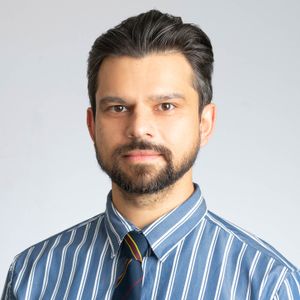
Ashley Moore, an assistant professor of Teaching English to Speakers of Other Languages (TESOL) at BU Wheelock, is working to make language education more inclusive of LGBTQ+ people. A newcomer both to BU Wheelock and the United States, Moore is an applied linguist whose research and teaching focus on how LGBTQ+ people express their identities and relationships when they learn new languages.
We spoke to Moore about why inclusive language education matters and the ways he incorporates gender, sexuality, and other identities into his work as a teacher and teacher educator at BU Wheelock.
Q&A
Question: What sparked your interest in the relationship between LGBTQ+ identity and language learning?
Moore: I’m queer myself. We go through life differently. We experience education differently. Growing up queer in England was difficult because we had a law called Section 28 at the time. It created the blueprint for a lot of the so-called no-promo laws that we see today in Russia and in the United States. My entire schooling career was under Section 28, and it had real effects. I remember teachers’ not being able to combat homophobic remarks because of that law and saying, “I can’t say anything about that,” or “I have to be careful about what I say because of this law.”
Question: How does this connect to the experiences you and other queer people have of learning languages?
Moore: I’m a huge language learner. I grew up monolingual, so I really admire plurilingual people who can speak more than one language. As I kept learning languages throughout my teenage and adult life, I realized that the ways that queer and trans people use language are never in textbooks. Research tells us that the vast majority of language education is very cis- and heteronormative.
This has real implications. When I was learning Japanese, I had no idea how to let my Japanese teacher know that I was queer in a way that was culturally readable in Japan. Eventually, through careful watching, I discovered you can do that in Japan by referencing a very famous area in Tokyo, Shinjuku ni-chōme. Almost everybody in Japan knows that’s the gay or queer area of Tokyo. We can call this kind of knowledge “queer literacy,” and it’s almost never included in foreign language education.
Question: How are you bringing those discoveries into your research and classes?
Moore: A lot of my research is about uncovering how classrooms come to be cis-heteronormative. When we enter the classroom, social cues tell us about what is and isn’t possible within that space. In a typical classroom, the teacher stands at the front. Students face the teacher, and the teacher assigns grades and gives feedback on what we say. All these practices can act as mechanisms that reinforce cis- and heteronormative ways of being.
But a lot of the time, the students actually have more knowledge than their teachers on how LGBTQ+ people use language. We want teachers to keep abreast of this linguistic innovation and change the way they approach their role in the classroom to make more space for learners as linguistic ethnographers and creators.
Students are creating all these resources for themselves. They’re leading linguistic and gender innovation. They’re also the people who often have to school their teachers. It puts them in an incredibly difficult position when the teacher isn’t clued up and doesn’t know about gender, sexuality, or even about the nature of language itself.
Question: How have you used your knowledge about queer identity and language here at BU Wheelock?
Moore: I include the study of gender and sexuality in my teacher education classes and make sure that students taking our courses consider the relevance of nonnormative genders and sexualities. In my critical applied linguistics courses, I explore approaches to identity in language education, including class, race, and religious identity. Critical applied linguistics opens up discussion about the ways other groups have been denied an equitable language education. Students who take our classes have started to think about their responsibilities as people who are going to enter or reenter the field as teachers, teacher educators, or policymakers.
The other part of my work is about doing public scholarship. I want this knowledge—these ideas, these questions—to go beyond BU Wheelock. So I write blog posts, do interviews with podcasts, and create YouTube videos to engage as many people as possible.
Language is entangled in everything we do as humans. We’re social animals. Everybody has language; everybody does language. People have very clear, strongly held beliefs about language and what it should be, but they are not always correct or just. It’s very important to talk to people about what applied linguistics tells us about language.