The Case for High School Interns on Campus
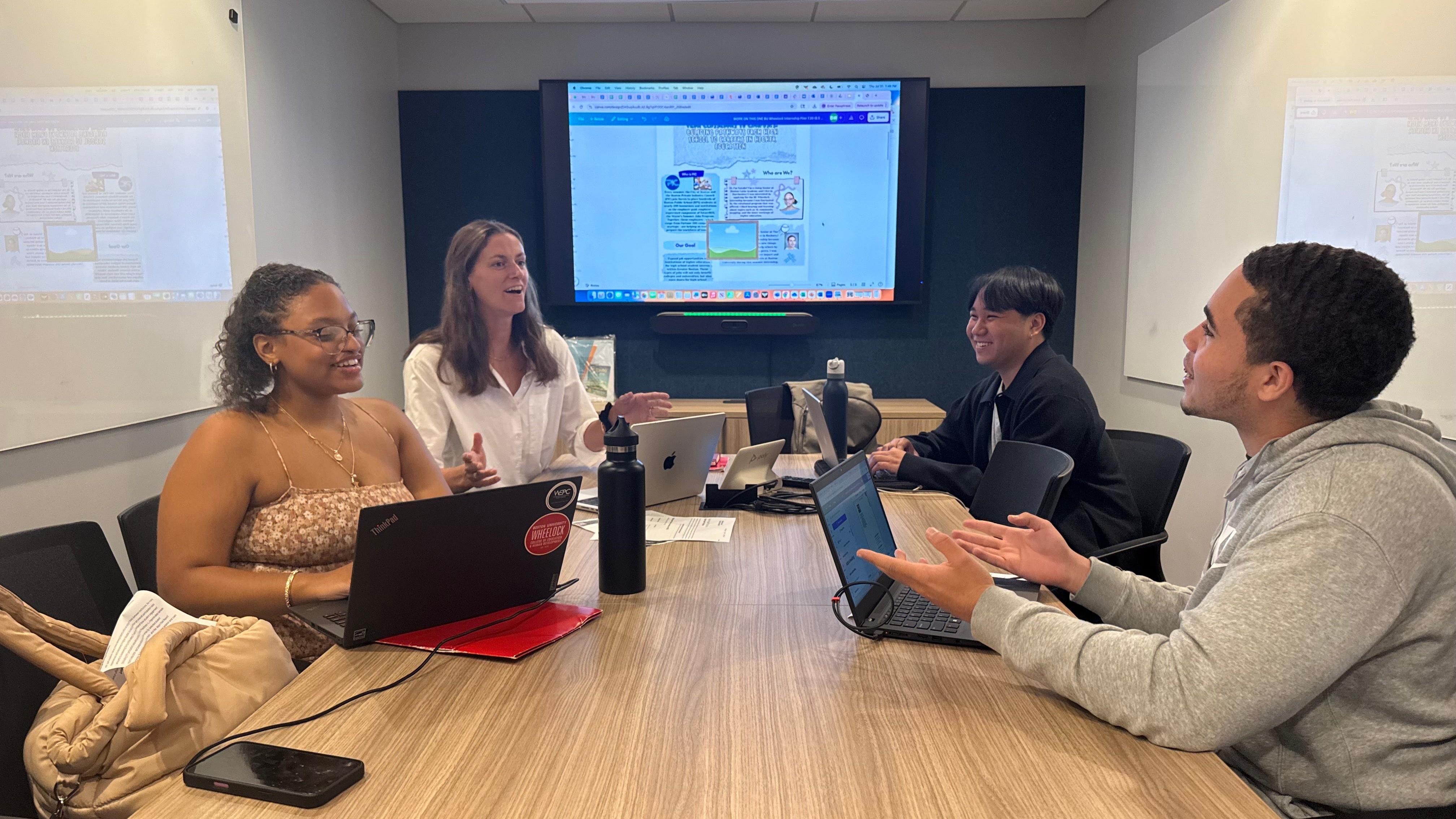
Natalie Mendoza, Cara Mattaliano, Justin Ruiz, and Daniel Mendoza
Untapped Potential
The case for high school interns on college campuses
It’s indisputable: Summer internships improve young people’s lives. They increase employment and earnings, reduce involvement in the criminal justice system, and strengthen educational outcomes. The data are so clear that in 2024, Boston Mayor Michelle Wu guaranteed a summer job to every Boston Public Schools (BPS) student who applies.
For employers, summer internships provide an opportunity to engage with energetic, motivated members of the next generation’s workforce. Interns can challenge organizations to rethink how they operate, approach instruction, and manage teams, and they bring fresh perspectives and innovative ideas of their own.
For university employers, working with young people offers a unique chance to collaborate on research and practice, explore pressing societal questions, and gain insight from a generation most directly affected by current events. Summer internships create a basis for scholarly inquiry, both for the interns and their faculty supervisors.
The benefits for employers and their interns are reciprocal.
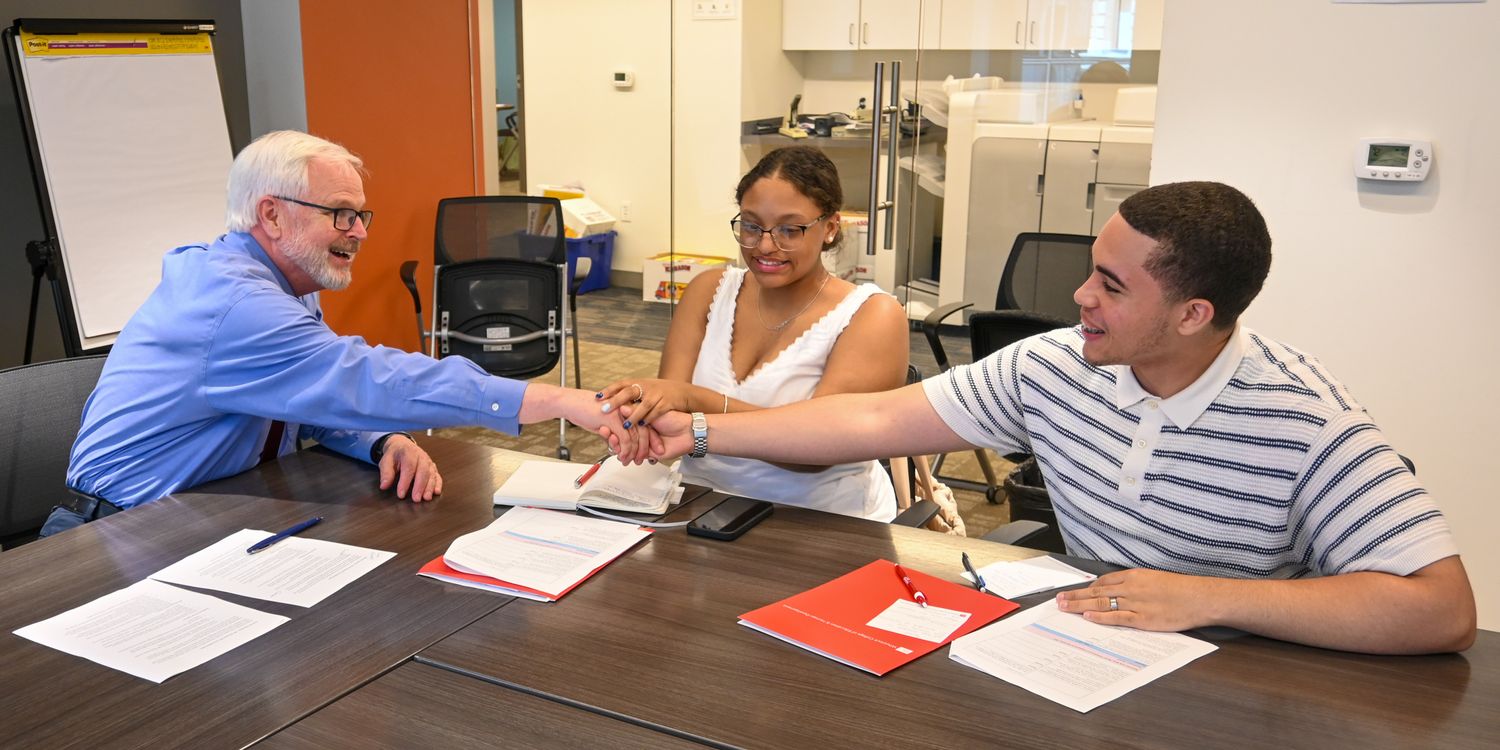
This summer, BU Wheelock welcomed two BPS high school interns. Rising seniors Daniel Mendoza from English High School and Natalie Varela from Boston Latin Academy were placed at BU Wheelock through a partnership with the Boston Private Industry Council (PIC), a nonprofit that has been connecting students with private-sector summer internships since 1979. Begun as a collaboration between Mayor Kevin White and William Edgerly of State Street Bank, the program was designed not only to provide career experience but also to mitigate youth crime by offering alternative, structured opportunities during summer months.
In her 2024 State of the City address, Mayor Wu celebrated Boston as the safest major city in America, and summer youth employment programs assume a critical role in this success. While mitigating youth crime may have been the impetus for summer internship programming in Boston in 1979, the benefits are far reaching today.
While hospitals hosted over 330 PIC interns in the summer of 2024, universities only hosted about 30 interns. We have a clear opportunity to expand internships in the higher education sector.
For more than four decades, the PIC continues its mission to connect young people with paid, summer and year-round employment across Boston’s major sectors. Boston is often described as an “eds and meds” economy: education and healthcare together employ roughly 1 million people in Massachusetts and account for nearly a quarter of all wages earned. While hospitals hosted over 330 PIC interns in the summer of 2024, universities only hosted about 30 interns. We have a clear opportunity to expand internships in the higher education sector.
One way to grow summer internships in higher education is to connect students directly with faculty-led research. Over their six weeks at BU Wheelock, Natalie and Daniel contributed to three projects spanning workforce development, AI, and community-building technologies, and collaborated with faculty, staff, and doctoral students. Our team in BU Wheelock’s Strategic Partnerships & Community Engagement (SPACE) Office identified these projects through conversations with faculty eager to deepen their engagement with BPS students.
Professor Eric Gordon, faculty at the BU College of Communication, wanted to collaborate with BPS students to develop an AI literacy curriculum for middle schoolers. We met with him in April and told him about the summer internship. He immediately took the opportunity to work with BU Wheelock’s high school interns.
A few weeks later, we introduced him to Justin Ruiz, a doctoral student in applied human development at BU Wheelock whose research explores the positive use of technology and AI in educational settings. Eric and Justin got to work in early July, and with interns Natalie and Daniel, they defined the scope of their project.
The result of their collaboration wasn’t an AI literacy curriculum as initially imagined, but a card game called Bot or Not. The idea for the game sprang from critical evaluation of what resources could be useful for middle schoolers to help them discern AI from human thought. The game is interactive, engaging, and fully shaped by the perspectives of young people, whose classroom experiences and learning journeys have been rapidly transformed by the rise of AI.
“As researchers and educators, it was important for me and Eric to hear directly from current students, rather than assuming their lived realities or pushing certain narratives for them.”
“Having Natalie and Daniel be part of the design process was extremely important to the goals and values that Eric and I had set for the project,” said Justin. “Their perspectives on AI usage and AI literacy in their own schooling experiences reflected tensions, beliefs, and feelings that are so unique to the high school student voice. As researchers and educators, it was important for me and Eric to hear directly from current students, rather than assuming their lived realities or pushing certain narratives for them. Being honest and vulnerable about AI and how they view this developing digital landscape was core to our development of Bot or Not.”
Universities thrive on curiosity, inquiry, and the exploration of new ideas. Professor Michael Alan Chang embodies this ethos, and, as a faculty member affiliated with both BU Wheelock and the Faculty of Computing & Data Sciences (CDS), he develops AI-supported approaches to teaching and learning that move beyond traditional instruction. A key part of his work is community engagement, which is what led him to write high-school students directly into his research proposal. Once the grant was secured, all that remained was finding the students.
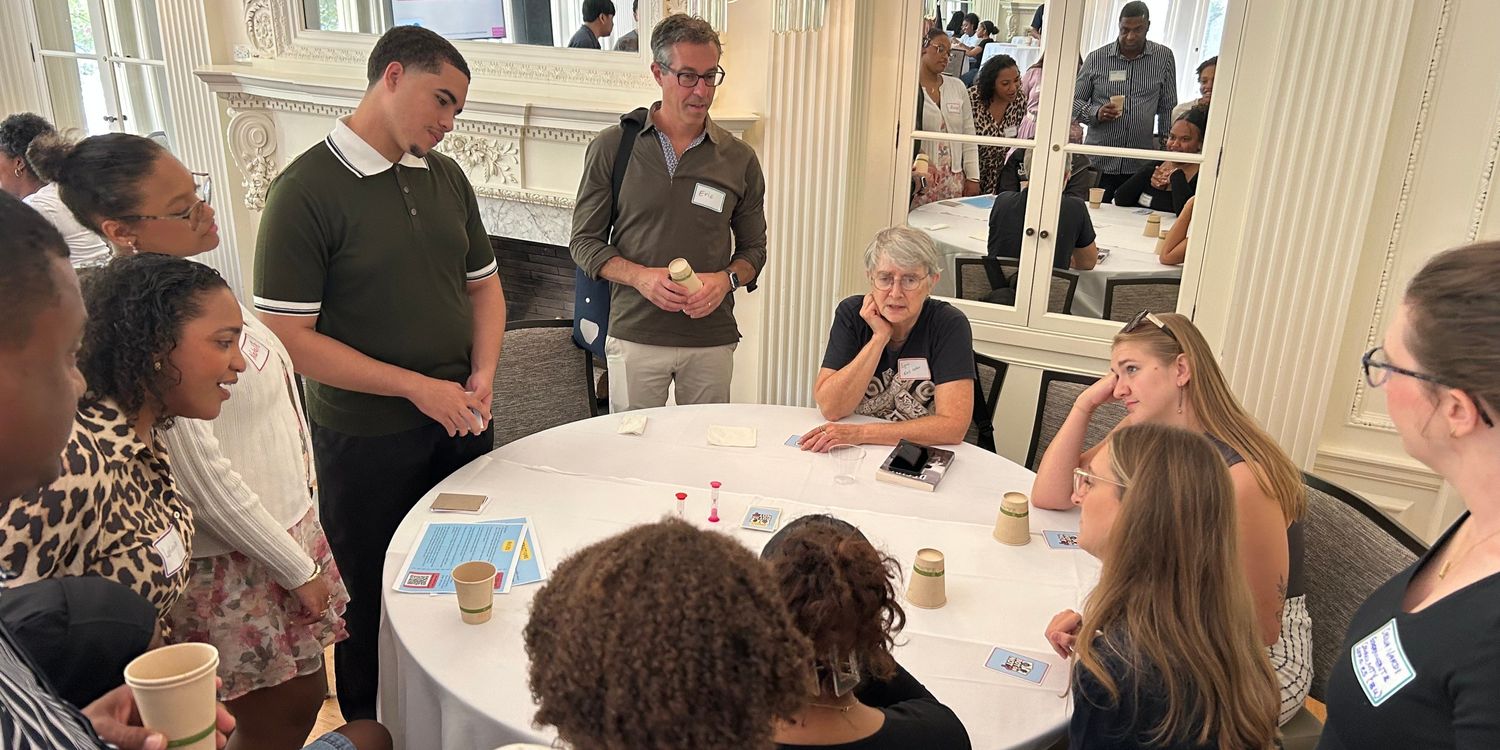
Looking back on last summer, Professor Chang said, “Daniel and Natalie taught us so much. They worked diligently and thoughtfully with us all summer to think through some extremely difficult topics around computing, AI, education, and design. Their presentation at the end of the summer was an absolute delight, helping us as researchers see connections across our projects that we couldn’t have seen on our own.”
Universities have a unique opportunity—and a responsibility—to step up, partner with our city’s youth, and transform research, practice, and community through summer internships.
Employer recruitment has already begun for Summer 2026. If you’re a faculty or staff member at an institution of higher education in Boston looking to build out a summer internship program, reach out to Cara Mattaliano at BU Wheelock (caramm@bu.edu) or Josh Bruno at the Boston PIC (josh.bruno@bostonpic.org).

Comments & Discussion
Boston University moderates comments to facilitate an informed, substantive, civil conversation. Abusive, profane, self-promotional, misleading, incoherent or off-topic comments will be rejected. Moderators are staffed during regular business hours (EST) and can only accept comments written in English. Statistics or facts must include a citation or a link to the citation.