Tribute to Professor Bill Klein
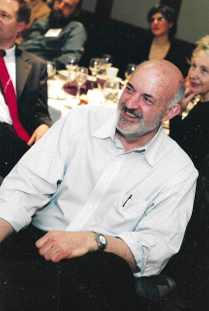
Bill Klein, Professor of Physics and a member of the Center for Computational Science at Boston University, was a leading figure in statistical mechanics whose work shaped our understanding of percolation, nucleation, and complex systems. Bill passed away on November 18, 2025, at the age of 82. He is survived by his wife Susan, his son Jonathan (Marla), his daughter Rachael, and grandsons Asher and Zachary.
Bill was born on April 1, 1943 into a working-class family in Philadelphia. He attended Central High School in North Philadelphia, a public magnet school. He enrolled at Drexel University with the intention of becoming an engineer, later transferring to Temple University. His life changed when he became a teaching assistant for a physics course; after taking quantum mechanics, he was hooked and began what would be a lifelong love affair with physics. He received his B.A. in physics from Temple University in 1965. At around that time, he met Susan at a diner near campus. Bill and Susan were married in June 1967.
Bill Klein received his Ph.D. in physics at Temple University in 1972 under the supervision of Melville S. Green. He then held postdoctoral positions at the National Bureau of Standards and at MIT under the supervision of Elliot Lieb, and then was a Research Scientist at the Institut f¨ur Theoretische Physik, Universit¨at zu K¨oln from 1974 to 1976. He joined the faculty at Boston University as an Assistant Professor of Physics in 1977 and was promoted to Full Professor in 1984. Bill was a fellow of the American Physical Society and a member of the American Geophysical Union.
Bill Klein traveled extensively and held many visiting positions in Europe, including at Kernforschungsanlage, J¨ulich, the University of Konstanz, and the Oersted Institute. He also enjoyed visiting positions at Harvard University, McGill University, the Santa Fe Institute, the Kavli Institute for Theoretical Physics at the University of California, Santa Barbara, and at Los Alamos National Laboratory. He was the Ulam Scholar in 2000 at the Center for Nonlinear Studies at Los Alamos National Laboratory. Bill had over 50 collaborators and mentored 25 Ph.D. students, most of whom went on to academic and industrial positions. He also mentored 6 Ph.D. students who worked with Harvey Gould at Clark University.
Bill Klein’s research interests centered on percolation phenomena, nucleation in the Ising model and dense fluids, earthquake fault systems, and the distribution of wealth. A unifying theme of his research was the subtle behavior of near-mean field systems and the effects of pseudospinodals. His first major work was on the real-space renormalization treatment of percolation with Peter J. Reynolds and H. Eugene Stanley. His most cited work was with Antonio Coniglio, then a visiting scientist at Boston University. They mapped the Ising model onto a site-bond percolation problem and determined the distribution of cluster sizes in the Ising model. These clusters diverge in size at the Ising thermal critical point with percolation exponents equal to the corresponding thermal exponents.
Bill had a long standing interest in nucleation. With his collaborators and students, he showed theoretically and by simulations that nucleation in a long, but finite range Ising model was not described by classical nucleation theory, but was influenced by the presence of a pseudospinodal. Bill used similar reasoning to predict the presence of a pseudospinodal and its influence in dense metastable Lennard-Jones liquids for deep quenches near the liquid-solid transition.
The powerful tools of statistical mechanics allowed Bill and collaborators, including John B. Rundle and Kristy F. Tiampo, to understand earthquake fault systems. Bill showed that the Rundle-Jackson and the Olami-Feder-Christensen models were equivalent if only the stress was considered, and that these systems were in thermal equilibrium in the mean-field limit. He also showed that Gutenberg-Richter scaling is associated with an underlying critical point.
Bill was concerned about the increasing wealth inequality in our society and became interested in understanding agent-based models of the economy. He proposed an extension of the yard-sale model to incorporate economic growth and showed that this extension could be described by mean-field theory with a critical point between a phase with economic mobility and exponentially growing wealth of all agents and a phase with wealth condensation and no mobility. Recently, Jan Tobochnik, H. Gould, and Bill generalized the model further to include investment and found realistic wealth distributions that were not describable by a mean-field theory.
Bill Klein’s weekly group meetings, which were attended by students, postdocs, and colleagues, were marked by many questions, none of them “stupid,” and accompanied by frequent laughter and bad puns. Bill was supportive of his students and touched the lives and careers of many of them. He was an exceptional mentor to junior faculty and was generous with his advice and time. Beneath a sometimes gruff exterior was a man of great integrity and sensitivity. He was a huge and valued presence in the Boston University physics department, both socially and intellectually.
In his later years Bill became very interested in teaching and developed a course on The Physics of Chance, which he taught at the Kilachand Honors College at Boston University. The course was directed toward first-year students not planning to major in science and was a reflection of Bill’s concern that many college students were not learning how to think critically. He hoped that the course would continue after his planned retirement from teaching in December, 2026. Sadly, he passed away while preparing to teach the course the next day.
Harvey Gould, Sid Redner, Bulbul Chakraborty, Kristy Tiampo, John Rundle and Shyam Erramilli