Multi-Scale Neuro-AI for Striatal Learning: Machine Learning, Voltage Imaging, and Safe Perturbation Design
Focused Research Program
Our Focus
This FRP will build a BU Neuro-AI community around multi-scale striatal learning by integrating neuromodulator recordings, voltage imaging, machine learning, and reinforcement-learning theory. Collaboration is essential because no single lab spans the measurement, modeling, and causal-testing capabilities needed to connect DA/ACh dynamics to interpretable learning rules and experimentally test them.
Focused Research Program led by
Mark Howe, Assistant Professor, Department of Psychological & Brain Sciences
Venkatesh Saligrama, Professor, Department of Electrical & Computer Engineering
Research Thrusts
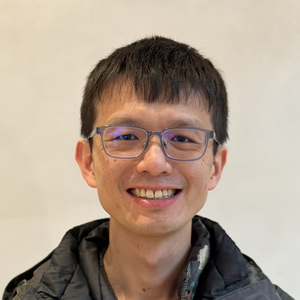
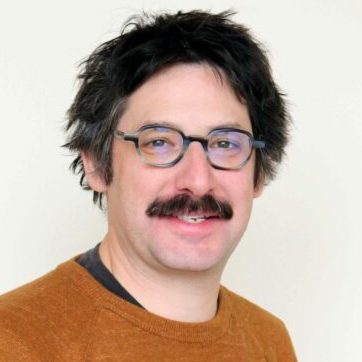
1. Cross-scale alignment of neuromodulator and circuit dynamics
This thrust will develop a common computational representation linking region-scale DA/ACh dynamics to fast local circuit dynamics during learning, so that cross-scale latent states can be compared, aligned, and related to behavior. This thrust directly addresses the gap identified in the planning notes: the need for better computational approaches across temporal and spatial scales.
Thrust Champion(s)


Core & Affiliated Faculty
2. Learning-rule discovery from striatal neural dynamics
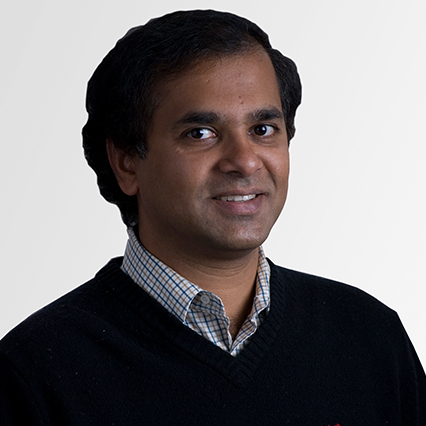
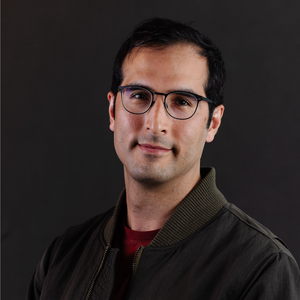
This thrust will use machine learning to identify and compare interpretable candidate learning-rule families that explain striatal dynamics during reward, aversion, and extinction, and to connect these rules to behavior and neuro-modulatory state. This thrust proposes to extract latent states, compare model families, and test whether neural data support distinct algorithm classes.
Thrust Champion(s)
Core & Affiliated Faculty

3. Safe adaptive perturbation design for causal model testing
This thrust will design safe, information-efficient perturbation strategies that distinguish among competing models of striatal learning while respecting physiological and experimental constraints. This thrust proposes to use safe-bandit procedures to choose ACh/DA perturbation settings for causal model discrimination.
Thrust Champion(s)
Core & Affiliated Faculty

Broader Community / Open Participation
Beyond the active faculty team, this FRP will engage a broader BU community spanning the Center for Systems Neuroscience, the Neurophotonics Center, the Graduate Program for Neuroscience (GPN), and affiliated researchers in Electrical & Computer Engineering, Biomedical Engineering, Psychological & Brain Sciences, Computer Science, and Computing & Data Sciences. The Center for Systems Neuroscience comprises over 80 faculty across BU, the Neurophotonics Center reports interactions with over 40 faculty and more than 80 trainees from 12 departments, and GPN is a university-wide PhD program that serves as a nexus for neuroscience training across BU. This broader community will participate through FRP workshops, technical sprints, reading groups, core faculty meetings, and the annual symposium.