
By Miranda Heinrich
We all need to move our bodies. Exercise is not only physically beneficial, but is known to help enhance sleep, reduce healthcare costs, improve mental wellness, and even prevent psychiatric disorders.
But what kind of exercise? Running? Cycling? Yoga? Of the many physical activities available to us, indoor rock climbing has become significantly more popular. Now with 25 million enthusiasts worldwide, rock climbing draws adventurers, thrill-seekers, and even the mildly curious. For many, that means starting somewhere familiar. Boston University’s FitRec has a 30-ft climbing wall that accommodates everyone starting at age 5.
If you love working your brain and your body, you might want to do it too. Here are five reasons indoor rock climbing could be your next favorite indoor activity.
Your heart and lungs will love you.
Rock climbing is a good cardiorespiratory exercise. One study shows that climbing requires the same amount of energy that running does at an 8- to 11-minute-mile pace, burning about 600 calories an hour and elevating your heart rate.
It scratches the puzzle-itch in your brain.
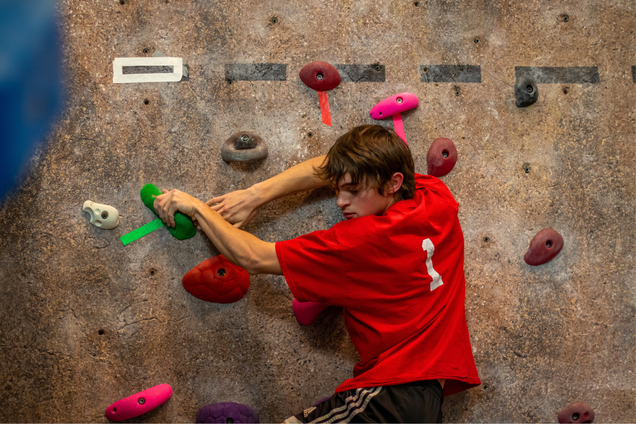
Rock climbing isn’t just about physical fitness. Climbing routes and boulders are lovingly referred to as “climbing problems.”
Moving along the wall requires planning and strategic thinking. Kinesiologist Pete Rohleder says that rock climbing helps sharpen the mind, training climbers to find the most efficient routes on the wall. You are solving a puzzle right on the wall.
It’s a mental health boost.
Science suggests that rock climbing is good for your mood. Studies demonstrate that therapeutic climbing has positive social
and psychological benefits, reducing depressive effects and even reducing anxiety for children.
Climbing can make you feel capable and confident. Knowing you can endure failure and overcome obstacles is a self-efficacy boost.
Got back problems? Climbing might help.
Studies show that rock climbing, when done correctly, can decrease back pain, particularly for beginners at low intensity and volume. Those with lower back pain reported less pain after regular rock climbing, even in comparison to doing stabilization exercises.
You gain a new tribe.
People find each other through climbing. Shared passion and mutual support are powerful in social connections. Lead climbing, in particular, requires teamwork and trust.
Lead climbing is a style of rope climbing in which the climber is attached by a rope to someone controlling the slack on the ground. This team effort builds trust, enhances communication, and develops a community of people who encourage one another to succeed.
Lead climbing classes are available both privately and in group settings at FitRec.
Ready to give indoor rock climbing a try? We offer a 30-foot-wall that offers bouldering, top roping, and lead climbing. You can check out private climbing lessons, children’s climbing classes, and belay sessions available for all ages and skill levels.
Learn more about how you can try it out today, free for all BU students and FitRec members. Not a member yet? You can attend a Climb Night or sign-up for a day pass today!
Got other questions about climbing at FitRec? Reach out to buop@bu.edu for more information.