News
BU by the Numbers
 ADVOCACY RESOURCE
BU by the Numbers
Have you wondered what the average BU student looks like? What we use federal research dollars for? How BU impacts a specific Congressional District or state? Find out with our newest fact sheets.
See the impact
 RESEARCH HIGHLIGHT
Can Technology Eliminate Blindspots?
BU researchers are using funds from the Defense Advanced Research Projects Agency (DARPA) to develop a digital-camera-based system that shows it's possible to "see" around corners. Yes, really. Take a look
 RESEARCH HIGHLIGHT
Can Technology Eliminate Blindspots?
BU researchers are using funds from the Defense Advanced Research Projects Agency (DARPA) to develop a digital-camera-based system that shows it's possible to "see" around corners. Yes, really. Take a look
IN CASE YOU MISSED IT...
Learn about BU's efforts to engage women and girls in STEM in our first @BU series for policymakers on February 22, RSVP to Emily Burlij... The BU Institute for Sustainable Energy provided a framework for Boston to be carbon-free by 2050... BU President Robert A. Brown tells the Boston Business Journal that the Massachusetts Green High Performance Computing Center is an asset worth recognizing... BU historian John Thornton helps The Washington Post get a fuller picture of the first Africans in America... BU Pardee School of Global Studies Professor Joshua Shifrinson argues that the "new Cold War" with China is overblown in The Washington Post.
Charles River, Medical Campus Faculty Promoted to Full Professor
Among areas of expertise: treatment of child anxiety, premodern Asian literature, violence prevention
Charles River Campus: five faculty have been promoted to the rank of full professor. Photo by Janice Checchio.
From expertise in dating abuse, adult binge drinking and youth drinking, and the use of experimental therapeutics in the treatment of Alzheimer’s disease to the social dynamics of cities and modern Spanish American literature, culture, and film, the 18 BU faculty recently promoted to full professor are leaders in their fields, bridging disciplines and finding solutions to some of the world’s most pressing issues. They are also classroom leaders, inspiring new generations of scholars and professionals.
“Every day, BU faculty are helping to shape the future and our understanding of the world in new and important ways,” says Jean Morrison, University provost. “We are proud of these scholars who exemplify through their teaching and research the very best that our community has to offer. Whether broadening our outlook on urban and community life, writing seminal works that further our knowledge and appreciation of global cultures, or advancing innovative approaches to everything from childhood trauma to vascular disease, all are leaders and pioneers in their fields. We are excited to see their work recognized as they become full professors at Boston University.”
The Medical Campus accounted for 13 of the 18 BU faculty members attaining full professorships. “These recently promoted faculty are senior leaders from the Schools of Medicine and Public Health and experts in their disciplines,” says Karen Antman, dean of the School of Medicine and provost of the Medical Campus. “We congratulate them for their accomplishments.”
Charles River Campus faculty promotions:
Japonica Brown-Saracino, College of Arts & Sciences (CAS) professor of sociology
An ethnographer, Brown-Saracino studies the social dynamics of cities and community life, focusing on questions of gentrification, culture, sexualities, and identities. Considered one of her field’s leading creative voices, she has published extensively in sociology journals and written three books, most recently How Places Make Us: Novel LBQ Identities in Four Small Cities (University of Chicago Press, 2017). In 2016, she received the American Sociological Association Jane Addams Best Article Award. Her A Neighborhood That Never Changes: Gentrification, Social Preservation, and the Search for Authenticity (2009) garnered the Urban Affairs Association Best Book Award. She directs the Urban Inequalities Workshop, sponsored by BU’s Initiative on Cities.
Wiebke Denecke, CAS professor of East Asian literatures and comparative literature
An expert in premodern Asian literature, Denecke explores early thought traditions of philosophy, poetic and court cultures, the development of literary traditions in multiliterate environments, and views of ancient East Asian traditions in the global present. A past recipient of the Andrew W. Mellon Foundation New Directions Fellowship, she published Classical World Literatures: Sino-Japanese and Greco-Roman Comparisons (2014), one of two major volumes, and has been an editor on several Norton Anthology, Oxford Handbook, and Wiley-Blackwell Companionprojects. She is currently researching early Japanese literature’s relationship to China and Korea, as well as visions for the global transformation of the humanities.
Adela Pineda Franco, CAS professor of romance studies
A professor of Spanish and director of the Pardee School of Global Studies Latin American Studies program, Pineda researches modern Spanish American literature, culture, and film and their relationship with political history, particularly Mexico’s. A leading scholar of transnational cultural phenomena and the 19th- and 20th-century modernismo movement, she has written 16 book chapters and the 2016 Mexican government Malcolm Lowry Fine Arts Literary Essay Award winner, Steinbeck y México. Una mirada cinematográfica en la era de la hegemonía estadounidense, one of two widely cited books. A forthcoming book explores Hollywood’s depiction of the Mexican Revolution.
Katherine Zhang, College of Engineering professor of mechanical engineering and materials science and engineering
Zhang studies the mechanical behavior of soft biological tissues and composites across multiple scales, using experimental techniques and computational modeling—research with translational implications for the diagnosis and treatment of vascular disease. Supported by numerous major National Institutes of Health and National Science Foundation grants, she is a past NSF CAREER Award winner, a past Clare Boothe Luce Professor, an elected fellow of the American Society of Mechanical Engineers, and the author of dozens of widely cited papers in biomedical and biomechanical journals.
Amie Grills, Wheelock College of Education & Human Development professor of counseling psychology
A specialist in the treatment of child and youth anxiety in school settings, as well as the resiliency factors in individuals of all ages following traumatic events, Grills is a frequent presenter at national conferences. She has received BU’s United Methodist Scholar/Teacher of the Year Award, and her research is supported by significant National Institutes of Health grant funding. She is the author of 2 books, nearly 40 papers in high-tier, refereed journals, and 17 book chapters or encyclopedia entries. Her most recent coedited book, Critical Issues in School Mental Health: Evidence-Based Research, Practice, and Interventions (2015), received Choice Magazine’s Outstanding Academic Title award.
 Medical Campus: 13 faculty have been promoted to the rank of full professor. Photo by Dan Aguirre.
Medical Campus Promotions
Christopher Andry (Graduate School of Arts & Sciences’87,’89, School of Medicine’94), School of Medicine (MED) professor of pathology and laboratory medicine and of family medicine
Andry is well-recognized in the field of biospecimen science. In a team-based setting at BU and Boston Medical Center, he has established evidence-based protocols and standards to ensure curation and distribution of high-quality, well-annotated biospecimens. He has been the principal investigator (PI) on more than $2 million in grants and contracts to set standards for the science of biospecimen collection. A mentor for many medical and graduate students, he directs MED’s Master of Science in Pathology Laboratory Sciences program and is course director, lecturer, and laboratory instructor in medical, dental, and graduate courses. Andry has raised BU’s profile in biobanking and provides the expertise for obtaining usable tissue samples for Medical Campus research faculty. He has chaired the BU Laboratory Safety Committee for 12 years and directs the BU-BMC Cancer Center Cancer Tissue Archive for Precision Medicine.
Lawreen H. Connors (GRS’86) MED professor of pathology and laboratory medicine
Connors’ research focuses on uncovering the protein and genetic determinants that underlie the formation of amyloid. Early in her career she worked on structural studies of amyloid-causing transthyretin (TTR) mutants, mainly those causing cardiac dysfunction. More recently, she has focused on wild-type TTR amyloidosis, an age-related disease now recognized as an underappreciated cause of heart failure in the elderly. She has had continuous support from the National Institutes of Health and foundation grants, as well as industry-sponsored research agreements. In 2009, she played a major role in the establishment of the MED and Boston Medical Center Amyloidosis Center Amyloid Pathology Diagnostic Testing Laboratory. She is director of the center’s Gerry Laboratory and codirector of the Amyloid Pathology Diagnostic Testing Laboratory. Connors has mentored more than 20 master’s, doctoral, and postdoctoral students, and has served on multiple local, national, and international committees.
Shoumita Dasgupta, MED professor of medicine and of biomedical genetics
A scientist educator whose scholarly work focuses on integrating genetic and genomic science in medical and graduate education, Dasgupta has made significant contributions to the reform of medical school genetics education, introducing curricula using team-based teaching and flipped classroom learning, with an additional focus on education in diversity and ethics. She has constructed and published several innovative teaching activities that integrate cultural, ethical, and genetic-genomic concepts. Through her leadership in the Association of Professors of Human and Medical Genetics Medical Course Directors, she’s had a major role in the revision of the Medical School Core Curriculum in Genetics, the foundation for genetics courses taught at most US medical schools. She has written several articles featured in the Centers for Disease Control and Prevention’s Public Health Genomics Knowledge Database. Dasgupta also was selected to lead NIH genomic medicine education initiatives on emerging genomic technologies and their responsible, inclusive implementation for trainees and providers.
Karen E. Lasser, MED professor of general internal medicine
A primary care physician researcher, Lasser is dedicated to improving health conditions in vulnerable populations, spanning primary care practice-based research; interventions to promote preventive services in vulnerable populations; outpatient medication safety; and interventions related to addiction. She is the first author on more than 50 peer-reviewed articles, including an influential JAMA Internal Medicine publication investigating how patient navigation and financial incentives promote smoking cessation among primary care patients served at an urban safety-net hospital. She has been continuously funded by the NIH, nonfederal foundations, and intramural programs with more than $5.2 million in direct costs since her 2009 promotion to associate professor. She has received numerous awards and has been appointed to several national and international committees.
Stephanie Lee, MED professor of medicine and of endocrinology, diabetes, and nutrition
A national expert in the clinical management of thyroid diseases, Lee has done research that has led to improving differentiation of malignant versus benign thyroid nodules. She is currently the PI on two externally funded grants, using ultrasound for diagnosis of thyroid nodules and developing a multi-institution thyroid cancer registry. In 2015 she received the American Thyroid Association Woman of the Year award, has served on the association’s guidelines committee for managing patients with thyroid nodules, and has been on the Thyroid World Congress faculty. She developed a two-year didactic curriculum for the Endocrine Fellowship, developed and directs a monthly multidisciplinary Endocrine-Pathology-Surgery Clinical Conference on thyroid cytology and pathology, and created an 80-hour curriculum, required for the certification of endocrinologists, for the human administration of radioactive iodine. In 2018, she was selected as an Evans Clinician, a lifelong designation awarded to department of medicine faculty recognizing outstanding clinicians.
Mark Miller, MED professor of psychiatry
A clinical psychologist in the VA Boston Healthcare System National Center for PTSD Behavioral Sciences Division, Miller is an internationally recognized expert in the genetics, neurobiology, and assessment of post-traumatic stress disorder. As a PI, he has been continuously funded by the National Institute of Mental Health and/or the US Department of Veterans Affairs for almost 20 years. He has published more than 100 peer-reviewed papers on PTSD and related conditions and his work has been cited about 6,000 times. He is currently an associate editor of the Journal of Abnormal Psychology, the American Psychological Association flagship publication, and previously was an associate editor for two other leading traumatic stress journals. Miller is a frequent grant reviewer for the NIH and other US and international funding agencies and he has been a research mentor to numerous pre- and postdoctoral trainees in BU programs.
Joanne Murabito, MED professor of general internal medicine
A clinician-scientist trained in epidemiology, with specific interests in aging, cardiovascular disease, and genetic epidemiology, Murabito has used the Framingham Heart Study database for research focusing on the epidemiology and genetics of longevity, healthy aging, and reproductive aging (menopause). She is investigating the use of mobile health technologies to study overall and cardiovascular health. Her research has been funded by the NIH, and she is the author of over 170 original peer-reviewed articles in such journals as Nature Genetics, Circulation, and JAMA.
Timothy Naimi, MED professor of general internal medicine
Naimi is a CDC-trained epidemiologist with a focus on adult binge drinking, youth drinking, the health effects of moderate alcohol consumption, and substance use policy that includes the impact of alcohol control policies on youth and adult alcohol consumption patterns. He has been the PI on three NIH-funded projects to develop better measures of state alcohol policy environments and study their relationship with excessive alcohol use and related outcomes, such as fatal motor vehicle crashes and alcohol-related homicides and suicides. He has written more than 100 peer-reviewed papers.
Elizabeth Pearce (School of Public Health’04), MED professor of medicine and of endocrinology, diabetes, and nutrition
Clinical investigator, endocrinologist, and epidemiologist Pearce has made contributions in iodine nutrition, thyroid disease in pregnancy, environmental thyroid disrupters, and the association of thyroid function with cardiovascular risk. Her internationally cited publications have changed US recommendations for iodine supplementation and iodine use in pregnancy. Among her 87 articles, 22 include a mentee as first author. She is president of the American Thyroid Association and has received its Van Meter Award. Pearce has been a leader in the Iodine Global Network, an NGO dedicated to eliminating iodine deficiency disorders, since 2007.
Jillian C. Shipherd, MED professor of psychiatry
Shipherd is a leader in the field of PTSD and LGBT health. She has directed the national LGBT Health Program for the VA since 2012 and her national fellowship program on LGBT Health has been adopted at VA sites across the country, including Boston. She worked at the national level to develop a VA policy on care for transgender veterans and a policy for veterans who identify as lesbian, gay, or bisexual. She has served on numerous national committees and editorial boards. The recipient of the American Psychological Association’s Award for Distinguished Contribution to Education and Training and the Health Professionals Advancing LGBT Equality 2018 Achievement Award, she has published more than 100 peer-reviewed papers.
Weiming Xia, MED professor of pharmacology and experimental therapeutics
Xia is an expert in Alzheimer’s disease and related neurodegenerative disorders. His 1999 Nature paper about his postdoctoral research linking presenilin and gamma secretase directly led to a specific therapeutic target for Alzheimer’s disease. His current research focuses on identifying therapeutic targets for Alzheimer’s and developing biomarkers for Alzheimer’s diagnostics and therapeutics. He is the PI on VA Merit and Pilot Awards and on a Cure Alzheimer’s Fund foundation grant. He has 95 peer-reviewed journal articles, 13 invited peer-reviewed critical reviews in journals such as Nature, PNAS, and Cell and in leading Alzheimer’s disease and neuroscience journals, and 12 book chapters, and is an editor of Amyloid Precursor Protein: A Practical Approach.
Ching-Ti Liu, School of Public Health (SPH) professor of biostatistics
Liu, an expert in statistical genetics and its applications, specifically on obesity, type 2 diabetes, and musculoskeletal disorders, is a biostatistician and statistical geneticist on several large research consortia and coleads the African American Genetics of Glucose and Insulin Consortium and the Anthropometric and Adiposity working group in the Cohorts for Heart and Aging Research in Genomic Epidemiology Consortium. He has had more than 100 peer-reviewed journal articles in Nature, Nature Genetics, Genome Biology, and the American Journal of Human Genetics. Liu has a portfolio of externally funded research, most from the NIH. An exemplary teacher and mentor, he has developed three new courses and has twice received the SPH Excellence in Teaching Award.
Emily Rothman, SPH professor of community health sciences
Rothman’s research focuses on violence prevention in the areas of dating abuse and sexual violence, human trafficking, and community violence. Her scholarship on relationship violence has been ahead of its time, well before the #MeToo movement. Her research has been funded by the NIH, the National Institute of Justice, the Department of Justice, the US CDC, and the Robert Wood Johnson Foundation. She has more than 85 peer-reviewed publications, many in such high-impact journals as the New England Journal of Medicine, the American Journal of Public Health, JAMA, and Pediatrics. Rothman’s honors include three SPH teaching awards and the Linda Saltzman New Investigator Award from Futures Without Violence and the CDC Foundation. She has facilitated psychoeducational groups and individual counseling interventions for perpetrators of partner and sexual violence since 1997.
Authors, BU Today staff.
Science Gets a Nod in the State of the Union
BU IN DC
College of Engineering Dean Kenneth Lutchen attended the American Society for Engineering Education’s Public Policy Colloquium and met with Congressional staff from February 4 through 6.
School of Public Health Dean Sandro Galea was the keynote speaker at the Institute for Integrative Health symposium on February 4. He also participated in a meeting of the National Advisory Council on Minority Health and Health Disparities, of which he is a member, on February 5.
Associate Provost and Dean of Students Kenneth Elmore and Director of the Howard Thurman Center for Common Good Katherine Kennedy participated in a screening of a documentary film about Howard Thurman on February 5.
Julie Wickstrom of Financial Assistance attended a meeting of the Higher Education Loan Coalition and discussed federal student aid with Congressional staff between February 3 and 5.
College of Arts & Sciences undergraduate Sabrina Schnurr attended the State of the Union address as a guest of Representative Frank Pallone (D-NJ), for whom she is interning this semester, on February 5.
SCIENCE GETS A NOD IN THE STATE OF THE UNION
President Donald J. Trump gave his annual State of the Union address to Congress on Tuesday night, calling for bipartisanship while urging action to enhance border security and stem illegal immigration. The President's speech mentioned scientific advancement several times. He announced that the Administration's forthcoming budget would request $500 million over ten years for childhood cancer research, recognized the 50th anniversary of the Apollo 11 moon landing, and called for the end of HIV transmission by 2030. The President also referenced America's historic leadership in science.
POLICYMAKERS RECEIVE BU FACT SHEETS
As the 116th Congress gets underway, BU Federal Relations is sharing data and stories about the University with policymakers on Capitol Hill. Every two years, each Member of Congress from New England receives personalized fact sheets that describe how BU utilizes federal research dollars, supports students with federal financial aid, and enhances the local community and economy. The handouts help legislators understand how their decision to invest in science, higher education, and the humanities impacts the communities they represent.
EVENTS NEWS YOU CAN USE
Need help with your op-ed? Want to build your social media presence? Interested in learning how to connect with policymakers? Join Marketing & Communications and the Research Office for a unique one-stop-shop workshop tailored to your needs. The session will follow a circuit, boot-camp style format to help you build your communications core muscles, and introduce you to key staff on campus who can help increase the visibility of your work.
Federal Agencies Reopen for Business
BU IN DC
President Robert A. Brown participated the Association of American Universities Board of Directors meeting on January 31.
Provost Jean Morrison attended a meeting of the Education Advisory Board on January 24 and 25, and met with staff on the House Science, Space, and Technology Committee on January 25.
FEDERAL AGENCIES REOPEN FOR BUSINESS
On January 25, Congress and the White House reached a deal to temporarily reopen federal government agencies that had been closed for 35 days. The measure extends the agencies' budgets through February 15, giving lawmakers three weeks to negotiate a final compromise on funding for the remainder of fiscal year 2019. Without a final deal, impacted federal agencies could close again. Program staff with the National Science Foundation, the National Aeronautics and Space Administration, the National Endowment for the Humanities, and other agencies are addressing a significant backlog of grant awards and review panels, as well as announcing some changes to submission deadlines.
UNIVERSITIES OPPOSE TITLE IX PROPOSAL
The public comment period for the U.S. Department of Education's proposed changes to Title IX, the federal law that governs gender equity in education, closed on Wednesday. The Department received more than 100,000 comments, including letters expressing significant concerns from Boston University, the Association of American Universities, the Association of Independent Colleges & Universities in Massachusetts, the American Council on Education and a coalition of 60 higher education associations, and the City of Boston. BU's letter lamented provisions in the proposal that could discourage victims of sexual misconduct from reporting their experience and that more narrowly define what constitutes sexual harassment. Due to the significant number of comments the Department must review, it is unclear when the agency will publish a final Title IX rule.
EVENTS NEWS YOU CAN USE
The next installment of the Research on Tap series hosted by BU Research will be held on Monday, February 4. The "Costal Cities, People, and Waterways" session will feature microtalks by a dozen BU faculty working to better understand the connections between humans and inland waterways and urban areas on the coast, from the Amazon Basin to Southeast Asia and Indonesia to coastal New England. A wine and cheese reception will follow the presentations, giving investigators the opportunity to interact with potential research collaborators.
BU to Contribute $250K to King Memorial
 NOTABLE ALUMNI
BU to Contribute $250K to King Memorial
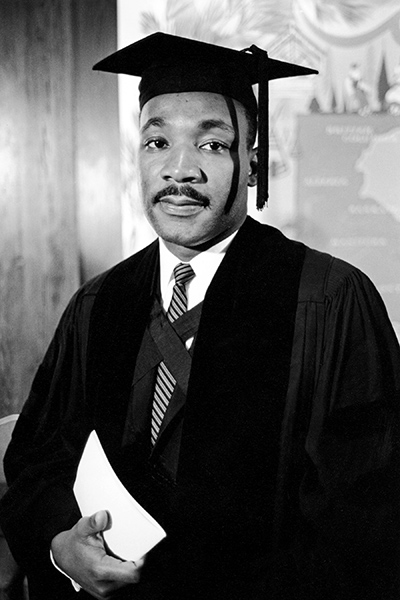
The University announced its contribution to an initiative honoring the Rev. Martin Luther King, Jr. (GRS ’55, Hon.’59) at a joint BU-Boston holiday observance featuring Congresswoman Ayanna Pressley and Boston Mayor Martin Walsh.
Find out more
 ADVOCACY RESOURCE
BU Urges Rethinking on Proposed Title IX Changes
In a letter to the U.S. Department of Education, Boston University President Robert A. Brown says the agency's proposed rules change would deter victims of sexual misconduct from coming forward.
Read the letter
 RESEARCH HIGHLIGHT
Drug Marketing is a Matter of Life and Death
A new county-by-county study from the BU School of Medicine, funded in part by the National Institutes of Health, shows that opioid marketing directly fuels prescription rates and fatal overdoses. Learn the truth
IN CASE YOU MISSED IT...
The BU Initiative on Cities unveiled its 5th annual Menino Survey of Mayors at the National Press Club on January 22... BU School of Public Health Dean Sandro Galea gave a talk on the importance of "Health, Not Healthcare" at the National Institute on Minority Health and Health Disparities on January 22... Joshua Shifrinson of the BU Pardee School of Global Studies briefed Congressional staffers on the geopolitics of great world powers on January 16... a BU political scientist revealed a gender pay gap for Congressional staffers to CNBC... Steve Ramirez of the BU College of Arts & Sciences is making memories -- and then erasing them -- with National Geographic.
BU Urges Department of Education to Rethink Title IX Changes
President Brown submits letter saying changes could deter victims from coming forward
Colleges and universities, including BU, face sweeping changes around how they handle sexual misconduct if new federal rules go into effect. Photo by Cydney Scott.
In a resolute letter to the Department of Education on Thursday, BU President Robert A. Brown said proposed changes to federal Title IX regulations would deter victims of sexual misconduct from coming forward and undermine the University’s efforts to “foster a campus environment that is free of harassment and discrimination.”
Brown said BU reviewed the proposed changes with a single guiding principle in mind: Do they promote student safety and well-being and “foster a campus environment that is free of harassment and discrimination.” In the end, he concluded, “we do not believe they adequately address this key consideration.”
He specifically called attention to the DOE’s redefining sexual harassment in a more narrow way than universities currently do. He also took issue with a proposal that would require a live hearing where both the accused and the accuser would be cross-examined. “This would create an intimidating, court-like setting that will chill participation in the Title IX complaint process,” Brown wrote.

President Robert A. Brown told the DOE the proposed changes to federal Title IX regulations would undermine BU’s efforts to “foster a campus environment that is free of harassment and discrimination.” Photo by Scott Nobles.
His letter was filed the same week that both the Association of Independent Colleges and Universities in Massachusetts (AICUM) and the Association of American Universities (AAU) filed their comments. Like BU, both groups emphasized concerns for the safety of students, faculty, and staff first—calling for environments that are free from harassment and discrimination. The deadline for submitting comments is January 30.
The DOE, under Betsy DeVos, Secretary of Education, has proposed a high-stakes legal process for handling misconduct complaints, making changes many fear go against the spirit of the federal civil rights law banning sex discrimination in federally funded education programs.
The changes to the regulations were unveiled by DeVos last November and almost immediately sparked an outcry. There were worries that the new guidelines provided greater protections to those accused well beyond what fairness requires, thus making it less likely that victims, mostly women, would come forward, and would roll back gains made in recent years to increase the reporting and addressing of sexual misconduct.
The updated guidelines replace language that existed under President Obama, which describe sexual harassment broadly as “any unwelcome conduct of a sexual nature.” That wording was criticized by some groups as being overly broad, and that it could include conduct that should not be a basis for an institutional response.
Sexual harassment is defined more narrowly in the proposed guidelines as “unwelcome conduct on the basis of sex that is…severe, pervasive, and objectively offensive.” Brown said this new definition “would limit rather than secure the ability of students to seek redress when subjected to harassment or discrimination.”
One of the most controversial proposals is a new requirement that colleges offer a live hearing, which would require the accuser and the accused to be cross-examined by an advisor or a lawyer while in separate rooms, with “technology enabling the decision maker and parties to simultaneously see and hear the party answering questions.”
Critics of all the proposed changes from the DOE note that sexual harassment is already vastly underreported. The Rape, Abuse & Incest National Network estimates that nearly 12 percent of college students experience rape or sexual assault. Brown said Boston University is steadfast in its commitment to providing a safe and discrimination-free learning environment, and his letter said the live hearing does not adhere to those values and could slow down the adjudication of discrimination claims.
Another change the president expressed concern about is the requirement that universities dismiss any sexual misconduct complaints that do not occur at university programs or activities, that occur outside the United States, or that occur online. This could include incidents that happen off-campus, in non-BU housing, at professional conferences, or involving students or employees studying or working abroad. Brown notes that such incidents can impact the BU community.
Additionally, the proposals have the potential to limit how the University addresses harassment online.

“Central to our concern is our ability to provide BU students, faculty, and staff with an environment where they can learn, work, and live without fear of sexual harassment and sexual assault,” says Jean Morrison, BU provost. Photo courtesy of Morrison.
“Central to our concern is our ability to provide BU students, faculty, and staff with an environment where they can learn, work, and live without fear of sexual harassment and sexual assault,” says Jean Morrison, BU provost. “The guidelines would hamper BU’s ability to ensure that our campus and our community are free from sexual misconduct.”
Beyond the fears that the changes might deter complaints about sexual harassment, there are also challenges to implementing the new regulations, which Brown raised in his letter. The new definition of sexual harassment is different from the definition in BU’s current policies, as well as other federal and state employment discrimination standards.
The new measures also require colleges to use the same standard of evidence in all internal conduct code processes, even those unrelated to sexual misconduct. Such a measure would interfere with the University’s ability to take a case-by-case approach based on the behavior in question and the individuals involved, Brown said in his letter.
The parties involved in a case will also gain access to all the evidence gathered in a case under the new guidelines, even if the evidence is not central to the investigation. A student’s full diary, for example, could now be considered evidence when only a single entry in the diary may be relevant to the complaint.
Brown described the measure as an “unnecessarily broad requirement that risks the dissemination or misuse of highly personal information and goes well beyond what is required.”
Jennifer Grodsky, BU vice president for federal relations, says the changes reflect a fundamental shift in the way universities have handled sexual assault and harassment cases for decades.
The current investigative process, typically undertaken at BU by a single investigator in Judicial Affairs or the Equal Opportunity office, would be replaced by a legalistic hearing. Advisors would be appointed to represent students, and those who could afford it would be allowed to hire experienced lawyers to represent their interests.
“Universities aren’t courts; we don’t have a court process,” Grodsky says. “Many people filing complaints usually just want the unwanted behavior to stop. You don’t need a live hearing with cross-examination to do that.”
Brown urged the Department of Education to adopt the recommendations of AICUM, a group that represents the interests of 55 nonprofit colleges and universities in the commonwealth. The group filed a 17-page letter in response to the changes earlier this week. Its recommendations include:
- Eliminating the requirement for a live hearing and allowing institutions to determine which circumstances, if any, require one. If the DOE does proceed with the requirement, colleges and universities should determine how a hearing is conducted.
- Give institutions discretion to determine whether to allow direct cross-examination of parties, and if so, who should conduct it.
- Allow institutions to investigate and adjudicate complaints of sexual harassment that do not fit the narrowed definition of Title IX violations or that occur off-campus or abroad.
Kenneth Elmore (Wheelock’87), associate provost and dean of students, whose role includes creating a campus environment in which students feel safe, supported, and heard, says the adversarial encounter that could result from a live hearing is particularly alarming to him.
“We have to support survivors, but we also have to be fair. That’s what I want to safeguard,” Elmore says.

“We have to support survivors, but we also have to be fair. That’s what I want to safeguard,” says Kenneth Elmore, associate provost and dean of students. Photo by Frank Curran.
Under the existing process, complaints are handled by trained investigators from Judicial Affairs (if the complaint is against a student) or the Equal Opportunity office (if the complaint is against a member of the faculty or staff). The investigator collects all relevant evidence from the complainant and the accused, as well as from relevant witnesses, to determine the facts of a case and reach a conclusion as to whether University policies have been violated. Under the proposed regulations, an investigator will no longer be permitted to make that determination.
When the accused is a student, the case is presented to Elmore once the investigation is complete, and he makes his determination as to whether the conclusion is substantiated and the appropriate sanction. His decision can be further appealed to a panel that includes a student, as well as a faculty member and a staff member. The panel’s decision can still be appealed higher, to the Provost’s office, for final consideration. Each year, several students are typically suspended for violations of the University’s Sexual Misconduct/Title IX Policy, and at least a couple are expelled.
“I know that there are some who believe this is a fairly long and tedious approach we’ve got right now,” Elmore says. “But I think it’s fair and thorough and a very relevant way, on behalf of all the students here, to get at the truth as best as possible.”
Author, Megan Woolhouse can be reached at megwj@bu.edu.
Government Shutdown Drags On
BU IN DC
Provost of the Medical Campus and Dean of the School of Medicine Karen Antman spoke about sexual harassment in medical schools during the opening panel of the American Health Lawyers Association annual meeting on January 24.
School of Public Health Dean Sandro Galea delivered the first National Institute on Minority Health and Health Disparities Director's Seminar of 2019 on January 22.
Graham Wilson and Katharine Lusk of the Initiative on Cities presented the findings of the fifth annual Menino Survey of Mayors at the National Press Club on January 22.
GOVERNMENT SHUTDOWN DRAGS ON
The U.S. Senate was unable to pass two bills aimed at ending the partial government shutdown this week, so the impasse will continue into its second month. BU Federal Relations and Sponsored Programs are documenting the impact at the University and sharing it with policymakers; investigators are encouraged to communicate with both offices as they encounter shutdown impacts. Meanwhile, research advocates have developed resources for impacted investigators and policymakers alike. For example:
- BU Sponsored Programs has a blog with updates from federal grant-making agencies.
- The National Humanities Alliance has guidance for humanities scholars who plan to submit grants to the National Endowment for the Humanities.
- The American Society for Biochemistry and Molecular Biology is tracking the impact at the National Science Foundation.
MORE COMMITTEE ASSIGNMENTS FOR MA LEGISLATORS
The U.S. House of Representatives continued to fill out Committee rosters for the 116th Congress, with members of the Massachusetts delegation appointed to many key committees:
- Rep. Ayanna Pressley (D-7th) was appointed to the Committee on Oversight and Government Reform. She is one of several progressive freshmen members on the panel, which is expected to investigate Trump Administration activities.
- Rep. Lori Trahan (D-3rd) has been named to the Committee on Education and Labor and its subcommittee on higher education policy. She outlined college affordability as one of her priorities for the Committee.
- Rep. Bill Keating (D-9th) was assigned to the Committee on Armed Services, joining fellow Massachusetts members Trahan and Seth Moulton (D-6th) who are focused on the Department of Defense and national security.
- Rep. Stephen Lynch (D-8th) will join the Committee on Transportation and Infrastructure. Lynch has an interest in noise pollution at Logan Airport, among other issues.
GRANTS NEWS YOU CAN USE
The Department of Defense (DOD) Congressionally Directed Medical Research Program (CDMRP) released its fiscal year 2019 Peer Reviewed Medical Research Program solicitations. The DOD intends to make $350 million available across 49 topic areas, including antimicrobial resistance, emerging infectious diseases, and tissue regeneration. CDMRP utilizes a two-tiered review process that includes both scientific and programmatic review, so investigators are urged to carefully review the submission requirements.
Eight Big Questions US Mayors Faced in 2018
Key takeaways from annual BU-led Menino Survey on Mayors

In general, the mayors surveyed in BU’s 2018 Menino Survey of Mayors said the so-called sharing economy was helping cities more than holding them back, but that concerns remain, especially about Airbnb, like this one in Boston, and its impact on hotels. Photo by Lisa Cranshaw for the Washington Post via Getty Images.
For hundreds of mayors around the country, 2018 became the Year of Amazon. But for only two of them (the mayors of Arlington, Va., and New York City) did the obsession about landing one of the new headquarters for the online retail king prove worthwhile. For the others (Boston’s among them)? Not so much.
That was just one of the key observations and takeaways from the 2018 Menino Survey of Mayors conducted by Boston University’s Initiative on Cities. Released on Tuesday in Washington, D.C., the annual report collects feedback from more than 100 mayors across the country and provides a measure of how cities are faring and the critical issues they are facing. Only mayors from cities with populations over 75,000 were surveyed.
The survey, now in its fifth year, was founded by the late longtime Boston mayor Thomas M. Menino (Hon.’01), who joined BU after leaving office to become IOC codirector and a College of Arts & Sciences professor of the practice, political science. Menino once said, “Change makes cities, and great change makes great cities.” This year’s survey was led by David M. Glick, a CAS associate professor of political science, and Katherine Levine Einstein and Maxwell Palmer, both CAS assistant professors of political science.
“At a time of deadlock and bitter partisan conflict in Washington, mayors are being asked to pick up the slack and take action to advance our nation’s economy, lift up marginalized groups, mitigate climate change, and maintain aging infrastructure,” Graham Wilson, IOC director and a CAS professor of political science, and Katharine Lusk, executive director, write in the report.
Some of the big questions the 2018 survey revealed:
- Do Living-Wage Standards Help? There is gridlock in Washington. And the growing divide between red and blue states is reflected in cities across the country. Democratic mayors were much more supportive of ordinances that require some sort of living wage standard to support upward social mobility for their cities’ lower- and middle-class populations, “even if it could result in fewer jobs and some companies relocating elsewhere.” The survey found that no Republican mayors supported living-wage ordinances if it meant a possible loss of jobs and growth. “This divide represents the largest partisan gap we have seen in five years of the Menino Survey of Mayors,” the survey authors note.
- Tax Breaks to Lure Businesses? Mayors were largely in agreement that while their constituents may not love cities luring companies with financial incentives and tax breaks, those strategies generally work and are necessary to compete with other cities for growth. In essence: Tax breaks are good policy, but potentially bad politically. One unidentified Midwestern mayor was quoted as saying: “No one is thrilled about tax breaks [for corporations], but we would do almost anything to get jobs for the city.”
- Can Housing Costs Be Fixed? The only issue deemed just as critical as creating more living-wage jobs by the 110 mayors surveyed was the need to create more affordable housing opportunities. This was especially true in cities with a higher cost of living, whereas in cities with lower cost of living, the living-wage jobs issue was the top priority.
- Were There Lessons to Be Learned from the Amazon Process? Mayors were generally frustrated at how aggressively cities used financial incentives and tax breaks as the core of their pitch to land Amazon’s second headquarters. They suggested that instead, mayors should highlight “workforce skills and composition” and “quality of life” as the leading reason a company should relocate to their city.
- Is Airbnb Helping or Hurting? The so-called sharing economy, from bike-share programs to home sharing and ride sharing, generally was seen as helping cities more than holding them back, according to the mayors surveyed. But concerns remain, especially about Airbnb and its impact on hotels. “Interestingly, few mayors have concerns that the sharing economy may have disparate benefits across income and racial groups; a majority of mayors believe that the sharing economy has a positive effect across all income levels, for residents of color, and for the business community,” according to the survey.
- Are Health Challenges a Mayor’s Job? A Governor’s? A President’s? While mayors generally acknowledged the huge health issues their cities face, from obesity, mental health, and hunger to opioid addiction, heart disease, and diabetes, they put more of the burden of addressing those problems on other levels of government, from the state to the federal. So what health challenges should mayors focus on? Traffic deaths, gun violence, exposure to lead and other toxins were among the challenges that mayors said should fall to them to address. However, they acknowledged that they believe “a majority of residents hold them at least a little accountable” for those more societal health issues.
- Should Pot Be Legal? The growing legalization of marijuana, not surprisingly, elicited widely divisive responses from mayors. A sizable number of mayors supported it, but 35 percent disagreed. “Many mayors suggested that their views on marijuana were less about philosophy or values and more about practical challenges related to policy implementation,” the survey says.
- Are Racial Problems Getting Better or Worse? This line from the survey was telling: “Roughly 90 percent of mayors disagreed with the statement that “racial problems are rare, isolated situations,” implying that they believe racial concerns are widespread. But there was more of a divide on the issue of how to handle undocumented immigrants. Two-thirds of mayors surveyed supported ensuring that immigrants have access to local services regardless of their status, but 20 percent disagreed.
The Ways Boston Helped Shape the Life of Martin Luther King, Jr. (GRS’55, Hon.’59)
The civil rights leader lived, studied, met his wife here, returned to give powerful speeches
 A plaque on the outside of 397 Massachusetts Avenue in Boston, where Martin Luther King, Jr. (GRS'55, Hon.'59) lived in 1952 and 1953. Photo by Jackie Ricciardi.
It might seem curious at first that Martin Luther King, Jr. (GRS’55, Hon.’59) is getting a memorial on Boston Common. He wasn’t born in Boston. He didn’t die here. He didn’t give a famous speech here. But Boston, in fact, may have influenced the life of the civil rights icon both personally and professionally as much as any city in America.
He lived here for three years, worked here, studied at, and graduated from, Boston University, and it was here he and met and dated the woman he would go on to marry. It was also in Boston where he revisited his most famous speech, “I Have a Dream.” So yes, it makes sense why the Common will soon be home to a prominent memorial to MLK.
Where did he live?
During his time in Boston, King had several known addresses. One was 395-397 Massachusetts Avenue, a three-story brownstone in the South End where a plaque is attached to the red brick: “This home, built in 1884, was home to Martin Luther King, Jr. in 1952-53 while he was enrolled in the Graduate School of Boston University.” He also called 396 Northampton Street in the South End, just behind the Mass Ave MBTA station, home. He listed that apartment in a letter in 1954, which means that presumably it was the first place he lived with Coretta Scott after their 1953 marriage. He also spent a short time at 170 Saint Botolph Street, another South End brownstone.
When he needed a break from his graduate studies, King often wandered over to the William E. Carter Playground in the South End to play pickup basketball.
Where did he study?

Martin Luther King, Jr., received an honorary degree from Boston University at the 1959 Commencement on June 7. Photo by BU Photography.
After studying at Crozer Theological Seminary in Upland, Pa., King arrived in Boston in 1951 to study at BU, with a special interest in philosophy and ethics. It was the PhD in systematic theology he earned at BU that gave him the right to be called Dr. King for the remainder of his life. According to his transcript at BU, he also took courses at Harvard, including the Philosophy of Plato.
BU’s School of Theology says this about his studies: “During these years, Howard Thurman was named dean of the University’s Marsh Chapel. King not only attended sermons there but also turned to Thurman as his mentor and spiritual advisor. Among the lessons that inspired him most were Thurman’s accounts of a visit to Mohandas Gandhi in India years earlier. It was Thurman who educated King in the mahatma’s ideas of nonviolent protest. As the bridge between Gandhi and King, BU’s progressive dean helped sow the seeds of change in the US and beyond.” Thurman (Hon.’67) was Marsh Chapel dean from 1953 to 1965, the first black dean at a mostly white American university.
Approximately six months after graduating from BU, King led the bus boycott in Montgomery, Ala., where he first began to attract national recognition. He returned to Boston in 1964—the same year he received the Nobel Peace Prize—to donate his personal papers to BU; the collection is among the most prominent held by the Howard Gotlieb Archival Research Center.
One final note on his BU years: King did not attend his BU graduation in 1955. He wrote the University that his wife was pregnant and financial hardships made it impossible for him to return for Commencement, so BU mailed his diploma. He did come to Boston to receive an honorary degree from BU in 1959.
Where did he meet his future wife?

Photo courtesy of Rev. David Briddell (STH’58).
Biographers have made no secret of King being something of a ladies’ man when he arrived in Boston. But it was a friend’s suggestion that he meet a young woman studying opera at the nearby New England Conservatory of Music, who was also earning money doing housework, that changed his life.
In his autobiography, he described how he met Coretta Scott:
“We met over the telephone: ‘This is M. L. King, Jr. A mutual friend of ours told me about you and gave me your telephone number. She said some very wonderful things about you, and I’d like very much to meet you and talk to you.’
“We talked awhile. ‘You know every Napoleon has his Waterloo. I’m like Napoleon. I’m at my Waterloo, and I’m on my knees. I’d like to meet you and talk some more. Perhaps we could have lunch tomorrow or something like that.’
“She agreed to see me. ‘I’ll come over and pick you up. I have a green Chevy that usually takes ten minutes to make the trip from B.U., but tomorrow I’ll do it in seven.’
“She talked about things other than music. I never will forget, the first discussion we had was about the question of racial and economic injustice and the question of peace.”
Their first date was at a chain restaurant called Sharaf’s on Mass Avenue.
Did he return to Boston on other occasions?

Dr. Martin Luther King Jr. (at podium) is applauded after a speech to the joint session of the Massachusetts Legislature in Boston April 22, 1965, the day before he led a civil rights march to Boston Common. (AP Photo, File).
King would leave the city in 1954, as he wound down work on his PhD, but returned to deliver a forceful speech at the Massachusetts State House just months after he won the Nobel Peace Prize.
On April 22, 1965, he appeared before a joint legislative session at the Massachusetts State House. He closed his remarks by quoting his “I Have a Dream” speech, which he had famously made in Washington, D.C., on August 28, 1963.
The day after his Boston speech, King led a freedom march of more than 20,000 people from the South End to Boston Common, where the planned memorial will be constructed. “Now is the time,” he told the crowd, “to make real the promise of democracy. Now is the time to make brotherhood a reality. Now is the time.”
Author, Doug Most can be reached at dmost@bu.edu.
BU to Contribute $250,000 to MLK Memorial on Boston Common
Congresswoman Ayanna Pressley says Trump era needs “radical” King, at joint BU-Boston holiday observance

“The Embrace” by Hank Willis Thomas with MASS Design Group.
BU will contribute $250,000 to a multipronged initiative honoring the Rev. Martin Luther King, Jr. (GRS’55, Hon.’59), Robert A. Brown, president of BU, announced at Monday’s observance of the civil rights leader’s birthday.
The $12 million initiative, which will include a $5 million monument on the Boston Common to BU’s most famous alumnus, will commemorate the work of King and his wife, Coretta Scott King.
The University’s donation “will see the project through to completion and ensure that future generations of Bostonians and visitors will appreciate Martin Luther King’s extraordinary legacy and what his years in Boston meant to him, to Mrs. King, and to all of us,” Brown said during the ceremony in the George Sherman Union Metcalf Ballroom.
He said the $250,000 was contributed by alumni and friends of the University, which had a critical influence in King’s life. The future civil rights leader met his wife while earning his doctorate here, “he walked our halls and sidewalks, learned from our professors, and preached in Marsh Chapel,” Brown said. “We also are proud to be the curators of his papers.”

BU President Robert A. Brown told those attending a joint BU-City of Boston Martin Luther King, Jr., Day observance Monday that the University will help fund a memorial honoring the civil rights leader and Nobel Peace Prize winner. Photo by Maddie Malhotra (COM'19).
Brown recalled how King’s activism resonated during his own hardscrabble youth in segregated Texas: “I remember theaters with two entrances and buses with two kinds of seats. I was raised in what you would refer to as the poor side of town, families living paycheck-to-paycheck, where many of my best friends were Mexican-Americans. As teenagers, we aspired to find our version of the American dream, after dealing with the draft.
“We have come a long way from this world,” he said, “because of leaders in that time who seized the opportunity for change,” King among them, and who “saw the need to move America toward a more just and inclusive society and seized the opportunity in their time to push for change.”
In her keynote address, Representative Ayanna Pressley (D-Mass.), who in November became the first African American woman elected to Congress from Massachusetts, directly linked the era of King to the era of Donald Trump. King, she recalled, was a “radical” who was “wildly unpopular before his assassination in Memphis and often on the wrong side of debates” with many, from black militants to Democratic Party officials.
Speaking with the measured pacing of a seasoned speaker, Pressley, the granddaughter of a Baptist preacher, said contemporary America demands that radical outlook. It is “in the face of our longest government shutdown, the growing concern that the women’s movement cannot possibly keep up this momentum, the continued battle to keep the Voting Rights Act intact, and the occupant of the White House’s continued rhetoric and action to make this country unwelcoming to immigrants that we summon Dr. King.
“Although tremendous gains have been made, each day we are acutely aware that these gains are not guarantees. They are being threatened, eroded, and rolled back,” she said. To combat that threat, “Dr. King gave us the blueprint: organize, mobilize, legislate.
“The choice is not between a border wall and an open government,” Pressley continued. “We can progress as a country of immigrants while resisting the call of xenophobia.”

Representative Ayanna Pressley (D-Mass.), keynote speaker at the joint BU-Boston MLK Day celebration, is the first African American woman elected to Congress in Massachusetts. Photo by Maddie Malhotra (COM'19).
Monday’s ceremony, the first Martin Luther King, Jr., Day observance cosponsored by the University and the city of Boston, attracted an estimated crowd of 1,200 people who braved subzero wind chills. The audience heard music by BU’s Inner Strength Gospel Choir and the Boston Youth Symphony Orchestra and joined in a sing-along that included Amazing Grace, This Little Light of Mine, and the anthem of the civil rights movement, We Shall Overcome.
“A memorial has been talked about for many years,” Martin Walsh, mayor of Boston, told the crowd. “I’m thrilled we are finally making it a reality. It will change the story that our most iconic public space [the Boston Common] tells to the next generation and to the world.”
Walsh noted other memorials to King’s vision, ones that aren’t made of wood or stone, in Boston’s efforts to forge greater equality, including an executive order he plans to sign “to recognize and fix disparities in city services.”
He welcomed the joint King Day remembrance with the University, as “BU brought Dr. King to Boston, and we are forever grateful. There’s no better example of what this University—and all our colleges—does to bring life and light to our city.”
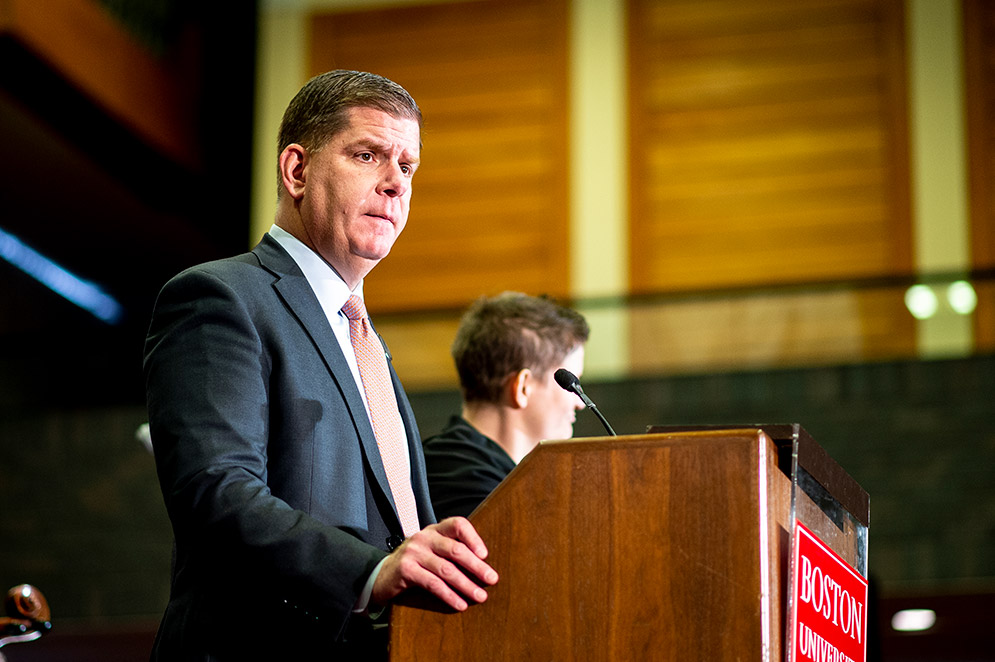
Boston Mayor Martin Walsh was the top Boston representative at Monday’s event, the first joint observance of MLK Day by BU and the city of Boston. Photo by Maddie Malhotra (COM'19).
Besides the Boston Common monument, scheduled for completion early next year and coinciding with a $28 million upgrade of the park, the King memorial initiative will include an eponymous center in Boston’s Roxbury section that will pursue King’s work to address economic inequality; a $1 million endowment to pay for MLK-related programs at Roxbury’s Twelfth Baptist Church, where he preached while studying at BU; and a new documentary about the Kings that will explore their lives and joint work in Boston. (Coretta Scott King graduated from the New England Conservatory of Music.)
The documentary, with online and multimedia accompaniment, will be produced by Roberto Mighty (CAS’76), who as the former artist-in-residence at Mt. Auburn Cemetery was the nation’s first such appointee at a burial ground.
The five designs being considered for the Common commemorative are a mirrored bronze sculpture of the Kings arm in arm; a pulpit monument made of Indian granite in acknowledgement of Mahatma Gandhi, a hero of King’s; a pair of light- and sound-emitting beacons amid ripples in the ground, signaling how the influence of Martin’s and Coretta’s lives rippled out; an “Avenue of Peace” with a walkway, 22 inscribed benches, and fountain-cum-pool; and a overlook of black stone from which visitors can gaze at an amphitheater of mountain-like sculptures below.
The city and King Boston, a nonprofit working on the memorial initiative, will announce the winner later this winter. BU’s contribution to the King memorial was one of two announced Monday. The Boston Foundation, a 104-year-old philanthropy, pledged to donate $500,000.
View photos of the five proposed Boston Common monuments to MLK in this slideshow click here.
Author, Rich Barlow can be reached at barlowr@bu.edu.