News
Teaching’s Diversity Problem
Travis Bristol is working to keep male teachers of color in public schools
Travis Bristol was just 22 when he arrived at Manhattan Hunter Science High School in September 2004, armed with a bachelor’s from Amherst, a master’s from Stanford, and a passion for introducing New York City 10th graders to the intellectual thrills of Candide, Oedipus Rex, and Othello. But by late October, school administrators were leaning on Bristol—their only black teacher—for something else: what they saw as his skill at managing teenagers—specifically, boys of color.

Brett McLean (right) credits BU’s Travis Bristol (left) with helping him achieve his dream: becoming a teacher in a Boston public high school. Photo (above) by Jackie Ricciardi.
When a colleague couldn’t get her class under control, several boys who had been branded as “troublemakers” were reassigned to Bristol. “There was this assumption that I could manage them,” he says. “I was able to do that not because I was a black male, but because I was getting to know the students and designing content that was engaging and rigorous. The students weren’t the problem.”
Bristol soon learned that other teachers like him felt similarly typecast. His experience shaped his research for his PhD: asking 27 Boston teachers what it was like to be the only black male teacher, or one of just a few, at a big-city public school. Their answers helped explain why black men were leaving classrooms across the country at higher rates than their white and female counterparts. A study by University of Pennsylvania education professor Richard Ingersoll found that in the 2004–2005, 2008–2009, and 2012–2013 school years, turnover among teachers classified as “minority” was, respectively, 18, 24, and 25 percent higher than white teacher turnover.
The Boston teachers told of being turned into disciplinarians—the black man charged with controlling students of color. They spoke of white colleagues who didn’t seem to value their intellects or ideas about teaching. They felt isolated—“like all eyes were on me,” as one put it.
“They were surprised that anyone cared,” Bristol says. “They said to me, ‘Who’s going to listen to you?’”
As it turns out, a lot of people listened. Today, as a School of Education assistant professor of English education and educational leadership and policy studies, Bristol is at the forefront of efforts to bring more men of color into the nation’s teaching workforce—which remains 82 percent white even as children of color have become a majority of public school students—and to keep them there.
He is the principal investigator for New York City’s $16 million NYC Men Teach initiative, begun by the city’s mayor, Bill de Blasio, in 2015 to recruit, support, and retain 1,000 male teachers of color within three years—the largest such effort in the country. Bristol is intent on making those teachers feel welcome, supported, and empowered.
“Having a teacher of color matters. But it isn’t enough to be Latinx or black. They have to be good teachers.” –Travis Bristol
Such recruitment drives have come and gone for decades in school districts across the country; the Obama administration launched a nationwide effort in 2011. But recruitment, Bristol knew, wasn’t enough. He helped persuade city and school officials that NYC Men Teach had to focus on retention as well as recruitment.
“Travis was an original thought partner,” says W. Cyrus Garrett, executive director of the NYC Young Men’s Initiative, the umbrella program for NYC Men Teach. “He had actually done the research. He showed us how our assumptions around male teachers of color not being interested in the profession because it was mostly women were actually completely wrong. It was that they didn’t feel welcome in that space.”
While boys of color make up 43 percent of New York City’s 1.1 million public school students, only 8.3 percent of some 77,000 teachers are black, Latino, or Asian men. Nationally, the teaching workforce is 76 percent female. Men and women of color account for 18 percent of teachers, according to a 2016 US Department of Education study. Latino men make up 2 percent of teachers, and about 2 percent are black men.
With the nation’s public school student population becoming more racially and ethnically diverse (children of color are expected to make up 56 percent of that population by 2024), and a growing body of research showing that children of color do better, academically and socially, when they have a teacher who looks like them, the need to recruit—and even more important, retain—teachers of color has never been more urgent, educators and policymakers say.
“Having a teacher of color matters,” says Bristol, who did a postdoctoral fellowship at the Stanford Center for Opportunity Policy in Education under faculty director Linda Darling-Hammond, an authority on educational equity who led President Barack Obama’s education policy transition team in 2008. “But it isn’t enough to be Latinx or black. They have to be good teachers.”
A New York City School Student Returns at the Head of the Class
The son of Guyanese immigrants, Bristol, whose mother is a preschool teacher, grew up in Brooklyn’s working-class East New York neighborhood. The high school he attended was overcrowded and underfunded and served mostly students of color. They entered Washington Irving High School, in Manhattan, through metal detectors, Bristol recalls, and in some classrooms, the desks were bolted to the floors. Bristol makes the point that one of that school’s most inspiring teachers was a white 11th-grade English teacher named Elayne Shapiro.
It was his election to student body president that led to a revelatory journey in his senior year—a subway ride downtown to meet his counterpart at Stuyvesant High School, an elite exam school where most students were Asian or white.
“I remember being filled with anger when I walked into Stuyvesant and saw that I could travel just 20 minutes on the train to another school that looked very different from mine and that had all these resources that I didn’t have,” he says. “There were no metal detectors. There was a swimming pool. The student council had their own offices. There were escalators. The paint wasn’t coming down from anywhere.”
And, he says, “clearly, the students at Stuyvesant were being asked to do a lot more academically.”
At Amherst, Bristol majored in English, volunteered as a tutor in the Holyoke schools, and fell in love with teaching. Earning an MA in education at Stanford, he did his teacher training at Menlo-Atherton High School, near Palo Alto. While he was assigned to regular classes, he spent his breaks sitting in on honors classes that had large numbers of affluent white students. “I wanted to know what the honors students were reading,” he says.
“The sophomores were reading Candide. I decided that if those students who are living in multimillion-dollar houses can read Candide, then wherever I go, if I’m teaching 10th graders, I’m going to teach Candide.” And so in September 2004, when Bristol began teaching English to 10th graders, mostly students of color, at Manhattan Hunter Science High School, he put Candide at the top of the reading list.

Bristol’s experience in the New York City schools, both as a student and as a teacher, enhances his role with NYC Men Teach, Garrett says. “Travis knows the system because he was in it. He understands the hurdles.”
And for novice male teachers of color, who tend to be concentrated in schools—in cities across the country, not just in New York—that have large numbers of students of color from low-income families and lack resources and support for just about everyone working there, the hurdles can be especially daunting. In a nod to the crucial role of black teachers, both men and women, in educating black students in segregated schools more than 60 years ago, Garrett chose the word “Anchors” for novice teachers involved with NYC Men Teach.
“They helped build the black middle class,” he says. “Teaching was one of the only professions that many people of color who sought college degrees could find employment in, which led to a high talent pool of people who would otherwise have become doctors, lawyers, or PhDs.”
It was an unintended consequence of the 1954 Brown v. Board of Education Supreme Court ruling outlawing segregated schools: while black students entered previously all-white schools, black principals and black teachers did not follow. Instead, tens of thousands of men and women—a battle-tested army of role models, mentors, and community leaders—were let go. (Before Brown, there were 82,000 black male and female teachers in the United States. Between 1954 and 1964, 38,000 of those teachers lost their jobs.)

After teaching for several years, Bristol concluded that the schools, not the students, needed fixing. Photo (above) by Jackie Ricciardi.
These men and women viewed their role not just as teachers, says Bristol, but as surrogate parents. Many teachers of color embrace a similar role in urban schools today, he says.
With input from Bristol, NYC Men Teach has set out to provide experienced teachers as mentors to help its Anchors develop their classroom skills and feel welcome in their schools. Bristol has also recommended that school administrators be provided with racial- and gender-awareness training; one of the aims, he says, is to get principals to “understand how their unconscious biases influence the roles they assign teachers from particular subgroups.”
Bristol has published his research on male teachers of color in Urban Education (March 2014), a peer-reviewed journal focused on inner-city schools, and Kappan(October 2015), a magazine aimed at elementary and secondary school teachers published by Phi Delta Kappa International, a professional association for educators. In addition to his work with NYC Men Teach, he is consulting with policymakers and school officials in a number of different cities and school districts on how to support and retain male teachers of color.
A diverse teaching workforce benefits children—and adults—of all races, says Bristol, who in 2015 received the American Association of Colleges for Teacher Education inaugural Teacher Diversity Research Award. Teachers and administrators of color provide leadership role models; their educational achievement and professional status help counter negative racial stereotypes, says Bristol, a Peter Paul Career Development Assistant Professor at BU.
“Travis has spent years examining black male teachers’ pathways into the profession, their experiences, and their retention rates, and his findings have served as a catalyst for national conversations on these topics,” says John B. King, Jr., who was secretary of education in the Obama administration in 2016 and 2017, and is now president and CEO of the Education Trust, a national nonprofit that seeks to close achievement gaps from pre-K through college.
“He’s been dazzling to watch,” says Hugh Price, a former National Urban League president, who became a mentor to the 19-year-old undergrad at Amherst College—Price’s alma mater—when he was a summer intern at the Urban League. “He speaks with authority because of his combination of the academic and the practical. Given his understanding of the intersection of research, teaching, policy, and practice and his ability to operate in all those domains, I think he has the potential, if he keeps evolving and growing, to become another Linda Darling-Hammond.”
To continue reading this story visit Bostonia.
Author, Sara Rimer can be reached at srimer@bu.edu.
Photojournalist, Jackie Ricciardi can be reached at jricc@bu.edu.
BUzz Bits
BUZZ BITS...
- Last week, the U.S. Senate unanimously confirmed Michael Griffin to serve as undersecretary for research and engineering at the Department of Defense (DOD). Mr. Griffin, who led the National Aeronautics and Space Administration during the latter half of George W. Bush's presidency, will helm the newly-created office overseeing DOD's science enterprise.
- In a letter to the U.S. House of Representatives, more than 35 higher education groups expressed opposition to the PROSPER Act, a proposal to renew the Higher Education Act and reduce federal student aid.
- At a congressional hearing last week, Secretary of Health and Human Services Alex Azar stated that the agency was "in the science business and the evidence-generating business" and would be proactive on conducting gun violence research.
GRANT NEWS YOU CAN USE
The Office of Naval Research (ONR) released a special program announcement, “Advancing Artificial Intelligence for the Naval Domain," that seeks proposals on the integration of domain knowledge and machine learning, artificial intelligence in support of collaborative, complex decision-making, and decentralized perception and planning in dynamic environments. White papers are strongly encouraged and due by March 22, and full proposals are due by May 11. ONR anticipates multiple awards in each topic area, and each award would not exceed $2 million over a four-year period.
EVENT NEWS YOU CAN USE
The Fogarty International Center at the National Institutes of Health (NIH) announced that its 50th anniversary symposium will be held on May 1, 2018, on the NIH campus in Bethesda, Maryland. The day-long event will feature panel discussions concerning AIDS, noncommunicable diseases, global mental health, and the role of trainees. Participants can attend in person or via webcast, and registration is required for the in-person option.
Looking for Extraterrestrial Life? Here’s a New Target
BU astronomers: charged oxygen in ionosphere may offer biomarker for exoplanets

The search for extraterrestrial life has focused mostly on exoplanets like Kepler-186f, shown here, which circle M-class stars in a “habitable zone” where water may exist. But “not all habitable zones are created equal,” says Mendillo, who notes that some exoplanets are dangerously close to their stars, exposing them to hazardous radiation that might prevent life as we know it. “Earth’s habitable zone has a little more hospitality.” Photo credit NASA Ames/SETI Institute/JPL-Caltech.
- Scientists are searching for signs of life on almost 4,000 exoplanets
- Most are seeking water, but BU astronomers suggest looking for a peak concentration of oxygen ions (O+) in the ionosphere, indicating photosynthesis
- Scientists don’t yet have the tools to detect an ionosphere on an exoplanet, but expect to in about a decade
On January 9, 1992, astronomers announced a momentous discovery: two planets orbiting a pulsar 2,300 light years from our sun. The two planets, later named Poltergeist and Draugr, were the first confirmed “exoplanets”—worlds outside our solar system, circling a distant star. Scientists now know of 3,728 confirmed exoplanets in 2,794 systems, each one begging the question: “Is anyone else out there?”
“What more important question could we ask? Are we alone?” asks Michael Mendillo (GRS’68,’71), a College of Arts & Sciences professor of astronomy. “I don’t know of any more fascinating question in science.”
For decades, astronomers have been searching these distant exoplanets for signs of life, mostly looking for that most essential molecule, water. But Mendillo and his colleagues have a different idea. In a paper published in Nature Astronomy on February 12, 2018, Mendillo, Paul Withers, a CAS associate professor of astronomy, and PhD candidate Paul Dalba (GRS’18) suggest looking instead at an exoplanet’s ionosphere, the thin uppermost layer of atmosphere, which is whizzing with charged particles. Find one like Earth’s, they say, packed with single oxygen ions, and you have found life. Or, at least, life as we know it.

“What more important question could we ask? Are we alone?” Michael Mendillo asks. Photo by David Bradford.
“Throughout the history of human civilization, we have never gotten to the point—until basically the last 15 years—where we could see planets around other stars. And now we’re at the point where we’re coming up with ideas to discover life outside Earth,” says John Clarke, a CAS professor of astronomy, and director of the Center for Space Physics. “This is a great intellectual adventure that we’re on.”
Their work began when Mendillo and Withers received a grant from the National Science Foundation (NSF) to compare all planetary ionospheres in the solar system. (All the planets have them except Mercury, which is so close to the sun that its atmosphere is stripped off entirely.) Simultaneously, the team was also working with NASA’s MAVEN mission, trying to understand how the molecules that made up Mars’ ionosphere had escaped that planet. Since the early years of the Space Age, scientists have known that planetary ionospheres differ greatly, and the BU team started to focus on why that was the case, and why Earth’s was so different. While other planets stuff their ionospheres full of complicated charged molecules arising from carbon dioxide or hydrogen, Earth keeps it simple, with mostly oxygen filling the space. And it’s a specific type of oxygen—single atoms with a positive charge.
“I started thinking, how come our ionosphere is different than the other six?” recalls Mendillo.
The team ticked off numerous possibilities for Earth’s high concentration of O+ before settling on a culprit: green plants and algae.
“It’s because we have this atomic oxygen that traces its origin back to photosynthesis,” says Mendillo. “We have atomic oxygen ions, O+, in the ionosphere as a direct consequence of having life on the planet. So why don’t we see if we can come up with a criterion where the ionosphere could be a biomarker, not just of possible life but of actual life.”
Most planets in our solar system have some oxygen in their lower atmospheres, but Earth has much more, about 21 percent. This is because so many organisms have been busy turning light, water, and carbon dioxide into sugar and oxygen—the process called photosynthesis—for the past 3.8 billion years.
“Destroy all the plants on Earth and our atmosphere’s oxygen will vanish away in mere thousands of years,” says Withers, who notes that all this oxygen exhaled by plants doesn’t just stick around the Earth’s surface. “To most people, O2, the oxygen we breathe, is not a very exciting molecule. To chemists, however, O2 is a wild, exhilarating, and perilous beast. It just will not sit still; it chemically reacts with almost any other molecule it can find and it does so very quickly.”

A 10-minute, infrared exposure of Earth taken from the moon during the Apollo 16 mission. The bright yellow is “dayglow” from atomic oxygen (O). On the dark side, “nightglow” bands, arising from atomic oxygen ions (O+) in the ionosphere, can be seen near the equator. Photo from NASA.
On Earth today, excess oxygen molecules, in the form of O2, float upward. When the O2 gets about 150 kilometers above the Earth’s surface, ultraviolet light splits it in two. The single oxygen atoms float higher, into the ionosphere, where more ultraviolet light and X-rays from the sun rip electrons from their outer shells, leaving charged oxygen zipping through the air. The abundance of O2 near the Earth’s surface—so different than the other planets—leads to an abundance of O+ high in the sky.
This finding, says Mendillo, suggests that scientists seeking extraterrestrial life could perhaps narrow their search area. Dalba, who was working on exoplanet atmospheres with Philip Muirhead, a CAS assistant professor of astronomy, joined the team to weigh in. “Dalba’s knowledge of star-exoplanet systems really helped,” Mendillo says. Currently, most scientists on this quest focus on M-class stars—the most abundant in the galaxy—and the planets circling them in the “habitable zone,” where water might exist.
This makes sense, because life as we know it needs water. But scientists don’t know exactly how much water a planet needs to support life. “If we only had the Mediterranean, would that have been enough? Do we need the Pacific, but not the Atlantic?” asks Mendillo. “If you look at the ionosphere, you don’t need to know the number. You just need to know that if the maximum electron density is associated with oxygen ions, then you’ve nailed it—you’ve got a planet where there’s photosynthesis and life.”
Of course, this assumes that this “life” is at least somewhat analogous to life on Earth, which requires not only water and oxygen, but also a certain temperature range, probably a magnetic field, and other factors. “That’s a good starting point,” says Clarke. “But in the back of our mind, we are all aware that there may be kinds of life we’re not thinking about that may surprise us.”
There’s one other catch, at least for now: scientists don’t have the tools to detect an ionosphere on any exoplanet—yet. “If you look at the space telescopes that might come next, a lot is going to be possible,” Clarke says. “I think in 10 years we will have the technology to do this experiment.”
Mendillo hopes his team’s work makes a case for further research, development, and exploration in this area. “Just the idea of using the ionosphere as a signature is a captivating idea,” he says. “We don’t have the observational capability yet, but I’m optimistic. We offer this up as a challenge.”
Author, Barbara Moran can be reached at bmoran@bu.edu.
Move Over, Iron Man
BU profs on team working on a wearable robot could help stroke suffers walk farther and faster
Powered by a chunky robotic suit, Iron Man can leap from buildings and soar into space. The superhero’s gold and titanium getup might look great when taking down villains, but it’d be overkill for spending a morning with the grandkids. For people who are recovering from a stroke and want to get back to enjoying their favorite activities, there’s something better: a soft, lightweight, bionic walking aid that straps to the leg and can be worn anywhere.
Lou Awad and Terry Ellis, both Sargent College of Health & Rehabilitation Sciences assistant professors of physical therapy, are part of the team behind the medical exosuit, a wearable robot that can help people who have had a stroke walk faster, farther, and more safely. Instead of Iron Man’s titanium, it has breathable wraps made from proprietary materials, thin cables, and a series of small motors that help it mimic human muscles and tendons.
The technology has already been licensed and a suit could be commercially available for use in clinics within the next few years. That would be life-changing for thousands. Every year, 795,000 Americans have a stroke, which stops blood flowing to parts of the brain and can leave survivors with chronic weakness or paralysis, turning walking into a frustrating—even dangerous—chore. For 15 to 35 percent of survivors, learning to walk independently can take more than six months. Many of those who do learn to walk again will not regain their former speed or stability. According to Stroke Connection magazine, about 40 percent of all survivors have a serious fall within a year of their stroke.
Equaling nature
For a robot, the exosuit is understated, more high-tech sports brace than sci-fi cyborg; it weighs only about 10 pounds. A matchbox-sized sensor attaches to the outside collar of the shoe close to the ankle, while two black wraps cover most of the lower leg and the waist. Cables, similar to those used to control bicycle brakes, run from inside the wearer’s shoe to their calf and from the shoe’s tongue to their shin. Motors—worn around the waist and regulated by a computer unit loaded with algorithms—apply forces through the cables to help the wearer walk
“People who have had a stroke have trouble with dorsiflexion, or foot clearance,” says Ellis—they have a reduced ability to bend their ankle and lift their foot. When they try to plant their heel on the ground to walk, they instead “drag their toes and their foot gets caught.” The exosuit counteracts that issue by retracting the cable attached to the shoe’s tongue, applying a small amount of force to bring the toes up. When the wearer needs to take a step forward, the rear cable contracts to ensure that their foot pushes off the ground, a movement called plantar flexion.
The exosuit traces its roots to a soft robot designed for the military by a team at the Harvard Biodesign Lab at the Wyss Institute for Biologically Inspired Engineering at Harvard University. That suit, developed in collaboration with Kenneth Holt, a Sargent College associate professor emeritus of physical therapy and athletic training, is intended to help soldiers and emergency personnel carry heavy loads with minimum effort. With a similar cable, wrap, and motor combination, it works in harmony with the body to help reduce the strain associated with lugging hefty packs. By applying assistive forces to the ankle and hip, the suit—which is still in development—reduces the amount of energy needed to carry a load equivalent to 30 percent of a wearer’s body weight by around 7 percent, according to a study published in the May 2016 Journal of NeuroEngineering and Rehabilitation.

Terry Ellis (left) and Lou Awad both Sargent assistant professors of physical therapy, are developing the medical exosuit to help people relearn to walk after a stroke. Photo by Dana Smith.
To adapt the suit to a medical purpose, the Wyss Institute invited Ellis and Awad to join its team of engineers, computer scientists, and business developers. They needed “researchers who are embedded in the clinical world and work with patients,” says Ellis, director of the BU Center for Neurorehabilitation. The first major challenge was a practical one. The military suit was designed for “fit individuals who can handle the high amount of force” the exosuit applies to the body, Awad says.
For the suit to work, the wearer needs to be able to bear the typical forces our muscles, tendons, and bones absorb every day, as well as those the exosuit adds. That’s less of an issue for an athletic solider than it is for a senior who has suffered a stroke.
When developing the medical version, the team began by exploring less rigid textiles than those used for the military suit. “The first prototypes used seatbelt webbing,” says Awad, director of the BU Neuromotor Recovery Laboratory. In contrast, the medical suit is made of “composite materials that create a secure, breathable, and form-fitting interface with the wearer’s leg.” They made other changes, too. Although the original is worn on both legs versus the medical suit’s one leg, it assists only with the pushing off—the military doesn’t have to worry about soldiers dragging their toes. “The goal with the military suit is to beat nature, break that barrier that nature provided,” says Awad. “With the medical exosuit, the goal is to bring people back to where they were.”
Both versions of the suit have sensors that tell the computer control unit—Awad calls it the brain—where a person is in their stride, so it can deliver the right amount of force for each individual. The brain is adaptive, he says, “so if a person suddenly starts walking faster or changes their cadence, it recognizes that and responds accordingly.” It should eventually allow wearers to navigate uneven terrain, although testing has so far been limited to the lab.
Awad says the suit’s on-the-fly thinking is one of the features that sets it apart from others in development—and one of the Sargent team’s major contributions. Like the less rigid fabrics, the algorithms plugged into the medical exosuit’s control unit also help ensure that it doesn’t put too much pressure on the wearer’s body.
“It’s a product of a deep understanding of how people move and how movement goes awry after something like a stroke,” he says. “That came from our discussions with the biomechanics team, the engineers, teaching them how people with a stroke move; they didn’t have that experience.”
“OMG! OMG! OMG!”
The medical exosuit is light years ahead of the current alternative for rehabilitation after a stroke: the ankle foot orthosis, an ungainly contraption of molded plastic that’s been in use since the early 1980s. The stiff boot runs down the calf and under the heel, holding the leg and foot at a 90-degree angle. By keeping the ankle locked, the orthosis prevents the wearer from stubbing their toes and tripping, “but because you have a rigid 90-degree angle, you can’t push off, so you sort of lift the leg and lose some of the key features of a normal gait,” says Ellis. The boot allows people to gain a degree of independence, but it doesn’t get them back to the activities they love. And, Awad adds, it may bring its own complications. “If you had a stroke at a young age,” he says, “the muscles that may not have been directly impacted by the stroke are going to suffer.”
In testing, some participants wearing the medical exosuit have been able to nearly regain their prestroke walking speeds. In one exosuit testing session, the user began outpacing the physical therapist monitoring his progress. In another, Awad watched as a participant began shouting, “OMG! OMG! OMG!” He says she told him, “‘I was thinking about my grocery list; I’m never able to think about anything except walking, the next step in front of me, otherwise I’m going to fall.’”

One of the future goals for the exosuit’s developers is to improve the bionic walking aid’s sensors to help it better adapt to different activities. Photo by Rolex/Fred Merz.
In a series of presentations and journal articles, the researchers have quantified the suit’s impact. They found participants pushed off from the ground more effectively and used less energy, and they walked faster over longer distances. The research, which began with military funding through the DARPA Warrior Web Project and has also been supported by the National Science Foundation, the Wyss Institute, Harvard Paulson School, and the American Heart Association, was published in the July 26, 2017, edition of Science Translational Medicine. The principal investigator is Conor Walsh, an associate professor of engineering and applied sciences at Harvard and a core faculty member at the Wyss Institute.
Ellis doesn’t intend for the suit to replace physical therapists in stroke rehabilitation. Instead, it could be used to help people relearn walking in the immediate aftermath of a stroke and allow them to practice walking at home after being discharged.
“In this country, once you’ve had a stroke, after about three months, you’re done with all the rehab,” she says. “It’s a real drawback, because there are a lot of studies that show that rehab in the chronic phases is very effective and can enhance function. A therapist could prescribe the exosuit with parameters helpful for each individual.”
Perfecting the science
The team is pursuing funding to investigate how best to use the exosuit beyond the lab and recently won a National Institutes of Health grant, awarded through the National Institute of Child Health and Human Development, to continue developing the technology. It plans to explore other applications, like customizing the suit to help people with Parkinson’s disease, multiple sclerosis, and cerebral palsy. For now, though, the primary goal is getting the suit ready for people who have had a stroke. The medical exosuit currently augments only the ankle, but a new project with Harvard will focus on a system that integrates support for the knee and hip.
In a separate project, funded by a BU Clinical & Translational Science Institute pilot grant, Awad is studying ways to improve how wearable devices like exosuits sense and assist impaired movement. He says the current sensors are good at tracking data like joint angle and joint speed—how fast the leg is moving—but not as successful at determining the activity associated with that movement: is the user walking or marching in place, are they turning or walking in a straight line? With Roberto Tron, a College of Engineering assistant professor of mechanical engineering and of systems engineering, he’s exploring systems that could compute both.
According to ReWalk Robotics, the company that has licensed the technology, the current version of the medical exosuit could—pending FDA approval—be ready to ship sometime this year. It won’t help anyone swoop into the stratosphere like Iron Man, but it could give plenty of grandparents the chance to play superheroes again.
Author, Andrew Thurston can be reached at thurston@bu.edu.
BU, Peers Raise Concerns About Higher Education Bill
 BU IN DC
BU, Peers Raise Concerns About Higher Education Bill
The PROSPER Act would hurt both undergraduate and graduate students by reducing federal student aid. Find out more
 FACULTY EXPERT
Telling the Truth About Rwanda
BU Professor Timothy Longman examines Rwanda's long recovery from the genocidal tribal wars in 1994. Learn about his work
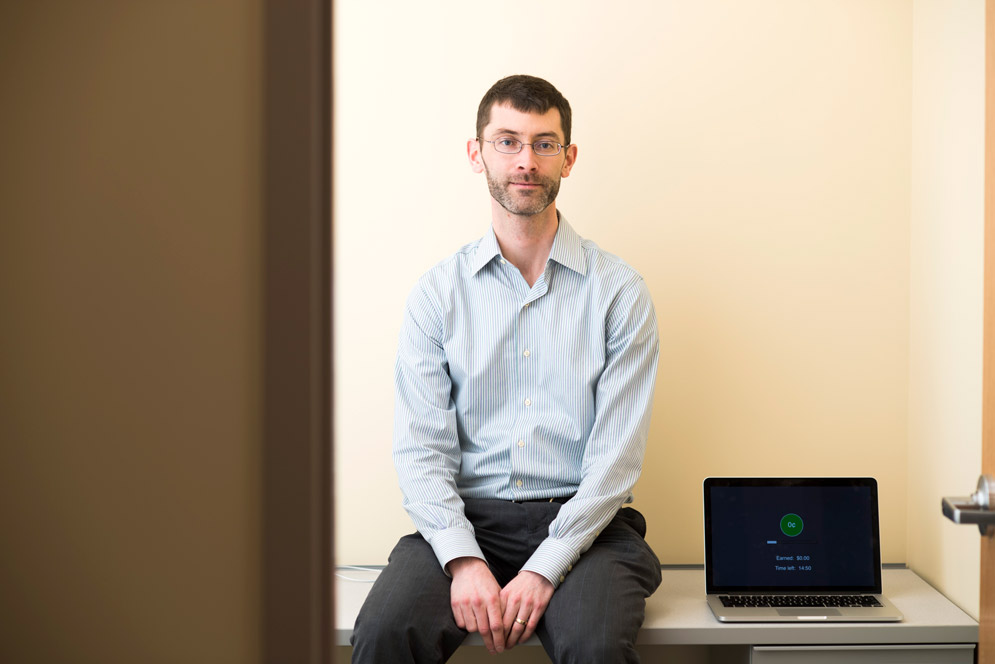 RESEARCH HIGHLIGHT
How Decisions Work
BU Professor Joe McGuire works to understand the cognitive processes behind our choices.
Decide to read on
IN CASE YOU MISSED IT...
Hyeouk Chris Hahm of the BU School of Social Work was interviewed by NBC Newsabout safe sex at the Winter Olympics... Ellen Hendriksen of the BU Center for Anxiety and Related Disorders spoke with The New York Times about trying to be less awkward... Kevin Gallagher of the BU Pardee School of Global Studies discussed China's role in Latin America with CNN Money... David Kaufman of the BU School of Medicine explained his study showing that too many people dangerously exceed the daily limit of ibuprofen to Reuters.
Science Steady, Student Aid Cut in President’s Budget
BU IN DC
Vice President and Associate Provost for Research Gloria Waters attended the University Research Associates Council of Presidents Annual Meeting and Policy Forum on February 15.
Juliet Moncaster of the School of Medicine advocated for medical research on Capitol Hill as part of The Association for Research in Vision and Ophthalmology's (ARVO) Advocacy Day on February 9.
SCIENCE STEADY, STUDENT AID CUT IN PRESIDENT'S BUDGET
On Monday, the White House released a budget request for fiscal year 2019 that emphasizes national security over domestic priorities such as research or student aid. Under the proposal, major science agencies would maintain their current funding levels, student aid would be cut significantly, and the National Endowments for the Humanities and the Arts would be eliminated. Congress rejected similar proposals from the Administration last year in favor of lawmakers' own priorities, and the same result is likely again this year. However, the President's request provides a window into the Administration's goals.
BUZZ BITS...
- The U.S. Senate failed to pass a measure on Thursday to allow young immigrants brought to the United States unlawfully as children to remain in the country once the Deferred Action for Childhood Arrivals (DACA) program expires. The fate of the "Dreamers" now remains in flux.
- Last week, the National Science Foundation (NSF) announced plans to modify the NSF award terms to require grantee organizations to tell the agency about findings of harassment by any personnel funded by a NSF grant.
- Andrei Iancu was confirmed as the under secretary of commerce for intellectual property and director of the United States Patent and Trademark Office earlier this month. He previously served as managing director of a law firm.
EVENT NEWS YOU CAN USE
BU Research will present a Research on Tap event entitled "Challenges and Opportunities for an Aging Society: New Directions in Medicine, Health Care, and Social Policy" on February 27. Organizer Jonathan Woodson of the Institute for Health System Innovation & Policy has invited more than a dozen faculty to give three-minute microtalks on their research. After the presentations, attendees will have the opportunity to network and meet potential research collaborators.
Six Quick Stats about Applicants to the Class of 2022
Record-breaking 64,470 applied, surge in those seeking early decision
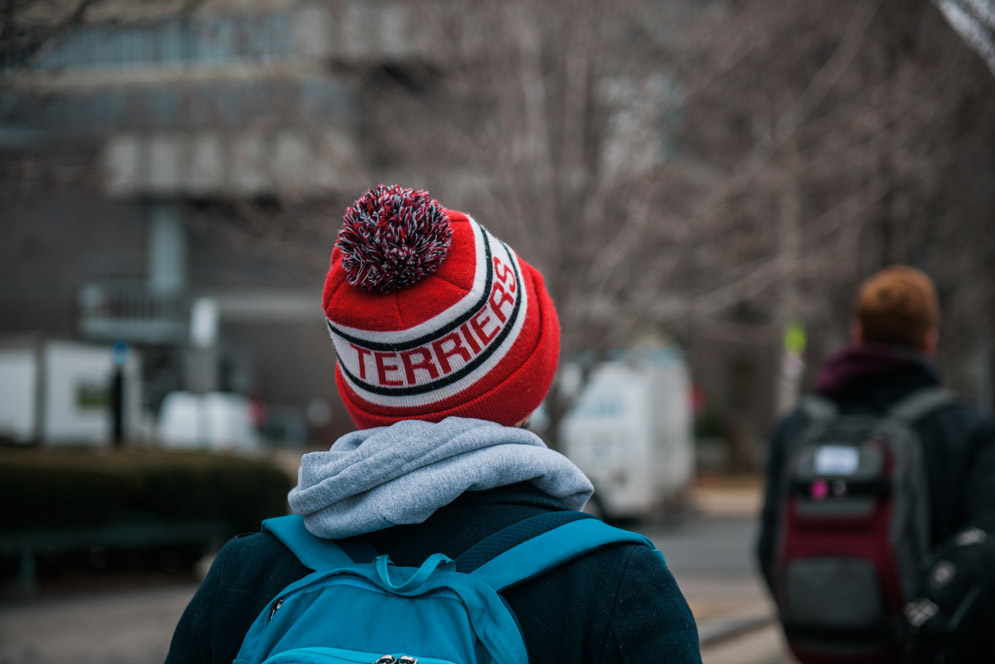
Half of the students who apply to BU have never set foot on campus. Current students can help them navigate, should they attend. Photo by Janice Checchio.
- A record-breaking 64,470 students applied to the BU Class of 2022
- Applicants’ average GPA is 3.66, average SAT score is 1350, and average ACT score is 30
- The School of Education, the College of Arts & Sciences, and the College of Fine Arts saw more applicants than in recent years
It’s only a matter of time until Harlem resident Pedro De Los Angeles goes viral. In a video posted on Twitter, the Democracy Prep Charter High School senior logs online to check the status of his early decision application to Boston University’s Class of 2022. After a few nerve-racking seconds, his body shoots out of the chair and his classmates scream. He made it.
De Los Angeles (CFA’22) was one of 4,492 students who applied this year for early decision (a nearly 8 percent increase over last year) and was among the record-breaking 64,470 students who applied by the January 2 deadline. That’s a 6 percent rise over last year’s record of 60,701 applicants.
Christine McGuire, vice president and associate provost for enrollment and student administration, describes the increase as huge. “It’s just all more positive signs of the quality of BU and how desirable we are,” she says. “We’ve become more competitive, more selective.”
Kelly Walter (SED’81), associate vice president for enrollment and dean of admissions, says the increase reflects “the quality of the academic experience, our growing reputation, and our improved rankings. These are the reasons why students want to be here.”
Admissions now faces the arduous task of sorting through the tens of thousands of applications to fill the 3,300 Class of 2022 slots, 100 fewer than last fall. Applicants will learn their fate by early April.
Some interesting aspects of this year’s application season:
1. BU attracts early birds
Applying for early decision gives a college application a bit of extra oomph, McGuire says, because it tells admissions officers that the school is a student’s first choice. It helps students, since they’re competing against fewer applicants, and if they are accepted, the stressful college waiting game is over. If students are accepted for early decision by a school, they are contractually obligated to attend and must withdraw their other college applications.
The National Association for College Admission Counseling reports that last year, colleges reported a 5 percent increase in early-decision applications nationwide, in line with BU’s 8 percent rise this year over last. In fact, Walter says, early decision applications have increased 161 percent over the last five years. BU has two rounds, which this year were November 1 and January 2.
2. Big gains at certain BU schools
This year, three BU schools saw an unusual rise in applications: the College of Arts & Sciences, with 34,796 applications, a 7.1 increase over last year; the School of Education, with 1,302 applications, a 15.4 percent increase over last year; and the College of Fine Arts, with 3,106 applications, a 19.6 percent increase over last year. McGuire and Walter attribute the SED and CFA gains to recent news stories about each school: the merger of SED and Wheelock College to create the Wheelock College of Education & Human Development (WCEHD), scheduled for this June, and the opening of the Joan & Edgar Booth Theatre and the College of Fine Arts Production Center this past December.

Infographic by Meaghan Glendon.
3. Applicants are racially diverse
More than 12,000 underrepresented minority students (African Americans, Hispanics, and Latinos) are 18 percent of the applicant pool (last year the combined groups were 17 percent of the applicant pool). Of this year’s applicants, 16 percent are Asian and 35 percent are white.
4. They come from around the world
International applications represent 20.6 of the hopeful pool, according to Walter, similar to last year’s group. “We are holding steady in international applications, which is good, because some schools are seeing significant dips in international applications because of the proposed changes to US immigration policy,” McGuire says.
5. Students are increasingly learning about BU online
As has been the case in recent years, social media continue to change the admissions game.
Walter says new social media initiatives, like Snapchat takeovers and encouraging early decision applicants to use the hashtag #BUEarlyBirds have been especially effective because they give students a platform to talk to admissions staff and current BU students.
“Our goal is to meet students where they are, and I mean ‘meet’ parenthetically—we don’t have to see students in person anymore,” Walter says. “It used to be that meeting students on campus and in person was the only way to connect with them. While this type of outreach remains important and is the bedrock of what we do, the reality is that social platforms are where we are connecting with students today. We ramp them up each and every year. It’s very effective.”
Walter says half of the students who apply to BU have never set foot on campus, but they can get a feel for the place through the Admissions virtual tour.
6. Applicants do well in school and on standardized tests
The average GPA of this year’s applicant pool is 3.66; last year’s was 3.62. The average SAT score is 1350 (out of a possible 1600), 21 points higher than last year. The average ACT score is 30 (of a possible 36), unchanged from last year.
Author, Amy Laskowski can be reached at amlaskow@bu.edu.
Kilachand Center’s New MRI Scanner Yields Outstanding Data
CNC team invites neuroscientists across both BU campuses to use machine
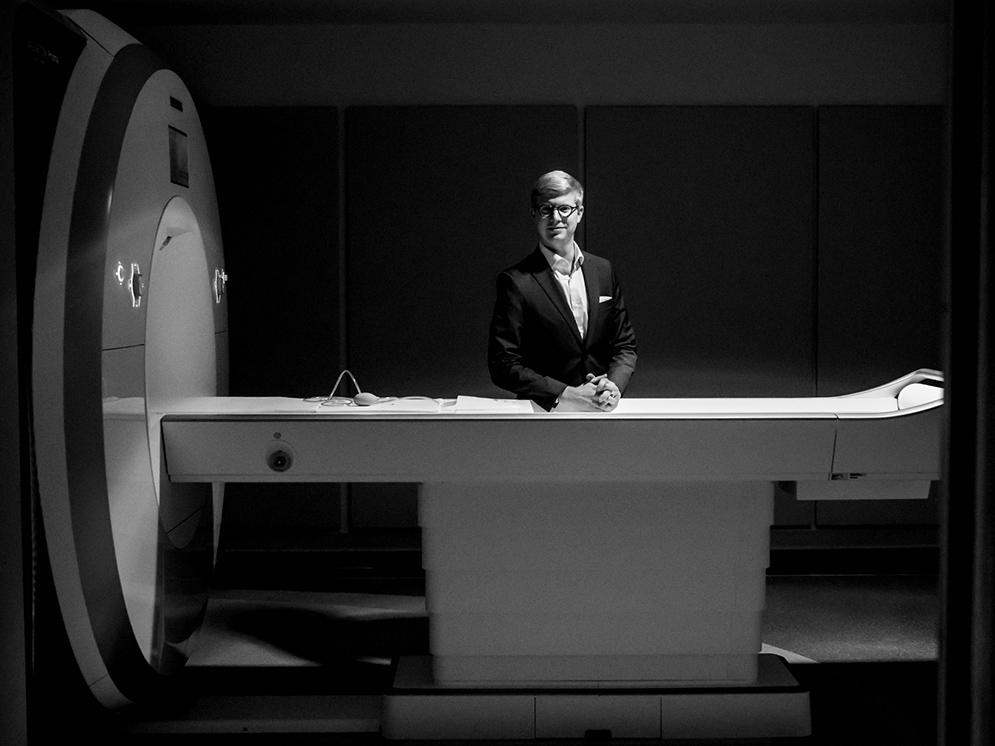 Neuroscientist Tyler Perrachione, who studies speech and language, is delighted with BU’s new Siemens Prisma 3 Tesla MRI scanner in the Cognitive Neuroimaging Center at the Rajen Kilachand Center for Integrated Life Sciences and Engineering. Photo by Mira Whiting Photography.
Neuroscientist Tyler Perrachione, who studies speech and language, is starting a new research project—decoding what the human brain is hearing when the person is listening to speech. The Sargent College of Health & Rehabilitation Sciences assistant professor of speech, language, and hearing sciences recently walked out of his office, crossed Commonwealth Avenue, and entered the Rajen Kilachand Center for Integrated Life Sciences & Engineering’s Cognitive Neuroimaging Center (CNC). There he spent two hours scanning a human subject’s brain for the study using BU’s new Siemens Prisma 3 Tesla MRI machine.
It was the first time Perrachione, director of the Communication Neuroscience Research Laboratory, didn’t have to wait for the bus or call an Uber to schlep across the river to MIT’s brain imaging center to do his scanning.
“Everything went swimmingly and the computers are churning away at the data,” says Perrachione, who was part of a small team of BU researchers who worked closely on the CNC with Payette, the Boston architectural firm that designed the Kilachand Center, at 610 Commonwealth Avenue.
Perrachione’s enthusiasm is being echoed by other BU researchers who have been using the CNC’s MRI scanner, on the center’s first floor, since October. “Everyone’s been thrilled with the quality of the data they’re getting,” says CNC associate director Jay Bohland. “In addition to the scanner itself, we’ve worked hard to put together the devices and tools necessary to support modern cognitive neuroscience, which depends on high-quality, precisely controlled stimulation and response recording.”

Images of the human brain showing which parts are activated when a person is listening to words, from the scan of a human subject’s brain that neuroscientist Tyler Perrachione ran recently using the 3 Tesla MRI machine at BU’s new Cognitive Neuroimaging Center. The subject was listening to lists of monosyllabic words such as “boot,” “toad,” “deck,” and “give.” Perrachione is collecting the data as part of his project to “decode” how the brain recognizes the same word spoken by different people. His question: “How do brains know that words are the same, even when every person’s speech has a unique sound?” Images courtesy of Perrachione.
The CNC is available to neuroscientists across the University, on both the Charles River Campus and the Medical Campus. “We’re excited to welcome researchers who have been using imaging facilities at other Boston sites and new users who are interested in expanding their research to include neuroimaging methods,” says CNC director Chantal Stern, a College of Arts & Sciences professor of psychological and brain sciences. Stern is the principal investigator of a $1.6 million National Science Foundation grant that supports the scanner.
Bohland says the CNC team will work with investigators at the new brain imaging suite so that they can “become comfortable with the equipment, center capabilities, and quality of data obtained before moving funded studies to the facility.”
Sam Ling, a CAS assistant professor of psychological and brain sciences, has been using the scanner to carry out research funded by the National Institutes of Health aimed at “understanding how our brains process what we see and the neural computations that allow us to alter that processing to cater to our moment-to-moment thoughts and desires,” Ling says.
“Our lab has totally embraced the scanner,” he says. “The quality of the data we’ve been acquiring is outstanding. We’re already starting to write up manuscripts based on some of the results.”
Perrachione explains why the CNC’s scanner is an amazing tool for his research. “First, it has a great signal-to-noise ratio, meaning that we can see the living, thinking brain in unprecedented detail,” he says. “Second, it has a new technology called simultaneous multislice imaging, which is a fancy way of saying we can take an fMRI picture really, really fast—up to four times faster than we used to. This means we can do scans that are quieter and get a lot more data in the same amount of time, which is really important when you’re studying speech and hearing. Getting a lot more data in each scan means we can better understand how individual brains are working, rather than having to get an average of a lot of brains. This will help us develop a more personalized and sensitive understanding of brain function and its relationship to behavior and health.
“But what’s really great is not just the scanner, but the whole research environment it’s the anchor for,” says Perrachione, whose research is funded by the NIH National Institute on Deafness and Other Communication Disorders and the Brain and Behavior Research Foundation. “The imaging center is a collaborative community to foster new discoveries and new science, not just the device that takes the pictures, exciting as that is.”
Author, Sara Rimer can be reached at srimer@bu.edu.
Budget Deal Approved
BU IN DC
College of Engineering Dean Kenneth Lutchen discussed engineering education with congressional offices as part of the American Society for Engineering Education's Public Policy Colloquium on February 6 and 7.
School of Public Health Dean Sandro Galea participated in a meeting of the National Academies Standing Committee on Medical and Public Health Research During Large-Scale Emergency Events, of which he is a member, on February 2.
Jay Orlander of the School of Medicine spoke at a Health Affairs briefing regarding the diffusion of innovation in health care on February 6.
BUDGET DEAL APPROVED
This morning, the President signed into law a bill to increase discretionary spending by $300 billion above the strict spending caps previously set by the Budget Control Act of 2011. Research and student aid advocates are optimistic the two-year budget agreement will make it easier for Congress to boost funding for these university priorities in fiscal years 2018 and 2019. With a budget agreement in hand, Congress will aim to finalize and pass the overdue spending bills that determine agency budgets by March 23. Federal agencies have been awaiting their budgets since the fiscal year began in October.
SENATORS OFFER DUELING HIGHER ED PRIORITIES
The senior Republican and Democrat on the Senate Health, Education, Labor and Pensions Committee offered contrasting visions for a planned renewal of the Higher Education Act, pointing to the challenges policymakers will face as they work to reauthorize the bill. Last week, Chairman Lamar Alexander (R-TN) asked for feedback on a white paper which contemplates changing how the federal government identifies which schools are eligible to participate in the federal student aid programs. Ranking Democrat Patty Murray (D-WA) offered Democrats' principles for the bill shortly thereafter. The Committee has held a series of hearings on higher education, and Chairman Alexander has stated his intent to introduce a bipartisan bill this spring.
EVENT NEWS YOU CAN USE
BU Research will host a "Research on Tap" gathering focused on Global Development Policy on February 12. BU scholars will give three-minute micro-talks on their research in financial stability, human well-being, and environmental sustainability. Kevin Gallagher of the BU Global Development Policy Center will serve as host, and faculty are encouraged to network with colleagues and find research collaborators.
House Bill Targets Federal Aid for Needy and Grad Students
BU, peers raise red flags about reauthorization of 1965 education act
BU and other universities fear seats for needy and graduate students will go unfilled under a House bill that would cut federal aid. Photo by Janice Checchio.
- US House bill whacks federal aid for poor and graduate students
- BU president writes University’s congressman about concerns
- Prospects uncertain; students should contact their US representatives
The poorest students, those in graduate studies, and some others would suffer under parts of a proposed higher education bill currently in the US House of Representatives, BU and other education institutions are telling the nation’s leaders.
The PROSPER Act (Promoting Real Opportunity, Success, and Prosperity through Education Reform) is the House reauthorization of the Higher Education Act, first passed in 1965. The current reauthorization would scrap federal supports that many University students depend on.
In a letter to US Rep. Michael Capuano (D-Mass.) (Hon.’09), whose district includes the University, Robert A. Brown, BU president, said the University believes a reauthorization of the Higher Education Act should prioritize college access, help students and parents make informed choices about college attendance, and promote affordability in higher education. “Unfortunately,” wrote Brown, “the PROSPER act includes several provisions which are harmful to our undergraduate and graduate students.”
Among the many education groups opposing the bill is the Association of American Universities (AAU), the consortium of research universities that BU has belonged to since 2012. Mary Sue Coleman, AAU president, expressed the association’s concerns, especially about the bill’s potential hits to loans for graduate education, in a December statement.
“At a time when our economy demands a highly skilled and educated workforce, these and other aid programs are more important than ever,” Coleman said in the statement.
Jennifer Grodsky, BU’s vice president for federal relations, says it’s important for students to make their views known to their legislators. “Members of Congress genuinely want to hear what students have to say,” says Grodsky. “People should tell policymakers what they like or dislike about any bill that impacts their access to higher education. It’s a cliché, but it’s true: every voice counts.
Grodsky discussed the bill with BU Today.

Photo by Jackie Ricciardi.
BU Today: What would the PROSPER Act do to financial aid programs BU students rely on?
Grodsky: The PROSPER Act would curtail federal student aid, undermining the historic goal of the Higher Education Act: to make college more accessible for all Americans. It would eliminate Supplemental Education Opportunity Grants (SEOG), which are designed to give the neediest students additional tuition support. To give you a sense of the impact that will be felt by Boston University’s students, you should know that more than 16 percent of BU’s entering freshmen received SEOG funds this academic year.
The bill would also make student loans more expensive. Right now, low-income students aren’t charged interest on their student loans while they’re in school. This “in-school subsidy” would disappear, making loans more expensive to repay.
Could you explain what the act would do to graduate study programs and how that would affect the BU student community?
Unfortunately, the bill is harmful to graduate students. The Grad PLUS program, which has more generous approval and repayment terms than private loans, would be eliminated, and federal lending for graduate study would be capped. This means that graduate students might have to rely more heavily on the private loan market, where there’s no guarantee that students would be able to find favorable loan terms or interest rates.
Right now, students can have their loans forgiven after 10 years of working in public service in fields such as public health, law, and social work. That option would disappear under the PROSPER Act, changing the financial implications for both BU graduate students and undergraduates who plan to serve the public after they complete their degree.
Also, graduate students would no longer be eligible for federal work study. So, yet another element of graduate student financial aid would disappear.

Photo by Janice Checchio.
Does the University support any provisions of the act?
We like that the bill eliminates student loan origination fees, which needlessly increase the cost of loans. Students will also benefit from a new Pell Grant [for poor students] bonus for those who choose to take 15 or more credits in a semester.
We also think students will appreciate the additional employment options that will be permitted in the Federal Work-Study program.
The Senate is working on a significantly different bill. Would BU support that legislation, and what might the final bill look like after both bodies reconcile their differences?
The chairman of the Senate Health, Education, Labor and Pensions Committee has indicated he would like to introduce a bipartisan bill this spring, but the Committee’s Republicans and Democrats have different points of view on key issues. Based on the hearings the committee has held, I think we’ll see a bill that simplifies the financial aid application process, streamlines regulations that haven’t proven to be helpful to students, and promotes campus safety. Those are goals Boston University shares.
There are still questions about how the Senate bill might address federal student aid. Some lawmakers want to consolidate the number of federal grant and loan programs, but we will be closely watching to ensure that consolidation doesn’t lead to a reduction in federal aid for students.
Despite the activity in the Congressional education committees, it’s far from certain that both chambers of Congress will be able to approve a final bill and send it to the president before the end of this year. Bills can take months to get through the Senate, which currently has a serious backlog of other pending bills. The November elections will also constrain the available time for debate.
Author, Rich Barlow can be reached at barlowr@bu.edu.