CDS Faculty Fellows
The Faculty Fellows Program in the Faculty of Computing & Data Sciences (CDS) is conceived to develop and nurture a strong community of exceptional faculty members who pursue novel computational and data-driven research with strong potential for long-term impact. To that end, the program endeavors to identify and support newly recruited faculty members in various disciplines at BU, and to provide them with opportunities for connecting with the faculty members and programs in CDS. Below is a list of our CDS Faculty Fellows.
Learn about the CDS Faculty Fellows Program
 Patrick Keys (2025)
Dr. Patrick Keys is an Assistant Professor in the Department of Earth & Environment at Boston University. His overarching aim is to explore how society will navigate climate and societal turbulence toward a sustainable and just future. Pat's research is highly interdisciplinary, focusing on a broad range of global challenges, including climate change futures, moisture recycling and society, and improving anticipation of Anthropocene change. To explore these topics, his research group uses climate data and models, societal simulations, and creative futures methods. Before joining Boston University, Pat served as an Assistant Professor in the Department of Atmospheric Science at Colorado State University. Previously, Pat founded an environmental consultancy that worked with local and international partners. In collaboration with different partners, he explored food security in the UAE, the link between drought and conflict in sub-Saharan Africa, and climate change adaptation and mitigation in Fort Collins.
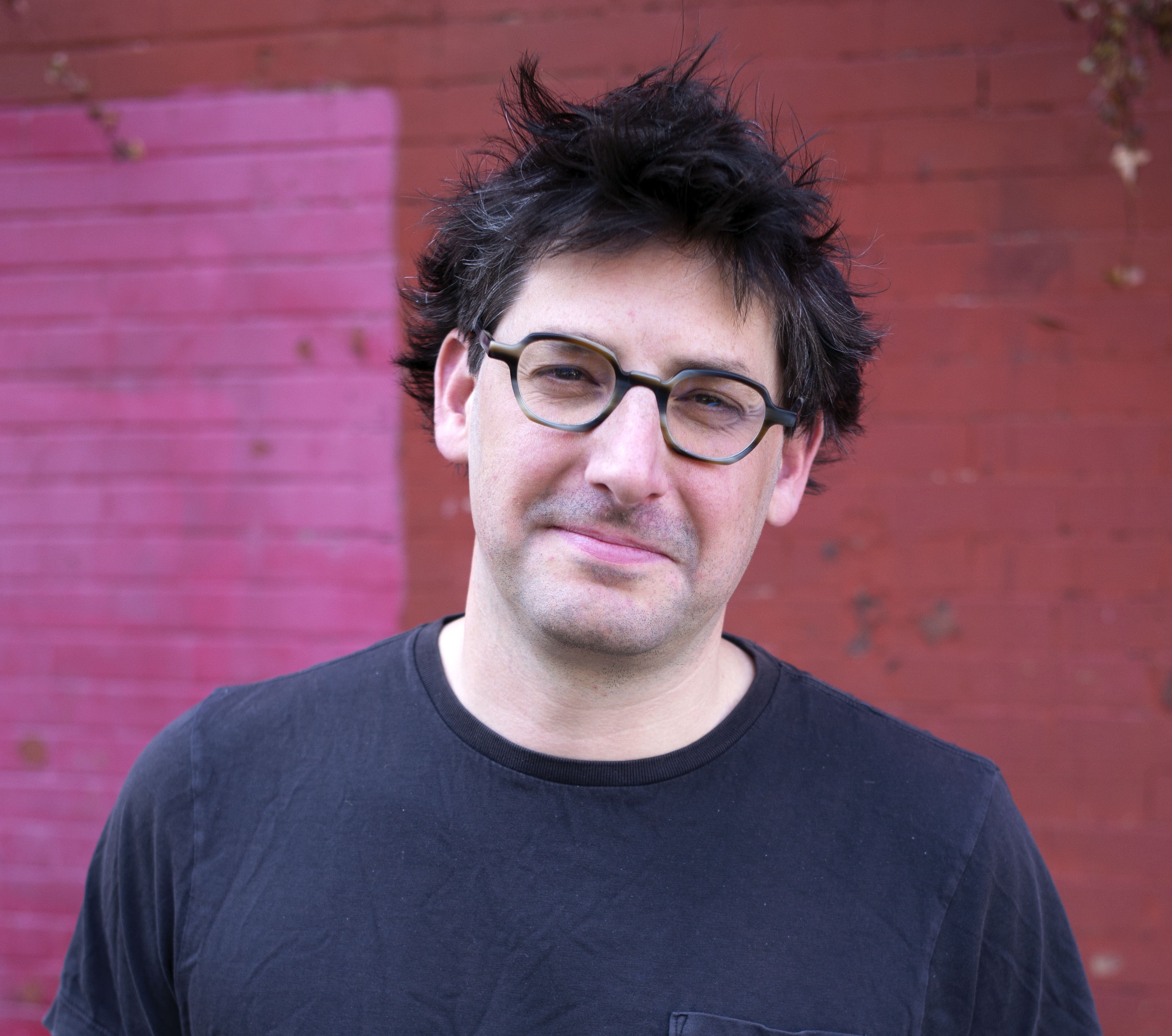 Brian DePasquale (2025)
Brian DePasquale is an Assistant Professor in the Department of Biomedical Engineering. He leads the Artificial and Biological Intelligence Lab and is an affiliate faculty member in the Center for Systems Neuroscience. He conducts quantitative neuroscience research at all scales, from cognitive neuroscience and circuit biophysics to protein biochemistry. He uses approaches from machine learning, dynamical systems, and probabilistic modeling to uncover neural algorithms underlying decision-making, movement, and sensory processing. During his doctoral training at Columbia University and postdoctoral work at the Princeton Neuroscience Institute, Brian pioneered methods for constructing biologically realistic network models, establishing a bridge between networks in the brain and AI systems. In collaboration with experimental neuroscientists, his lab designs machine learning approaches to uncover structure in large neural datasets and develops artificial neural networks to understand the neural dynamics underlying computation.
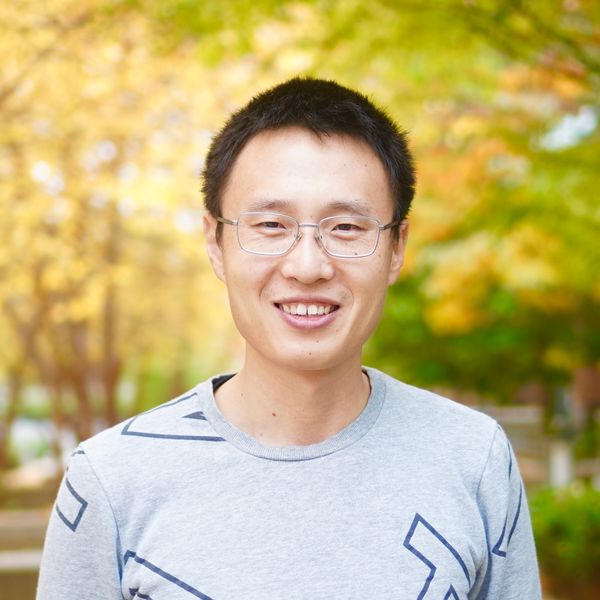 Boqing Gong (2025)
Boqing Gong is an Assistant Professor in Computer Science at Boston University, where his research in computer vision and machine learning focuses on generalization, efficiency, and the visual analytics of objects, scenes, human activities, and their relationships. Dr. Gong is also an affiliated faculty member of Systems Engineering. Dr. Gong is an associate editor for IEEE T-PAMI and has served as a program co-chair for WACV 2023, tutorial co-chair for CVPR 2022, and (senior) area chair for CVPR, ICCV, ECCV, NeurIPS, ICML, and ICLR.
 Michael Chang (2024)
Michael Chang is an Assistant Professor at Boston University Wheelock College of Education & Human Development, and an Assistant Director of Imaginative Computing & AI at the Earl Center for Learning & Innovation. Michael brings dual expertise in education and computer science to CDS. He completed my PhD at UC Berkeley EECS, where he focused on networking and distributed systems before doing a postdoc at the Berkeley School of Education. He brings this expertise together to envision AI-supported possibilities for teaching and learning that go outside the status quo instructional practices of schooling, which are often deeply inequitable. Across his design work, Michael centered the voices of students, their families, and their teachers.
 Dolores Acevedo-Garcia (2024)
Dr. Dolores Acevedo-Garcia is a professor of Human Behavior, Research, & Policy and director of the Institute for Equity in Child Opportunity & Healthy Development at Boston University School of Social Work. She received her BA in Public Administration from El Colegio de Mexico (Mexico City) and her MPA-URP and PhD in Public Policy with a concentration in Demography from the School of Public and International Affairs at Princeton University. Her research examines racial/ethnic inequality in social determinants of health across the United States from the national to the neighborhood level. For children, social determinants of health include residential segregation, neighborhood inequality, and poverty, as well as social policies (e.g. housing, anti-poverty, immigrant policies) that can mitigate or exacerbate inequities.