Puccini’s Last Opera Has Gone Without a True Ending. A BU Musicologist Gave It One.

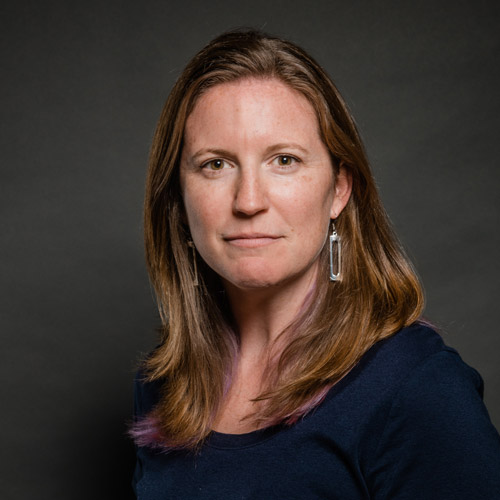
Deborah Burton, a Boston University associate professor of music, created an ending to Giacomo Puccini’s unfinished opera, Turandot, using the composer’s notes, most of which had not been studied before.
For a Century, Puccini’s Last Opera Has Gone Without a True Ending. A BU Musicologist Gave It One.
Using the Italian composer’s deathbed notes, Deborah Burton pieced together a finale to Turandot and premiered it in Italy
When Giacomo Puccini died on November 24, 1924, the world wept.
It was fitting for one of the most successful and influential Italian composers, whose operas had brought so many people to tears. But even as he left behind a legendary body of work, one opera remained unfinished.
As Puccini was undergoing treatment for throat cancer, he was writing his last opera, Turandot, but died before he could complete the final scene, a climactic love duet. Since then, it has become a white whale for composers, with several attempting to finish the maestro’s final masterpiece.
Now, 100 years after the opera first debuted, Deborah Burton, a Boston University College of Fine Arts associate professor of music, has given Turandot an ending closer to what Puccini originally envisioned, using the composer’s own deathbed notes, some of which had never been studied before. It had its world premiere in July, at the Teatro della Pergola, a historic opera house in Florence, Italy, that had played host to the composer’s work when he was in his prime.
“It was an incredible feeling of joy, and I now feel a little like Cinderella after the ball,” Burton says. “Did that really happen? It was like a dream.”
An Unprecedented Glimpse into Puccini’s Process
From La bohème and its tale of Parisian bohemians to Madama Butterfly, the heart-wrenching story of a geisha left behind by her American husband, Puccini transformed opera from mythological grandiosity to an emotional realism that reflected the lives of everyday people. Many of his works are still the most frequently performed in the modern canon.
An unfinished opera from such a great master of the form, perhaps unsurprisingly, remains an enticing prospect for both composers and audiences.
Set in China, Turandot tells the fairy tale-like love story of Prince Calaf and the titular cold-hearted princess. The opera ends in a duet between the two characters, as they finally express their love for one another. It’s a dramatic story rivalled only by the behind-the-scenes theatrics of the opera’s creation.
After Puccini’s death, his publisher, Casa Ricordi, gathered the composer’s notes and gave them to Franco Alfano, a young composer and friend of Puccini’s. Alfano had not studied under Puccini and was given only a few months to finish the opera before its debut.
Upon finishing his finale, Alfano presented it to Casa Ricordi and Arturo Toscanini, a legendary conductor and tastemaker in the opera world. Their reaction was far from glowing: He was told to cut out much of what he’d done and to make it sound more like Puccini. Alfano did as he was asked, resulting in some awkward transitions and moments, Burton notes.
“After the dress rehearsal, Alfano came up to Toscanini and said, ‘What did you think, maestro?’ and he said, ‘I think I see Puccini’s ghost about to give me a slap in the face,’” she says.

Although Toscanini refused to perform Alfano’s ending during the 1926 debut of Turandot, most modern performances of the opera include it.
Since then, several other composers have attempted to craft their own conclusions, but they all were only able to make educated guesses about the maestro’s vision. Burton chronicles these attempts in her new book, The Finales of Turandot: Puccini’s Last Act (Routledge, September 2026).
Burton worked with Dieter Schickling, a German musicologist, to track down and access Puccini’s original notes, some of which had been sold at auctions over the years. Burton was the first musicologist to study many of these compositional notes.
What they offered was an unprecedented glimpse into Puccini’s process and a deathbed how-to guide for how to finish Turandot, she says.
The composer had written the words to his final aria, indicated the tempo, and even explained that he wanted it all set to a modernized melody from Edgar, one of his earlier operas.
“I felt like I was more a conduit than the author,” Burton says. “I was just bringing this into reality.”
Burton admits she isn’t a composer, but decades of studying Puccini’s work served her well. In places where Puccini’s notes were incomplete, she drew from his other operas. For the climactic kiss, she looked to a similar moment in Puccini’s La fanciulla del West, imitating the compositional style while adapting it to Turandot’s more modern sound.

“I know how his mind worked,” she says. “I wouldn’t say this was easy, but it was within reason that I could do this, because I understood how he thought and I had the materials there.”
A Vision Brought to Life
With the world shut down during the COVID-19 pandemic, Burton devoted all of her time to realizing her ending to Turandot. During the summer of 2020, she pulled together an early version of the finale. Over the next few years, she worked with composer Jeff Atmajian to fully orchestrate it.
After an initial run through of the opera at BU, conducted by Martin Amlin, CFA’s Mildred P. Gilfillan Professor of Music and associate director of the BU Center for New Music, Burton began looking for an opera house for the premiere of her finished version of Turnadot. She received several offers from smaller American venues but held out hope of finding a stage that reflected the significance of this moment for Puccini’s legacy.
Her bet paid off.
With Mauro Pardini, an Italian art historian and Puccini scholar, she secured a premiere at Florence’s historic Teatro della Pergola, a venue that had hosted debuts of Puccini and other opera greats like Giuseppe Verdi. Burton’s completed Turandot debuted on July 18 to a packed crowd, which included the mayor of Florence.
As she watched Puccini’s vision come to life, Burton says she was speechless. She had heard this music countless times, yet on that stage, it took on a new weight. Burton even got her own moment in the spotlight. She appeared on Italian TV to talk about the performance, and in acknowledgement of her role in the production, she briefly spoke on stage before the show and gave a bow after her finale had played.
“As scholars, we work in our offices or dusty libraries, so to be on stage was new for me,” Burton says. “But mostly, I was thinking I don’t want to trip and fall in front of all these people.”