Skip to Main Content
Boston University
  • Bostonia
  • BU Today
  • The Brink
  • University Publications

    • Bostonia
    • BU Today
    • The Brink
  • School & College Publications

    • The Record
Other Publications
The Brink
  • Sections
Pioneering Research from Boston University

Photonic Forensics

How a laser beam and a little gold can identify body fluids at crime scenes
May 5, 2015
  • Lara Ehrich
Twitter Facebook
Chemistry professor Lawrence Ziegler is developing a machine that will identify body fluids at crime scenes precisely, on site, and in under an hour.

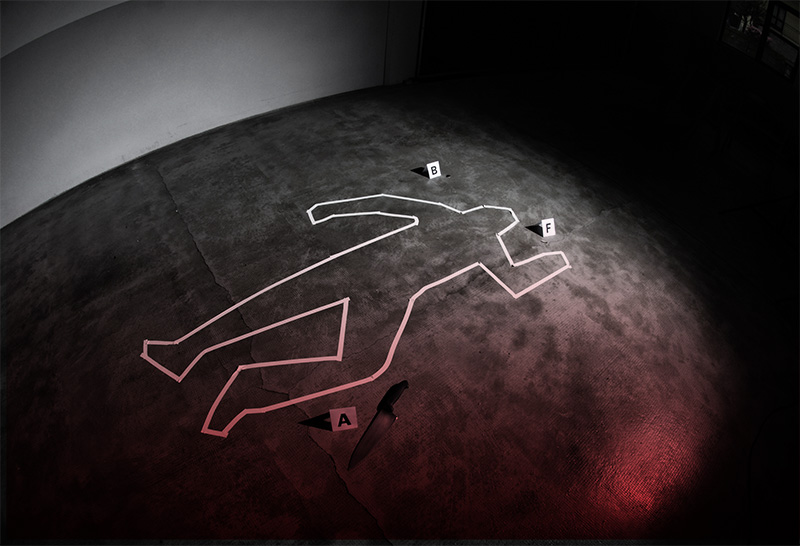
Fade in: A motel room, morning. The bed is made. The towels are folded. The room looks pristine, but caution tape hangs from the door. A forensic team sprays the scene with the chemical reagent Luminol, revealing a blue Pollock-like splatter invisible to the naked eye. The team documents the stain and collects a sample. By the time the forensic scientist back in the lab confirms the stain is blood, two men are crossing into Mexico with a body in the trunk.

It’s a scene from a typical crime show, but it won’t be long before investigators—both fictional and real-life—will be able to get results well before the bad guys reach the border. Lawrence Ziegler, a professor of chemistry at Boston University’s College of Arts & Sciences, is developing a machine that will identify body fluids at crime scenes precisely, on site, and in under an hour.

The instrument—a Portable Raman Microscope—is powered by what’s called surface enhanced Raman spectroscopy (SERS), a marriage of laser spectroscopy and nanotechnology. And it will be relatively easy to use. The forensic scientist will place a fluid sample in the machine, which will then compare the substance to those in a pre-programmed library. The sample is then identified as blood, saliva, semen, or one of many other fluids that could be present at a crime scene.

The critical component of the instrument is a glass chip painted with a metal—typically gold. The paint is nanostructured, or composed of coarse particles that generate enhanced optical fields. “That’s where the black magic is,” says Ziegler, who is developing the machine with the help of a two-year grant from the National Institute of Justice and BU’s Biomedical Forensic Sciences program.

To illustrate how the machine works, Ziegler places a drop of blood on the gold-covered chip and, in a process called “Raman scattering,” targets a laser at it. The laser interacts with the chip where the blood’s molecules touch the gold. Each type of molecule present in the blood scatters light from the surface of the chip at a different wavelength along a spectrum; the spectrometer separates these wavelengths to produce a frequency spectrum. Every type of body fluid generates a unique spectrum, or fingerprint.

The technique is so precise that it can differentiate human blood from that of other animals, as well as determine the age of some samples, suggesting the approximate time frame in which a crime occurred. It can also classify the components of a mixture of body fluids, such as picking up a trace of semen in vaginal fluid, a distinction that could improve forensic accuracy in rape cases.

Ziegler’s research in this area developed in the wake of the September 11 attacks, when the US Department of Defense awarded BU funding to create an instrument for detecting Bacillus anthracis, the bacterium that causes the disease anthrax. Ziegler has also received funding from the National Institutes of Health to apply SERS technology to diagnosing blood infections, enabling physicians to more quickly and accurately prescribe antibiotics. Other possible applications include rapid diagnostics for STDs and urinary tract infections, and the detection of cancer cells.

“My life prior to this experience was exclusively in chemical physics, and when my wife’s friends would ask me what I’m interested in, I’d try to convince them that the ‘first measurements of the fifth order susceptibility’ really is important,” Ziegler says with a laugh, as he recalls past difficulties describing the relevance of his research. Now, this additional line of research gives him a different kind of satisfaction. “It addresses long-standing problems and challenges in society that are broadly recognized and profound.”

Explore Related Topics:

  • Microbiology & Molecular Biology
  • Share this story

Share

Photonic Forensics

Share

  • Twitter
  • Facebook
  • Reddit
  • LinkedIn
  • Email
  • Lara Ehrich

    Lara Ehrich Profile

Latest from The Brink

  • Excess Deaths

    Why Does the US Have Higher Death Rates than Other Wealthy Nations?

  • Dental Health

    Heart Attack, Stroke, and Dementia Risk May Be Higher for Older People Who Can’t Afford Dental Care

  • Innovation

    Biomedical Engineer Wilson Wong Is Boston University’s Innovator of the Year

  • Online Polarization

    Studying How Online Images Feed Polarization Wins BU Scholar Prestigious Andrew Carnegie Fellowship

  • Opioids

    How the Legal Opium Market Shaped Global Trade—and Led to an Opioid Crisis

  • Languages

    Boston University Linguist Helps Preserve an Endangered Language in Papua New Guinea

  • Research News

    Brink Bites: Michael J. Fox Parkinson’s Foundation Grant to BU, Widowed Men Have Higher Depression Risk than Women

  • Brain Science

    Songbird Brains Can Generate New Neurons. Can We Help Human Brains Do the Same?

  • Retinal Disease

    Could a Retinal Prosthesis Restore Sight for People with Age-Related Macular Degeneration?

  • Hearing Loss

    What Is the Cocktail Party Problem—and Can New Boston University Research Solve It?

  • Clergy Burnout

    Finding Her Voice, in Song and Healing Research at Boston University

  • Television and Media

    TV Viewership Is Down. The Oscars Are YouTube-Bound. Is TV Dying?

  • Accolades

    Two Boston University Researchers Elected AAAS Fellows

  • Intellectual Disabilities

    Including People with Down Syndrome and Intellectual Disabilities in Research That Affects Them

  • Antibiotic Resistance

    WHO Joins Forces with BU Center on Forced Displacement to Help Vulnerable Populations at Risk of Antimicrobial Resistance

  • Public Health

    How Can We Improve Public Health in America?

  • Convergence

    BU Task Force on Convergence Outlines New Strategy to Boost the Impact of the University’s Research

  • Workplace Stress

    How to Deal with Rude Customers

  • Accolades

    Biologist Jeffrey Marlow Awarded National Academies’ New Voices Honor

  • COVID Vaccines

    Big Majority of Young Adults Are Pro-COVID Vaccine, Driven to Protect Themselves and Community, BU Study Finds

Section navigation

  • Sections
  • Notable
  • Videos
  • About Us
  • Topics
  • Archive
Subscribe to Newsletter

Explore Our Publications

Bostonia

Boston University’s Alumni Magazine

BU Today

News, Research, Community

The Brink

Pioneering Research from Boston University

  • Twitter
  • Facebook
  • YouTube
  • LinkedIn
  • Instagram
  • Weibo
  • Medium
© Boston University. All rights reserved. www.bu.edu
© 2026 Trustees of Boston UniversityPrivacy StatementAccessibility
Boston University
Notice of Non-Discrimination: Boston University prohibits discrimination and harassment on the basis of race, color, natural or protective hairstyle, religion, sex or gender, age, national origin, ethnicity, shared ancestry and ethnic characteristics, physical or mental disability, sexual orientation, gender identity and/or expression, genetic information, pregnancy or pregnancy-related condition, military service, marital, parental, veteran status, or any other legally protected status in any and all educational programs or activities operated by Boston University. Retaliation is also prohibited. Please refer questions or concerns about Title IX, discrimination based on any other status protected by law or BU policy, or retaliation to Boston University’s Executive Director of Equal Opportunity/Title IX Coordinator, at titleix@bu.edu or (617) 358-1796. Read Boston University’s full Notice of Nondiscrimination.
Search
Boston University Masterplate
loading Cancel
Post was not sent - check your email addresses!
Email check failed, please try again
Sorry, your blog cannot share posts by email.
Photonic Forensics
0
share this