Straub Group Receives NSF Award to Simulate Phase Changes
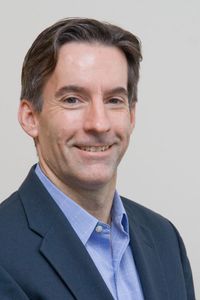
As theoretical chemists John Straub and his Research Group apply mathematical statements of basic physical laws to accurately simulate known phenomena, and then from this basis, make predictions about the unknown. The intellectual challenge they face is first choosing the appropriate mathematical description of a problem that embodies its basic physics, and then coming up with an elegant way to implement it in a calculation that will illuminate the phenomenon.
In June, 2011, the group was funded by the National Science Foundation (NSF) to determine the “Algorithms for the simulation of strong phase changes in complex molecular systems” (CH-1114676, $600K over 3 years). This continuing award from the Chemical Theory, Models and Computational Methods program in the NSF Chemistry division is to develop algorithms for the simulation of molecular systems undergoing strong phase transitions, including the characterization of metastable and unstable states.
The group has developed generalized simulated tempering and replica exchange algorithms which exhibit superior scaling and sampling efficiency for a series of benchmark systems. In this work, they are extending and generalizing these algorithms to simulate a variety of outstanding problems, including vapor-liquid phase change in simple fluids, freezing of nano-confined water, and the aggregation and assembly of peptides into functional channels. Phase changes, such as the melting of ice or evaporation of water, are ubiquitous in nature but are very difficult to simulate on a computer. This research enables scientists and engineers to model nature more realistically.
John Straub is also involved in science outreach activities in collaboration with the Pinhead Institute, a non-profit group devoted to K-12 science education and outreach to the economically and ethnically diverse population of Southwestern Colorado. This grant from the National Science Foundation will help support Pinhead’s Scholars in the Schools program, that bring scientists to the region for middle and high school visits, and the Pinhead Internship Program, through which talented students from the region are supported in carrying out summer research in laboratories across the US, including Boston University.