news
Embodied Absence: Chilean Art from the 1970s to Now

Embodied Absence: Chilean Art from the 1970s to Now
Carpenter Center for the Visual Arts, Harvard University, Cambridge, MA
October 27, 2016 – January 8, 2017
Embodied Absence: Chilean Art from the 1970s to Now, held at the Carpenter Center for the Visual Arts (CCVA) at Harvard University during the fall of 2016 and curated by Liz Munsell, introduced a multi-layered narrative on Chile’s neo-avant-garde scene (Escena de Avanzada). The exhibition portrayed art’s defiant role in Chile’s sociopolitical history following the military coup d’etat in 1973 which led to a fragmented historicity, cultural amnesia, and a fundamental cultural and political identity crisis that affected the evolution and circulation of avant-garde art practices. Chile’s Escena de Avanzada emerged during the Pinochet dictatorship (1973-90) and was formed by artists who subverted the regime’s rhetoric of power and censorship by exploring the relationships between art and politics. The exhibition included works from twelve artists whose contributions span multimedia practices including video, installation, photography, and performance, as well as documentation of ephemeral and dematerialized art actions. Embodied Absence presented gestures of resistance at a particular historical moment in which the Chilean social fabric had been torn apart by political repression and the destruction of democratic governance.
By the People: Designing a Better America

By the People: Designing a Better America
Cooper Hewitt, Smithsonian Design Museum
September 30, 2016 – February 27, 2017
By the People: Designing a Better America was the third installment of the Cooper Hewitt’s Socially Responsible Design exhibition series, succeeding Design for the Other 90% in 2007 and Design with the Other 90%: Cities in 2011. It included sixty small-scale, grassroots projects that address problems in some of the most economically fragile parts of the U.S. today: rust-belt cities, post-industrial rural landscapes, areas damaged by natural disasters, and border regions.
‘Keep Hands Off Them’: The Case of the Priapic Votives at the British Museum
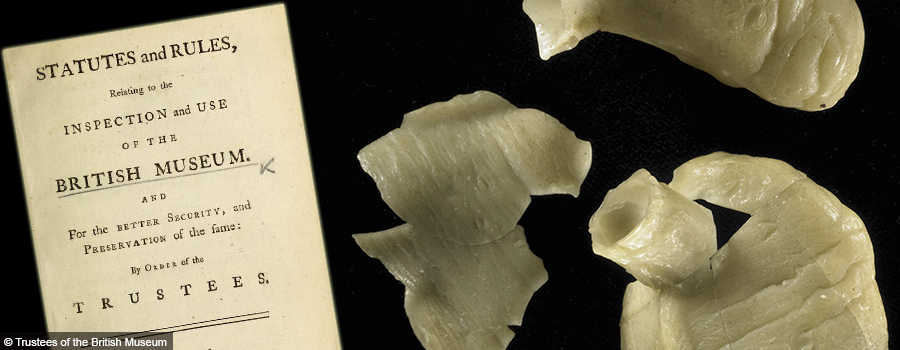
In 1784, the antiquarian Sir William Hamilton donated a group of phallic-shaped votive sculptures to the British Museum. These votives were used in cult rituals to the ancient fertility god Priapus, which Hamilton had researched in Southern Italy on behalf of the Society of Dilettanti. There were five votives in total, each hollow and modeled in wax. Hamilton’s bequest was accompanied by a note to the museum’s Keeper of Natural and Artificial Productions: “keep hands off them.”[1] The note was tongue-in-cheek, but apparently he had reason to be concerned. Today the votives lie in pieces in storage, broken at an unspecified time in the museum’s history (fig. 1).
Maurizio Cattelan: Not Afraid Of Love
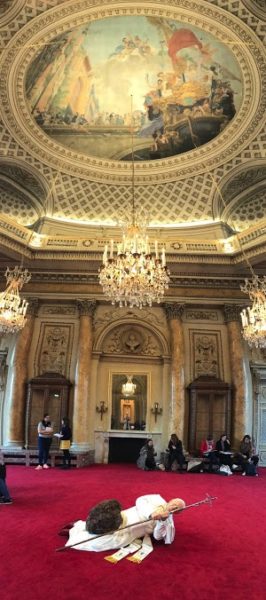
Maurizio Cattelan: Not Afraid of Love
Monnaie de Paris, Paris, France
October 21, 2016 – January 8, 2017
Returning to the art scene five years after his self-imposed retirement, Italian artist Maurizio Cattelan (b.1960) is apparently Not Afraid of Love, as the title of his recent exhibition at la Monnaie de Paris proposed. Housed in the historic mint on the Left Bank of the Seine, which has produced French coinage since the eighteenth century, Not Afraid of Love was the first exhibition of Cattelan’s work since his groundbreaking 2011 retrospective at the Guggenheim Museum in New York (after which the artist cheekily announced his departure from the art world). For Cattelan, an artist who has always maintained tight control over exhibitions of his work, the choice to return to exhibition making, at an institution typically associated with money, not art (although the two are inextricably linked), demonstrates a new direction for the artist in his post-retirement career.[1] Organized by Chiara Parisi, the Director of Cultural Programs for la Monnaie, in close collaboration with the artist, the exhibition presented Cattelan’s irreverent, provocative sculptures within the institution’s elaborate neoclassical architecture. This arrangement created a compelling intersection between an artist known for extending the legacy of institutional critique and an institution that is looking to expand its purview outside the realm of monetary production into exhibitions of contemporary art.[2] Although Cattelan produced no new works for the exhibition, la Monnaie’s exhibition spaces provided an ornate, theatrical stage for new readings and associations to emerge around Cattelan’s best-known sculptures, all created between 1997 and 2010.
Notes about Contributors
Chelsea Baumgartner is a second year PhD student at the University of British Columbia, Canada, where she studies gender and sexuality in Islamic Art and lives with her spouse, Marlene Evangeline Imana Iyemura.
Sasha Goldman is a doctoral candidate in the History of Art & Architecture Department at Boston University where she studies Modern and Contemporary Art and Exhibition Culture in Italy. Her dissertation focuses on Italian artist Maurizio Cattelan and his relationship to humor, performativity, publications and temporary exhibitions.
Kelsey Gustin is the Raymond and Margaret Horowitz Fellow in American Art at Boston University. Her dissertation, “Victorian Values and Social Reform Realism: The Visual Culture of the Progressive Era in New York City, 1890-1920,” examines representations of “the other half” as constructed images that reveal middle-class anxieties about the atrophy of Victorian values in a twentieth-century urban, industrial America.
Lydia Harrington is a PhD Candidate in the History of Art & Architecture program at Boston University. She specializes in Islamic art and architecture history and is starting a dissertation project on institutional architecture in the Arab provinces of the Ottoman Empire in the nineteenth century.
Rachel Hofer is a doctoral student at Boston University where she studies seventeenth-century Dutch art. Her research focuses on globalism in the early modern world with emphasis on the influence of trade networks and cross-cultural interaction on art production.
Defne Kırmızı is a PhD student at Boston University in the History of Art & Architecture Department. Her research focuses on the contemporary art scene in Turkey and the dialogue between current art practices and urban politics.
Nicholas Pacula received a Bachelor of Architecture degree from the Cooper Union in 2015. He is currently working on his SMArchS Architectural Design thesis at MIT. It investigates Etienne-Louis Boullée’s unbuilt redesign of the French National Library, 1785.
Ariana Panbechi is a second-year MA student in Art History at The George Washington University. Her research focuses on Islamic manuscript illustration and portrait painting, with an emphasis on the arts of the Persianate world. She recently completed her MA qualifying paper on aristocratic portraiture of early Qajar Iran.
William Schwaller is a PhD student in Art History at Temple University studying postwar art of the Americas with a focus on transnational artistic networks, discourses of systems aesthetics, and artistic engagements with cybernetics and ecology. His dissertation focuses on the Buenos Aires institution and artist group, the Centro de Arte y Comunicación.
Roxanne Smith is a second year MA student in Art History at Columbia University. She studies American and British visual culture in the nineteenth century.
A New Database of Muslim Women’s Patronage: Proof of Concept
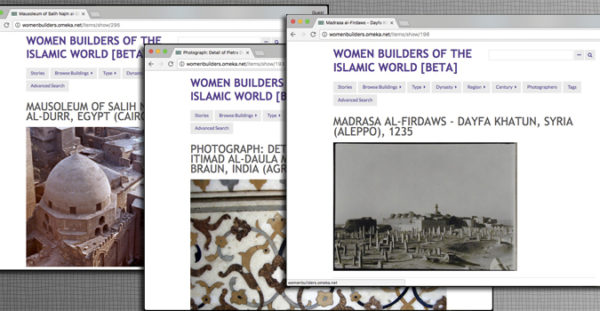
Women have always been active in the Islamic cultural sphere as patrons of architecture. In the fall of 2016, I began collecting records of Muslim women’s patronage in the Islamic world to document their longstanding involvement.[1] The database covers a broad range of buildings: religious, secular, civic, residential, or some combination of all four. This breadth of architectural types balanced my narrow geographical focus on structures in Egypt, Syria, greater Iran, Turkey, and Mughal India. Issues of infrastructural preservation led me to include non-extant buildings in the database. Throughout the development of this database, I grappled with the relationship of women’s patronage to their visibility.
Editors’ Introduction
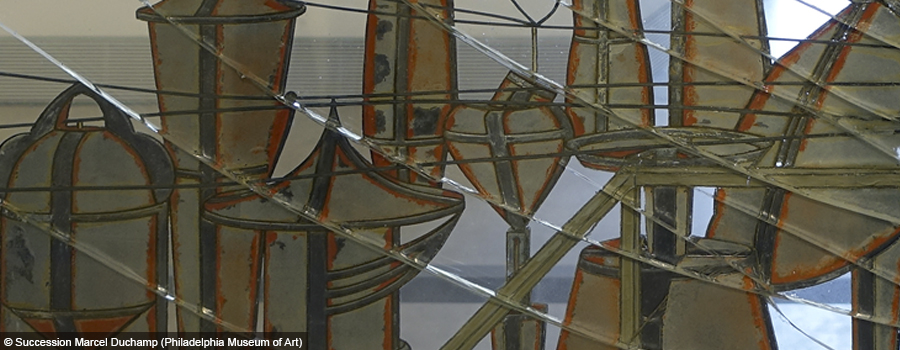
This issue of SEQUITUR explores a theme that is often omitted from discussion: the “oops!” moments in the history of art and architecture. Although history tends to ignore “oops!” instances in favor of successful outcomes, our contributors to this issue discuss error, failure, methodological quandaries, unrealized projects, and unexpected creative reuse. These themes illuminate the challenges that art and architectural historians face when seeking to bring clarity and reason to complex historical questions that are anything but clear-cut.
Roxanne Smith’s feature essay, “‘Keep Hands Off Them’: The Case of the Priapic Votives at the British Museum,” chronicles the history of five phallic votives at the British Museum, from their late-eighteenth-century bequest to their current broken state. Smith historicizes the likely mishandling of the objects against Enlightenment classification practices, noting how the museum’s failure to sufficiently record them may have stemmed from their censorship as obscene objects, along with the administrative troubles that plagued the nascent museum.
Kelsey Gustin, co-coordinator (with Tessa Hite) of the 33rd Annual Boston University Graduate Student Symposium in the History of Art & Architecture, reflects on this year’s conference, which was held on March 24-25, 2017 at the Boston University Art Gallery and the Museum of Fine Arts, Boston. Titled “Trashed: Rejection and Recovery in the History of Art and Architecture,” the symposium inspired our issue’s theme. Keynote speaker Dr. Joanna Grabski, Professor and Chair of Art History and Visual Culture at Denison University, spoke about the techniques of contemporary Senegalese artists who rely on the creative reappropriation of products in Dakar’s Colobane Market. Graduate student papers addressed myriad topics relating to the repercussions of rejection and the possibilities of repurposing materials, ideas, and motifs throughout art and architectural history.
Two research spotlights highlight some of the methodological challenges that accompany the formation of architectural history. Chelsea Baumgartner discusses the difficulty of creating an online database that catalogues and connects buildings funded by women in the Islamic world. Meanwhile, Nicholas Pacula creatively reconstructs Adolf Loos’s unrealized House for Josephine Baker, using an examination of real estate holdings and architectural drawings to imagine where the architect might have built the dwelling within the city of Paris.
Continuing our expanded reviews section, this issue also includes six exhibition reviews covering a vast array of topics. Our contributors discuss New York exhibitions ranging from seventeenth-century Dutch prints at the Metropolitan Museum of Art to a retrospective of the moving image at the Whitney Museum to design solutions for socioeconomic and environmental problems at the Cooper Hewitt, Smithsonian Design Museum. Exquisite examples of the Qur’an, on loan from Istanbul’s Museum of Turkish and Islamic Arts, are given the spotlight at the Freer and Sackler Galleries in Washington, D.C. In Cambridge, MA, we find moving examples of Chilean avant-garde art arising from the political turmoil of the 1970s. Finally, in Paris’s old Mint, a solo show featuring the provocative work of contemporary Italian artist Maurizio Cattelan rounds out our exhibition review section.
We would like to offer a special thanks to our outgoing senior editors Jordan Karney Chaim, Sasha Goldman, and Erin McKellar. Their tireless work ethic and sharp minds have been essential to SEQUITUR’s continued growth as an experimental online graduate student journal. We hope to continue their legacy of rigorous standards, collegial collaboration, and effective leadership in the next issue of SEQUITUR.
Lydia Harrington and Joseph Saravo
Dreamlands: Immersive Cinema and Art, 1905–2016

Dreamlands: Immersive Cinema and Art, 1905–2016
Whitney Museum of American Art, New York
October 28, 2016 – February 5, 2017
In the ambitious and stimulating exhibition, Dreamlands: Immersive Cinema and Art, 1905 – 2016, the Whitney Museum of American Art continued to flex its curatorial muscles thanks to its adaptive and technologically proficient galleries designed by Renzo Piano. Surveying artistic experimentation with moving images since the invention of film technology at the dawn of the twentieth century, with forty works and installations by thirty-eight artists (not including the extensive list of theater screenings and expanded cinematic events off-site), curator Chrissie Iles installed a remarkable breadth and variety of works throughout the museum’s record-sized fifth-floor gallery.
Interview: Martine Gutierrez and Jordan Karney Chaim
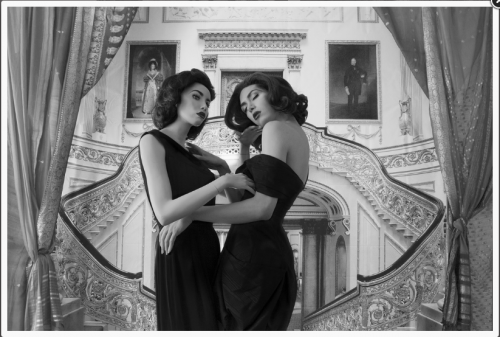
Martine Gutierrez (b. 1989) is a Brooklyn-based performance artist who documents her personal transformation through film and photography. Borrowing from various pop culture idioms, she produces elaborate narrative scenes in which she stars. Smart, seductive, and sincere, Gutierrez’s imagery heightens awareness of our own expressions and perceptions of identity—particularly gender identity—by elucidating how each is informed by the visual tropes we are exposed to as we move through the world. Her work is invested in the construction of identity, self-fashioning, and refashioning—matters central to this issue’s theme, Self + Portrait. Martine Gutierrez: True Story is an exhibition I curated at the Boston University Art Gallery’s Stone Gallery. On October 13, 2016 Martine and I had a public conversation in the gallery to discuss her work and process. That conversation is included below.
Martine Gutierrez & Jordan Karney Chaim
This Is a Portrait If I Say So: Identity in American Art, 1912 to Today
This Is a Portrait If I Say So: Identity in American Art, 1912 to Today
Bowdoin College Museum of Art, Brunswick, Maine
June 25, 2016 – October 23, 2016
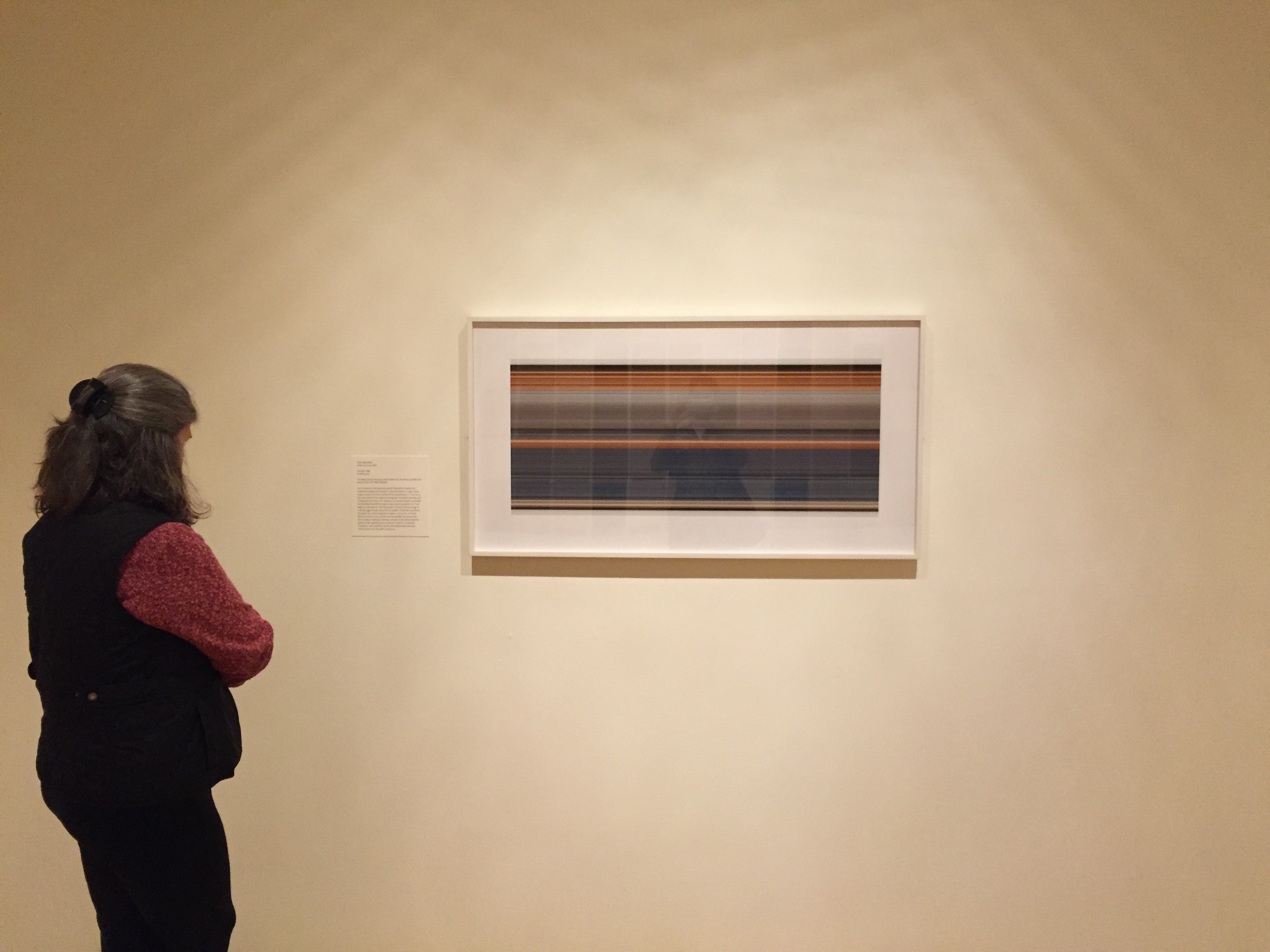
No faces appeared on the wall of the Bowdoin College Museum of Art’s landmark exhibition, This Is a Portrait If I Say So: Identity in American Art, 1912 to Today. A pioneering exploration of symbolic portraiture in America over the last hundred years, this thoughtfully organized installation re-conceptualized notions of facial likeness with works by preeminent American artists such as Alfred Stieglitz, Jasper Johns, Marcel Duchamp, Glenn Ligon, Roni Horn, Felix Gonzalez-Torres, Jim Dine, and Yoko Ono. Through a chronological arrangement that accentuated art historical moments such as the 1913 Armory Show or 1960s minimalism, This Is a Portrait If I Say So historicized a specifically American method of abstract portraiture.