

93%
Of graduates seeking employment accepted an offer in 6 months (Class of 2026)
$93,957
Mean base salary for graduates accepting full-time roles (Class of 2026)
19
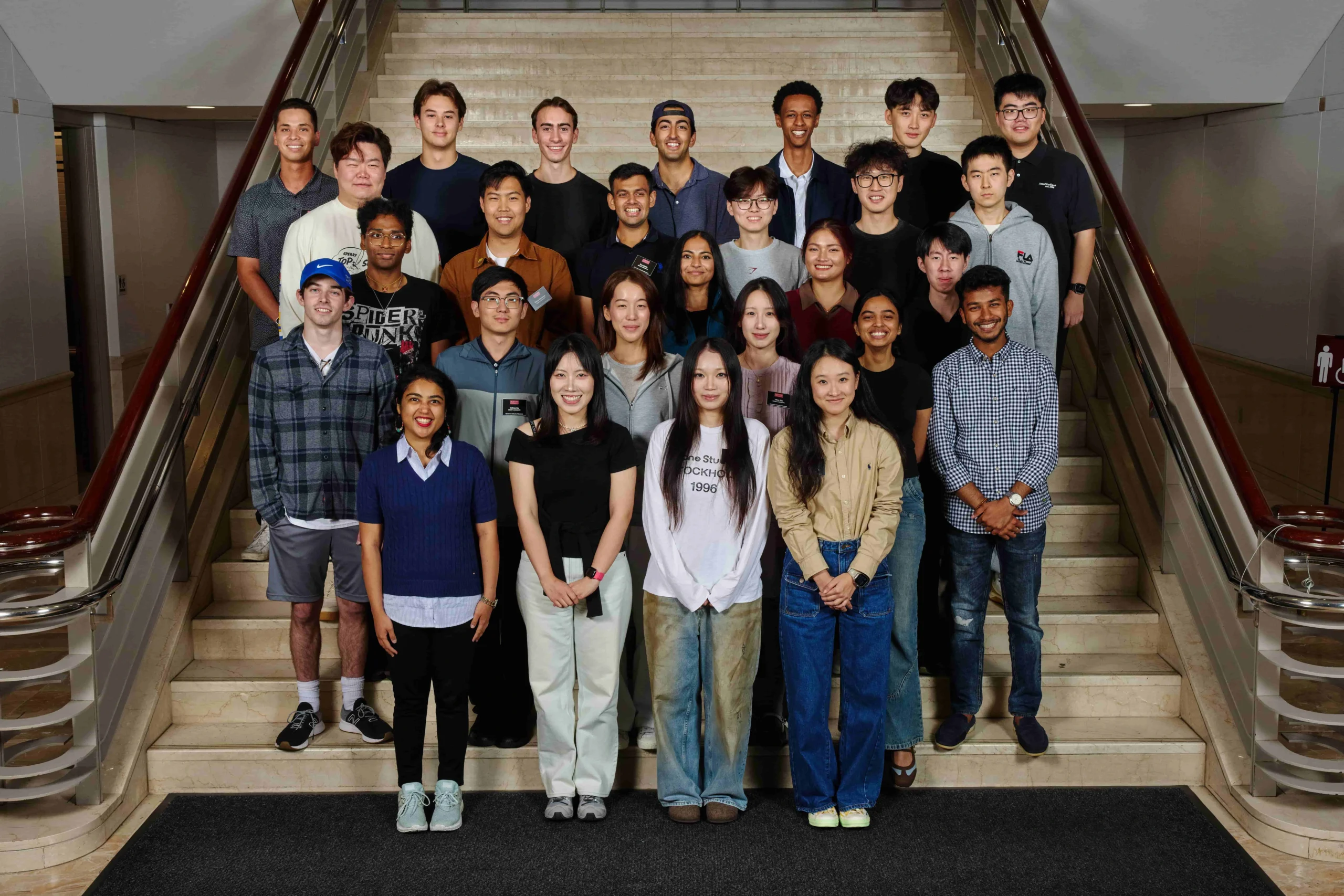
Countries represented in the program (Class of 2027 & 2028)
16 mo.
Pathway to your career
Why MS in Mathematical Finance & Financial Technology at Questrom
From bootcamp
to the trading floor.
The field of financial engineering is expanding and evolving rapidly as financial engineers add quantitative modeling and big data analysis to traditional fundamental financial analysis and as FinTech continues to grow.
The MS in Mathematical Finance & Financial Technology adds analytical versatility, teaming, and data wrangling to mathematical rigor and financial modeling, preparing versatile problem solvers who can turn sophisticated analysis into real-world impact.

“What I value most about the MSMFT program is how it connects rigorous mathematical training with real financial decision-making. Whether in FinTech, portfolio management, or risk, the program equips you to translate complex models into practical, impactful solutions.”
Integrated Skill Set for Modern Markets
Employers don’t hire in silos — and we don’t teach in them. Quantitative finance, financial technology, and AI & machine learning form an integrated, practical curriculum.
master the foundations
Quantitative Foundations
Derivatives pricing, fixed income, financial econometrics, and portfolio optimization — taught at the depth required for quantitative roles, not survey-level overviews.
Derivatives Pricing
Fixed Income
Portfolio Optimization
Econometrics
Technology
Technology & Applied AI
Build and deploy ML models, not just interpret them. Finance and technology are treated as a single discipline throughout.
Machine Learning
Algorithmic Trading
FinTech & Innovation
Python
C++
Experiential
Hands-On Learning
Real experience built into the degree — not arranged around it. From live trading simulations to a summer internship to research opportunities.
Summer Internship
Rotman Simulation
Industry Practicum
Career Management
Where MSMFT graduates work
Select employers
Goldman Sachs
JPMorgan Chase
Bloomberg
BlackRock
Morgan Stanley
State Street
Fidelity
Bank of America
Is MSMFT Right for You?
For quantitative thinkers ready to move closer to the market.
The MSMFT program attracts recent graduates and early-career professionals who are advanced in math, statistics, or engineering and want to take the next step toward quantitative finance and fintech roles.
You’ll thrive here if you’re a …
Your career strategy starts before your first class.
You’re matched with dedicated career counselors the summer before arrival. Together you set goals, review your resume, and begin building the strategy you’ll execute all year — so semester one is about momentum, not orientation.
What this stage builds
Your academics experience starts with a career strategy already taking shape.
Career coaching
Goal setting
Resume review
Where math, code, and markets start working together.
You build quantitative depth fast — derivatives, computational methods, econometrics — while writing code that actually runs against real financial data. The workload is demanding by design. The students who thrive here are the ones employers want to hire.
The pace is real.
This isn’t a program that eases you in. The intensity is deliberate — and it’s a major reason placement rates are as high as they are.
Financial modeling
Python and C++
Derivatives
Econometrics
Focus on FinTech and AI.
Coursework moves from foundations to application. You work through computational methods for pricing and simulation, program the tools fintech firms actually run on, and train machine learning models on financial data — then put that work directly to use in algorithmic and high-frequency trading, portfolio construction, and financial econometrics.
What this stage builds
Machine learning
Algorithmic trading
Portfolio construction
Financial econometrics
You build experience outside the classroom — not just inside it.
Throughout the program, you’ll find opportunities to apply what you’re learning in settings that go well beyond coursework — case competitions, research projects, hackathons, product pitches, and innovation challenges.
This is how instincts develop.
The classroom gives you frameworks. Competitions, research, and real-world projects give you the judgment and confidence that separate strong candidates from technically competent ones.
Case competitions
Research projects
Hackathons
Product pitches
A real role in a city that competes globally.
Summer: A real role in a city that competes globally.
The summer between years is built into the program for professional experience. Most students pursue internships at firms in their target area — quant research, risk, asset management, or fintech. Students without internships take on employer-sponsored industry projects, applying their skills to real financial challenges.
Boston as a career market.
The second-largest asset management hub in the U.S. is where you build your career — not a commute away. The Questrom alumni network is embedded in the local industry, and many students return from summer with full-time offers in hand.
Internships
Industry projects
Boston and beyond
Specialize your skills.
Final semester: Specialize your skills.
Your final semester is largely yours to shape. Electives let you go deep in a chosen direction — risk management, portfolio theory, derivatives, or the deep learning side of the field — so what you graduate with reflects the specific roles you’re interviewing for rather than a general finance degree.
What this stage builds
Risk management
Portfolio theory
Derivatives
Deep learning
You leave ready: with a network, a plan, and an offer.
Your career team supports you through offer negotiation and salary discussions. You graduate not just with a degree, but with professional standing and earning potential that make the investment pay back fast.
ROI is part of the design.
This program is built to pay back — not just look good on a wall. The return shows up in your first offer, and compounds from there.
Business Challenges
From Questrom
to Toronto.
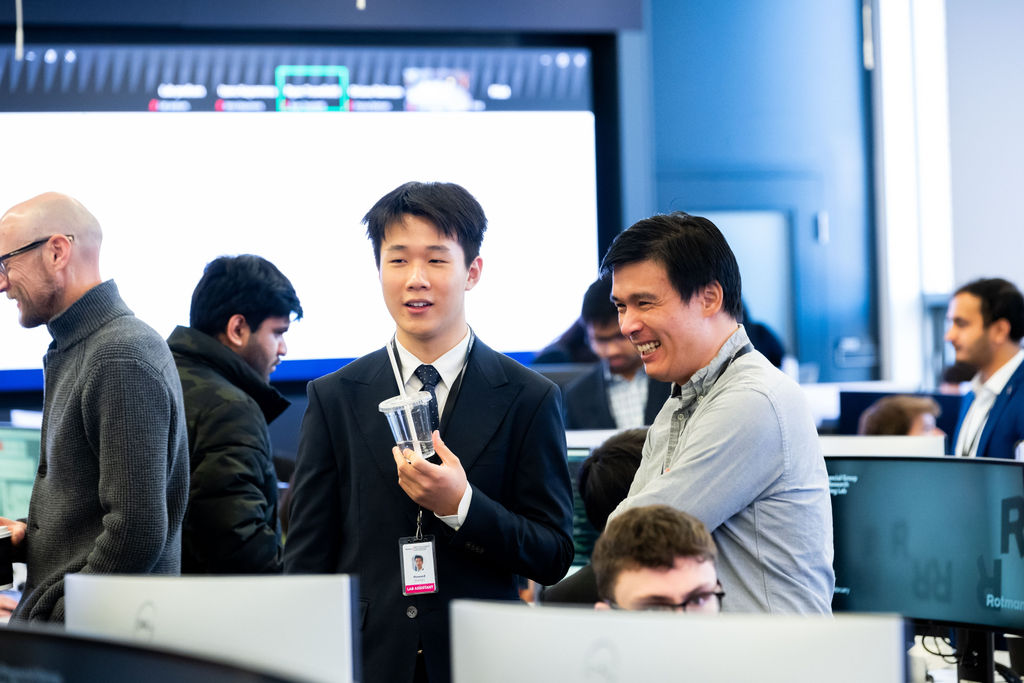
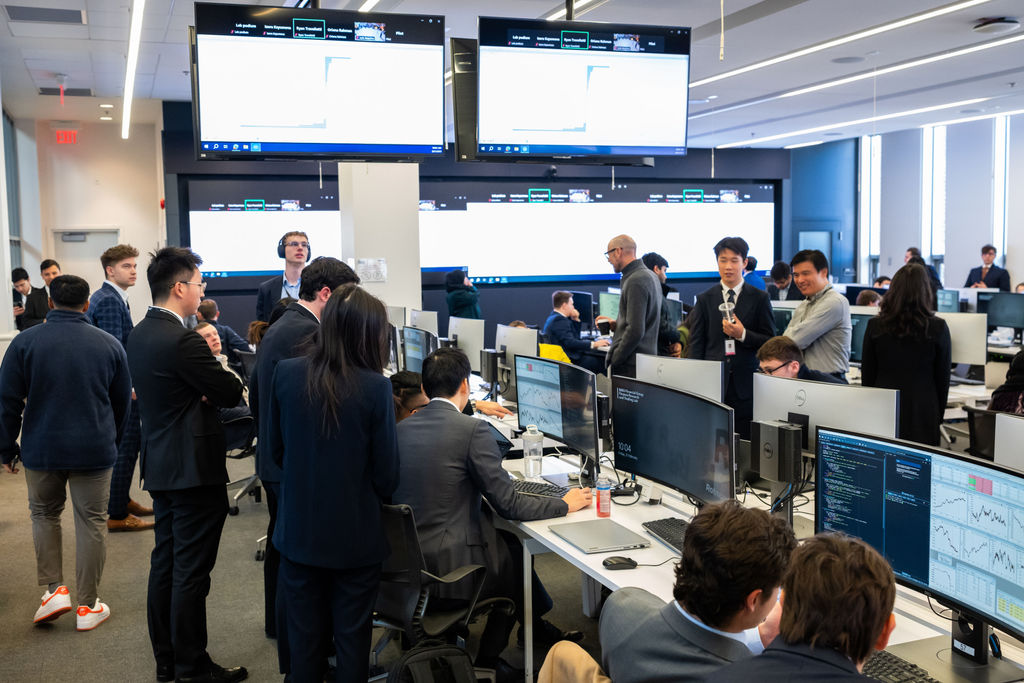
A team of six MSMFT students earns a spot at the Rotman International Trading Competition in Toronto — going head-to-head with 40+ universities worldwide in real-time market simulations.

AI & Machine Learning in Quantitative Finance
AI is part of the discipline, not a side topic.
Build and deploy ML models, not just interpret them. Finance and technology are treated as a single discipline throughout.
The MSMFT curriculum connects machine learning and computational methods directly to the financial applications where they matter — from pricing and simulation to trading, portfolio construction, and financial econometrics.
Machine Learning
Train models on financial data and develop the fluency to evaluate how they perform in real analytical settings.
FinTech & Innovation
Understand how financial technology reshapes products, infrastructure, analytics, and the roles quantitative professionals play.
Algorithmic Trading
Connect quantitative methods, computation, and market behavior in algorithmic and high-frequency trading contexts.
Python & C++
Develop technical fluency with programming tools used to move quantitative ideas from models toward implementation.
Built for the curious.

Philip Sun
Lecturer, Finance
“Generative AI won’t replace stochastic calculus or risk fundamentals — but it will radically accelerate how we explore model space and uncover relationships humans would never test on their own.”
MSMFT Career Outcomes & career Support
Where graduates
actually land.
MSMFT graduates are hired into quantitative roles — analyst, research, risk, and trading seats at asset managers, banks, and fintech firms.
39%
Quantitative & Research Analyst
22%
Data Science & Analytics
17%
Trading & Portfolio
11%
Risk
11%
Financial Technology & Other
Top Hiring Cities:
Boston
New York
Chicago
Shanghai
Your Dedicated Career Team
A career coach dedicated to MS in Mathematical Finance and Financial Technology starts working with you the summer before you arrive and stays with you for six months after you graduate. Career management is built into the degree, not bolted on.
Dedicated MS in Mathematical Finance & Financial Technology career advisor
Work with a career advisor dedicated specifically to the MS in Mathematical Finance & Financial Technology student experience.
Summer online career course before you arrive
Begin structured career preparation online during the summer before the program starts.
Weekly calendar of finance-industry events
Tap into an ongoing calendar of events focused on finance careers, employers, and industry connections.
Nine Feld Center industry advisors
Connect with the Feld Center’s network of nine industry advisors for additional career guidance and perspective.
An Unsurpassed Financial Network
36K+
BU Connects, an online network of 36,000+ BU alumni
500
Finance firms visits to Questrom each year
79
finance and accounting faculty
14
Finance-oriented student clubs
2
Sister programs in Quantitative Finance and Business Analytics
Not ready to apply yet?
Get the inside
view on MSMFT.
Program updates, application tips, event invitations, and a closer look at the curriculum, delivered to your inbox. No pressure, no spam.
Or reach us directly: questromgrad@bu.edu.
Upcoming Admissions Events
Attend an event and apply for free. Join us to discover program insights and enjoy a waived application fee when you apply to a Questrom graduate degree program.
Ready to Apply?
Ready to apply? Follow the link to learn more about the application process. Once you’ve submitted your materials, we’ll start the review process. We’re happy to answer your questions along the way.
Application Deadlines
Round 1 | October 13, 2026
Round 2 | November 17, 2026
Round 3 | January 7, 2027
Round 4 | February 16, 2027
Round 5 | March 16, 2027