Georgetown Law Appellate Immersion Clinic Wins Key Employment Discrimination Case in US Supreme Court
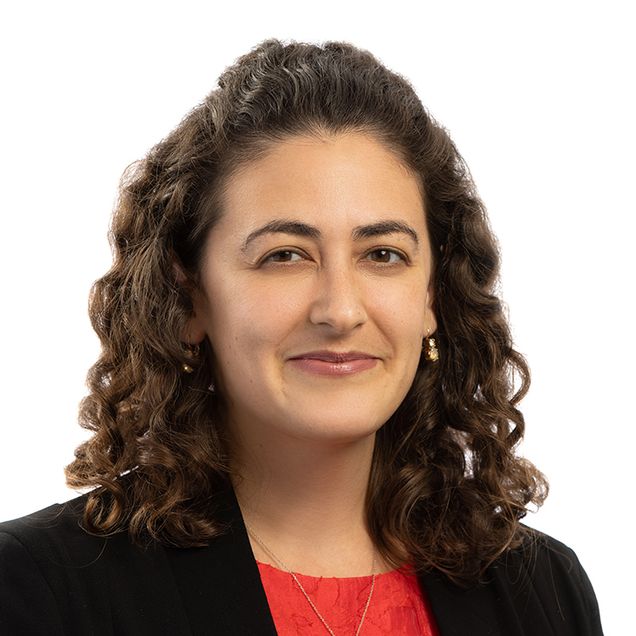
Madeline H. Meth is mentioned.
The Appellate Clinic is a full-year, 12-credit clinic in which students take the lead in researching and writing complex appellate briefs for public interest cases in an intensive, collaborative learning environment. Appellate Clinic clients are individuals and entities otherwise unlikely to obtain quality representation either because they are indigent and can’t afford a lawyer or because their case is unlikely to generate substantial profit even though it’s important. For example, we represent civil-rights plaintiffs, employees fighting for fair workplaces, consumers, tenants, immigrants, and criminal defendants. We occasionally represent amici as well.
Student teams work under the close supervision of the Clinic’s director through multiple drafts of outlines and briefs. Every aspect of appellate advocacy—argument choice, argument ordering, use of authority, writing style and tone, and word choice, to name a few—are discussed and debated within the student team and with the clinic’s director. Our clients’ causes are worthy ones, and we have the time and resources to file briefs of the highest possible quality on their behalf.
Concerning, among other things, whether it’s a Title IX violation for a university to punish a student who reports being sexually harassed by another student purportedly for engaging in underage drinking around the time of the assault and when a university has substantial control over student-on-student sexual harassment that occurs off campus. Clinic wrote opening brief and reply brief and clinic student Gregory Bowe handled oral argument.
Concerning whether the Sentencing Commission’s policy statement permitting district courts to consider non-retroactive changes in law as “extraordinary and compelling” Along with co-counsel from Georgetown Law’s Appellate Courts Immersion Clinic, clinic wrote initial petition for hearing en banc.
Concerning whether the federal habeas statute limits a district court’s discretion to consider legal errors in prior proceedings as “extraordinary and compelling reasons” warranting a sentence reduction under the federal compassionate-release statute. The clinic wrote a cert-stage reply brief in Ferguson’s case. Although the Supreme Court did not grant cert in Ferguson’s case, in 2025, the Court granted cert on the question presented by Ferguson’s case in Fernandez v. United States (S. Ct. No. 24-556).
Concerning whether Title VII of the Civil Rights Act of 1964 prohibits discriminatory job transfers and refusals to transfer. Along with co-counsel from Georgetown Law’s Appellate Court’s immersion clinic, the clinic wrote the merits-stage opening and reply brief for petitioner Jatonya Muldrow. The clinic won the case 9-0.
Concerning whether the Washington Post violated the D.C. Human Rights Act when it banned reporter from covering #MeToo related stories after she was open about having been sexually assaulted. Clinic handled oral argument, and, along with co-counsel from Georgetown Law’s Appellate Courts Immersion Clinic, fended off the Post’s petition for rehearing en banc.
Concerning, among other questions, whether procedural requirements under the Federal Torts Claim Act are jurisdictional or claims-processing rules and whether the United States acted negligently by treating a prisoner like a contract killer with two victims when the U.S. Probation Office knew that this information was false and had been ordered to strike it from the prisoner’s pre-sentence report. Clinic wrote opening brief and reply brief and handled oral argument. The Third Circuit’s Judge Roth wrote this about the clinic’s representation: “Freeman is represented, at our request, by the Boston University School of Law Appellate Clinic. We thank them for their excellent representation. Lawyers (and law students) who agree to act pro bono represent the legal community at its finest.”
Concerning, among other issues, whether police officers violated individual’s Fourth Amendment rights to be free from unlawful arrest and excessive force when they grabbed, punched, tased, and arrested him supposedly for resisting arrest after he attempted to use his phone to record a traffic stop.
The Appellate Clinic is officially launching in Fall 2024. Students who worked on appellate litigation projects with Prof. Meth in her prior role have this to say about the experience:

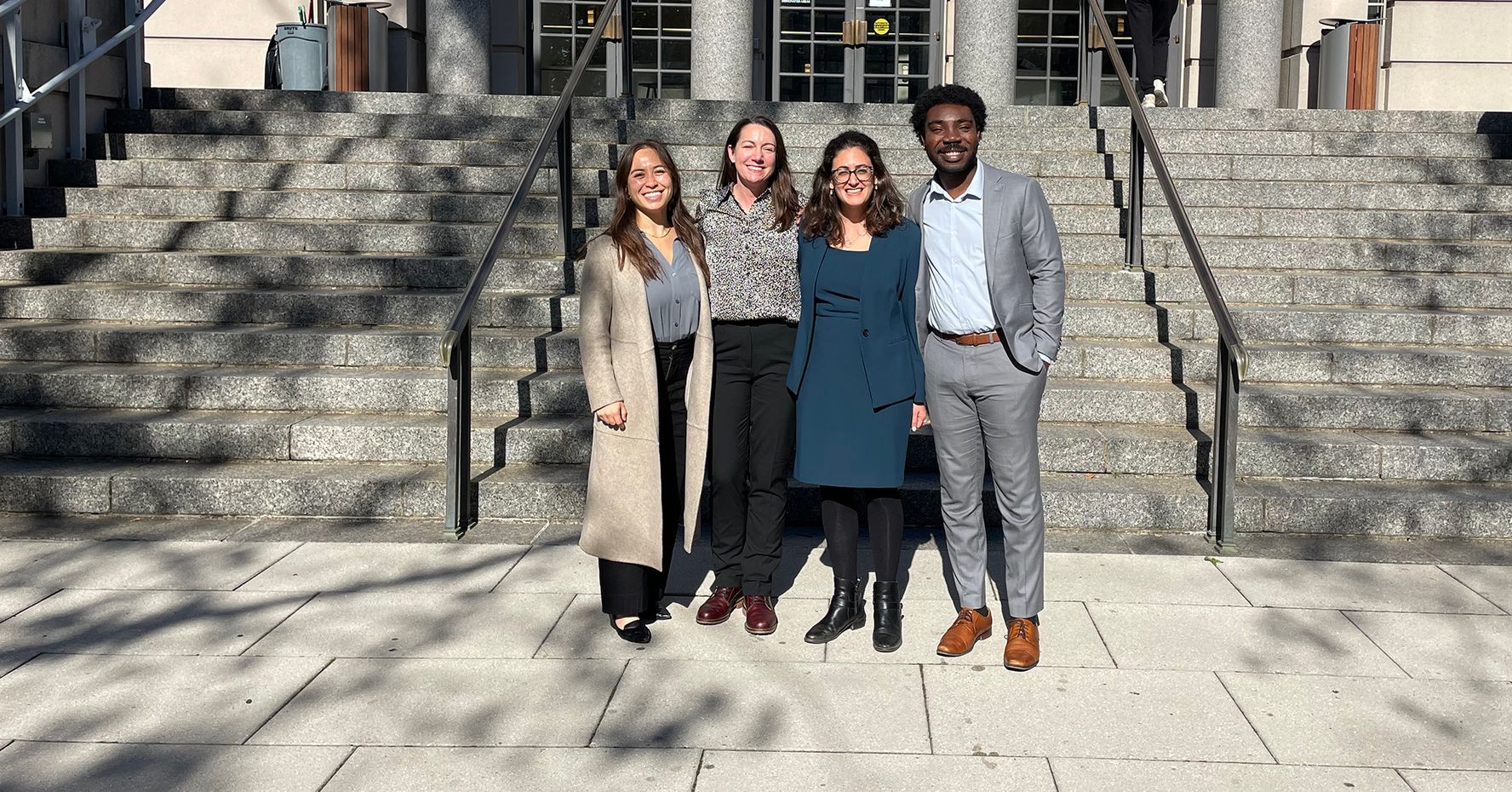
Clinic students Erin Hunter, Gregory Bowe, and Sarah Monahan after a clinic oral argument before the Fourth Circuit Court of Appeals in Richmond, VA.
Madeline H. Meth is mentioned.
Madeline Meth is quoted.
Madeline Meth is interviewed.
Madeline Meth is quoted.