News
Subcommittee Discusses Student Visas, Security
BU IN DC
Sargent College Dean Christopher Moore met with Washington-area alumni and parents on June 7.
Azer Bestavros of the Rafik B. Hariri Institute for Computing and Computational Science & Engineering attended a panel at the National Science Foundation on June 7 and 8.
SUBCOMMITTEE DISCUSSES STUDENT VISAS, SECURITY
On Wednesday, the Senate Subcommittee on Border Security and Immigration held a hearing entitled, “Student Visa Integrity: Protecting Educational Opportunity and National Security.” Witnesses from the national security community focused on the potential threats international students and academics, particularly those from China, pose to national and economic security. Representatives from the academic community expressed an interest in better communication with national security officials. They also emphasized the need to bolster U.S. research funding in order to address the competitive threats posed by nations that have increased their support for science. Members of Congress and the Administration are expected to continue their scrutiny of security in academic settings.
SPENDING PANEL BOOSTS HUMANITIES, ARTS
On Wednesday, the House Appropriations Committee approved a spending bill that proposes to increase funding at both the National Endowment for the Humanities (NEH) and the National Endowment for the Arts (NEA) by $2 million, bringing each agency's budget to $155 million in fiscal year 2019. The Committee's action is an early indication that, for the second year in a row, Congress intends to reject the Trump Administration's proposal to eliminate the NEH and the NEA. The full U.S. House of Representatives and the U.S. Senate will need to approve the proposed spending increases before they can take effect.
BUZZ BITS...
- On Monday, the National Institutes of Health released its first Strategic Plan for Data Science, intended to mobilize advancements in data storage, communications, and processing to modernize how data is utilized in the life sciences.
- The Senate confirmed Kenneth Marcus to lead the U.S. Department of Education Office of Civil Rights by a 50 - 46 vote on Thursday.
- The U.S. Department of Labor issued its final report on expanding apprenticeships last month. The report states "the American higher education system is churning out a pool of in-debt job seekers who are not equipped to meet the skills needs of many employers..."
Graduating, With a Big Assist from Dad
 ON THE CHARLES RIVER
Graduating, With a Big Assist from Dad
BU custodian Eddie Almeida used his University tuition benefit to give his children a world-class education they couldn't have afforded otherwise.
Hear their touching story
 FACULTY EXPERT
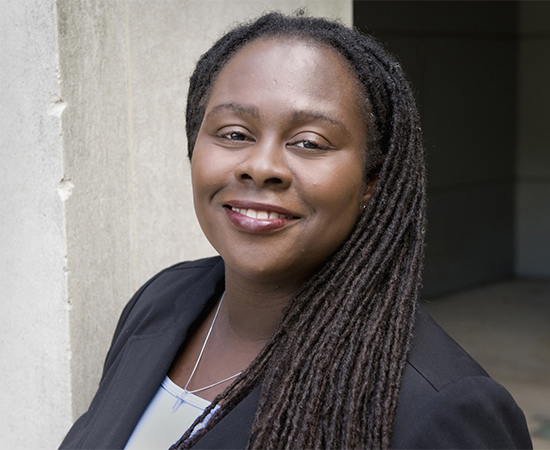
Noted Scholar of Inequality To Lead BU School of Law
Angela Onwuachi-Willig, a renowned expert in racial and gender inequality as well as civil rights law, looks to build on BU's history of access and diversity. Learn more
 RESEARCH HIGHLIGHT
The Curse of Meetings
Imagine a day without a single meeting on your calendar. An expert at the BU Questrom School of Business can show you how. End your meeting misery
IN CASE YOU MISSED IT...
The BU Alumni Association hosts a networking event at City Market at O on June 14... Julia Raifman and Sandro Galea of the BU School of Public Health assert that denying services to same-sex couples can impact mental healthin The Hill... The Wall Street Journal touts a BU cybersecurity camp for high school girls... Nicolas Gunkel of the BU Initiative on Cities demonstrates that Republican mayors are advancing climate-friendly policies in The Conversation... Nahid Bhadelia of the BU School of Medicine explains how vaccines alone won't stop Ebola in The Atlantic.
Noted Scholar of Inequality to Lead BU School of Law
Angela Onwuachi-Willig drawn by BU’s history of access and diversity

Angela Onwuachi-Willig says she decided to leave top-ranked UC, Berkeley, School of Law to take the LAW deanship because of the University’s commitment to the causes and ideals she cares deeply about. Photo courtesy of Onwuachi-Willig.
Angela Onwuachi-Willig, a renowned legal scholar and expert in racial and gender inequality as well as civil rights law, has been named dean of the BU School of Law. A prolific writer and authority on employment discrimination and law as it relates to social injustice, she comes to BU from the University of California, Berkeley, School of Law, where she is the Chancellor’s Professor of Law.
“We are delighted to have recruited Angela Onwuachi-Willig to Boston University as the next dean of the BU School of Law,” says Jean Morrison, BU provost and chief academic officer. “She has an excellent record of accomplishment as a scholar and teacher, and as dean, Dr. Onwuachi-Willig will continue the advancement of the quality and stature of the BU School of Law.”
Morrison says Onwuachi-Willig, who has published extensively in leading law journals, including the Yale Law Journal, California Law Review, and the Georgetown Law Journal, is a high-impact academic. Prior to her post at Berkeley, she was the Charles and Marion J. Kierscht Professor of Law at the University of Iowa College of Law, as well as a finalist for the Iowa Supreme Court.
Onwuachi-Willig says she made the decision to leave top-ranked UC, Berkeley, School of Law to take the LAW deanship because of the University’s commitment to the causes and ideals that she cares deeply about.
“I was initially drawn to BU Law because of its outstanding academic reputation and its amazing community of students, staff, and faculty. The faculty at the law school are stellar. They are highly productive. They write first-rate legal scholarship, and they are as committed to being excellent teachers and mentors for their students as they are to being great legal scholars. The students are also very impressive. They are smart and ambitious. They care not only about being excellent lawyers but also about being excellent citizens in their communities.
“Frankly, the more I learned about the school, the more I was attracted to it. I was particularly touched by and drawn to BU Law’s history of access and diversity. The fact that its doors have been open to all since its founding is incredibly meaningful to me as an African American woman. The law school’s body of alumni—in fact, the University’s body of alumni, including Dr. Martin Luther King, Jr. (GRS’55, Hon.’59)—are incredibly impressive. When I discovered that Barbara Jordan (LAW’59, Hon.’69) was an alumna of the law school, it felt like a sign. I was born and raised in Houston, Tex., and I grew up with Barbara Jordan as one of my idols.”
Onwuachi-Willig’s long list of awards and distinctions includes her 2017–2018 appointment as the William H. Neukom Fellows Research Chair in Diversity and the Law at the American Bar Foundation, and her selection by the National Law Journal as one of the “Minority 40 under 40” lawyers to watch.
In 2013, Yale University Press published her book According to Our Hearts: Rhinelander v. Rhinelander and the Law of the Multiracial Family. The work examines a story that came to her attention because of her own marriage to a white man, that of the interracial marriage between Leo and Alice Rhinelander in 1920s New York. Interracial marriage was legal in the state at that time, but the couple’s marriage license identified both parties as white, and when a newspaper reported that Alice Rhinelander was “colored,” the events that unfolded altered their lives forever.
Texas native Onwuachi-Willig earned an undergraduate degree from Grinnell College and a law degree from the University of Michigan, where she was a Clarence Darrow Scholar, a Michigan Law Review note editor, and an associate editor for the founding issue of the Michigan Journal of Race and Law. She also holds an MA, an MPhil., and a PhD in sociology and African American studies from Yale University.
Onwuachi-Willig says she is currently delving into historical and social legal work, in particular, the case of Emmet Till, a 14-year-old African American who was lynched in Mississippi in 1955, and Trayvon Martin, a black teenager shot and killed in Florida by a white man in 2012.
As dean, she says, she will be a passionate advocate of keeping the law school financially accessible. She credits Maureen O’Rourke, current LAW dean, who is stepping down to return to her teaching post, with putting the school on an excellent path forward, noting the value the school has placed on diversity.
“The current dean, Maureen O’Rourke, has been an excellent leader of the law school for 14 years,” Onwuachi-Willig says. “She is widely recognized for her impact on legal education, and she has left an amazing foundation, which I will build on—of course through collaboration with the staff, faculty, and students. Bob Brown and Jean Morrison are tremendous leaders, and my priorities align well with their vision for the school. Boston University as a whole is on the move, and I am excited to play a role in advancing and continuing its incredible growth and development.”
Members of the eight-person selection committee that recruited Onwuachi-Willig say that her commitment to legal education, extensive mentorship to other academics seeking tenure, and vision for the future of the law school made her a natural choice.
“She has it all,” says search committee member Katharine Silbaugh, a LAW professor. “She is an exceptional scholar, recognized as a giant among legal academics, and one of the top writers in race and law today.” She also notes Onwuachi-Willig’s reputation as a generous mentor to young scholars both inside and beyond where she works. She says references noted her integrity, quiet confidence, drive, and tireless work ethic.
“Her work on diversity and inclusion across multiple institutions makes her the ideal leader for the 21st century legal landscape,” Silbaugh says. “I can think of no better way to honor the exceptional legacy of Dean Maureen O’Rourke than to be led by someone with such a strong reputation for excellence, personal integrity, and humanity.”
Committee member James E. Fleming, the Honorable Paul J. Liacos Professor of Law and LAW associate dean for intellectual life, says the school’s focus on interdisciplinary scholarship, social justice, and public service will likely increase as part of the new dean’s vision for LAW. Fleming says Onwuachi-Willig is one of the most important scholars writing about race and the law.
Another committee member, Adil Najam, dean of the Frederick S. Pardee School of Global Studies, says the incoming dean’s interdisciplinary scholarship is a boon to BU.
“Angela Onwuachi-Willig not only brings amazing intellectual heft, but also a deep thoughtfulness and a caring spirit,” Najam says. “I hope she will further strengthen the interdisciplinary spirit and links between BU Law and other schools and colleges at BU.”
Author, Megan Woolhouse can be reached at megwj@bu.edu.
Spending Committee Recommends Science Increases
BU IN DC
Kristen Goodell of the School of Medicine testified before the Senate Health, Education, Labor and Pensions Committee regarding the healthcare workforce on May 22.
SPENDING COMMITTEE RECOMMENDS SCIENCE INCREASES
The House Appropriations Committee recently approved two spending bills that would increase the research budgets for the National Science Foundation (NSF), National Aeronautics and Space Administration (NASA), and U.S. Department of Energy (DOE). The Committee rejected the Trump Administration's proposal to reduce science funding; instead, the Committee-passed bills would boost NSFfunding in fiscal year 2019 by 5.2% over the current level, NASA's Science Mission Directorate by 7.4%, and DOE's Office of Science by 5.4%. The bills would need to be approved by the full U.S. House of Representatives and negotiated with the U.S. Senate before final spending levels are determined later this year.
BUZZ BITS...
- The White House plans to nominate Dr. Chris Fall as the director of the U.S. Department of Energy's Office of Science. Dr. Fall is a neuroscientist who has held roles with the agency's Advanced Research Projects Agency-Energy and with the Office of Naval Research.
- On Tuesday, two subcommittees of the House Oversight and Government Reform Committee held their second hearing on campus free speech in less than a year. The discussion included assertions that universities suppress conservative points of view, as well as concerns about hate speech and discrimination on college campuses.
- Last week, the House Veterans Affairs Committee held a hearing to examine the effectiveness of research activities undertaken by investigators affiliated with the U.S. Department of Veterans Affairs.
GRANTS NEWS YOU CAN USE
The U.S. Department of Education’s Institute of Education Sciences (IES) has announced its fiscal year 2019 competitions for education research and special education research. IES plans to host nine competitions on topics such as school readiness, career and technical education, autism spectrum disorders, and early learning in special education. Grant awards range from $50,000 to $1,000,000 annually for two to five years.
A NOTE TO OUR READERS... With Congress headed home for the Memorial Day District Work Period, Beltway BUzz will not publish next week.
Alum Nina Totenberg to LAW Grads: “Beware the Golden Handcuffs”
NPR legal correspondent says blind old Lady Justice is waiting for them
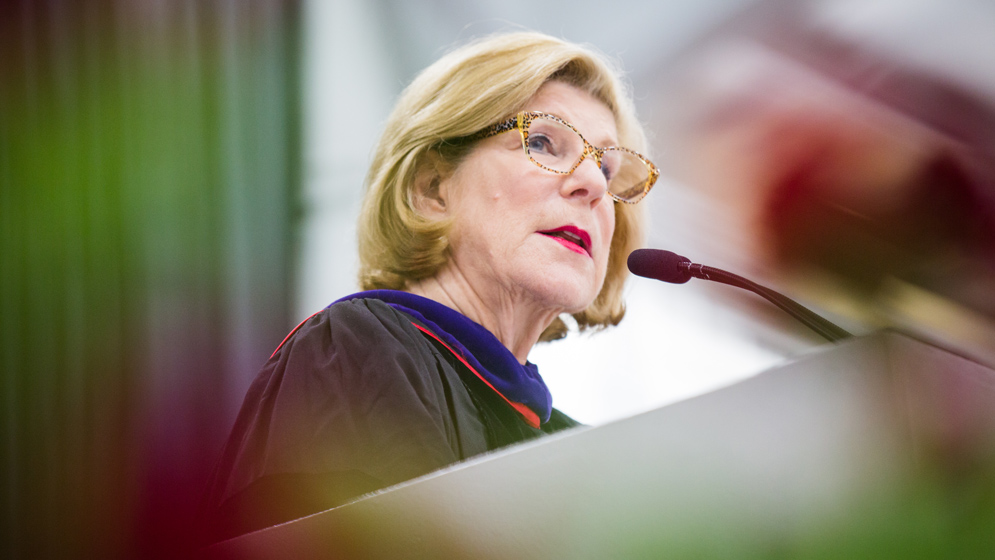
Nina Totenberg (COM’65, Hon.’11) told the 2018 grads her hope was that they “all will find legal principles that you care enough about to take risks for.” Click for Video by BU Productions.
Award-winning National Public Radio legal affairs correspondent Nina Totenberg counseled the 2018 School of Law graduates Sunday to seek a variety of experiences as they embark on their legal careers, including public service.
Families, friends, and faculty gathered at the Track & Tennis Center to celebrate the 490 graduates receiving Juris Doctor and Master of Law degrees and to hear Totenberg (COM’65, Hon.’11) give the Convocation address.
“I know a skadillion lawyers. And the ones who are really happy are those with a diversified life,” Totenberg said. “They have worked in administrations, Democratic and Republican, and as political appointees. They have worked as prosecutors, as defense lawyers. They have worked on the Hill or headed up advocacy organizations. They teach. They have served on important committees for the local bar, or the American Bar Association. They have done pro bono work on everything from housing to the death penalty. They have been tapped by mayors and governors to help with various projects from local schools to revising tax codes. So I urge you to keep all that in mind as you begin your careers.”
Totenberg acknowledged that many among the new degree-holders face financial pressures, like repaying student loans, and many will want to pursue lucrative work at big law firms.
“There’s nothing wrong with making money,” she said. “There’s just one caveat: Beware the golden handcuffs. Don’t let yourself slip into such a high standard of living that you simply cannot afford to do anything other than make money. For that, my friends, is a sort of a professional death. And then suddenly you’re going to be 60 years old, wanting the opportunity to do something else, and you’ll only have a track record with billable hours.”

Seeking a range of career experiences is one antidote, she said. “Remember, as you enter the life of the law, that it is not just the firm, or the client, or the company waiting for you. Also standing there, awaiting your arrival, is that blind old Lady Justice. And she expects you to spend some time with her, too.”
Totenberg said history offers ample models of lawyers who stood on principle, some who weather intense political pressure for representing unpopular clients. On the right, she cited Paul Clement, a former solicitor general under President George W. Bush, who left a lucrative law firm partnership when the firm balked at his representing House Republicans in their case to stand by the Defense of Marriage Act. On the left, she mentioned Neal Katyal who successfully challenged Bush’s handling of Guantanamo detainees in 2006, representing Osama bin Laden’s driver. Katyal would later serve as President Barack Obama’s solicitor general.
She noted that lawyers like these are vital to a justice system that tries to advance the truth. “I hope for you that you all will find legal principles that you care enough about to take risks for,” Totenberg said.
A veteran of such NPR shows as All Things Considered and Morning Edition, Totenberg joined NPR in 1975. Known for her Supreme Court coverage, she is perhaps most familiar to listeners for covering the 1991 confirmation hearings of Supreme Court Justice Clarence Thomas. She was the first to report the sexual harassment allegations brought against Thomas by Anita Hill. Totenberg’s reporting prompted the Senate to reopen confirmation hearings and led to a nationwide dialogue on sexual harassment in the workplace. She’s earned numerous honors for her work, among them a George Foster Peabody Award and the George Polk Award for excellence in journalism.

Maureen O’Rourke, outgoing School of LAW dean, is stepping down after 13 years. She received a standing ovation at Sunday’s convocation.
Maureen A. O’Rourke, dean of LAW, opened the Convocation by urging the 2018 graduates to pursue Constitutional principles in their work and to demonstrate integrity, leadership, humility, and resilience.
O’Rourke, who last year announced she was stepping down as dean after 13 years to rejoin the LAW faculty, said such traits are especially important now, at a time when both major political parties cultivate animosity to shared values.
“We seem to have lost our collective faith and trust in the ability of all our institutions, including those with the primary responsibility of moving us closer to realizing the vision of the Constitution,” O’Rourke said. “You know, people asked why I stepped down as dean.…Part of it is that it’s gotten harder. I wonder now, more than I ever have, whether we still believe we have something bigger than just ourselves. Whether we hold these truths to be self-evident. That all men are created equal. That they are endowed by their creator with certain unalienable rights. That among these are life, liberty, and the pursuit of happiness.”
The Constitution’s framers built a system of government to vindicate those rights, she said, even if the results have been uneven. “I would never contend it has been perfect. Far from that. For long periods of time, for substantial segments of our society, the promise of our founding documents has been illusory. And ‘We the People’ has been more a term of exclusion than inclusion for too many,” she said.
“At the same time, though, it has also been true that for generations it has been lawyers who have been at the forefront of vindicating our most cherished ideals. Of expanding opportunity and of guarding our freedom.”
O’Rourke received a standing ovation following her remarks.
Two students speakers also addressed the Convocation, Kevin Michael Smith (LAW’18) and Abd Gafur (LAW’18). Smith, who was copresident of the Black Law Student Association and articles editor for the Journal of Science and Technology, received the Emmanuel Hewlett Award (named for the first African American LAW graduate, in 1877) for academic excellence and public service. He recounted the frightening experience of watching as his cousin was arrested in his record shop in his Wilson, N.C., hometown and his determination to channel the fear he felt at the time into something positive .
“I still feel the pain, but I am no longer fearful,” said Smith, who will join the global law firm Goodwin Procter LLP. “There will be lions and tigers and barriers. But we will be the innovators and leaders and dreamers that the world needs. We will be there, poised to effect change, if we continue to invest in each other.”
Gafur, who studied banking and financial law and plans to return to work at the Indonesian Ministry of Finance, encouraged his peers to continue to foster the strong sense of community they developed in their time at BU.
Several LAW faculty were honored at the ceremony. O’Rourke made special mention of Tamar Frankel, the Robert B. Kent Professor of Law, described by the Wall Street Journal as “the intellectual godmother of the fiduciary rule,” who is retiring after 50 years on the faculty. James Scott, a lecturer and director of the graduate program in banking and financial law, received the John Stephen Baerst Award for Excellence in Teaching. Lecturer Michael Schneider won the Part-Time Faculty Teaching Award. And Mark Pettit, a professor of law, received the Michael Melton Award for Excellence in Teaching.
Find more information about Commencement here.
, she can be reached at kulanday@bu.edu.
Author, Michael S. Goldberg can be reached at michaelscottgoldberg@gmail.com.
Prof. Kristen Goodell Testified Before the Senate HELP Committee
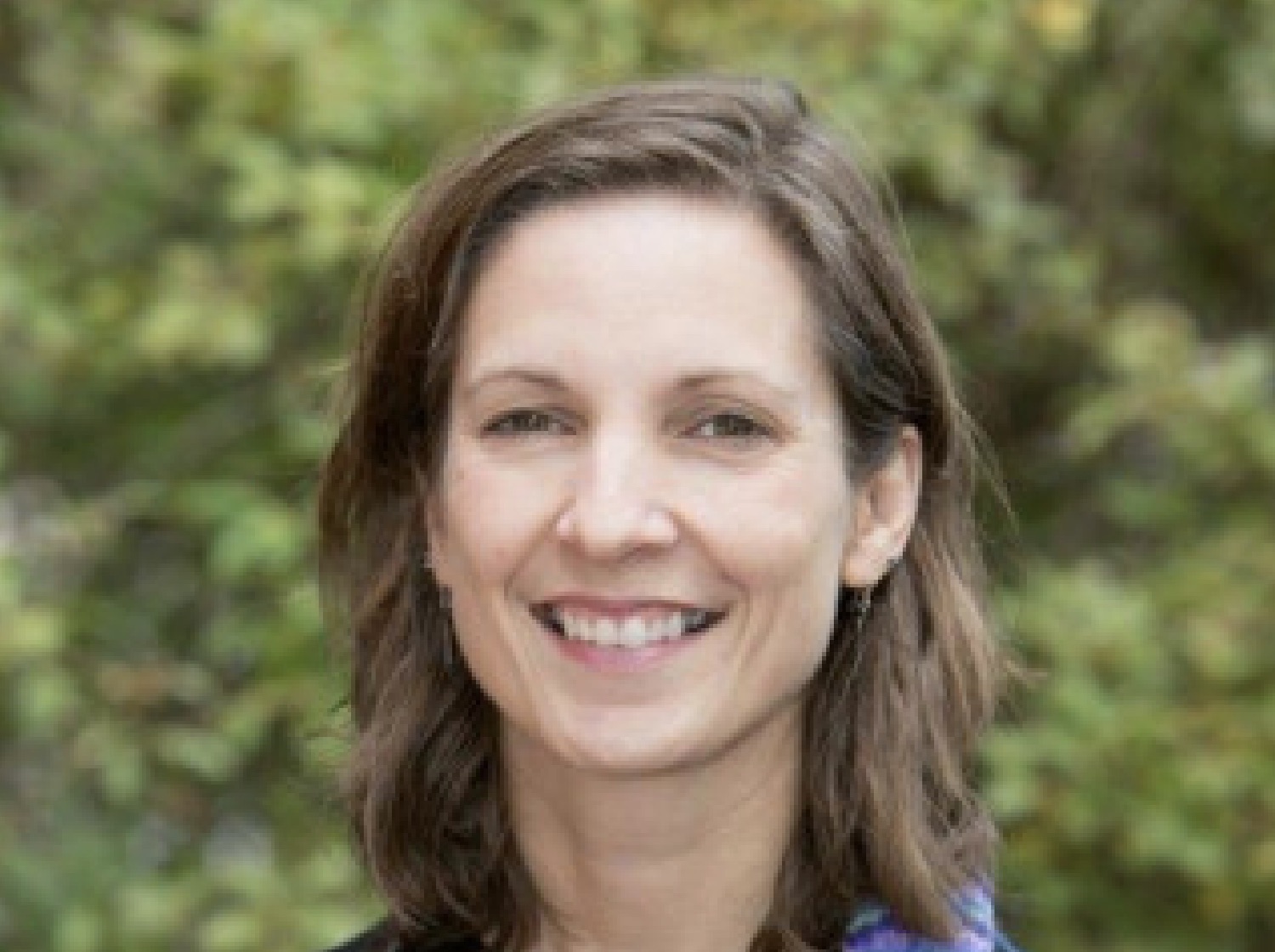
On May, 22, 2018, Dr. Kristen Goodell from Boston University School of Medicine testified before the United States Senate Committee on Health, Education, Labor & Pensions (HELP) about the Health Care Workforce: Addressing Shortages and Improving Care. Learn more & watch the video.
BU-Based CARB-X Antimicrobial Partnership Gets Another $50 Million Plus
Gates Foundation, UK government contributions push CARB-X funding to more than $500 million

A computer-generated image of a cluster of drug-resistant Campylobacter bacteria. Photo courtesy of James Archer/CDC.
In a sign of the growing recognition of the threat of antibiotic resistance, the Bill & Melinda Gates Foundation and the UK government are joining CARB-X (Combating Antibiotic Resistant Bacteria Biopharmaceutical Accelerator), a BU-based public-private partnership launched two years ago by the US Department of Health and Human Services (HHS) to give financial, scientific, and business support to small companies focusing on drug-resistant bacteria. The Gates Foundation is committing up to $25 million over three years to support scientific research to develop new vaccines, preventatives, and other antimicrobial products, particularly for health needs in low- and middle-income countries. The UK government, through its Global Antimicrobial Resistance Innovation Fund, is contributing up to $27 million for similar work. CARB-X, which is overseen by executive director Kevin Outterson, a School of Law professor of law and N. Neal Pike Scholar in Health and Disability Law and an expert on pharmaceutical markets, is the world’s leading public-private partnership dedicated to the early development of innovative antibiotics, vaccines, and other products to fight the global threat of superbugs.

Kevin Outterson, a LAW professor of law, heads the world’s leading nonprofit partnership—BU-based CARB-X—supporting the development of innovative antibiotics, vaccines, and other products to fight superbugs. Photo by Jackie Ricciardi.
The commitments bring to more than $500 million the total funding available to CARB-X for the development of products to protect people from superbug bacterial infections. CARB-X’s existing funding partners include the Biomedical Advanced Research and Development Authority (BARDA), part of HHS, which has committed $250 million over five years; the Wellcome Trust, a UK-based global charitable organization, which has committed up to $155.5 million over five years; and the National Institute of Allergy and Infectious Diseases(NIAID), part of the US National Institutes of Health, which has committed $50 million in preclinical services over five years.
“We are in a race against superbugs, and it will take leadership, vision, and sustained effort to keep ahead,” says Outterson. “We are deeply grateful for this new partnership with the UK government and Bill & Melinda Gates Foundation, building upon the leadership from the US government [BARDA and NIAID] and the Wellcome Trust.”
“The threat of antimicrobial resistance underscores the importance of prevention—which we believe is key to saving lives,” says Sue Desmond-Hellmann, CEO of the Gates Foundation. The Gates funding “will advance the development of vaccines, and novel biologics, including monoclonal antibodies, to avert drug-resistant diseases and protect the lives of children and infants, especially in low- and middle-income countries.”
“Superbugs are already killing hundreds of thousands of people around the world,” says England’s chief medical officer, Sally Davies. “By working together [with the Gates Foundation and CARB-X’s other partners], we will represent a formidable force against this intensifying threat.”
“We’re honored to have these two powerhouse organizations join us in this fight to accelerate global antibacterial innovation,” says Rick Bright, BARDA director.
Tim Jinks, head of Wellcome’s Drug-Resistant Infections Priority Programme, calls the funding from the Gates Foundation and the UK government “a significant boost” and says he hopes other countries and partners will follow. “Without wider investment and collaboration,” he says, “we will struggle to deliver the new treatments needed globally to protect and save lives and stop superbugs undermining modern medicine.”
Drug-resistant infections cause about 700,000 deaths worldwide each year, according to the World Health Organization (WHO), with an estimated 23,000 of those deaths in the United States. If antibiotic resistance continues at its current rate, these numbers are expected to rise significantly within a generation.
Researchers say it takes at least a decade and many millions of dollars to develop a new antibiotic or vaccine, and the success rate for bringing an early preclinical compound to market is less than one percent. In fact, there have been no approved classes of antibiotics for the most dangerous types of bacteria—Gram-negatives—since 1962. Largely because of a lack of financial incentives, the pharmaceutical industry has all but gotten out of the business of developing new antibiotics and antimicrobials. Small biotech and pharmaceutical companies have difficulty attracting private investors for the early phase of development of new antibiotics.
CARB-X funding—along with the partnership’s scientific and business expertise—is intended to help companies get projects through the first phase of clinical testing, when they have a much better chance of attracting additional private or public funding for further clinicial development. The partnership selects promising early research to support through a competitive review process overseen by a group of leading scientists who make up the partnership’s scientific advisory board. Outterson, who does not have a seat on the board, and who works with a shoestring staff crammed into offices on LAW’s 12th floor, says 94 percent of CARB-X’s funding goes directly to research and development. “We’re trying to be entrepreneurial and lean and nimble,” he says.
“Receiving additional funding for CARB-X, particularly of this magnitude and from these funders, is an indication of the importance of the type of work that CARB-X is undertaking,” says Gloria Waters, the University’s vice president and associate provost for research. “It is also a very strong endorsement of the unique funding model—and public-private partnership—that Kevin and his team have put together.”
The partnership, which focuses on companies targeting the most serious bacteria infections, has 5 products in clinical development and 33 in preclinicial development in the United States and half a dozen other countries. Outterson says they represent nine new classes of antibiotics, six novel diagnostic devices, one vaccine, and more than a dozen nontraditional products, including microbiome approaches.
“CARB-X has become a significant source of funding for antibiotic development,” says Allan Coukell, senior director of health programs at the Pew Charitable Trusts, which studies efforts to combat antibiotic resistance, including the pipeline for new antibiotics. And, he adds, by offering companies scientific expertise around testing protocols, CARB-X “helps them to make good decisions in the early development phase.”
With support from CARB-X, Entasis Therapeutics, a small company based in Waltham, Mass., has one antimicrobial product in the first phase of clinical testing and another project, for a new class of antibiotic aimed at Gram-negative bacteria, in the discovery phase. “Innovation is a long haul,” says Manos Perros, president and CEO of Entasis. “When you have a small company, it’s in those earliest stages, when the return is farther away and the risk is higher, that the need for support is greatest.
“CARB-X focuses on what matters, which is making sure they put as much money as they can into the science and clinical development of the companies they’re funding,” says Perros. “They want us to be successful. There is engagement with the science, with the strategy, with the way in which we are solving problems that inevitably arise in R&D.”
More than 400 companies in the United States and other countries have so far submitted projects to CARB-X for funding. In its latest round of awards, in April 2018, CARB-X gave up to $2.4 million over about 11 months to Achaogen, a biopharmaceutical company in South San Francisco, Calif., for the development of a novel antibiotic to treat Gram-negative infections.
CARB-X is “very well organized and highly respected,” says Kenneth Hillan, Achaogen’s president of research and development. “They can bring things together in a way that the individual organizations involved couldn’t do on their own. A lot of it is Kevin’s leadership. Very few people would have the tenacity to bring these organizations together and navigate between all the partners.”
CARB-X’s next round of funding opens for applications June 1, 2018. The scope of funding will include vaccines and other projects that meet the criteria of the Gates Foundation and UK government.
The two new partnerships were announced at the launch of the Global Antimicrobial Resistance R&D Hub May 22, during the 71st World Health Assembly, the WHO decision-making body, meeting in Geneva. The Global AMR R&D Hub will help advance international funding and collaboration for research and development of antimicrobial medicines.
Author, Sara Rimer can be reached at srimer@bu.edu.
Be Bold and Courageous
 ON THE CHARLES RIVER
Be Bold and Courageous
Congressman John Lewis (D-GA) urges BU's Class of 2018 to "stand up, speak out" during an inspiring address at the University's 145th Commencement.

FACULTY EXPERT
Laurel or Yanny?
BU hearing expert Tyler Perrachione explains the science behind the phenomenon that's sweeping the Internet.
RESEARCH HIGHLIGHT
Cities Joining Ranks
The BU Initiative on Cities offers the first systematic review of how cities are joining together to solve common problems like climate change, gun violence, and immigrant integration.
IN CASE YOU MISSED IT...
David H. Webber of the BU School of Law says California's pensions are the state's most powerful voice on Wall Street in the Los Angeles Times... Nathan Phillips of the BU College of Arts & Sciences explains how his carbon farm uses people's breaths to grow plants to WBUR... BU School of Public Health expert Catharine Wang tells the Boston Business Journal that recreational DNA testing may reveal more than consumers bargained for... BU College of Fine Arts Dean Harvey Young recalls royal bride Meghan Markle as a student at Northwestern University on CNN.
Mayor of San Juan: What Will You Do in a Moral Crisis?
Carmen Yulín Cruz Soto (CAS’84, Hon.’18) delivers emotional Baccalaureate address
“You may not accomplish everything you set out to do, but I guarantee you…you will never fail,” Carmen Yulín Cruz Soto (CAS’84, Hon.’18), told those at BU’s Baccalaureate Service at Marsh Chapel May 20. The mayor of San Juan, P.R., talked about the desperation Puerto Rico faced in the aftermath of Hurricane Maria. Watch the entire speech in the video by BU Productions.
Her voice often cracking with emotion, the mayor of San Juan, P.R., used her BU Baccalaureate address Sunday at Marsh Chapel to take attendees to the ghostly streets of her devastated island, while urging them to raise their voices against injustices.
Carmen Yulín Cruz Soto (CAS’84, Hon.’18) recounted her role as global troubadour for her island after Hurricane Maria devastated Puerto Rico last September. She publicly condemned the slow pace of federal help, a criticism recovery leaders themselves echoed, and President Trump responded by denouncing her.
“There were no cars” immediately after the storm, Cruz said from the Marsh pulpit, “no people in the street, no dogs barking, and no music playing.…Just a deafening silence.”
Cruz told of spending a night with 685 homeless people in Puerto Rico’s largest emergency shelter. Without naming Trump or island officials who neglected serious review of emergency response plan updates, she said that “rather than leadership at the highest places, we faced a general lack of urgency and a dismissive attitude.
“Those charged with coming to our aid failed us,” she said. “We were dying, and they were killing us with bureaucracy.” Her pleas for help, however, galvanized others globally, including the Puerto Rican diaspora. “Boy, did they listen,” she added, coming forth with aid.
Cruz exhorted her listeners to raise their voices against other injustices in the headlines. Acknowledging in the audience Sunday’s Commencement speaker, US Representative John Lewis (Hon.’18) (D-Ga.), a veteran of the Civil Rights Movement, she said, “You may not accomplish everything you set out to do, but I guarantee you, as Congressman Lewis knows all too well, you will never fail.”
“If you believe that children everywhere have the right to schools without gun violence,” she said, just two days after yet another school shooting by a student who killed 10 in Santa Fe, Tex., “you must demand that sensible gun control laws are enacted.”
On immigration, Cruz urged activism “if you believe in keeping families together rather than tearing them apart.” (The Trump administration has separated hundreds of children from migrant families entering the country.) In this #MeToo era, she also denounced the fact that many women are “forced and harassed to endure unwelcome advances.”

Laura Torres (ENG’18), her mortarboard decorated as the flag of Puerto Rico, with Cruz.
Cruz’s Baccalaureate talk before a packed Marsh Chapel audience earned a standing ovation and came just two weeks before the start of this year’s hurricane season, with Puerto Rico’s government vowing it won’t be caught flat-footed again with its emergency planning. At least 150,000 residents still await the return of electricity service and insurance payments for their destroyed homes.
The Rev. Robert A. Hill, Marsh Chapel dean, introduced Cruz as “an advocate for immigrants, the LGBTQ community, the deaf community, children…and those that struggle with gender-based violence.”
In a prayer of optimism similar to Cruz’s address, Brother Lawrence Whitney (STH’09,’18), University chaplain for community life, quoted a famous line from Martin Luther King, Jr. (GRS’55, Hon.’59): “The moral arc of the universe is long, but it bends toward justice.”
Cruz’s speech was part of the chapel’s regular Sunday service and was accompanied by scripture readings that reflected the occasion: graduates about to take leave of their alma mater.
Jean Morrison, University provost, read Ecclesiastes’ famous reminder that such transitions are part of the cycle of life: “To every thing there is a season, and a time for every purpose under the heaven…a time to cast away stones, and a time to gather stones together…”
Robert A. Brown, BU president, reading from St. Paul’s Letter to the Romans, offered departing Terriers the apostle’s exhortation to exceed others’ expectations: “Do not be conformed to this world, but be transformed by the renewing of your minds, so that you may discern what is the will of God—what is good and acceptable and perfect.”
At BU’s 145th Commencement at Nickerson Field on Sunday afternoon, Cruz, one of five honorary degree recipients, received a Doctor of Laws.
Video of Mayor of San Juan Carmen Yulín Cruz Soto (CAS’84, Hon.’18): 2018 Baccalaureate Address
Find more information about Commencement here.
Author, Rich Barlow can be reached at barlowr@bu.edu.
Photographer, Dave Green can be reached at dg@davegreenphoto.com.
Senate Votes to Restore Net Neutrality
BU IN DC
Anthony Janetos, director of the Pardee Center for the Study of the Longer-Range Future, met with officials at the U.S. Department of Defense and the U.S. Department of Agriculture, among others, to discuss environmental research on May 15 and 16.
SENATE VOTES TO RESTORE NET NEUTRALITY
On Wednesday, the U.S. Senate approved a resolution (S. J. Res. 52) introduced by Sen. Edward Markey (D-MA) to reinstate the Federal Communications Commission Open Internet order, which was repealed by the Trump Administration in December 2017. Universities supported Sen. Markey's effort to restore "net neutrality" regulations, which give users equal access to web content, because they want research and educational materials to be easily accessible online. Net neutrality supporters now face an uphill battle to force a similar vote in the U.S. House of Representatives and send the resolution to the White House.
WHITE HOUSE LAUNCHES ARTIFICIAL INTELLIGENCE EFFORT
Last week, the White House hosted a summit for government, industry, and academic leaders to discuss research, workforce development, and regulatory barriers regarding artificial intelligence (AI). During the Artificial Intelligence for American Industry summit, the White House announced the creation of a committee within the National Science and Technology Council that will provide guidance on federal AI policy and research. Representatives from the White House Office of Science and Technology Policy, the National Science Foundation, and the Defense Advanced Research Projects Agency (DARPA) will lead the committee.
ADMINISTRATION PROPOSES NEW VISA OVERSTAY RULES
On May 11, the U.S. Department of Homeland Security (DHS) proposed new guidelines for the treatment of non-immigrant visitors to the United States who do not comply with the rules of their F, J, or M visas. Under the proposal, international students and scholars could be considered unlawfully present immediately after violating the rules of their visa, rather than when there is a formal finding of a violation by an immigration official. Non-compliant visitors may then be banned from entering the U.S. again. The public is invited to comment on the rules, which could go into effect in August.