News
You’re Invited: Building the Next-Generation Climate Workforce
 BU IN DC
You're Invited: Building the Next-Generation Climate Workforce
Join us on Capitol Hill on March 12 to learn what universities and communities are doing to prepare tomorrow's workers and policymakers to address climate change. RSVP today
 NOTABLE ALUMNI
Hidden in Plain Sight
At the State Department, BU alumna Jane Sigmon (Wheelock '72) is fighting human trafficking on the global scale.
Join the fight
 ON THE CHARLES RIVER
Scientific Credibility in an Era of Misinformation
The National Science Foundation's Arthur "Skip" Lupia discussed how public expectations of science are changing during a talk at BU on January 29.
What are the facts?
IN CASE YOU MISSED IT...
Eugene Declercq of the BU School of Public Health spoke to the Congressional Black Maternal Health Caucus... Neta Crawford of the BU College of Arts & Sciences estimates that the Iraq war has cost the U.S. nearly $2 trillion in The Conversation... Lewina Lee of the BU School of Medicine explains why optimists tend to live longer than pessimists in The New York Times... Monica Wang of the BU School of Public Health is collaborating with the Boston-area Boys & Girls Clubs to reduce sugary drink consumption, with support from the National Institutes of Health.
NIH Announces Personnel Changes
BU IN DC
President Robert A. Brown attended a board meeting of the Association of American Universities on February 4.
College of Engineering Dean Kenneth Lutchen attended the annual American Society for Engineering Education Public Policy Colloquium between February 3 and 5.
Assistant Provost for Professional Development & Postdoctoral Affairs Sarah Hokanson participated in a meeting of the Association of American Medical Colleges Postdoctorate Leaders Section Steering Committee on February 6.
NIH ANNOUNCES PERSONNEL CHANGES
- The National Institutes of Health (NIH) announced that Dr. John Ngai will be the new director of the Brain Research through Advancing Innovative Neurotechnologies (BRAIN) Initiative, starting in March. Dr. Ngai is currently a neuroscientist at the University of California, Berkeley.
- The National Institute on Aging (NIA) has appointed Dr. Ken Santora as the director of the NIA Division of Extramural Activities. Dr. Santora received his PhD in immuology and pathology from the BU School of Medicine.
- The National Institute on Minority Health and Health Disparities (NIMHD) has named Dr. Monica Webb Hooper as NIMHD's deputy director. Dr. Hooper is currently a professor in the School of Medicine at Case Western Reserve University.
GRANTS NEWS YOU CAN USE
Are you curious about federal funding opportunities and fellowship programs that provide support for early career researchers, such as new faculty and postdoctoral associates? Lewis-Burke Associates has authored a compendium that lists opportunities at a range of federal agencies. Early career investigators can learn about support programs at the National Institutes of Health, the National Science Foundation, the Department of Defense, the Department of Energy, the Institute for Education Sciences, and more.
EVENTS NEWS YOU CAN USE
The Office of Research will host "Innovations in Brain Research," its next Research on Tap event, on February 20 from 4 to 6 pm at the Kilachand Center. Faculty from the Center for Systems Neuroscience will present microtalks on a range of exciting and innovative research addressing how neural circuits mediate behavior. A wine and cheese reception will follow the discussion so researchers can mingle with potential collaborators.
Pete Buttigieg’s First Hire in Iowa, a BU Alum, Is Ready for Long Haul
Sydney Throop’s months of work for Democratic presidential candidate comes to a head tonight with caucuses
 Sydney Throop (far left, in gray sweater) and Pete Buttigieg at Pete for America headquarters in Des Moines, Iowa, for a national staff conference call in early January. Photo by campaign staff photographer Chuck Kennedy.
The late stages of a political campaign feel like a finals week that goes on for months, says Sydney Throop.
For Throop (CGS’14, COM’16), the deputy organizing director for the Pete Buttigieg presidential campaign in Iowa, the work has been all-consuming, especially in the last weeks before Monday night’s Iowa caucuses.
The 26-year-old’s day starts by 8:15 am, with texts and email at campaign headquarters—she rolls out of bed and comes straight to work, before she even has coffee—and usually ends after midnight, after many rounds of meetings and phone calls and strategizing.
“It’s hard, but I’m just like this,” she says a couple of weeks before the caucuses. “It’s the perfect job for me.”
She’s been too busy to go to the grocery store in months. “I fully rely on Uber Eats and the Grubhub app,” says Throop. “Sometimes we have supporters bring food to our HQ, which is lovely and really, really kind.”
The candidate himself recently broke the culinary monotony.
“Yesterday Mayor Pete brought in some Dunkin’ Donuts, so shout-out to Massachusetts there, which was really exciting,” she says. “We had Munchkins in the office, which was a staple when I was working in Massachusetts.”
Buttigieg has lately been polling in the top tier of Democratic presidential hopefuls, mixing it up with former Vice President Joe Biden, Senator Bernie Sanders (D-Vt.), and Senator Elizabeth Warren (D-Mass.). Not bad for the 38-year-old Harvard graduate and former Naval intelligence officer, whose previous electoral post was the mayoralty of South Bend, Ind. Some of the credit for his surprising longevity in the race has to go to hard-working staffers like Throop.
“I work with our organizing team and our amazing volunteers to help get the word out about Pete here in Iowa,” she says. “The day in and day out is thinking about the best ways our team can reach out to caucus-goers. We’ve been on the ground for many months building authentic relationships and spreading the word about Mayor Pete and figuring out how we can do that in the most effective way.”
She builds strategy for the organizers and volunteers: where are they needed, where does the campaign need to focus, where do they put their resources, where do they need more boots on the ground.
“People want to talk to people they know,” she says. “That’s really effective. How do we encourage our supporters to talk to their friends and neighbors to get them out to caucus? How do we help get more people out there?”
My brother is autistic, and I grew up being really passionate about making sure that everyone’s voice is heard.
She actually doesn’t see the candidate often, as most of the time she’s buried at the headquarters while he’s out on the stump, meeting voters. She was the campaign’s first hire in Iowa, arriving more than a year ago. There were just three paid staffers by the time Buttigieg began making regular appearances in the state, and now, she says, they have “huge numbers” of workers and volunteers.
What’s Mayor Pete like when he’s not in front of the cameras? “Like when he did come in yesterday, he’s just really personable and playful,” she says. “He wants to bring the joy into the office, and I think that’s something folks don’t always get to see.”
Originally from the Westwood neighborhood of Los Angeles, Throop grew up in a “very, very liberal” household, she says, but only saw the hard work of politics on TV and never knew that campaigning could be a career. She learned early on, however, to fight for what she believes.
“My brother is autistic, and I grew up being really passionate about making sure that everyone’s voice is heard,” she says. “I wanted to make sure he had a say. I think that was where I learned about being able to advocate for others. I was president of the Best Buddies group in my high school.”
She first got her toes into politics at BU, when her friend MacKenzie Marcotte (CGS’14, CAS’16) got her involved with a nonpartisan group trying to get students active in issues that mattered to them. And then she took a College of Communication class called Persuasion in Public Opinion, taught by John Walsh, then a COM adjunct professor, who had managed Deval Patrick’s successful 2006 gubernatorial campaign.
“I could not stop thinking about this class,” she says. “This guy was talking about movements and organizing and things I never heard about before. And how you take action around issues, people together making change, standing up for things we care about. I was so inspired.”
Walsh’s class and their discussions changed her trajectory, she says, even more so when he suggested she join Fair Shot for All, a grassroots group organizing to close the income gap in Massachusetts. Two weeks after Commencement, she was knocking on doors around Greater Boston as a community organizer for the group. Soon she was campaigning in New Hampshire for Hillary Clinton on weekends. Later she found a role with Josh Zakim’s primary campaign for Massachusetts Secretary of State in 2018, and not long after Zakim lost to incumbent William Galvin in the September primary, she was off to Iowa.
Win or lose, what’s next for her after the Iowa caucuses?
“I can’t even think farther than February 3, I really can’t,” she says. “There’s a lot to do.”
Author, Joel Brown is a staff writer at BU Today and Bostonia magazine. He’s written more than 700 stories for the Boston Globe and has also written for the Boston Herald and the Greenfield Recorder. View his profile
NSF’S Lupia Discusses Social Science
BU IN DC
College of General Studies Dean Natalie McKnight and Associate Dean Megan Sullivan held a roundtable discussion on developing robust undergraduate research programs at the Association of American Colleges and Universities annual meeting on January 24.
Senior Vice President for External Affairs Steve Burgay attended a meeting of the Public Affairs Network of the Association of American Universities on January 24.
Boston University Alumni & Friends hosted a panel discussion on investigative journalism featuring Kevin Merida (COM '79) and Kimbriell Kelly (COM '98) at National Public Radio headquarters on January 22.
Graham Wilson, Katharine Lusk, Katherine Levine Einstein, David Glick,Maxwell Palmer, and Stacy Fox of the Initiative on Cities unveiled the 2019 Menino Survey of Mayors at the National League of Cities on January 21.
NSF'S LUPIA DISCUSSES SOCIAL SCIENCE
Dr. Arthur "Skip" Lupia, head of the Social, Behavioral, and Economic Sciences Directorate at the National Science Foundation (NSF), addressed the BU community on Wednesday as part of the Research How-To series organized by the BU Office of Research. Drawing on his expertise as a scholar of science communication, Lupia described how NSF strategically communicates the impact of investing in social science to policymakers and the public. He also emphasized the need for scholars to be transparent about how they conduct their work and suggested novel approaches to explaining the broader impacts of NSF-funded research.
BUZZ BITS...
- The U.S. Department of Education launched the Outreach, Prevention, Education and Non-discrimination (OPEN) Center within its Office for Civil Rights (OCR) last week. OPEN will provide technical assistance and public education designed to prevent discrimination in educational settings.
- President Donald J. Trump announced his intent to nominate two more members to the President's Council of Advisors on Science and Technology: Theresa Mayer of Purdue University, and Hussein Tawbi of MD Anderson Cancer Center.
- The Agency for Healthcare Research and Quality (AHRQ) has launched a new Division of Digital Health Research. The division offers extramural research funding and plans to support research on reducing provider burden and improving safety through better information technology design.
EVENTS NEWS YOU CAN USE
Dr. Alison Gammie of the National Institute of General Medical Sciences at the National Institutes of Health will give a presentation on the Charles River Campus on February 11 at 3:30 p.m. Geared towards postdoctoral scholars and junior faculty, this session will provide an overview of biomedical and behavioral research training activities, including those fellowships that promote diversity, trainee-centered outcomes, and career planning. The talk is hosted by the BU Office of Research.
Now is the Time: How to Increase the Public Value of Scientific Research
Dr. Arthur Lupia, Assistant Director, National Science Foundation (NSF) and head of its Social, Behavioral and Economic Sciences Directorate spoke at BU on January 29, 2020.
Outbreak Experts: What to Expect Next from Coronavirus
Researchers from BU’s National Emerging Infectious Diseases Laboratories explain how the virus “jumped” from animals to humans and how lethal it might prove to be
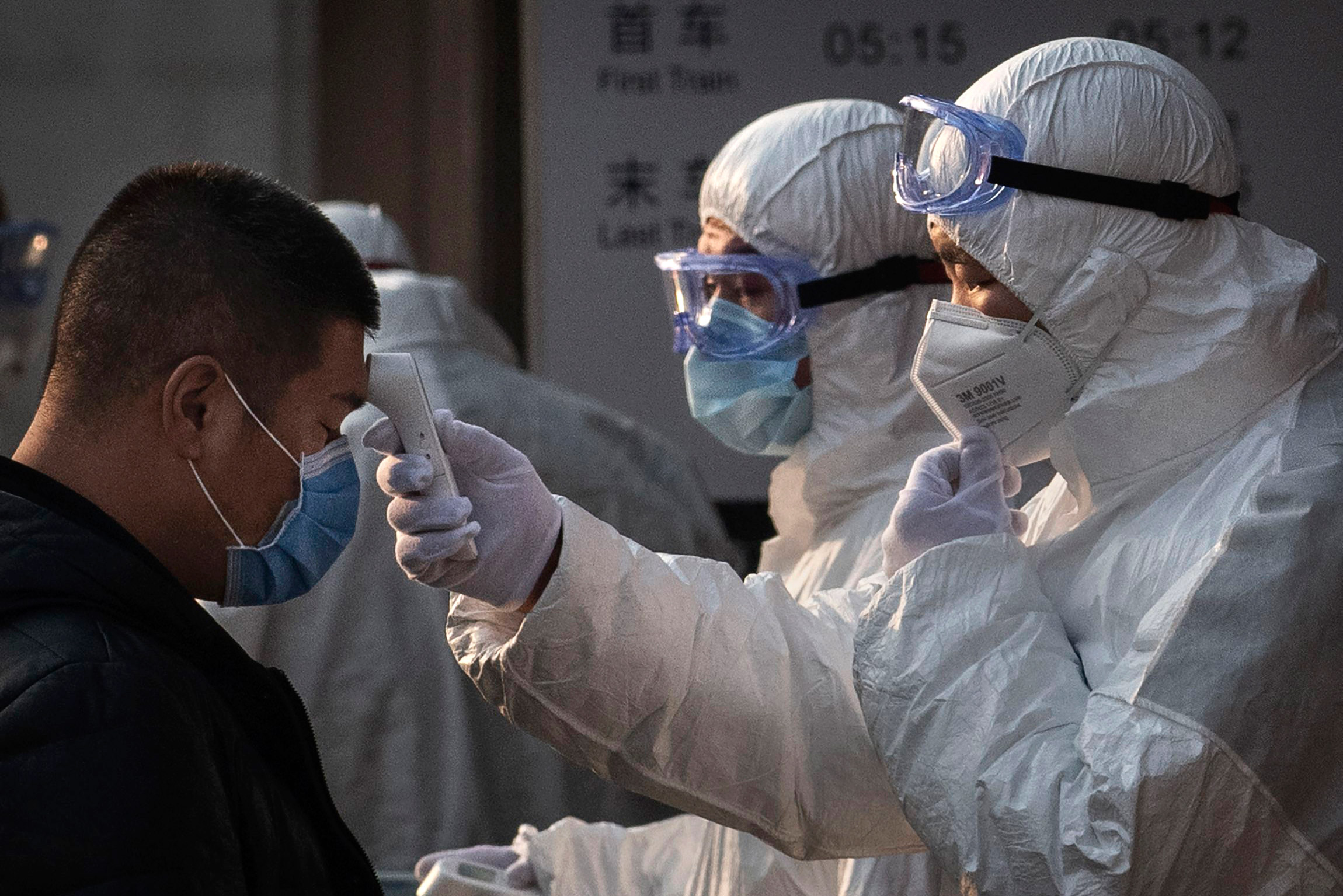
Airports in China and around the world are screening travelers for signs of infection with the new coronavirus. Photo by Kevin Frayer/Getty Images.
The world has been on high alert since December 2019, when a highly contagious respiratory illness caused by a new coronavirus began to break out across China. It has since spread to more than a dozen other countries, infected more than an estimated 6,000 people, and killed at least 132 of those sickened. Meanwhile, infectious disease researchers and global health experts are racing to learn more about what species of animal the disease came from and how deadly it may prove to be in humans. All but 68 of the confirmed infections have taken place in mainland China, according to the World Health Organization.
The outbreak, believed to have originated in a live animal market in the Chinese city of Wuhan, will likely continue to spread. Although officials in China recently expanded a travel lockdown that impacts nearly 35 million of the country’s residents, the onset of the outbreak arrived just as travel spiked around celebrations for the Lunar New Year, which occurred on Saturday, January 25.
At this point, it does not appear to be exceptionally lethal.
Last week in the United States, the first case of coronavirus was confirmed in Seattle, Wash. Since then, four additional cases have been confirmed, two in California and one each in Arizona and Illinois. All of the infected individuals recently traveled from Wuhan, China. A number of international airports in the United States are screening travelers for symptoms of the illness, including Boston Logan International Airport. There has yet to be any confirmed cases in Massachusetts, but that isn’t stopping Boston University officials from keeping an extra close eye on the outbreak.
To learn more about the new coronavirus and what we can expect from the outbreak in the days ahead, The Brink spoke with Mohsan Saeed and John Connor from Boston University’s National Emerging Infectious Diseases Laboratories. Saeed studies emerging viruses that affect the respiratory system in humans, similar to the newly identified coronavirus. Connor researches what makes viruses so effective at infecting animals and humans and recently helped develop a diagnostic tool to differentiate fevers caused by the Ebola, Marburg, and Lassa viruses from ones caused by the malaria parasite.
Q&A
The Brink: What do you know about this new virus so far?
Mohsan Saeed: We know the virus belongs to the Coronaviridae family, which is the same family that SARS and MERS belong to. Those two coronaviruses have caused significant outbreaks in the past two decades. This new coronavirus mainly affects the respiratory system, and the disease symptoms are similar to the ones caused by SARS, including a fever, cough, and difficulty breathing. Symptoms typically appear within five to six days of infection. However it’s possible that they may appear anywhere between 2 and 14 days from exposure. Since the virus seems to affect the lower respiratory system, it can potentially cause pneumonia or more severe disease in some patients, particularly those of higher age or in people with an existing disease condition.
The origin of the virus appears to stem from a live animal market in Wuhan, China. How does a virus like this spread from animals to humans?
John Connor: Viruses have to get into living cells in order to make copies of themselves. To do that, they have a protein that acts as a key to get into a cell, like a door lock. So, an animal virus has a protein key that will allow them into an animal cell. Often, a key that works on animal cells, like bat cells, won’t let that same virus enter into human cells. From time to time, however, there will be mutations or other types of changes to the protein key of a virus that turn it into a master key, able to open the doors of both animal cells and human cells. When this happens, a virus can now “jump” from animals to humans, a process called zoonotic transfer. The new coronavirus, similar to SARS, appears to be another example of a virus that successfully made the jump.
What factors increase the risk of zoonotic transfer?
Connor: Current evidence suggests that being close to different animal species increases the risk. For many years, human coronavirus infections were associated with mild diseases. But the SARS outbreak at the beginning of the millennium was associated with the jump of a coronavirus from animals to humans, and it caused severe respiratory illness in humans.
Why does zoonotic transfer pose such a threat to humans?
Connor: Generally, these jumps bring something new into the human disease arena, which is the most dangerous aspect of zoonotic transfer. That’s in contrast to a virus like influenza, which we already have good diagnostic tests for, are familiar with how it’s transmitted, and know how to minimize transmission—therefore we have a large capacity to respond to flu outbreaks in various ways. For the new coronavirus, all of the tools we need to effectively find and fight the disease are either just being rolled out or don’t exist yet, a concerning aspect of trying to contain any new disease that emerges.
How severe does this illness appear to be, especially compared to other coronaviruses it’s related to?
Saeed: So far, the case fatality rate of this virus is lower than that of SARS. However, it is premature to say anything with certainty at this point, given that the outbreak is still new.
Connor: As we learn more about the cases in China and elsewhere, the picture of how severe the infections are will become clearer. The virus will never be something that someone wants to get, and it will remain a serious risk for people that have other health problems. It is very early to draw strong conclusions, but at this point, it does not appear to be exceptionally lethal.
How effective are travel restrictions, such as the ones being enforced in central China?
Connor: Limiting the travel of people from an area that is clearly spreading the disease is a tough—but logical—decision from a public health standpoint. The results of China’s efforts will not be that the disease immediately stops being transmitted, but the best case scenario is that the restriction of travel slows the rise of new cases outside the Wuhan region, which will be very helpful in ultimately containing the outbreak.
Saeed: For viruses like this one, which spread through close contact, public health measures like isolating patients, tracking down their contacts, keeping them under watch, and screening healthcare workers—particularly those that work in the hospitals where coronavirus patients are attended to—are the best intervention strategies. Implementing strict screening and quarantine measures in hospitals [near the outbreak origin] are some of the steps to take immediately.
What can we expect in the coming days and weeks?
Saeed: Given how far the virus has spread, the number of cases is bound to increase in the coming days and weeks. Many in the field believe that the actual number of cases is way more than what is being reported. Research in the near future will try to address the exact origin and mode of how the virus spreads. A recent [study] from China has proposed snakes as the possible source of virus; however it has been received with much skepticism and I personally don’t believe that the [researchers] have provided any experimental evidence to prove that snakes at the Wuhan animal market might be the culprits. So, the jury is still out on this. Research efforts should also be focused on antiviral and vaccine development, so that any resurgence of the virus or future coronavirus outbreaks can be controlled.
How can people take precautions, along with the suggestions from the CDC?
Saeed: It’s normal for people to be alarmed about a virus we don’t know much about. People can protect themselves by avoiding interactions with people with apparent symptoms, washing their hands frequently, and immediately seeing the doctor if they have fever and cough.
This conversation was edited for length and clarity. This story was updated on January 29 to reflect new information.
Author, Jessica Colarossi is a science writer for The Brink. She graduated with a BS in journalism from Emerson College in 2016, with focuses on environmental studies and publishing. While a student, she interned at ThinkProgress in Washington, D.C., where she wrote over 30 stories, most of them relating to climate change, coral reefs, and women’s health. View her profile
A Broken System
 FACULTY EXPERTS
A Broken System
BU School of Law faculty explain how policymakers can advance criminal justice reform beyond the FIRST STEP Act.
Take a step
 COMMUNITY RESOURCE
Mayors Talk Transportation
Mayors interviewed for the annual Menino Survey conducted by the BU Initiative on Cities say their cities are unsafe for pedestrians and cyclists -- but cars still rule. See more surprising results
 RESEARCH HIGHLIGHT
How Global Warming Helped Ignite Australian Wildfires
BU ecologist Michael Dietze talks about why the bushfires are so much worse than previous years and whether Australia’s plants and animals can recover.
Get his take
IN CASE YOU MISSED IT...
The NIH Director's Blog highlights research by Naomi Ko of the BU School of Medicine on how insurance status impacts racial disparities in cancer diagnosis... Jessica Stern of the BU Pardee School of Global Studies interviews war criminal Radovan Karadzic in her book excerpt in The New York Times... James Bessen of the BU School of Law discusses how automation is changing labor markets in a Brookings Institution podcast... Connor Wood of the BU School of Theology explains why copying others allows humans to flourish in The Conversation.
An Interactive Discussion on the State of Investigative Journalism Today
The BU Alumni Association held a conversation with BU alumni journalist powerhouses Kevin Merida and Kimbriell Kelly on January 22, 2020, at NPR Headquarters in Washington, DC.
Eric Kolaczyk Named New Director of BU’s Hariri Institute for Computing and Computational Science & Engineering
“Data science and computing are now embedded in the human experience and informing everything we do,” CAS math professor says
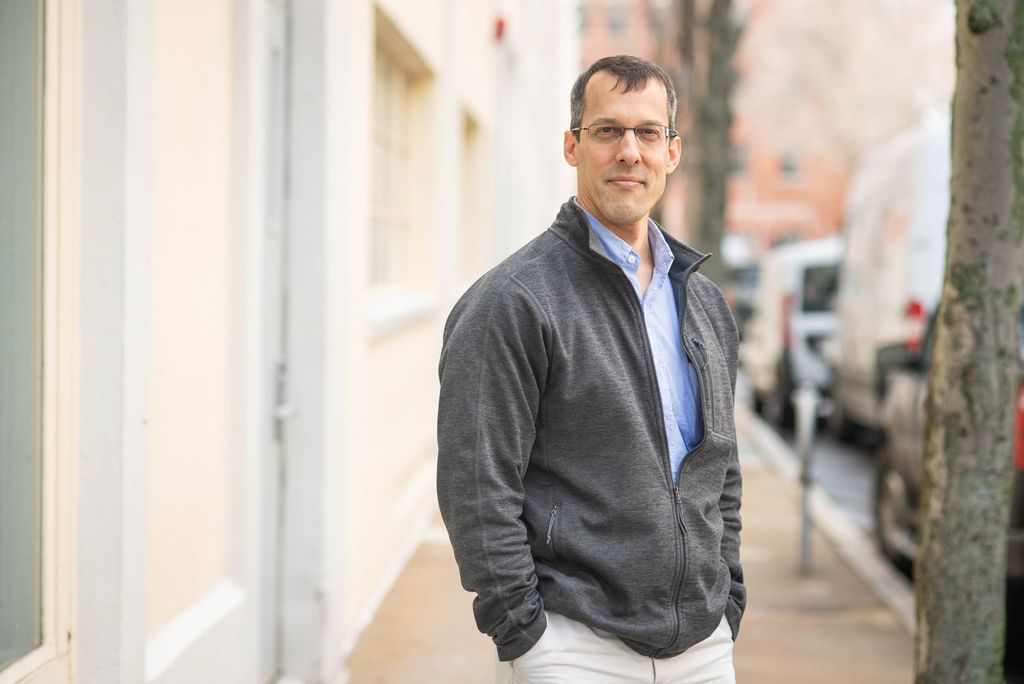
Eric Kolaczyk has earned an international reputation for his work across bioinformatics and computational neuroscience. Photo by Cydney Scott.
Eric Kolaczyk, a College of Arts & Sciences professor of mathematics and statistics, whose work across bioinformatics, computational neuroscience, and even social work has earned him an international reputation, is the new director of Boston University’s Rafik B. Hariri Institute for Computing and Computational Science & Engineering.
It’s a pivotal appointment for BU. Kolaczyk replaces founding Hariri Institute director Azer Bestavros, a William Fairfield Warren Distinguished Professor and a CAS professor of computer science, who was recently appointed associate provost of the University’s new Faculty of Computing and Data Sciences. These moves come as BU launches a major push into the burgeoning fields of computing and data sciences with the recent groundbreaking for the dramatic 19-story Center for Computing & Data Sciences, which will be the largest building on the Charles River Campus.
“The building is huge,” Kolaczyk says. “It’s a statement in and of itself of BU’s commitment and the intent behind it that we are at a point where we can say we are building it. It’s going to do wonders by vertically integrating math and computing and statistics and the faculty for computing and data sciences.” And, he adds, “data science and computing have gone from being arguably narrow to now being embedded in the human experience and informing everything we do.”
The days when computing and data science were a niche subject that few students wanted to pursue, and that business and industry took only a passing interest in, are long gone, Kolaczyk says. Today business strategies literally revolve around data, and students are coming to college with an expectation that their education will prepare them for that new world.
“Students in the United States and internationally are tremendously savvy now,” he says. “They come in knowing about, and wanting to have, data and computing be key parts of their undergraduate experience. And graduate students want even more. This should certainly should give BU an added edge in recruitment.”
Kolaczyk is “one of BU’s top innovators and intellectual leaders,” says Jean Morrison, BU provost and chief academic officer, and one of his great strengths is looking forward in his work. “His ability to look to the future and understand the evolving landscape, to recognize and grow the strong assets we have in place, and to achieve great results through collaboration make him a superb fit for this role.”
Morrison has previously noted that the University’s investment in the field is supported by surging interest from the student body: BU saw a 23 percent increase in teaching credit hours for math and statistics from the 2006–2007 to the 2016–2017 academic year and computer science saw a 266 percent increase.
“The work that Eric has carried out at the interface of statistics, computer science, engineering, and mathematics, as well as with a host of domain areas,” says Gloria Waters, vice president and associate provost for research, “will help him build on the tremendous success the Institute has had in fostering collaborative research that connects the faculty across the University and further lead to establishing the Hariri Institute as an internationally recognized center of excellence.”
Students in the United States and internationally are tremendously savvy now. They come in knowing about, and wanting to have, data and computing be key parts of their undergraduate experience.
What excites him about his new role, Kolaczyk says, is that it comes at a time when BU, and the Greater Boston region, is thriving in the digital landscape, where data and computing are at the core of virtually every business and every industry.
“BU is in an exciting period of time, and so is the United States in general, and schools are scrambling to put in place strong presences in computing and data science,” he says. “BU is ahead of the game with its new building, and the Hariri Institute has a tremendous history already.”
Kolaczyk has been a member of the BU faculty since 1998. He was previously director of his department’s Program in Statistics and is the founding director of the MS in Statistical Practice program and its statistical consulting group. He is recognized internationally for his work and is the author of three books and dozens of widely cited journal articles. He earned an undergraduate degree from the University of Chicago and holds an MS and a PhD in statistics from Stanford University.
He is a senior member of the Institute of Electrical and Electronics Engineers and an elected fellow of the American Association for the Advancement of Science, the Institute of Mathematical Statistics, the American Statistical Association, and the International Statistical Institute. In 2018, he was named a Data Science Faculty Fellow through BU’s Data Science Initiative.
A Chicago native, the 51-year old Kolaczyk has two college-age daughters. Asked how he relaxes when he’s not immersed in all things data and computing, he says with a laugh that he has a personal passion: “I keep my sanity by training in tai chi. I trained in martial arts for 30 years, and I lead a small group at Marsh Chapel in tai chi.”
Kolaczyk will report to Waters in his new role as Hariri director. “He will build on the Institute’s success in fostering collaborative research that connects faculty across the University,” Morrison says, “and support the faculty in undertaking major research initiatives and cutting-edge research.”
Kolaczyk says he can’t wait to get started. “I am excited for the challenge of elevating the Hariri Institute to a national level,” he says.
Author, Doug Most is a lifelong journalist and author whose career has spanned newspapers and magazines up and down the East Coast, with stops in Washington, D.C., South Carolina, New Jersey, and Boston. He was named Journalist of the Year while at The Record in Bergen County, N.J., for his coverage of a tragic story about two teens charged with killing their newborn. After a stint at Boston Magazine, he worked for more than a decade at the Boston Globe in various roles, including magazine editor and deputy managing editor/special projects. His 2014 nonfiction book, The Race Underground, tells the story of the birth of subways in America and was made into a PBS/American Experience documentary. He has a BA in political communication from George Washington University. View his profile
BUzz Bits
BU IN DC
Diane Baldwin, Ryan Russell, and Michael Vergoni of Sponsored Programs and Kathryn Mellouk of Research Compliance attended a Federal Demonstration Partnership meeting on January 8 through 10.
Roscoe Giles of the College of Engineering gave a presentation on transitioning from exascale computing at a meeting of the U.S. Department of Energy's Advanced Scientific Computing Advisory Committee on January 13.
Camron Bryant of the BU School of Medicine attended the Genetics and Epigenetics Cross-Cutting Research Team meeting at the National Institute on Drug Abuse on January 13 and 14.
Brian Jack and Clevanne Julce of the School of Medicine met with Congressional staff and federal officials to discuss maternal health disparities on January 14.
School of Social Work Dean Jorge Delva attended the Society for Social Work and Research annual meeting from January 15 through 19.
Kevin Outterson of the School of Law spoke at a Duke Margolis Center for Health Policy workshop regarding the market for antimicrobial drugs on January 16.
BUZZ BITS...
- The Congressionally-chartered Patient-Centered Outcomes Research Institute (PCORI) announced that Dr. Nakela Cook will become its executive director on April 15. Dr. Cook is currently the senior scientific officer and chief of staff at the National Heart, Lung, and Blood Institute at the National Institutes of Health.
- The U.S. Department of Education has consolidated several of its student aid websites into one redesigned StudentAid.gov. The new site is designed to streamline information for learning about and applying for federal aid programs.
- A subcommittee of the House Science, Space, and Technology Committee held a hearing on Wednesday about the Office of Science at the U.S. Department of Energy. Director Chris Fall updated the subcommittee on the agency's research priorities in the year ahead.
EVENTS NEWS YOU CAN USE
The popular Research on Tap series hosted by BU Research returns this semester, bringing groups of BU faculty together to give four-minute microtalks on their research. The gatherings are curated by a host faculty member and followed by a wine and cheese reception where investigators can interact with potential research collaborators. BU Industry Engagement will host the first talk of the semester, featuring BU researchers who have worked with industry partners to further their research and advance innovation. The event will take place on the Medical Campus on January 30 from 4 to 6 p.m.
RSVP today
GRANTS NEWS YOU CAN USE
The National Endowment for the Humanities (NEH) Public Scholars program is accepting applications through February 5. The grant competition supports the creation of nonfiction books in the humanities that are aimed at a broad, public audience. This year, the NEH has also added a new initiative focused on advancing civic education and celebrating the nation's 250th anniversary. The Public Scholars web site includes a one-hour webinar and sample application narratives.