News
Committee Explores Space Weather Outlook
BU IN DC
The School of Education hosted an alumni event on April 18 attended by interim dean Catherine O'Connor.
Daniel Segrè of the College of Arts & Sciences and the College of Engineering participated in a meeting of the Biological and Environmental Research Advisory Committee of the U.S. Department of Energy, of which he is a member, on April 25 and 26.
COMMITTEE EXPLORES SPACE WEATHER OUTLOOK
Two subcommittees of the House Science, Space and Technology Committee held a hearing on Thursday to examine the landscape surrounding space weather research and observation. The panel of witnesses from federal research agencies and industry provided a comprehensive overview of current capabilities to assess space weather and what needs to be done to better protect against a disruptive event. Lawmakers all expressed support for strengthening interagency coordination to improve preparedness for a potential event and involving industry in these efforts.
COURTS WEIGH IN ON IMMIGRATION POLICIES
The Trump Administration's controversial immigration policies received additional scrutiny from the U.S. Supreme Court this week. The Court heard oral arguments on Wednesday regarding the legality of travel restrictions placed on individuals from eight countries. A final decision is expected to be announced in June. Also on Wednesday, a federal judge ruled that the Trump Administration acted unlawfully when it ended the Deferred Action for Childhood Arrivals (DACA) program and its protections must stay in place. It is the third federal court to rule against the program's termination.
GRANTS NEWS YOU CAN USE
The Department of Energy's Office of Energy Efficiency and Renewable Energy released a $106 million funding opportunity to advance the development of photovoltaic and concentrating solar thermal power technologies, as well as workforce development in the solar power industry. This is the first time the office has released a comprehensive funding opportunity to take a holistic approach to solar research and development, with a focus on four areas: advanced solar systems integration technologies, concentrating solar thermal power research and development, photovoltaic research and development, and improving and expanding the solar industry workforce. Letters of intent are due May 4, and full proposals are due June 26.
GDP Center Hosts Panel Discussion in Washington, DC
 Wednesday, April 18, 2018, 5:30 pm – 7:30 pm
1777 F Street NW, 1st Floor, Washington, DC 20006
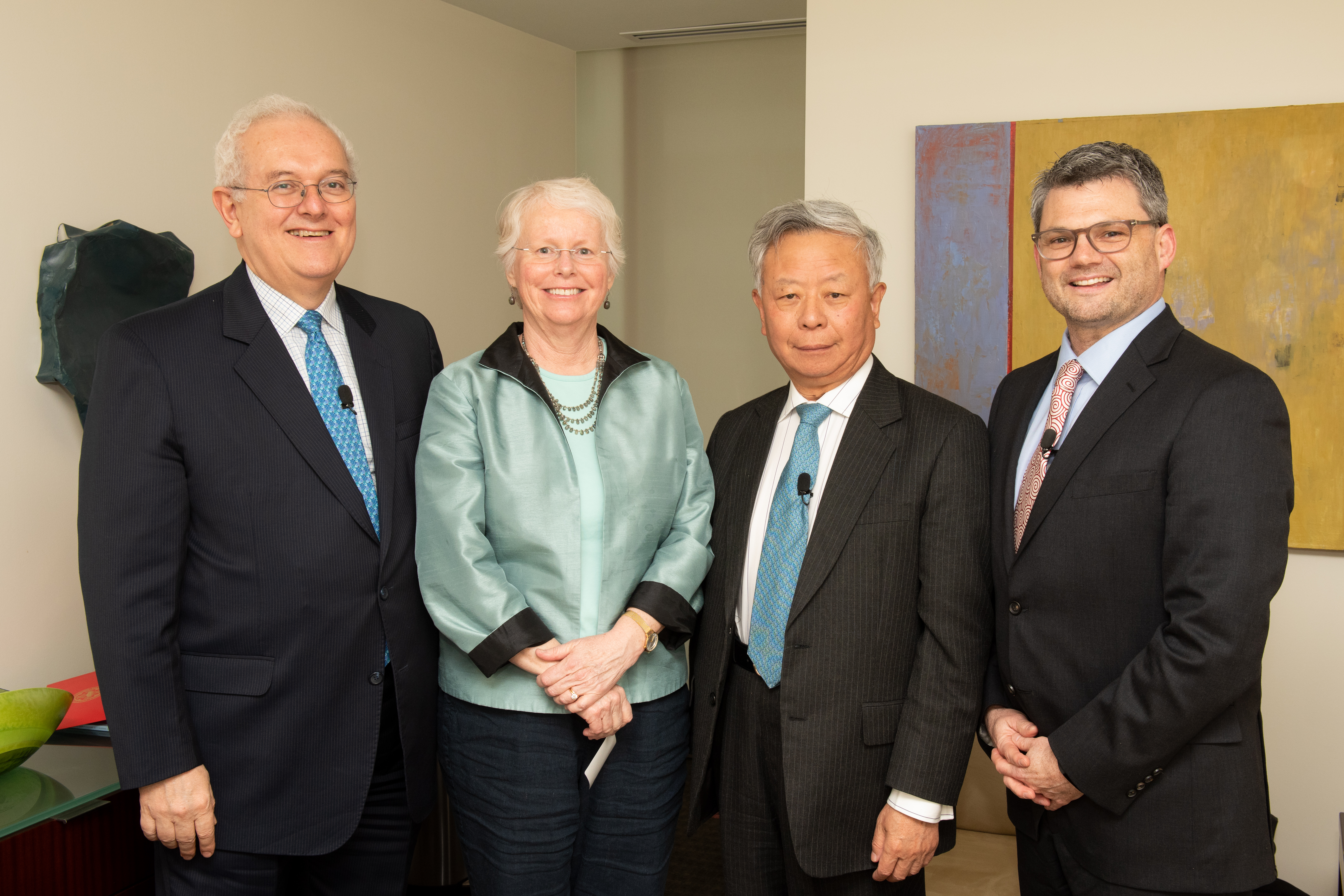
President Robert A. Brown and Provost Jean Morrison hosted a panel discussion organized by the BU Global Development Policy Center and BU Federal Relations in Washington, D.C. on April 18. Center Director Kevin Gallagher moderated a conversation with José Antonio Ocampo, co-chair of the Central Bank of Colombia, and Jin Liqun, president of the Asian Infrastructure Investment Bank, on the topic.
As financial leaders from across the world convene in Washington to cautiously celebrate what the International Monetary Fund sees as “brighter prospects,” Ocampo and Liqun discussed the concerns of emerging markets and developing countries despite the return of synchronized growth in the world economy for the first time since the global financial crisis of 2008.
The panel experts also examined whether there is justification for such complacency ten years after the global financial crisis and whether the return to global growth is a permanent one and in a form that can bring sustained economic development across the globe.
This event, titled “Brighter Prospects or Rose Colored Glasses? New Views on the Global Economy,” was timed to coincide with the meetings of the World Bank and International Monetary Fund. More than 100 global development stakeholders and BU alumni participated.
Jake Sullivan New Head of BU’s Government & Community Affairs
Replacing Bob Donahue as primary liaison with local elected officials and residents

“Out of college, I worked for a congressman, and then spent 15 years working for the city of Boston, and I always saw BU as a willing partner that helped the city advance certain goals and initiatives,” says Jake Sullivan, who will become vice president for government and community affairs on May 1. “I want to continue that great work.” Photo by Jackie Ricciardi.
- Jake Sullivan is BU’s new vice president for government and community affairs
- He will be BU’s chief liaison with the city of Boston, the town of Brookline, and the commonwealth of Massachusetts
- Sullivan replaces 30-year BU veteran Robert “Skinner” Donahue, who is retiring
Few people have a better understanding of how Boston’s City Hall works than Jake Sullivan. Prior to joining BU two years ago as assistant vice president for government and community affairs, Sullivan worked for Mayor Martin J. Walsh and for his predecessor, the late Thomas M. Menino (Hon.’01). Before that he worked on Beacon Hill as a senior research analyst for the state legislature’s Joint Committee on Energy and as a staffer for former Massachusetts Congressman John Olver. Sullivan will draw on that experience when he becomes BU’s vice president for government and community affairs, starting May 1.
BU’s Government & Community Affairs office is the primary liaison between the University and local elected officials and residents. Sullivan will be responsible for relations with the city of Boston, the town of Brookline, and the commonwealth of Massachusetts, and will oversee the 10-person staff.
Sullivan says he caught the politics bug growing up on a street that state reps and Governor’s Council members lived on. “It was part of my family. My dad was a probation officer and was always involved in public service and helping people,” he says. “Out of college, I worked for a congressman and then spent 15 years working for the city of Boston, and I always saw BU as a willing partner that helped the city advance certain goals and initiatives. I want to continue that great work.”
“Jake Sullivan brings a wealth of public affairs experience to his new leadership role,” says President Robert A. Brown. “During his two years with us he has developed an excellent understanding of our mission and values. I am confident that he will help Boston University develop new bridges to Boston and the broader community and maintain old ones.”
Sullivan replaces Robert “Skinner” Donahue, the current government and community affairs vice president, who will be a special assistant to Steve Burgay, senior vice president for external affairs, who oversees government and community affairs, before retiring at the end of the year.
In a letter sent to University senior leadership on Monday, Brown said Donahue is the “principal architect and steward” of the University’s “excellent relations with City Hall.” He cited Donahue’s role in shepherding BU’s first Institutional Master Plan through to approval in City Hall (a role he continued to play with subsequent plans) among his many accomplishments, as well as his involvement in helping secure the permits that allowed BU’s National Emerging Infectious Diseases Laboratories (NEIDL) to begin conducting biosafety level 4 (BSL-4) research.
Donahue says the time is right to step down, noting that many of BU’s long-standing projects, like NEIDL and Phase II of the Commonwealth Ave Reconstruction Project, are in good shape. “It was my desire to turn a page, and Jake was fit to take my place,” says Donahue, who had previously been director of city relations for two decades and had recruited Sullivan to work for BU. “He has had two years internally at the University to learn how things work, so it was a good place in time for a move.”
When he leaves BU in December, Donahue says, he plans to take some time off, visit family on the West Coast, and golf, before exploring opportunities at the intersection of public policy and politics.
Sullivan says the University has an excellent long-standing relationship with local communities and has been a strong neighbor and active in the communities for decades under Donahue’s stewardship. “This office is always looking for ways to deepen our commitment and highlight our involvement as a resource to our partners in Boston, Brookline, and the commonwealth of Massachusetts,” he says. “For the past three decades, Bob has led the office with integrity, transparency, and care for the community, and he was able to execute the vision of the University’s senior leadership flawlessly.”
Before joining BU, Sullivan worked in Boston’s Office of Intergovernmental Relations (IGR) for nearly 15 years. He had a number of other roles in City Hall, including director of IGR, chief of staff for the Advocacy and Strategic Investment Cabinet, and director of federal relations. He also had a leading role in creating Mayors Against Illegal Guns, a coalition of current and former mayors dedicated to fighting for common-sense gun laws, started by Menino and Michael Bloomberg, then New York City mayor. When Menino named him “stimulus czar,” Sullivan helped lead the city’s economic recovery team as it responded to President Barack Obama’s American Recovery and Reinvestment Act.
A graduate of UMass Amherst, Sullivan lives with his family in Dorchester.
American Academy of Arts & Sciences Elects Michael Hasselmo
CAS neuroscientist known for pioneering research—and building community
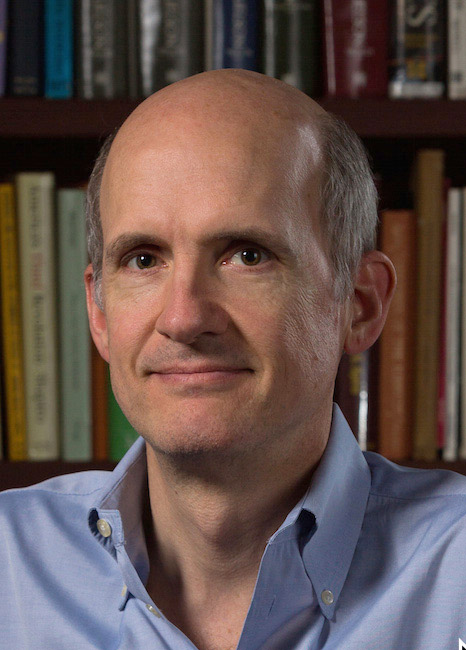
Michael Hasselmo combines experiments and computational modeling to study how memory works in the brain. Photo (left) by Michael Spencer Photography.
Michael Hasselmo, a College of Arts & Sciences professor of psychological and brain sciences, who is known for his pioneering research into memory as well as for his leadership in bringing together neuroscientists from multiple disciplines, has been elected to the American Academy of Arts & Sciences.
“It’s a great honor to be part of this community,” says Hasselmo, director of BU’s Center for Systems Neuroscience (CSN). “It’s a society that brings together all different disciplines. You tend to deal mostly with people in your field, and it’s good to be reminded of the broader scope of the world, not just academic, but also in the arts, and even in politics.”
Also, says Hasselmo, “I would love to meet Barack Obama.” The former American president has also been named to the the academy’s Class of 2018.
In addition to Obama, among the academy’s 213 new members, who were elected in 25 categories and are affiliated with 125 institutions, are author Ta-Nehisi Coates, Netflix, Inc., CEO W. Reed Hastings, Jr., actor Tom Hanks, and Supreme Court Justice Sonia M. Sotomayor. The new members will be formally inducted at a ceremony at the academy in October.
“Membership in the American Academy is wonderful recognition of Michael’s outstanding accomplishments as a scientist and academic leader,” says Robert A. Brown, BU president, himself a member of the academy.
“Mike is an exceptional neuroscientist who is known for using a range of experimental methods, including neurophysiological and behavioral experiments and computational modeling, to understand the cortical mechanism for memory-guided behavior,” says Gloria Waters, vice president and associate provost for research.
“It’s one thing to perform an experiment and describe the results,” says John White, a College of Engineering professor of biomedical engineering. “Mike goes further, building a computational framework to describe a wide variety of results and predict outcomes of new experiments. He is far ahead of the field in this regard.”
Hasselmo has used these methods to describe how the dynamics of brain circuits and certain chemicals in the brain—such as acetylcholine—enhance the encoding of memory and guide behavior. He focuses on the entorhinal cortex and hippocampus, and his work is relevant to how memory and cognitive function are impaired in Alzheimer’s disease and schizophrenia. He has published papers modeling cognitive deficits in both disorders based on neural circuit models.
“His work on the neuromodulatory and oscillatory dynamics of memory is groundbreaking,” says academy member Earl Miller, the Picower Professor of Neuroscience at MIT, who has collaborated with Hasselmo.
Hasselmo learned about the honor last Tuesday, when Kevin Gonzales, Rajen Kilachand Center for Integrated Life Sciences & Engineering (CILSE) director of operations, told him he had a FedEx delivery downstairs. “I thought it was just supplies,” Hasselmo says.
As soon as he read the letter inside, he emailed his wife, Chantal Stern, a CAS professor of psychological and brain sciences and director of the Cognitive Neuorimaging Center. Stern texted their two grown children with the news, and Hasselmo sent a text to his 86-year-old father, Nils Hasselmo, the former president of the University of Minnesota and of the Association of American Universities.
Hasselmo is the principal investigator on two National Institutes of Health R01 grants to study memory mechanisms involving modulation and oscillatory dynamics in entorhinal cortex and other cortical structures in the brain.
He is also the principal investigator on a five-year, $7.5 million Office of Naval Research (ONR) grant to study how the brain mechanisms for learning of rules work and how this might be translated into computer programs, especially for autonomous systems. The grant was awarded as part of the ONR’s Multidisciplinary University Research Initiative program, which supports team research involving more than one traditional scientific discipline.
Team research involving multiple disciplines is a trademark of Hasselmo’s work in the lab as well as his teaching. He founded the CSN, and in 2014, he started its popular lunchtime seminars, which feature speakers from other BU departments, such as biomedical engineering, math, physics, pharmacology and experimental therapeutics, and neurology, as well as from other institutions across the country and around the world. The seminars, usually held from 10 to 20 times a year, are open to all and routinely draw 80 to 100 people. So important have they become to BU’s neuroscience community that the architects of CILSE designed the first floor colloquium room to accommodate them.
Hasselmo, who plays keyboards in a rock band with Miller and other scientists, is known as a generous mentor and has helped guide 17 of his former graduate students—and postdoctoral fellows—to positions as faculty researchers at universities across the United States and in Canada. “I would not be where I am today without Mike’s mentorship,” Lisa Giocomo (CAS’04, GRS’08), a Stanford University assistant professor of neurobiology, wrote in an email. “He taught me to work successfully across a wide range of disciplines. His enthusiasm for science was an inspiration.”
On a shelf behind Hasselmo’s desk is a drawing of a mouse by Giocomo. In her email, she recalled the day she made her first neural recording of a mouse, in Hasselmo’s lab. “It was probably just one recording among the thousands Mike had performed—or seen—but he came in with such excitement to watch the recording on my rig, as if it was the very first.”
Hasselmo, who grew up in Golden Valley, Minn., graduated from Harvard College with a special concentration in behavioral neuroscience. He started out as a linguistics major looking for a way to combine his multiple interests—in language and the brain, physics, and philosophy. “I remember reasoning this through as an undergraduate,” he says. “I wanted to be able to understand everything about the world in a reductionist, mathematically structured way. I was also interested in philosophical questions about how we think and the basis for our consciousness of the world.
“So I thought, how can I link those questions?” The answer, he decided, was neuroscience. As a linguistics major, “I wanted to understand how neurons in the brain could perform language function. Then I realized there wasn’t any knowledge about that, really, and there still isn’t, because that was difficult to study in real neural circuits. So I thought, I can study memory—that’s a cognitive function. You can study it in neural circuits. It’s not only present in humans.”
Hasselmo studied at Oxford University on a Rhodes scholarship, earning a PhD in experimental psychology in 1988, and meeting Stern, who was also at Oxford. He completed a postdoctoral fellowship at the California Institute of Technology in 1991 and was an Harvard assistant and associate professor of psychology from 1991 to 1998.
In the late 1990s, Hasselmo and Stern came to BU, in part because they wanted to work with the late Howard Eichenbaum, a William Fairfield Warren Distinguished Professor and a CAS professor of psychological and brain sciences. Eichenbaum, who died suddenly in July 2017, was elected to the academy in 2015.
Hasselmo has published more than 120 articles in peer-reviewed journals. He is a member of the Board of Reviewing Editors of Science and is the computational neuroscience editor at Hippocampus.
In addition to Brown and Eichenbaum, current academy members from BU include President Emeritus Aram Chobanian (Hon.’06); Virginia Sapiro, a CAS political science professor; Leonid Levin, a CAS computer science professor; William Fairfield Warren Distinguished Professors Nancy Kopell, Laurence Kotlikoff, and Robert Pinsky; Kathryn Bard, a CAS archaeology professor; Jeffrey Henderson, William Goodwin Aurelio Professor of Greek Language and Literature; Nobel Laureate Sheldon Glashow, Arthur G. B. Metcalf Professor of Mathematics and Science; Ha Jin (GRS’93), a CAS creative writing professor; and Paula Fredriksen, a CAS professor emerita.
Founded in 1780, the American Academy of Arts & Sciences honors exceptional scholars, leaders, artists, and innovators and engages them in sharing knowledge and addressing global problems. Past members include Benjamin Franklin, Alexander Hamilton, Ralph Waldo Emerson, Margaret Mead, and Martin Luther King, Jr. (GRS’55, Hon.’59).
Author, Sara Rimer can be reached at srimer@bu.edu.
Brighter Prospects? New Views on the Global Economy
 BU IN DC
Brighter Prospects? New Views on the Global Economy
The BU Global Development Policy Center hosted a Washington discussion with Jin Liqun of the Asian Infrastructure Investment Bank and José Antonio Ocampo of the Central Bank of Colombia on April 18.
See the pictures
 RESEARCH HIGHLIGHT
Smaller, Faster, Cheaper
BU engineer Cathie Klapperich empowers both doctors and patients with point-of-care diagnostics: simple, portable technologies to diagnose diseases like malaria or HIV.
Learn how they work
 FACULTY EXPERT
TV Behemoth Raises Concerns
BU College of Communication's John Carroll explains why he is wary of Sinclair Broadcast Group's practices and its proposed merger with Tribune Media. Find out why
IN CASE YOU MISSED IT...
Julie Palmer of the BU School of Public Health explains the health disparities facing African American mothers in The New York Times... Patrick Kinney of the BU School of Public Health describes how cities are addressing climate change forWBUR... Ann McKee of the School of Medicine and alumna Carmen Yulín Cruz, mayor of San Juan, Puerto Rico, were named to Time's 100 most influential people list... The Washington Post says that it's true you are as old as you feel, according to research from BU School of Public Health biostatician Paola Sebastiani.
Diversity in Science – Where I’m Coming From
Underrepresented voices in science offer unique perspectives

Photo above provided by Jackie Ricciardi.
SCIENCE, WHICH IS SUPPOSED TO INVESTIGATE the entirety of the physical and natural world, is missing something. So is engineering. According to a report issued last year by the National Science Foundation (NSF), blacks and Hispanics are underrepresented both as recipients of degrees in science and engineering and in the science and engineering workforce. The same NSF report found that while women have reached parity with men among science and engineering degree recipients, they make up disproportionately smaller percentages of employed scientists and engineers than they do of the US population, and that while people with disabilities are as likely as others to enroll in science and engineering studies, they also remain underrepresented in the workforce. That imbalance is a problem for those underrepresented groups, and many observers consider it a problem for science and engineering, two life-changing fields that lack the benefit of the wealth of perspectives shared by the country’s increasingly diverse population.
Hear their stories on BU Today.
MED Researcher Ann McKee Makes TIME’s 100 Most Influential People List
Carmen Yulín Cruz (CAS’84), San Juan mayor, also named

Two BU affiliates, MED's Ann McKee, a CTE researcher, and San Juan Mayor Carmen Yulín Cruz (CAS’84), made TIME’s list of 100 most influential people. Photo courtesy of Time.
Ann McKee “may have saved my life,” former San Francisco 49ers linebacker Chris Borland writes in TIME magazine’s annual list of the world’s 100 most influential people. Her research into chronic traumatic encephalopathy (CTE), the progressive brain disease crippling many athletes and soldiers, persuaded Borland to abandon pro football after just one season.
Joining McKee, a School of Medicine professor of neurology and pathology, on TIME’s list is Carmen Yulín Cruz (CAS’84), mayor of San Juan, P.R., cited for her “passionate, courageous and articulate” advocacy for the island after it was devastated by Hurricane Maria last September. The storm caused up to $95 billion in damage and plunged the island into a humanitarian crisis.
McKee says TIME’s honor is a tribute to her research team. “I know what enormous hard work, thick skin, and persistence this has required from all of us over the past 10 years. I am very grateful to receive this tribute on behalf of the entire team.”

Citing her pioneering research into CTE, TIME praised McKee, a School of Medicine professor of neurology and pathology, for her “curiosity and integrity.” Photo by Jackie Ricciardi.
It’s not the first time that McKee, director of BU’s Chronic Traumatic Encephalopathy Center, has grabbed national media attention. Last year, she made global headlines when she announced that 27-year-old Aaron Hernandez, a former New England Patriot and convicted murderer who’d committed suicide in jail, had the worst case of CTE ever found in a young person.
McKee and her team made news again this year with a study suggesting that the disease may not be caused by concussions, as had been suspected, but by repeated head injuries. If true, efforts to protect athletes from concussions would have to be redirected toward the more difficult task of reducing head impacts and “the fundamental danger these activities pose to human health,” McKee said at the time.
Locally, in December the Boston Globe anointed her 2017 Bostonian of the Year.
CTE occurs in four stages in people who have suffered repeated concussions and other brain trauma. It is associated with dementia, mood changes, and aggression.
Borland’s accompanying essay in the April 30 TIME notes that pioneering research hasn’t always brought McKee praise: “Her reward for great scientific breakthroughs has often been sharp criticism. Dr. McKee has even endured personal attacks. She is reviled by the old-boys’ club of a multibillion-dollar [sports] industry. Punishment for doing your job well is an unparalleled professional pressure.
“Yet Dr. McKee shows up to work every day. She shares her findings. And she tells the truth, however uncomfortable. That is grace under pressure.”
The CTE Center’s brain bank stores hundreds of brains donated by professional athletes and their families and by many others. McKee, a graduate of the University of Wisconsin and the Case Western Reserve School of Medicine, has published more than 70 percent of the world’s CTE case studies and has testified before Congress.

Actor Benicio Del Torro praised Cruz in Time for her “uncompromising refusal to let anyone ignore the lives of those affected by [Hurricane Maria]”. Photo by Christopher Gregory.
Cruz, who took on President Trump in a public Twitter spat over the federal government’s glacial response to the widespread power outages and water shortages wrought by Maria, received a TIME shout-out by Puerto Rico–born actor Benicio Del Toro.
“Little by little, her words got the crisis the attention it desperately needs, just as if it were happening in Florida or Texas,” the Oscar-winner writes. “Cruz’s legacy will be marked by her uncompromising refusal to let anyone ignore the lives of those affected by the hurricane. For this we are forever grateful.”
The magazine broke its list of 100 into five categories: McKee is among those in “Pioneers”; “Artists” includes Nicole Kidman, Gal Gadot, and This Is Us star Sterling K. Brown; Cruz appears in the “Leaders” category along with Donald Trump and Robert Mueller, Prince Harry, and Meghan Markle; “Icons” includes names like Rihanna and Chadwick Boseman; and among the “Titans” listed is Oprah Winfrey.
Author, Rich Barlow can be reached at barlowr@bu.edu.
GDP Center Holds First Washington Event
BU IN DC
President Robert A. Brown and Provost Jean Morrison discussed college mergers at an event sponsored by Inside Higher Ed on April 19. Rachel Lapal ofMarketing & Communications attended the event.
College of Engineering Dean Kenneth R. Lutchen participated in the spring meeting of the National Science Foundation's (NSF) Directorate for Engineering Advisory Committee on April 17 and 18. He is a member of the committee.
Anthony Janetos, director of the Pardee Center for the Study of the Longer-Range Future, attended a meeting of the NSF's Advisory Committee for Environmental Research and Education, which he chairs, on April 18 and 19.
James Bird of the College of Engineering was the keynote speaker at the Center for Excellence in Education's annual Congressional luncheon on April 18.
Kady Rawal and students Jimmy Alburquerque, Lindsey Janof, Taylor Paek, Troy Vagianelis, Kellie Michaels, Anisha Pandya, Walter Wang, Mohammad Mourad, Poojan Dhanesha, and Christine Chiao of the Goldman School of Dental Medicine participated in the American Dental Association's Dentist and Student Lobby Day between April 8 and 10.
GDP CENTER HOLDS FIRST WASHINGTON EVENT
On Wednesday, President Robert A. Brown and Provost Jean Morrison hosted a panel discussion organized by the BU Global Development Policy Center and BU Federal Relations in Washington, D.C. Center Director Kevin Gallagher moderated a conversation with José Antonio Ocampo, co-chair of the Central Bank of Colombia, and Jin Liqun, president of the Asian Infrastructure Investment Bank. The event, titled "Brighter Prospects or Rose Colored Glasses? New Views on the Global Economy," was timed to coincide with the meetings of the World Bank and International Monetary Fund. More than 100 global development stakeholders and BU alumni participated.
BUZZ BITS...
- The U.S. Senate confirmed Rep. James Bridenstine (R-OK) to serve as the National Aeronautics and Space Administration (NASA) Administrator on Thursday.
- The Senate Foreign Relations Committee held a hearing on ratification and implementation of the Marrakesh Treaty, which would amend U.S. copyright law to facilitate access to published works for visually-impaired persons. The higher education community has expressed support for the treaty.
- A subcommittee of the House Appropriations Committee held a hearing on the nation's public health emergency preparedness and response capabilities on Wednesday. Members of Congress expressed support for improving the nation's ability to respond to public health crises, but had concerns about the availability of funds for the effort.
EVENTS NEWS YOU CAN USE
Join BU Research for its final "Research on Tap" event of the semester on April 24. Professor Neta Crawford of the College of Arts & Sciences will host more than a dozen faculty as they deliver microtalks on their research regarding "War and Peace: Causes, Consequences and Alternatives." Come meet faculty from Medicine, Law, English, History, Public Health, Political Science, and the Pardee School for Global Studies who have research interests in war, peace, and related topics.
Prof. James Bird to Deliver Keynote Address on Capitol Hill
“THE SCIENCE OF BUBBLES” KEYNOTE ADDRESS SET FOR ANNUAL CONGRESSIONAL LUNCHEON ON APRIL 18, HOSTED BY CENTER FOR EXCELLENCE IN EDUCATION
The Center for Excellence in Education (CEE), a nonprofit dedicated to improving STEM education through national and international programs for students and teachers, will host its Annual Congressional Luncheon at 11:30 a.m. on Wednesday, April 18th, at the Russell Senate Office Building, Room SR-325, in Washington, D.C.
Dr. James Bird, Professor at Boston University’s College of Engineering, will deliver the keynote address. His address discusses many of the applications of drops and bubbles. Dr. Bird’s research is motivated by problems in a variety of fields, including healthcare (e.g. virus transfer via droplets), energy (e.g. boiling and condensation), and materials (e.g. foams). He will speak on the “Science of Bubbles.”
CEE’s Annual Congressional Luncheon celebrates 35 years of success through its impactful STEM education programs: the Research Science Institute (RSI) at MIT, the USA Biology Olympiad (USABO), the Department of Defense Internships, and the Teacher Enrichment Program (TEP).
“To keep and grow U.S. leadership in science and mathematics, leaders in science, business, and technology must advance programs that both identify and nurture top achieving STEM students while simultaneously helping all students to maximize their potential to contribute to this country’s technological and scientific future,” said CEE President Joann DiGennaro.
“CEE has nearly 3,000 Research Science Institute alumni; engaged more than 150,000 USA Biology Olympiad high school students; and reached almost half a million underserved students through our Teacher Enrichment Program,” added DiGennaro.
Panels Discuss Academic Espionage
BU IN DC
John Clarke of the College of Arts & Sciences and Joshua Semeter of the College of Engineering participated in Space Science Week committee meetings at the National Academies of Sciences, Engineering, and Medicine between March 27 and 29.
David Bishop of the College of Engineering was inducted into the National Academy of Inventors on April 5.
Rebecca Ingber of the School of Law moderated a panel discussion on the legality of military commissions at the American Society of International Law annual meeting on April 6.
Vice President and Associate Provost for Global Programs Willis Wangparticipated in the inauguration of American University President Sylvia Mathews Burwell on April 12.
PANELS DISCUSS ACADEMIC ESPIONAGE
Two subcommittees of the House Science, Space, and Technology Committee held a joint hearing on Wednesday regarding "Scholars or Spies: Foreign Plots Targeting America’s Research and Development.” Legislators expressed support for maintaining international research collaborations and attracting international students to study in the United States, while also expressing concerns about protecting against the theft of sensitive research by foreign nations. Witnesses recommended training for university faculty and students, investment to combat cyber threats, enhanced collaboration between universities and the intelligence community, more coordinated counterintelligence, and greater punishment for bad actors.
BUZZ BITS...
- U.S. House of Representatives Speaker Paul Ryan (R-WI) announced that he will retire from Congress at the conclusion of his current term in December. As a result, there will be a new leader for the House in 2019, regardless of which party prevails in the fall midterm elections.
- The Trump Administration unveiled its National Space Strategy on March 23, focused on resilient space architectures and space as a "warfighting domain."
- Members of a subcommittee of the House Appropriations Committee praised the work of the National Institutes of Health during a hearing on the agency's budget on Wednesday. Rep. Katherine Clark (D-MA) touted the Framingham Heart Study led by Boston University.