A CAS Alum Helps Preserve the History of September 11
At the 9/11 Memorial & Museum in New York, which is marking the 25th anniversary of the terror attacks, alum Kerith Koss Schrager has an emotional task. “It’s a sacred space.”

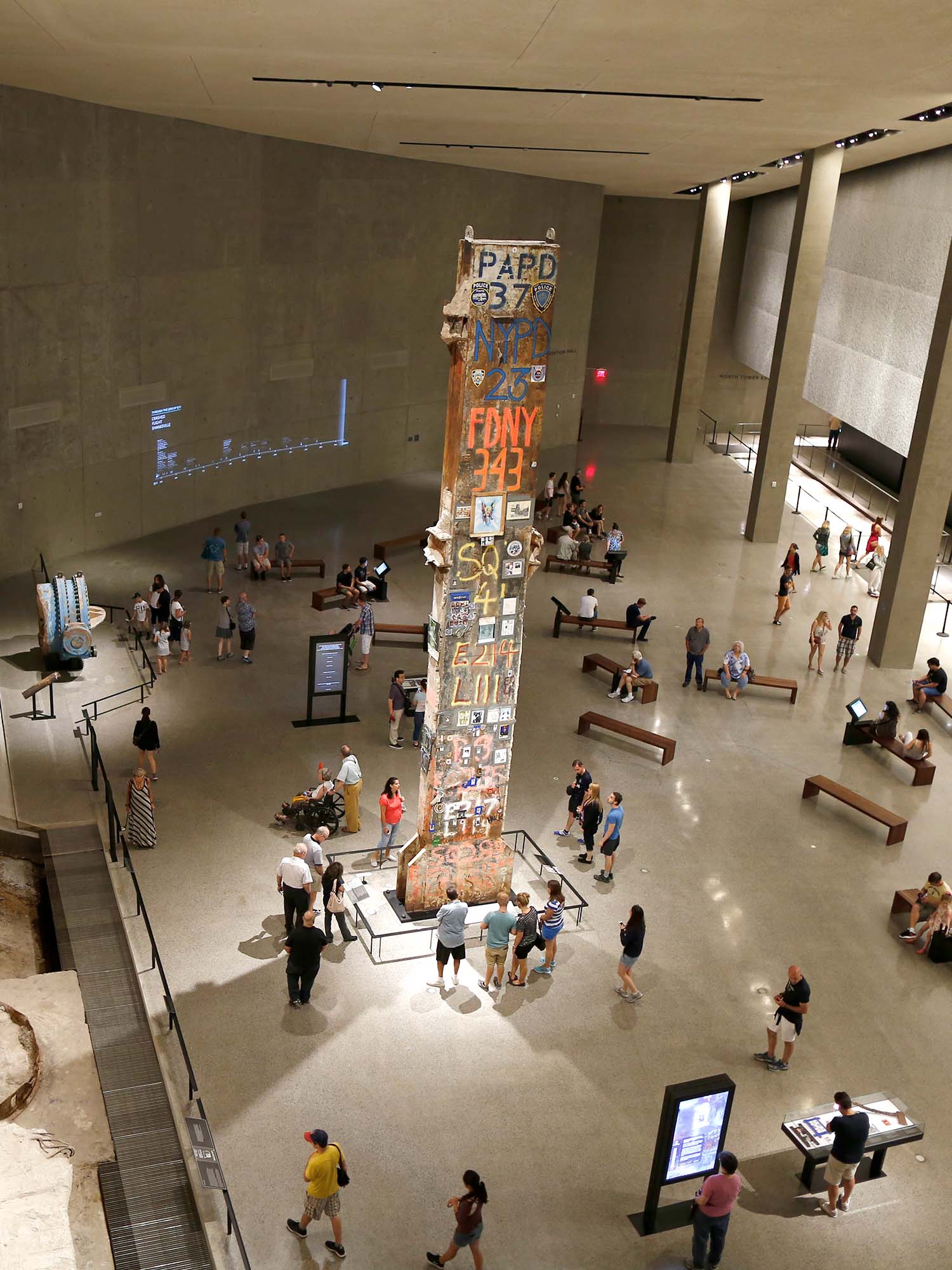
A damaged steel remnant from the facade of the North Tower of the World Trade Center. As vice president, head of conservation at the 9/11 Memorial & Museum, Kerith Koss Schrager (CAS’01) works to preserve the artifacts that tell the story of the terror attacks—and the long aftermath. Recovered from the World Trade Center site after September 11, 2001, Collection 9/11 Memorial Museum. Courtesy of the Port Authority of New York and New Jersey, Photograph by Jin S. Lee
Kerith Koss Schrager works every day around items that are a gut punch if you were alive on September 11, 2001. A crushed fire truck. A segment of the antenna from high atop the World Trade Center’s North Tower. A 36-foot-tall piece of structural steel from Ground Zero covered with painted messages and stickers.
Smaller items are just as potent: a dust mask, eyeglasses, boots, credit cards, and other personal objects belonging to the first responders and victims. Many artifacts are covered with the toxic dust from the towers’ collapse. The current exhibits, for example, include a section of a Broadway retail storefront, Chelsea Jeans, that was collected intact.
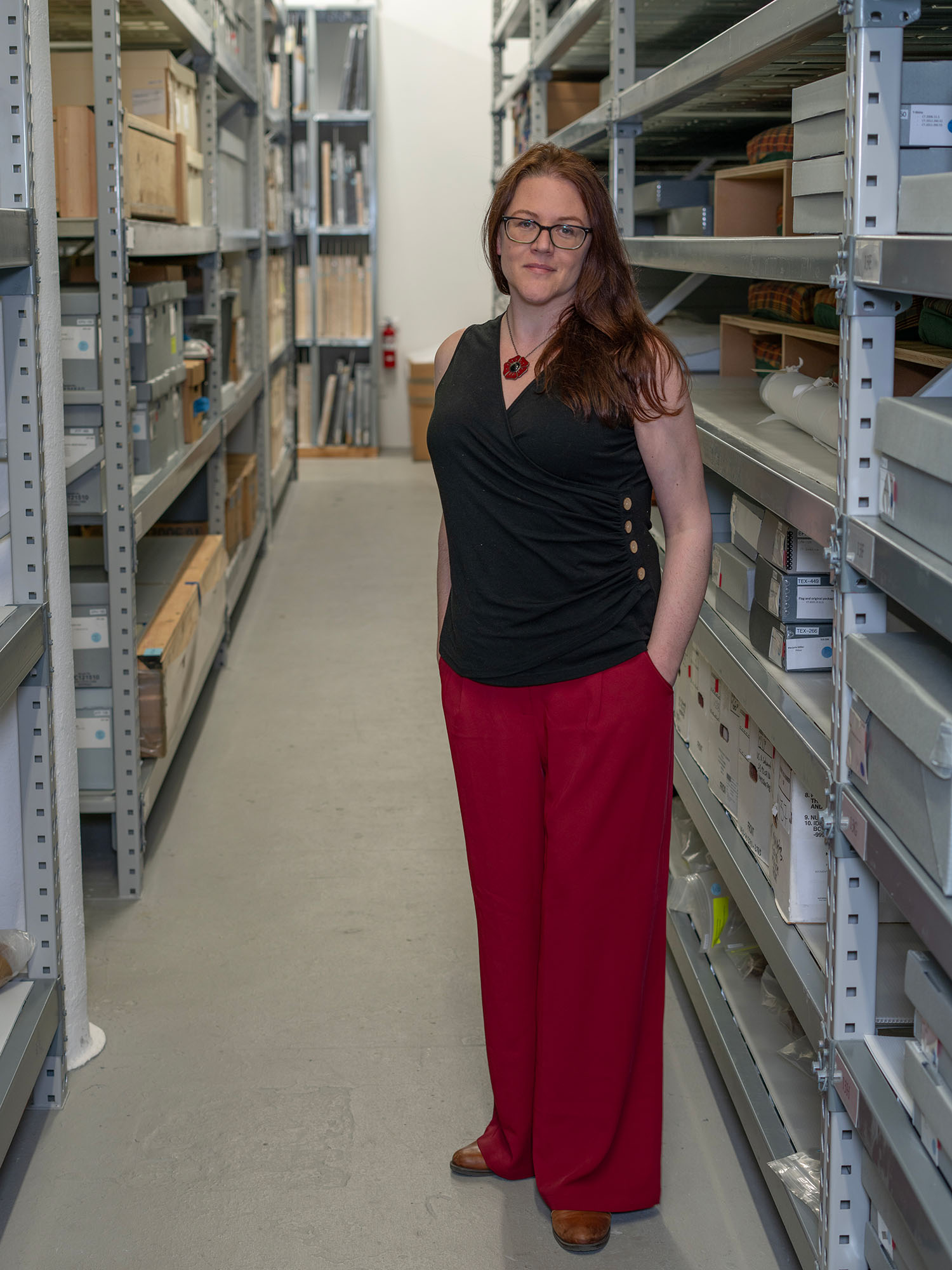
Schrager (CAS’01) is vice president, head of conservation at the 9/11 Memorial & Museum, built underground at the site of the World Trade Center in Lower Manhattan. Its mission is to honor the victims, survivors, and first responders of 9/11, as well as New Yorkers who faced the terror attack on the Twin Towers in 1993. Among its challenges is educating a generation of young people who weren’t even born when the four hijacked jets crashed into the World Trade Center towers, the Pentagon, and a field in western Pennsylvania.
Schrager’s mission is to preserve the artifacts that tell the story—and the long aftermath—of the terror attacks that took nearly 3,000 lives 25 years ago. It is as complicated and emotional a task as you would expect.
“We are one of the first organizations that has what we call a rapid response collection, where almost immediately after the events, there were people collecting for—it wasn’t a museum yet—some sort of custodial entity,” Schrager says. “We have about 28,000 objects in the collection. Maybe a third of it is on view, and the rest is largely in storage, which is typical for a museum. We also have 50,000 digital assets. What makes our collection challenging is it was all largely ingested in two or three years.”
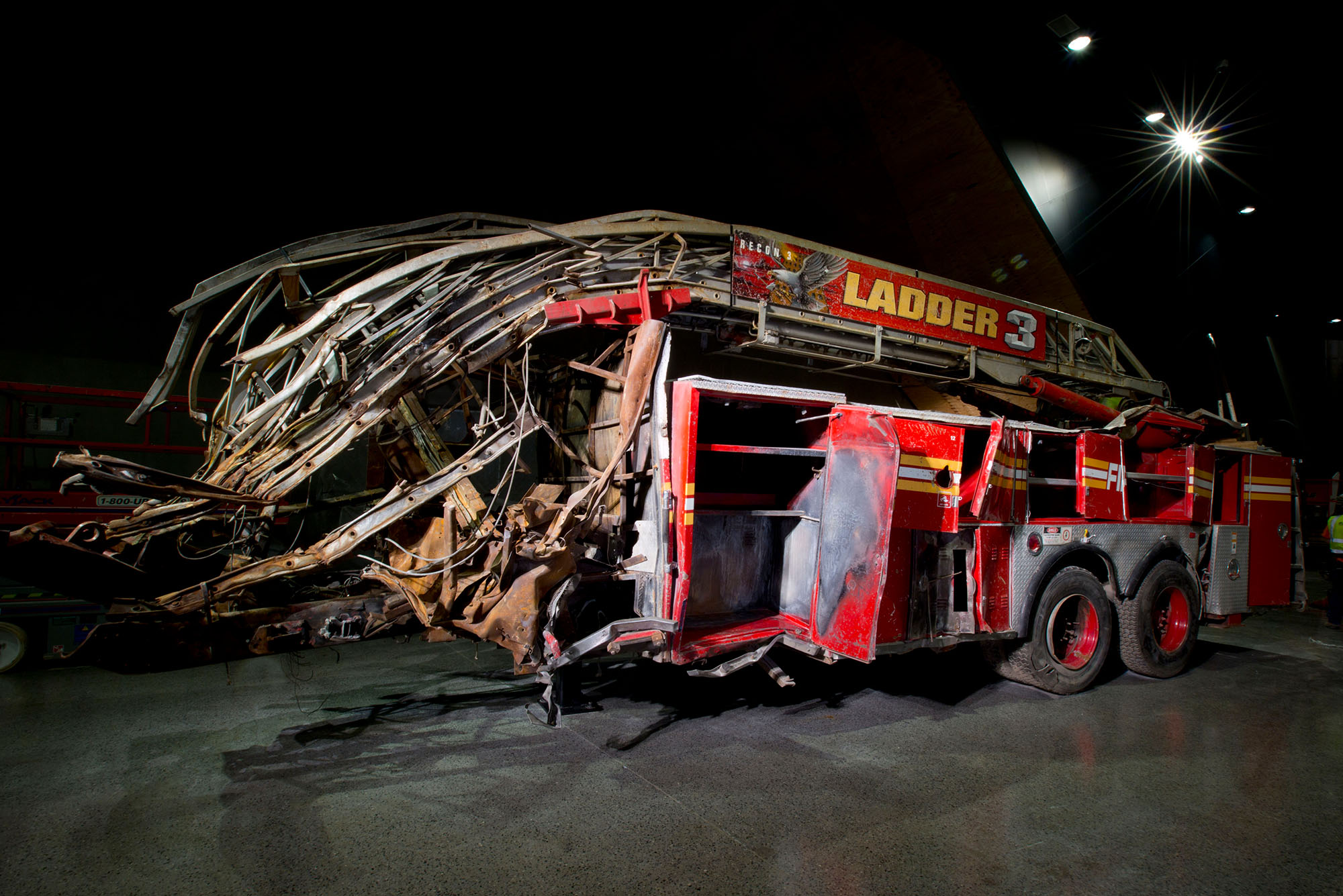
was crushed when the towers collapsed. Courtesy of the 9/11 Memorial & Museum, Photograph by Jin S. Lee
Schrager arrived at her job in 2022 after several years consulting there. Previous work at the Brooklyn Museum—a project involving historic tin mercury mirrors—introduced her to hazardous collections. She went on to earn an occupational health degree and started her own business helping institutions, such as the Thomas Edison National Historical Park in New Jersey, deal with similar materials. The experience is critical in her current job handling thousands of artifacts containing that toxic dust.
This year, the museum is marking the 25th anniversary of the attacks with special exhibitions, public programs, and professional development for educators, along with its annual commemorations. Bostonia spoke with Schrager by phone about how she handles the work and the emotions that it stirs up.
Q&A
with Kerith Koss Schrager
Bostonia: This is a difficult job. Why did you take it on?
Schrager: Having this kind of purpose, where I am doing something that I love but also giving back in a way that I never expected I would—I’ve found it to be truly rewarding. We are preserving these artifacts for a greater purpose. Not that art conservation in general isn’t a greater purpose, but we really have an emotional connection to this collection in a way that I haven’t had in other museums.
Bostonia: Did the emotional power these objects hold make you pause before taking the job? How do you cope with it?
When I came in as a consultant, it was something that I had concerns about. I was friendly with some of the conservators who were already here [Jan Ramirez (GRS’76,’85) is chief curator], so I understood, sort of, what I was getting into. I had worked with challenging collections at other institutions. I did have a concern that I was going to be dealing with this material every day.
But when people ask me, “How do you get through the day?,” this has really been probably one of the most rewarding and supportive work environments that I’ve ever been in. And we have a great camaraderie, which is really helpful in supporting our mental health, and we truly appreciate coming to work every day. Among my team [of five], I do try to make sure that they have the freedom if they need to take a day or take a moment or walk outside or invest in the types of activities they want to do to let them step away.
Bostonia:
Bostonia: Conservation work can be tricky and complex anywhere, but this is a level up. What are the challenges?
It was complicated for me to come into this situation because it is different than how we are trained as conservators in a fine arts context. There is a preservation bias [in fine arts], where every element of an artwork is important, and exactly the way it was created is how it should be preserved. You’re trying to preserve the artifact to its authentic moment in time—for example, for a painting, that’s the moment the artist signs the painting. But that’s not how we think about every object here.
For me—I watched the event on TV from Boston—the moment the buildings fell, that’s the 9/11 moment, seeing things covered in that dust. But for items in our collection, there’s a whole range of moments where that could be the case. There were nine months of recovery after that day. And now, 25 years of history that’s happened since. And all of that history is important in the context of the storytelling that we’re doing here.
That we would clean the fire trucks and remove all that dust from them so that we could display them in the gallery without having to put a vitrine [a clear glass container] over them was a difficult mind shift for me as a conservator. I was so focused on what I thought was the moment in time. But everybody knows what a fire truck looks like, so everyone recognizes that to see it bent and deformed means that that fire truck underwent some sort of physical transformative force. That is the story that this artifact represents, and we tell the dust story elsewhere.
Bostonia: The passage of time affects both memories and objects…
Even under the best care, you know, you’ve probably pulled out a pair of sunglasses or a pair of shoes, and the plastic has just degraded over time. The issue we now have is that we don’t want our visitors to see the degradation that naturally occurs to materials and assume that it’s 9/11 damage. It’s a very difficult balance that we have to make, and trying to figure out how much intervention is appropriate is one of the things that we’re dealing with.
What is particularly fraught and goes back to the emotional issue is that we have objects in our collection where the object was recovered, but the person wasn’t. So this object is the last thing that maybe they touched. When that’s combined with the “inherent vice” that these objects are going to degrade over time, questions of preservation come to the forefront. So we’ve got a grant from the National Endowment for the Humanities to survey our plastics collection of nearly 9,000 objects and identify the most at-risk ones, conservation-wise. Among other things, we’ll do 3-D digital models of some items, so a virtual copy can exist if the physical artifact can’t.


Bostonia: Talk about the dust.
Dust was a concern from the very beginning. We have a very engaged stakeholder community that is first responders, victim families, and a group that’s often sort of overlooked—local community members who live in the neighborhoods around the World Trade Center. They wanted to make sure that the dust was dealt with appropriately within the museum. Very early on, they had specialists come in to identify a characteristic fingerprint of World Trade Center dust. Everything that was in a building that was pulverized there. The main components we use to identify 9/11 dust are asbestos, lead, and man-made vitreous fibers.
We have strict protocols in place, and staff has to be trained in order to handle dust-containing artifacts. We have about 4,000 of them in the collection. We have to make sure that the visitors coming in, the museum workers who were working with this material, would be safe.
A lot of the controversy on the health impact was the dust. And in the immediate aftermath, even the EPA declared the air safe to breathe. I think a lot of people knew it wasn’t fine, and they were concerned that it would be overlooked. There are thousands of people who have died or now have health issues related to exposure.
The fire trucks, the ambulances, those big things underwent an abatement by people who have certifications to do those hazardous materials. Generally, for smaller things, we try not to remove the dust because we do want to keep it as part of the story, and so we have to wear a respirator or handle them in the fume hoods.
Bostonia: There were concerns about human remains.
We do not knowingly display human remains. Anything that has an appreciable amount of dust needs to be looked at by the Office of Chief Medical Examiner to be cleared of distinguishable human remains. As far as I know, they have never identified testable traces contained within our artifacts.
Bostonia: Every day you’re with all these objects. I’d think that, for three or four days, it’s going to be OK, and then on the fifth day, there’s some artifact or story that’s going to hit you differently.
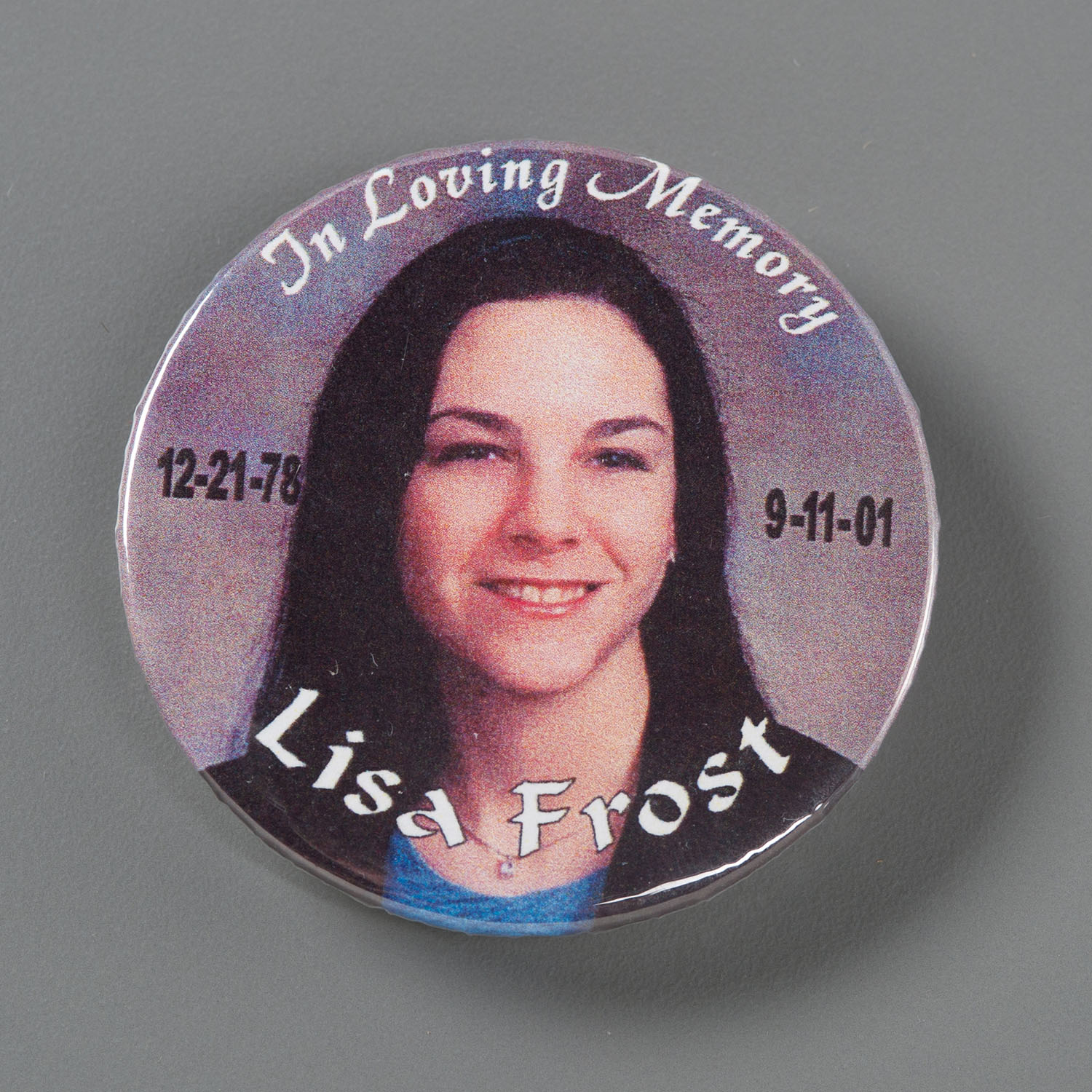
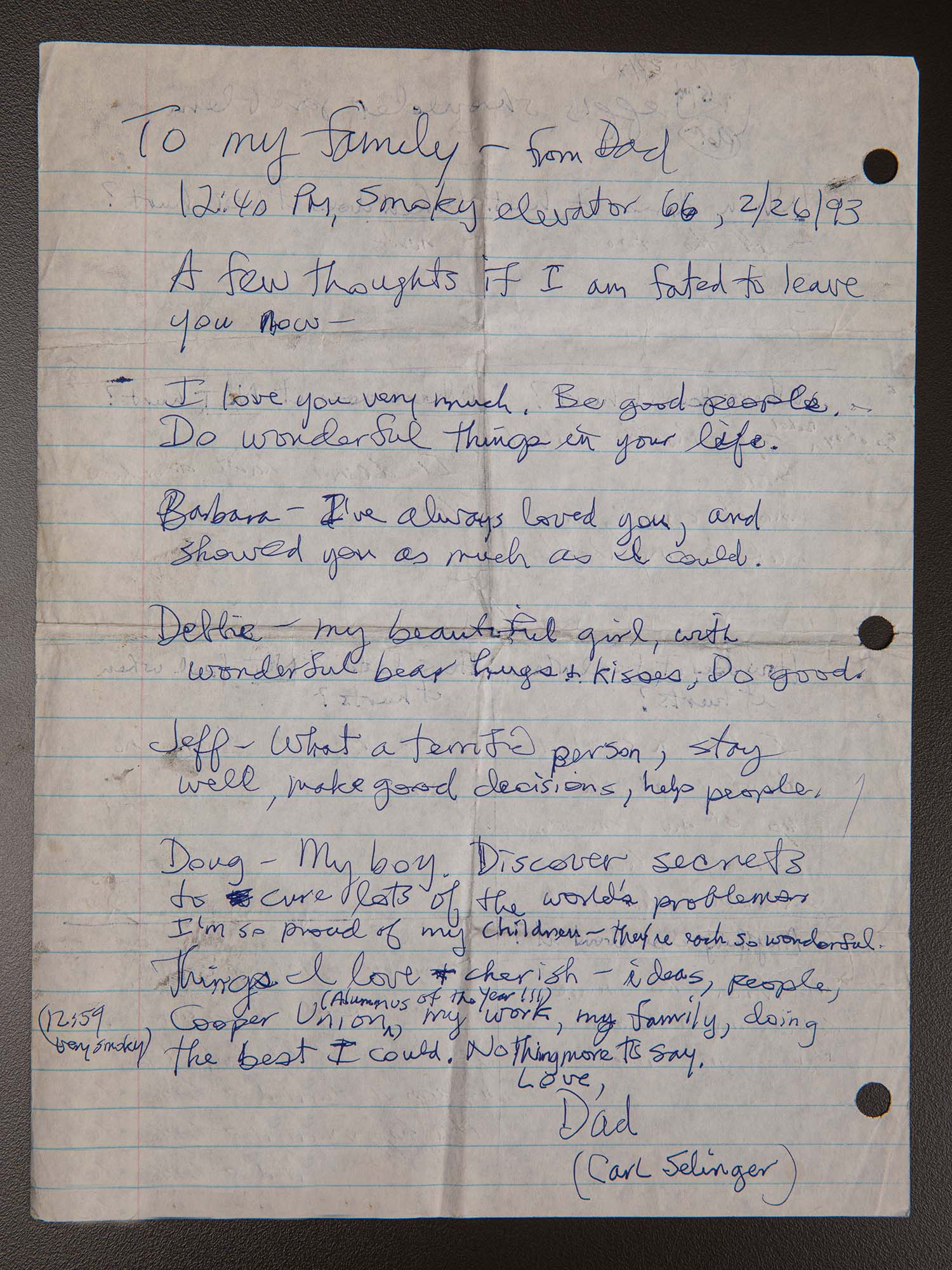
I’m getting better at recognizing what my triggers are. I learned pretty early that one of mine is handwritten notes [from victims]. For the most part, I can’t read them. I can treat them as an artifact, but I have to really be in the right mental space to sit and read them, especially if it’s a victim who wrote a letter to a loved one or something like that. And then, sometimes, I am completely caught off guard. The victims are so diverse that [often] there is something personally identifiable, whether it’s that they share your birthday or they went to the same college or they have the same favorite sports team. So you never quite know when you’re going to come across working on someone’s artifacts that you might unexpectedly connect with.
And then, yes, occasionally, I’ll be walking across the plaza and just the gravity of the situation hits me, even though for most of the time I can just think of it as a memorial space…. Then we talk amongst ourselves about the things that we’re feeling. I have a very supportive family. I have a very supportive supervisor. We take moments.
I’m getting better at recognizing what my triggers are. I learned pretty early that one of mine is handwritten notes [from victims]. For the most part, I can’t read them.
Bostonia: Many of your visitors were not even born in 2001.
One of my son’s best friend’s dad is the AP history teacher at the high school in our town, and they were bringing the 10th grade class to the museum. It was optional to come, and so I thought maybe 20 kids would show up. It turned out the entire class came, 87 students. This is an event that they haven’t experienced; they don’t have the emotional connection to this in the way that people who have experienced it do. I was impressed that they were all engaged. I did not get any backs turned or eye rolls.
One of the things that we stress is that we’re preserving the evidence. Why is it important that we’re collecting these things? There are conspiracy theories that 9/11 never happened, that the Holocaust never happened. These artifacts are evidence of it that people can see. They’re actually coming into this space where this event happened. This is a place where almost 3,000 people were murdered.
It’s a sacred space. You can see it when people come into the museum…. As they descend into the space, even the kids become more reserved, quiet, and respectful.
BU alumni who lost their lives on September 11, 2001, are remembered here.