Boston University’s Loretta Lees honored by UK’s Royal Geographical Society
Director of Initiative on Cities’ work on gentrification and displacement called “pivotal” to urban geography

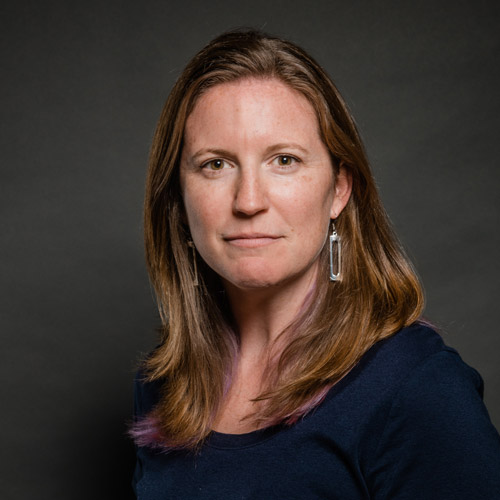
Loretta Lees, faculty director of BU’s Initiative on Cities, will receive the Patron’s Medal from the Royal Geographical Society.
Boston University’s Loretta Lees honored by UK’s Royal Geographical Society
Director of Initiative on Cities’ work on gentrification and displacement called “pivotal” to urban geography
Loretta Lees is joining the ranks of Sir David Attenborough, Neil Armstrong, and Bob Geldof as an honoree of the United Kingdom’s Royal Geographical Society.
Lees, faculty director of Boston University’s Initiative on Cities, will be in London on June 8 to receive the society’s Patron’s Medal for her contributions to urban geography. She says she is shocked and deeply honored by the recognition.
“Professor Lees has defined an entire sub-field of geography for decades and continues to do so,” said Dame Jane Francis, the society’s chair, in making the announcement. “Her methodologically rich, varied, and wide-ranging research has been pivotal to the study of urban geographies, gentrification, and displacement. She has made an indelible contribution to the future of the field, both through researchers she has mentored and the global body of scholarship that has cited her work.”
Her methodologically rich, varied, and wide-ranging research has been pivotal to the study of urban geographies, gentrification, and displacement.
The medal is one of the two most prestigious awards handed out by the society each year; the other, the Founder’s Medal, goes to Enric Sala, director of National Geographic’s Pristine Seas project. This year’s medals were approved by King Charles III.
Previous winners of the medals include NASA astronaut Armstrong, the first person on the moon; naturalist and documentarian Attenborough, who celebrated his 100th birthday earlier this month; and Geldof, the rock star who created the Live Aid benefit concerts to fight famine in Africa.
“These are really quite spectacular people. The first man on the moon and someone who fought for food justice internationally,” says Lees, a BU College of Arts & Sciences professor of sociology. “It hasn’t sunk in yet, to be honest. It is a big honor.”

Before coming to BU, Lees chaired the UK capital’s London Housing Panel from 2020–2022.
“I’ve spent the last 30 years really looking at processes of gentrification,” Lees says, “and I didn’t necessarily think when I first started my career that I would still be interested in and looking at that. But the process has mutated so much over the last 30 years and escalated, not just within cities, but globally and also in much smaller cities now.”
The society also praised her work supporting early-career researchers.
The honor “would not have happened without all the amazing people I’ve worked with over the years,” Lees says. “It is for them as much as for me.”
Since its founding in 1830, the society has been associated with global explorations by pioneers including Charles Darwin, David Livingstone, Ernest Shackleton, and Sir Edmund Hillary.
“More recently, the society has become much more engaged in and interested in public impact,” Lees says, “particularly around policy and helping everyday people on the ground, which is probably why I’ve gotten the award.”